ABOUT

Yellow-crested Cockatoo Protection and Recovery

Status:
1998 – current
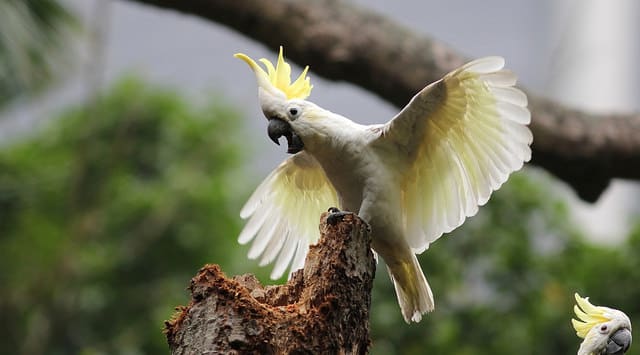
A feral Yellow-crested Cockatoo spreads its wings
© Sham Edmond [CC BY-SA 2.0] via Flickr
Collaborators/Funders:

View Species Profile

The IUCN-Critically Endangered Yellow-crested Cockatoo was added to CITES Appendix I in 2005 after years of indiscriminate trapping and large-scale logging drove wild populations to critical levels, with over 80% of the population disappearing. These threats continue, along with the risk of disease and persecution. Subspecies sulphurea and abbotti (the latter with only 10 birds seen in 2008) are the most endangered.

WPT financially and technically supported surveys of subspecies parvula that found 695 cockatoos in Komodo National Park in 2015, up from 558 in 2014, and counts on Moyo and Sumbawa islands that in 2016 and 2017 found that numbers were stable. Collaborations with local officials of Nature Conservation Agency Indonesia and community groups spread awareness in communities, and training sessions on birdwatching and tour guiding aimed to benefit local communities. Efforts also included supporting wild birds by installing and monitoring nest boxes on Moyo Island with help from the local community, researching current trade and trafficking routes across Indonesia and monitoring the wild population.

Status: IUCN Critically Endangered / CITES Appendix I

Population: 1200-2000 mature individuals, decreasing.

Threats: Has suffered steep declines (> 80%) due almost entirely to unsustainable exploitation for internal and international trade.

Range: The Yellow-crested Cockatoo is found on various islands in Indonesia – nominate sulphurea is found on Sulawesi and was introduced to Hong Kong and Singapore, parvula is spread out on 8 islands including Nusa Penida and Lesser Sunda Islands, and abbotti is restricted to Maskambing Island. Feral populations in the low hundreds of suphurea have been established in urban environments in Singapore and Hong Kong.

Natural history: This species is found up to 1200 m (3936 ft) in forest edge, woodland, farmland, coconut palms, semi-arid areas and forest. Its diet includes seeds, fruit, figs, berries, flowers, nuts and small insects. It is usually encountered in pairs or small groups of up to ten birds, with larger flocks feeding in fruiting trees. Breeding on Buton begins September-October; Nusa Tenggara April-May; nest is in a tree cavity.
Join Our Flock

FlockTalk our monthly newsletter for parrot people everywhere:

+ News from the world of parrots

+ Updates on wild parrot projects

+ Inspiring updates from partners

+ Real stories from the parrot flock

+ Plus, expert tips for caring for your feathered friends at home.


Stay In The Loop, Sign Up Now.

FlockTalk: our monthly newsletter for parrot people everywhere:

Parrot news. Conservation wins. Pet care tips. All in one monthly email.

We do not sell or share your information with anyone.