Status:
2010, 2023 – current
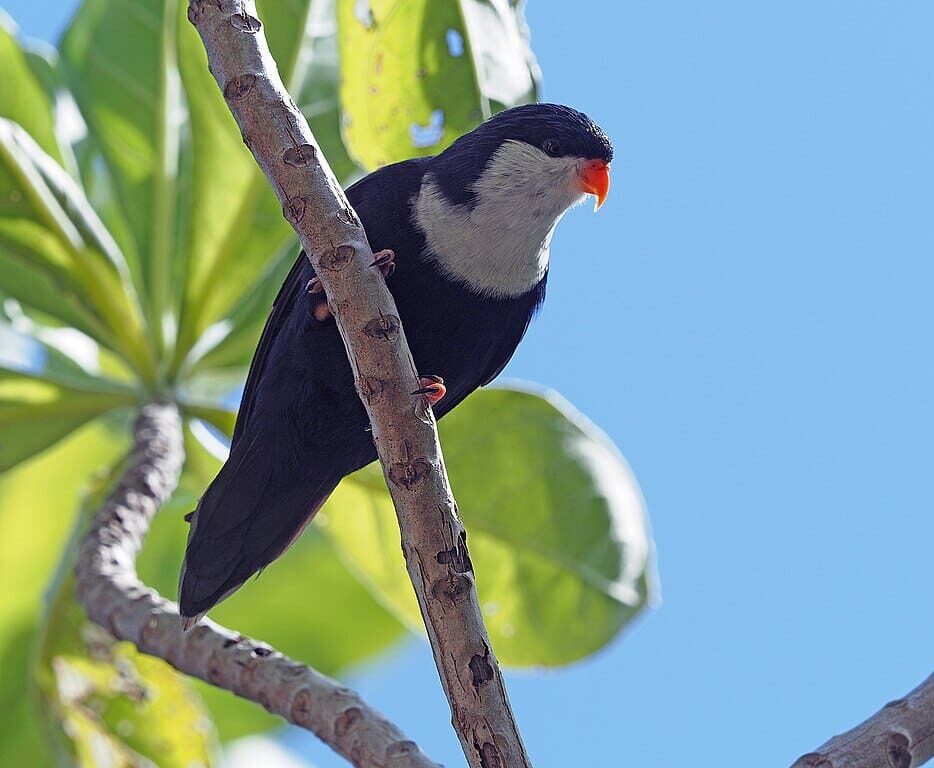
A wild Blue Lorikeet clings to a tree branch
© James Eaton, CC0, via Wikimedia Commons
Collaborators/Funders:

Cook Islands Natural Heritage Trust, Te Ipukarea Society, Pacific Development and Conservation Trust

View Species Profile

The Blue-Lorikeet (Vini peruviana) is seeing its population decline, with extinctions having occurred on islands in its range. Introduced predators such as ship rats and domestic cats are threatening their numbers. In addition, predicted increased storm severity due to climate change and the cumulative effects of breeding failures could accelerate its extinction.

The World Parrot Trust is helping to secure a future for Blue Lorikeets. In 2010, with the Cook Islands Natural Heritage Trust and the University of Leeds, WPT funded a survey on the island of Aitutaki to determine the extent of Cyclone Pat’s impact on the Blue Lorikeet’s numbers. The study found that the storm caused the loss of half the island’s population, leaving an estimated 1448 birds. The event changed the demographics of this group, as virtually all of the juvenile birds of the breeding season were lost.

In 2023 the World Parrot Trust, in partnership with the Cook Islands Natural Heritage Trust and Te Ipukarea Society, began a project funded by the Pacific Development and Conservation Trust aimed at increasing awareness about the risk of ship rats to the Aitutaki population and promoting the protection of nests. The same project seeks to estimate Blue Lorikeet numbers on the island. WPT’s Oceania Field Technician Samuel Ravatua-Smith visited Rangiora in 2025 to search for Blue Lorikeets and interview individuals and a local group, with the aim to help with biosecurity against non-native rats, and encourage education and Blue Lorikeet protection.

Status: IUCN Vulnerable / CITES Appendix II.

Population: 4300-6300 mature individuals, decreasing.

Threats: This lorikeet has a restricted range. Extinctions have occurred on many islands within this species’ range. Is at risk from colonised predators, habitat loss and increasingly severe weather events. Although trade is illegal, birds are still captured and sold on Rangiroa.

Range: Occurs on the Society Islands and W Tuamotu Archipelago; formerly further afield. Likely introduced to Aitutaki, S Cook Islands by Polynesians in the late 1700s.

Natural history: This lorikeet is seen in small groups in coconut plantations or gardens with flowering fruit trees. On Aitutaki, it prefers mixed woodland with banana trees and coconut palms, and plantations with shade trees and tall forest. Its diet includes pollen, nectar, soft fruits, flowering plants and their fruit, such as coconut, banana, hibiscus, mango and some insects. Breeding is December-January; nest is in a tree limb or trunk cavity.
Join Our Flock

FlockTalk our monthly newsletter for parrot people everywhere:

+ News from the world of parrots

+ Updates on wild parrot projects

+ Inspiring updates from partners

+ Real stories from the parrot flock

+ Plus, expert tips for caring for your feathered friends at home.


Stay In The Loop, Sign Up Now.

FlockTalk: our monthly newsletter for parrot people everywhere:

Parrot news. Conservation wins. Pet care tips. All in one monthly email.

We do not sell or share your information with anyone.