ABOUT

Echo Parakeet Conservation and Research

Status:
Past
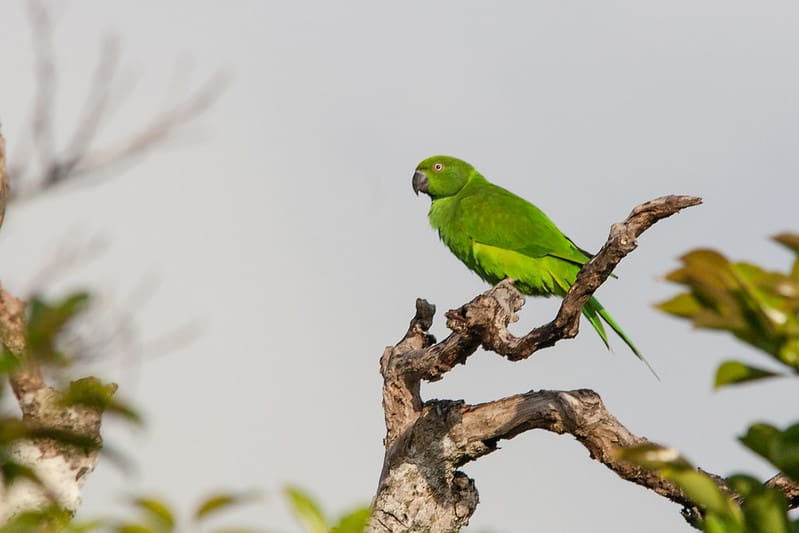
A wild female Echo Parakeet perches on a branch
© Peter-Steward-CC-BY-NC-2.0-Deed-via-Flickr
Collaborators/Funders:

Mauritius Wildlife Foundation, Mauritius government, Durrell Wildlife Preservation Trust

View Species Profile

Several decades ago, the wild population of Echo Parakeets (Alexandrinus eques) had plummeted due to severe deforestation, introduced mammals, and the effects of disease and severe storms.

In 1990, the Durrell Wildlife Conservation Trust (DWCT) invited the World Parrot Trust, along with the Mauritian government and the Mauritius Wildlife Foundation, to support Dr Carl Jones and his team to save the Echo Parakeet on Mauritius.

The team worked to protect and enhance nest sites and boxes, breed birds for release, manage the health of nestlings and encourage the production of more than one clutch per year. Additionally, there has been active management of the species’ remaining habitat.

The WPT made the species a priority and secured significant funding as well as providing logistical and other support. Due to the outstanding efforts of several organisations and dozens of individual contributors, after two decades of intensive management, the species has been brought from a low of 12 known individuals to more than 750.

Status: IUCN Vulnerable / CITES Appendix I

Population: About 450 mature individuals (2019). Increasing.

Threats: This species has a restricted range. Is affected by severe deforestation and degradation of habitat, as well as the effects of introduced pigs and Rusa deer on vegetation. Crab-eating macaques, Black rats and numerous species of aggressive insects pose a threat. The loss of old native trees to storm damage and age has intensified competition for nest cavities.

Range: Is found on Mauritius, and formerly on Reunion, Mascarene Islands.

Natural history:  This species favours upland forests and lower-level scrub forests, where they rely solely on native plants:  buds, young shoots, leaves, flowers, fruits, seeds, twigs, sap and bark. Introduced plants are not taken.
Join Our Flock

FlockTalk our monthly newsletter for parrot people everywhere:

+ News from the world of parrots

+ Updates on wild parrot projects

+ Inspiring updates from partners

+ Real stories from the parrot flock

+ Plus, expert tips for caring for your feathered friends at home.


Stay In The Loop, Sign Up Now.

FlockTalk: our monthly newsletter for parrot people everywhere:

Parrot news. Conservation wins. Pet care tips. All in one monthly email.

We do not sell or share your information with anyone.