ABOUT

Thick-billed Parrot Conservation and Research

Status:
1998-2007, 2019 – current
© Mishella
Collaborators/Funders:

Organización Vida Silvestre A.C. (OVIS)

View Species Profile

The Thick-billed Parrot (Rhynchopsitta pachyrhyncha) is highly endangered in the wild. The loss of its old-growth trees with natural cavities is ongoing, and climate-driven brush fires and drought threaten remaining trees. Trapping remains a threat, although the extent is not known.

Thick-billed Parrot preservation now relies on efforts to protect habitat, manage breeding, screen for diseases, and track bird movements. The World Parrot Trust has funded studies to evaluate translocation and habitat requirements, nest box installation to increase breeding capacity, genetics work to determine to inform conservation actions and held conservation planning meetings.

In 2019 and 2020, WPT co-funded Organización Vida Silvestre A.C. (OVIS) efforts to track birds in five breeding populations in the mountainous portion of Chihuahua. In 2022, the team installed 30 new lightweight solar-powered transmitters provided by the San Diego Zoo Wildlife Alliance, which also collects and analyses the data. The team has now conducted many years of Thick-billed Parrot tracking, accumulating 32,000 location fixes from transmitters attached to 30 parrots. These devices have helped to identify important water and mineral sources, and feeding, roosting, wintering and transit areas.
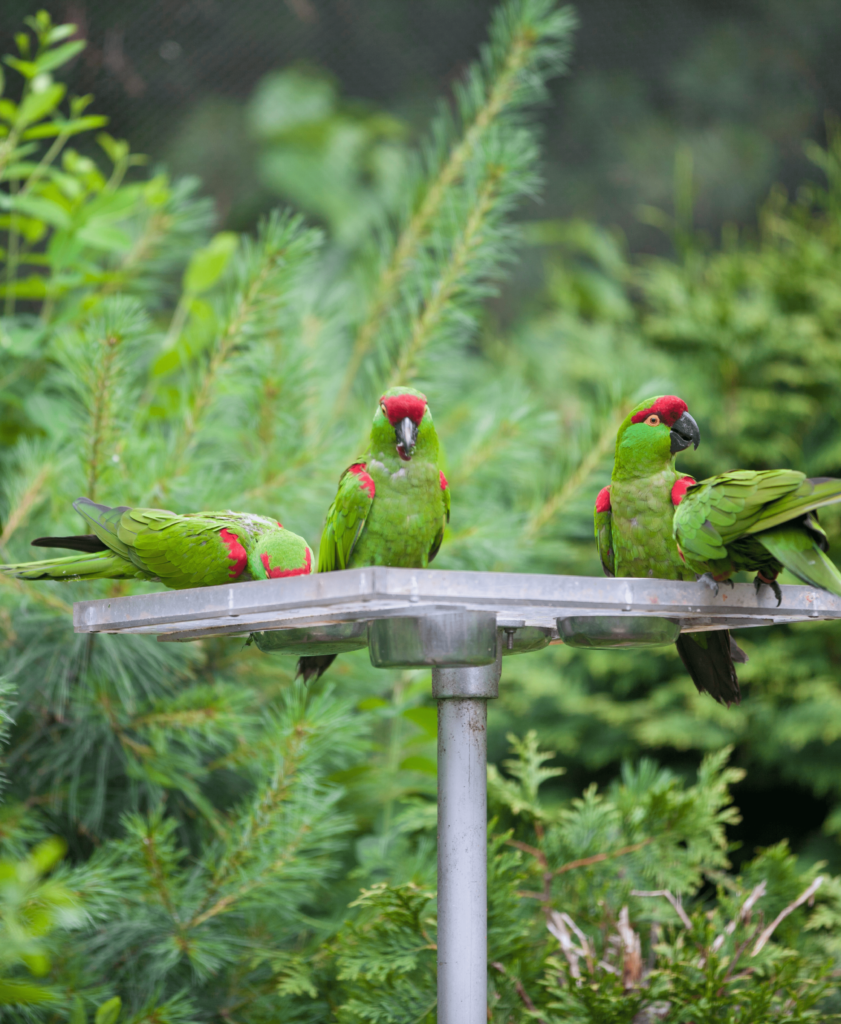

Status: IUCN Endangered / CITES Appendix I

Population: Fewer than 2000 individuals, decreasing.

Threats: This species has a restricted range (600 km2). Is affected by the habitat degradation and loss of pine and aspen trees; also forest due to drug growers and cattle farming. Shooting affected this species historically, and illegal trapping appears to have caused declines in recent decades. Climate change may impact habitat nest tree availability.

Range: Highlands of NW and C Mexico in the Sierra Madre Occidental. Attempted reintroduction to S Arizona.

Natural history: These parrots are found in mature upland primary-growth forests from 1200-3600 m (3937- 11,811 ft). Their diet includes pine seeds of a number of species, buds, leguminous plants, acorns and occasionally fruits. These parrots range widely after breeding and occur in flocks with communal roosting on inaccessible cliffs or in densely packed trees. Travels of up to 40 km in a day to foraging areas are common. Breeding coincides with pine seed ripening; eggs are laid from June to July in a mature tree hollow.


Join Our Flock

FlockTalk our monthly newsletter for parrot people everywhere:

+ News from the world of parrots

+ Updates on wild parrot projects

+ Inspiring updates from partners

+ Real stories from the parrot flock

+ Plus, expert tips for caring for your feathered friends at home.


Stay In The Loop, Sign Up Now.

FlockTalk: our monthly newsletter for parrot people everywhere:

Parrot news. Conservation wins. Pet care tips. All in one monthly email.

We do not sell or share your information with anyone.