ABOUT

Orange-bellied Parrot Recovery

Status:
Past
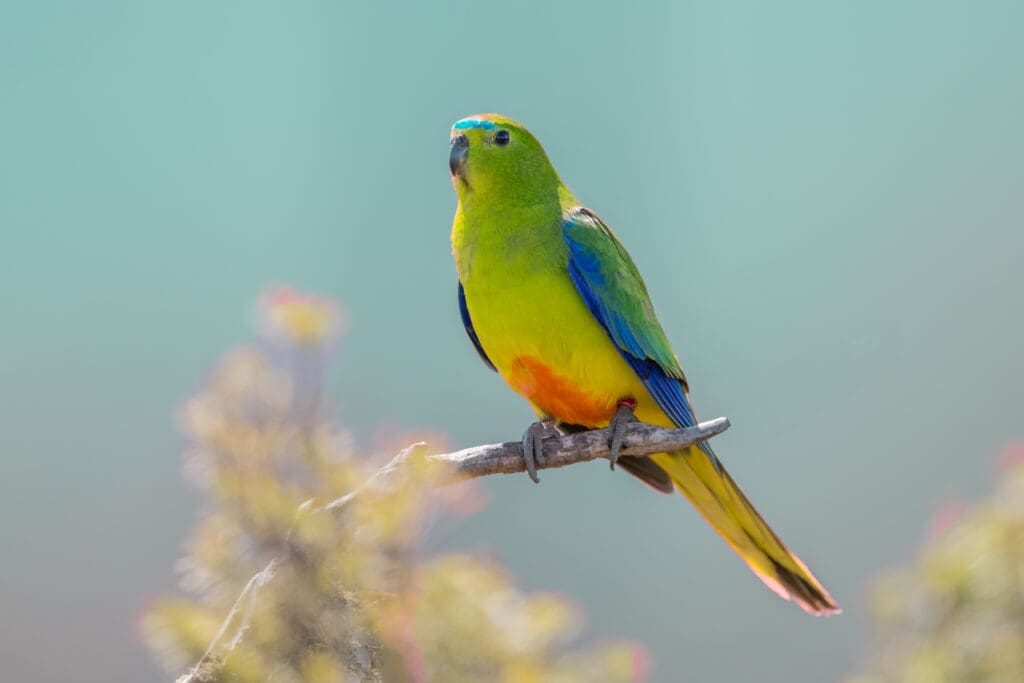
A wild Orange-bellied Parrot perches on a branch
© Corey Raffel
Collaborators/Funders:

Department of Primary Industries, Water and Environment, Hobart, Tasmania.

View Species Profile

The Orange-bellied Parrot (Neophema chrysogaster) is struggling for survival due to the loss of its overwintering habitat and competition with other species. A recovery team was first established in 1980. The wild population, which was estimated to number around 150 individuals in 2005, has since undergone a rapid decline. Individuals are being bred in captive breeding programs in Taroona, Tasmania, Healesville Sanctuary, Adelaide Zoo, Melbourne Zoo, Halls Gap Zoo (previously), Moonlit Sanctuary, Hobart Wildlife Centre in Tasmania, and Priam Parrot Breeding Centre.

In 2002, the World Parrot Trust funded Orange-bellied Parrot Recovery with its Small Action Grants program, which in turn helped employ an Extension Officer for 8 weeks, expand the volunteer observer network, conduct a coordinated habitat-wide survey, monitor and report activities at Piccaninnie Ponds, construct a feed station adjacent to Piccaninnie Ponds and develop a supplementary feed crop and study its use by the birds during winter migration.

IUCN/CITES Status: IUCN Critically Endangered / CITES Appendix I

Population: 188 (2024), with over 300 birds in a captive breeding program. Decreasing.

Threats: This parrot has a restricted range. Is affected by fragmentation and degradation of its overwintering habitat. Male-female sex ratios are heavily skewed towards males. Likely causes of recent decline are an 2014 outbreak of Psittacine Beak and Feather Disease and the effects of a ten-year drought on productivity of saltmarsh plants in their winter habitat.

Range: Tasmania and coastal SE mainland Australia.

Natural history: The species’ breeding areas include temperate forests and moorland plains; wintering areas are mostly saltmarsh and pastureland with freshwater sources and roosting sites.  Birds feed mainly on seeds and are seen in flocks, usually with a sentinel to warn the group of predators. In breeding areas birds roost communally in dense Melaleuca stands; individuals are sometimes seen in rural paddocks and around livestock.

Join Our Flock

FlockTalk our monthly newsletter for parrot people everywhere:

+ News from the world of parrots

+ Updates on wild parrot projects

+ Inspiring updates from partners

+ Real stories from the parrot flock

+ Plus, expert tips for caring for your feathered friends at home.


Stay In The Loop, Sign Up Now.

FlockTalk: our monthly newsletter for parrot people everywhere:

Parrot news. Conservation wins. Pet care tips. All in one monthly email.

We do not sell or share your information with anyone.