ABOUT

Great Green Macaws: Macaw Recovery Network

Status:
Past
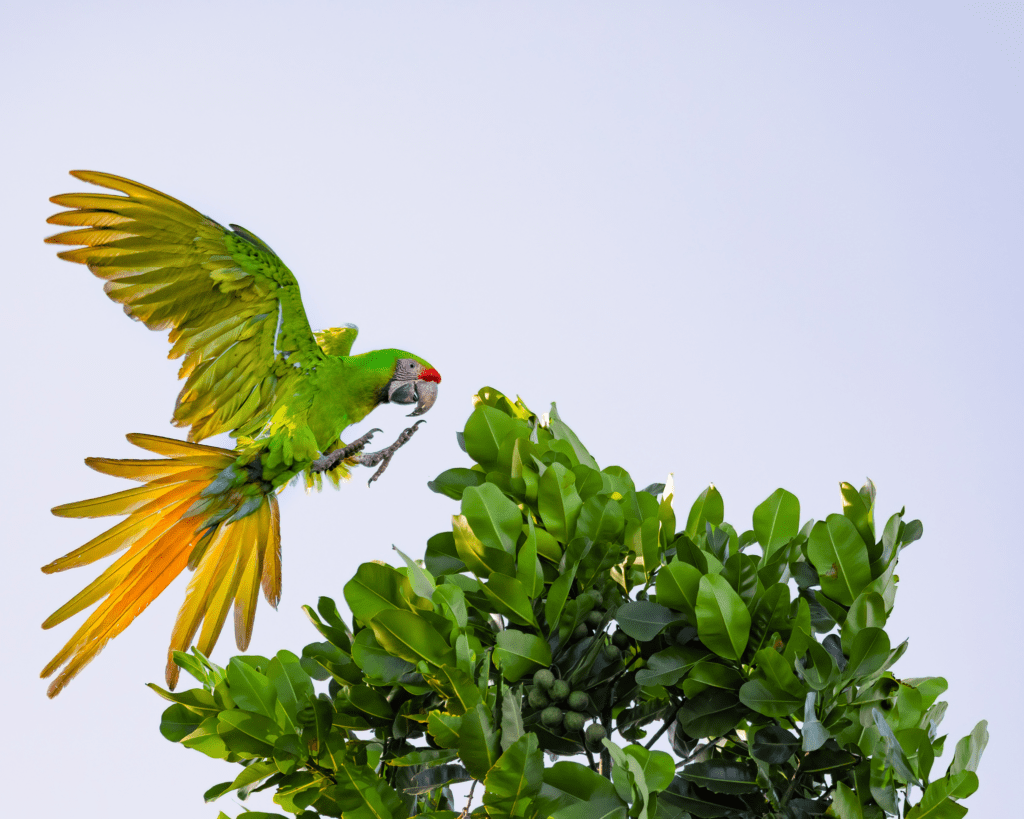
A wild Great Green Macaw comes in for a landing
© Artush
Collaborators/Funders:

View Species Profile

The WPT funded the Macaw Recovery Network’ work of protecting and growing endangered parrot populations in the Americas. At Punta Islita on the south coast of Costa Rica, efforts to boost and monitor wild macaw populations, preserve habitat and connect with communities continue. Efforts include completing surveys to estimate numbers and to locate roosts, discover how and where the birds travel, collaborating with university students to monitor wild nests, and health-check and fit  radio-tracking collars to chicks, and engaging local women to identify, collect and propagate the seeds of trees important to the macaws.

Engaging communities benefits both people and Great Greens – local women are being trained to identify, collect and propagate the seeds of trees important to the macaws. The Women Rangers Program in Boca Tapada, Alajuela was founded in 2020.  A nursery, “Casa del Titor,” which the women manage, currently houses 4,000 plants comprising 43 different plant species. The group has learned to record and monitor the progress of these plants and the weather and coordinate monthly trips out into the wilderness to collect more seeds to bring to the nursery. The team has, to date, planted 1,520 trees and aims to plant a total of 6,000 within the next two years.
Status: IUCN Critically Endangered / CITES Appendix I

Population: 500-1000 mature individuals, decreasing.

Threats: This macaw is extremely sensitive to habitat disturbance. Is also hunted for food in some areas and caught for the wild-bird trade.

Range: A.a. ambiguus: Caribbean lowlands of E Honduras to NW Colombia.
 A.a. guayaquilensis: W Ecuador, Esmeraldas; smaller numbers in the Cordillera de Chongon-Colonche, Guayas.

Natural history: The Great Green Macaw is found at altitudes up to 600 m (1968 ft) in Costa Rica and 1000 m (3280 ft) in Panama. It is seen in pairs or small groups foraging on seeds, nuts, fruits, flowers, bulbs, roots and bark. Almendro tree seeds are a major part of its diet. Breeding is May-October in Ecuador, dry season (December-April) in Costa Rica. Nest is in a tree hollow.

Join Our Flock

FlockTalk our monthly newsletter for parrot people everywhere:

+ News from the world of parrots

+ Updates on wild parrot projects

+ Inspiring updates from partners

+ Real stories from the parrot flock

+ Plus, expert tips for caring for your feathered friends at home.


Stay In The Loop, Sign Up Now.

FlockTalk: our monthly newsletter for parrot people everywhere:

Parrot news. Conservation wins. Pet care tips. All in one monthly email.

We do not sell or share your information with anyone.