ABOUT

Red-and-blue Lories: Field Research

Status:
2023
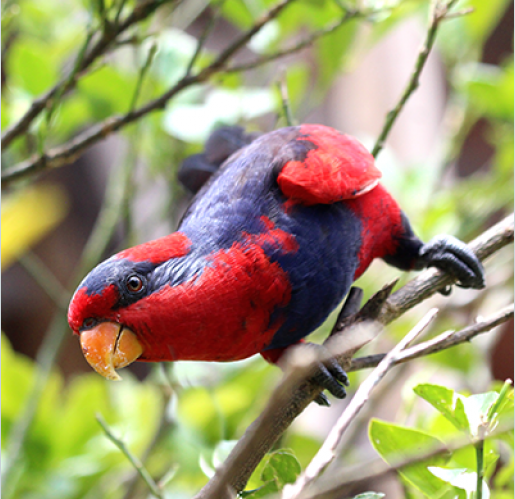
A wild Red-and-blue Lory leans over a branch
© Mehd Halaouate
Collaborators/Funders:

Pusat Informasi Sampiri, Natural Resource Conservation Agency North Sulawesi, Tasikoki Wildlife Rescue Centre

View Species Profile

Red-and-blue Lory (Eos histrio) numbers have dropped dramatically in recent years due to wildlife trafficking and habitat loss. The most current population assessment was in 1999 at 8200-21,400 individuals. With the rate of decline not slowing, gathering new data on their numbers is crucial.

In collaboration with Pusat Informasi Sampiri (PIS), the WPT aims to identify critical locations on Karakelang and create a map of where the lories’ strongholds persist, to tailor conservation activities where they will be most effective. WPT will help establish key conservation areas centred on habitat use and increase protection measures for these areas. Observing the birds via eco-tourism tours and independent monitoring efforts will also deter poaching, with increased surveillance of the population and their presence in areas they are known to frequent. Villagers in the region will also monitor the wild birds.

Beginning in September 2024, WPT collected data on the distribution, size, ecology and threats of remaining Red-and-blue Lory populations. The team completed 326 survey points over 1,600 ha, providing the first population estimate in decades (2,500–8,000 birds) and preventing a premature IUCN downlisting.

IUCN/CITES Status: Endangered / Appendix I

Population: 2400-8400 mature individuals, rapidly decreasing. Nominate of species possibly extinct on Sangihe.

Threats: This species has a restricted range. Habitat loss and illegal overexploitation for trade have caused serious declines. Insecticide use and disease transmission via escaped cage birds to wild populations are potential hazards.

Range: Native to Sangihe, Talaud and Nanusa Islands, Indonesia.  Nominate on Sangihe likely extinct.

Natural history: Red-and-blue Lories are found in forest and cultivated areas up to 1250 m (4100 ft). Their diet includes nectar from coconut flowers, and the fruit of various trees. Insects are also taken. They are most commonly seen flying in groups of up to eight birds. Very vocal numbers gather together to roost.