Puerto Rican Amazons: Increasing Breeding Success
Status:
Collaborators/Funders:
Department of Natural Resources Puerto Rico (DNER-Puerto Rico)

At a population of about 1000, the Puerto Rican Amazon (Amazona vittata) is making a steady recovery. It is, however, still threatened by forest loss and increasingly severe weather events.
For decades, the Puerto Rican Parrot Recovery Project (Proyecto Conservación Cotorra Puertorriqueña de Rio Abajo) has worked successfully to recover the wild population of Puerto Rican Amazons. The World Parrot Trust collaborates with the Puerto Rico Department of Natural and Environmental Resources (DNER) for this effort.
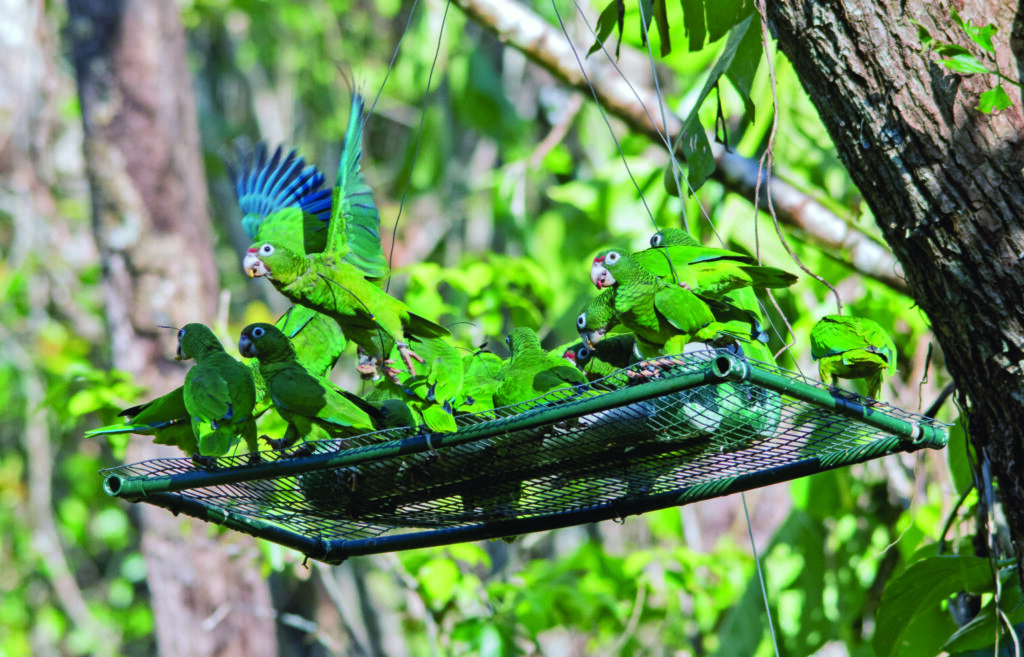
The partnership encompasses several targeted projects aimed at increasing the reproductive success and survival rates of the Puerto Rican Amazon through direct intervention and scientific research. WPT has provided technical and financial support for reproductive studies to develop and refine techniques to increase breeding success. WPT has also provided technical aid to the Río Abajo aviary, helping to ensure a high survival rate when the birds are released into the wild. Extensive nest management practices such as supplemental feeding and fostering captive-born chicks into wild nests help ensure that the wild population is recovering at a steady rate.
Increasing the availability of safe nesting sites is crucial for encouraging natural breeding in the wild. WPT has funded the DNER’s work of installing artificial nest boxes in strategic locations so the team can continuously monitor and maintain them. Assisting with maintenance and adjustments based on collected data ensures their long-term viability and effectiveness.
In 2025, a total of 120 chicks fledged at the Río Abajo aviary, of which 72 were from wild nests and 48 from the captive population. A total of 29 wild nests were activated during the season, marking a productive and encouraging breeding year, one of several of late.
World Parrot Trust’s partnership with DNER is integral to the comprehensive strategy aimed at recovering the Puerto Rican Amazon population. Through focused research, effective breeding programs, and strategic habitat interventions, the work to recover this emblematic parrot continues.
IUCN/CITES Status: Critically Endangered / Appendix I
Population: About 1000 individuals, including wild birds and those in the breeding program.
Threats: This parrot has a restricted range. Is affected mainly by habitat loss, hunting, trapping and increasingly severe hurricanes. In addition, introduced honeybees occupy nest cavities, botflies parasitise nestlings and Pearly-eyed Thrashers destroy nests.
Range: Puerto Rico and formerly neighbouring islands of Mona and Culebra.
Natural history: This species was formerly found in all vegetation types from mangrove to montane forest and dry forest to the south of Puerto Rico. The remnant population is between 200-600 metres in moist montane forest. The parrots take seeds, fruits, flowers and leaves from nearly 60 plant species. Breeding in the wild is from February to June in tree cavities.