LEARN

Dusky Parrot

( Pionus fuscus )

Also known as:
Dusky Pionus, Little Dusky Parrot, Violet Parrot, Violaceous Parrot

Also known as:
Dusky Pionus, Little Dusky Parrot, Violet Parrot, Violaceous Parrot

Geography:

DID YOU KNOW?

In the field Pionus parrots can be distinguished from other species by the distinctive wing beat which is strong and deep – so deep, in fact, that the downstroke results in the wings touching each other beneath the bird.

<p><em>Pionus</em></p>
Genus:

Pionus

<p><em>fuscus</em></p>
Species:

fuscus

Size:

26 cm (9.75 in)

Weight:

179-222 g (6.2-7.8 oz)

Subspecies including nominate:

one

Colour Adult:

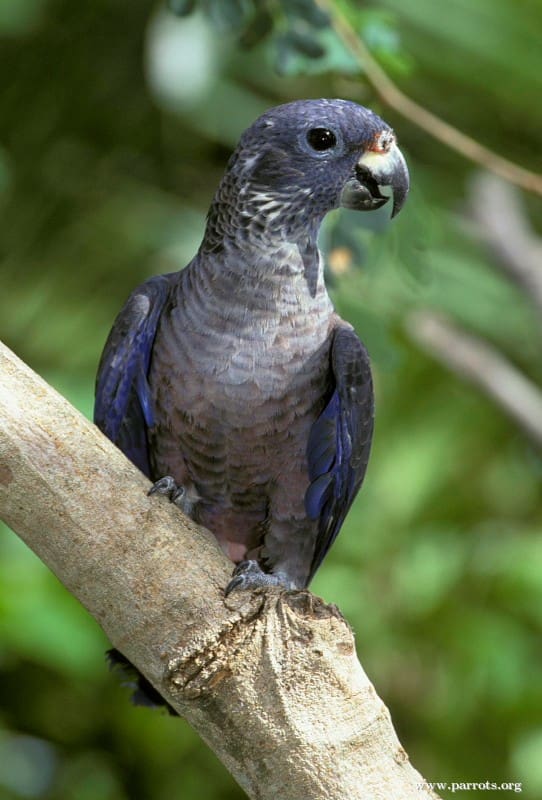
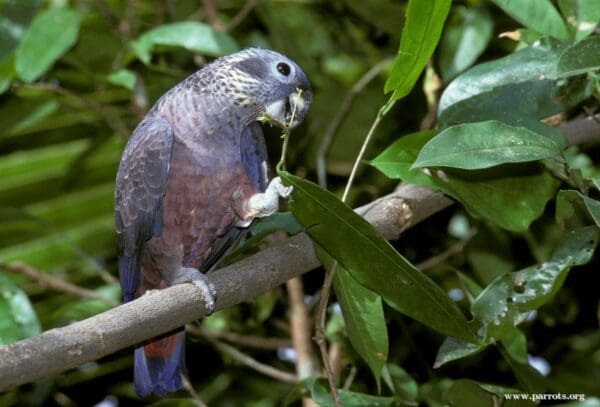
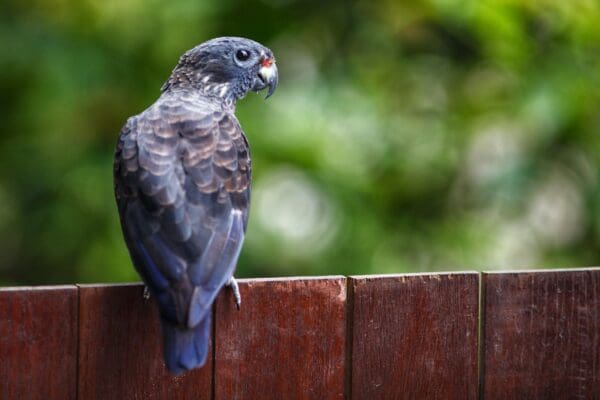
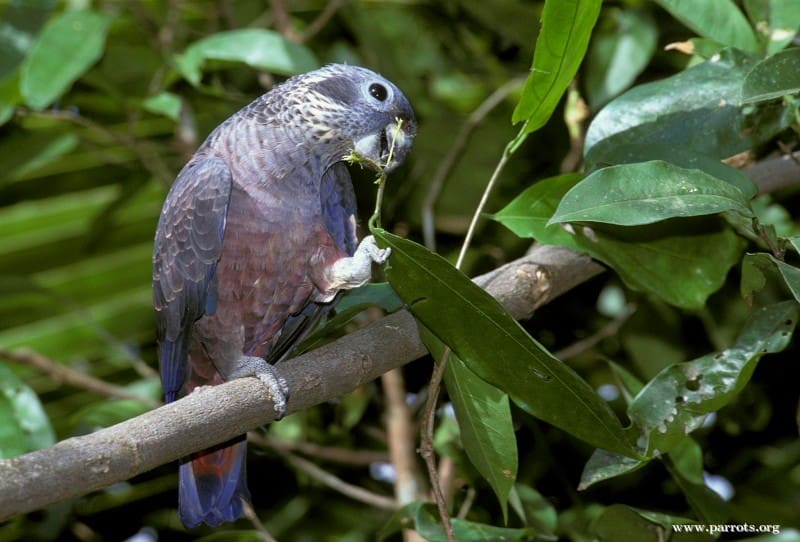
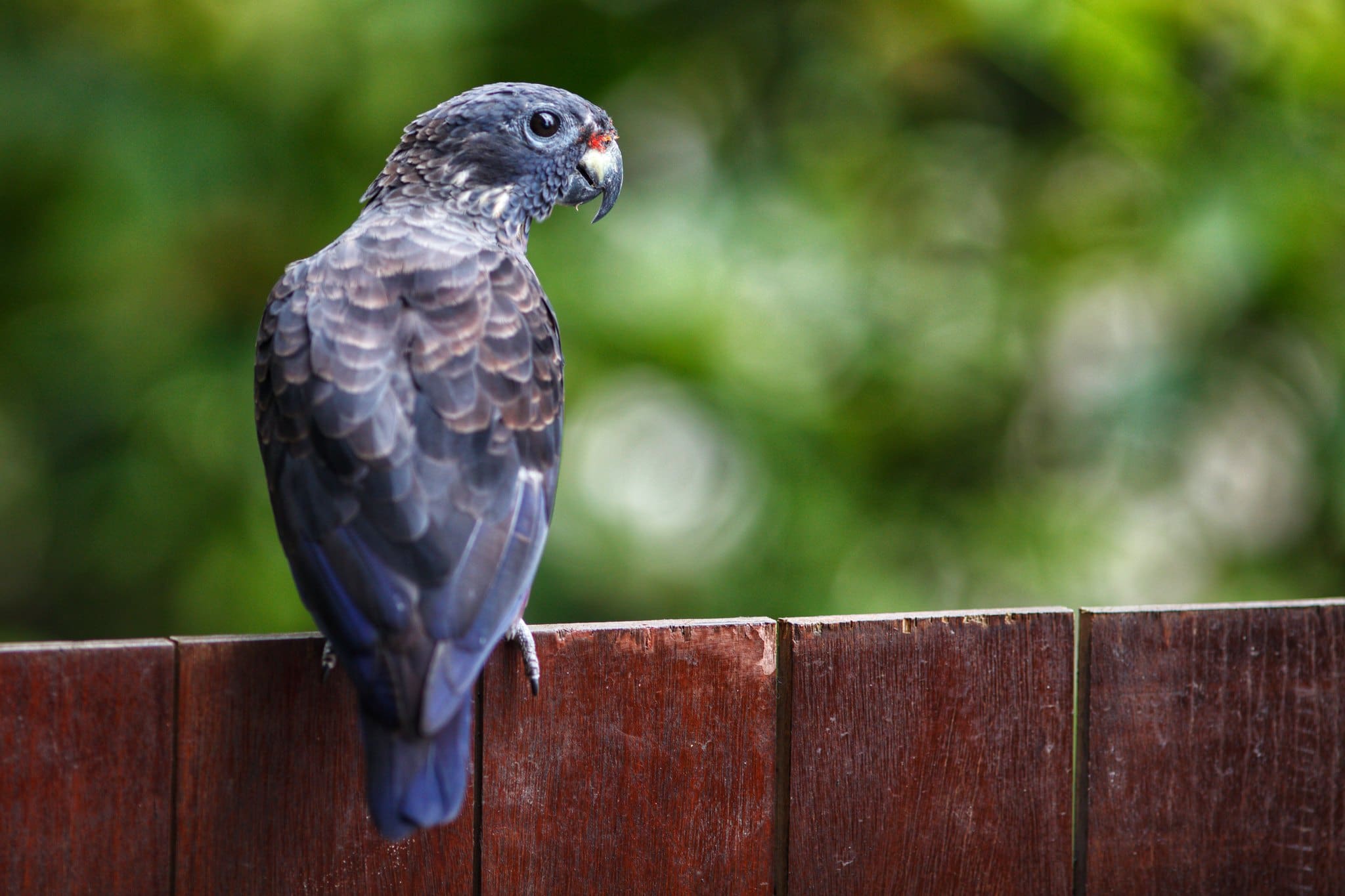
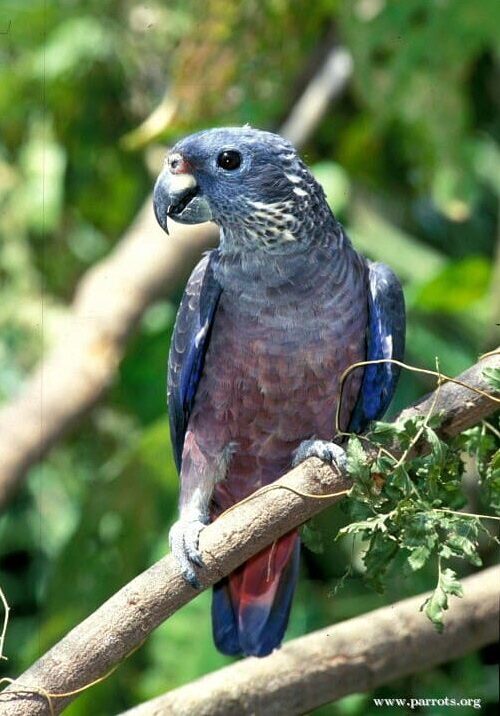
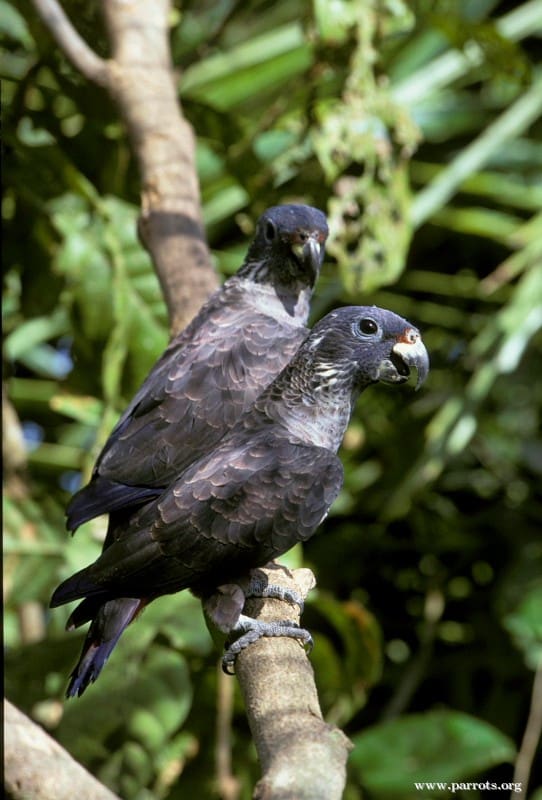
Both adults head grey/blue; red spot on both sides of forehead; ear coverts black; feathers of throat and neck tipped with dusty white; chin brown/blue, the feathers edged with pink; upperparts dark brown with pale margins on feathers; underparts brown, the feathers edged purple/red or red/blue; under tail coverts red; tail dark blue with red at base. Beak dark grey with yellow at base. Eye ring bare and pale grey. Eye brown.

Colour Juvenile:

As in adults but with some upper wing coverts edged with green; secondary feathers tinged with green. Eye ring bare and white.

Call:

Calls while in flight or perched said to be high-pitched and nasal. Also calls with ringing tone and pauses between.

Xeno-canto Wildlife Sounds-Dusky Parrot

More Information:

Avibase

Content Sources:

CITES
BirdLife International
Cornell Lab of Ornithology/Birds of the World
A Guide to Parrots of the World, Juniper and Parr, 1998
Pionus Parrots, Stoodley and Stoodley, Bezels Publications, 1984.
Parrots of the World, Forshaw and Cooper, 1989. 2010 edition
Parrots of the World, Forshaw, 2006.
Parrots in Aviculture, Low, 1992.
Psittacine Aviculture, Schubot, Clubb and Clubb, 1992.

Captive Status:

Rare until the 1970s when small numbers were imported from Guyana.

Longevity:

25 yrs

Housing:

Aviary or suspended cage, minimum length 2 or 3 m (6.5 or 9.8 ft).

Diet:

Fruit such as: apple, pear, orange, cactus fruits, bananas, pomegranate, etc, forming about 30 percent of the diet; vegetables such as: carrot, celery, green beans and peas in the pod, corn; green leaves such as: Swiss chard, kale, lettuce, dandelion, chickweed, sowthistle; spray millet; small seed mix such as: canary, millet, and smaller amounts of oats, buckwheat and safflower; limited sunflower seed; cooked beans and pulses; complete pellet.
Enrichment:

Bathing, puzzle toys, bird safe chewables (pine, fir, sterlized pine cones), vegetable tanned leather chew toys, swings, ladders, gradual socialization.

Nest Box Size:

Vertical box 12″ x 12″ x 18″ (30.5 cm x 30.5 cm x 46 cm) or 12″ x 12″ x 24″ (30.5 cm x 30.5 cm x 61 cm).

Clutch Size:

4-6

Fledging Age:

9-10 weeks

Hatch Weight:

Peak Weight:

Weaning Weight:

World Population:

Unknown, decreasing.

IUCN Red List Status:
Least Concern

CITES Listing:
Appendix II

Threat Summary:

Not globally threatened. Reported as uncommon. Is likely to have declined in south and east due to widespread habitat clearance. This species is suspected to lose 1.1% of suitable habitat within its distribution over three generations (20 years). Was abundant in Pará in the 1910s; less so now. Has been reported as used in trade at a high prevalence.

Range:

Eastern Venezuela, along lower Rio Caura and Sierra de Imataca to upper Rio Cuyuni and Sierra de Lema, northern Bolivar, and the Guianas to northeastern Brazil, north of the Amazon River from Amapa inland to Rio Negro and south of the Amazon River from northwestern Maranhão inland to the lower Rio Madeira; also on the western slopes of Sierra de Perija, Guajira, northern Colombia.

Habitat:

Chiefly lowland rainforest and humid forest in foothills; terra firme forest, várzea and igapó (permanently flooded forest). Also seen in savanna, coastal gallery forest and cultivated areas. Found up to 1200 m (3936 ft).

Wild Diet:

Feeds on seeds of Eschweilera subgrandulosa and Micropholis melinoneana.

Ecology and Behaviour:

Seen in groups, especially outside the breeding season. Feeds in canopy but may go lower to feed on fruiting trees.

Clutch and Egg Size:

4 elliptical eggs, 36.0 x 29.0 mm (1.4 x 1.1 in)

Breeding Season:

February-May depending on location. Nest is in tree cavity.

Related Links:

Join Our Flock

FlockTalk our monthly newsletter for parrot people everywhere:

+ News from the world of parrots

+ Updates on wild parrot projects

+ Inspiring updates from partners

+ Real stories from the parrot flock

+ Plus, expert tips for caring for your feathered friends at home.


Stay In The Loop, Sign Up Now.

FlockTalk: our monthly newsletter for parrot people everywhere:

Parrot news. Conservation wins. Pet care tips. All in one monthly email.

We do not sell or share your information with anyone.