LEARN

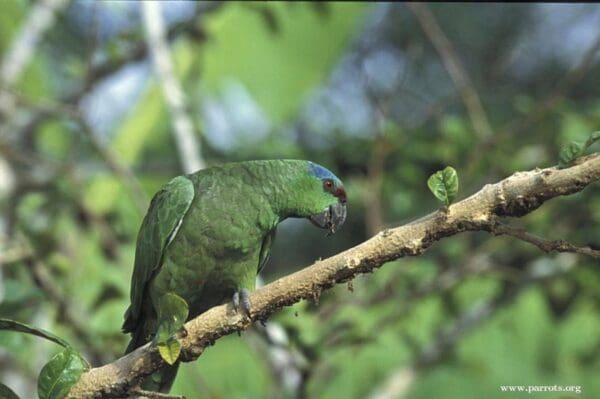
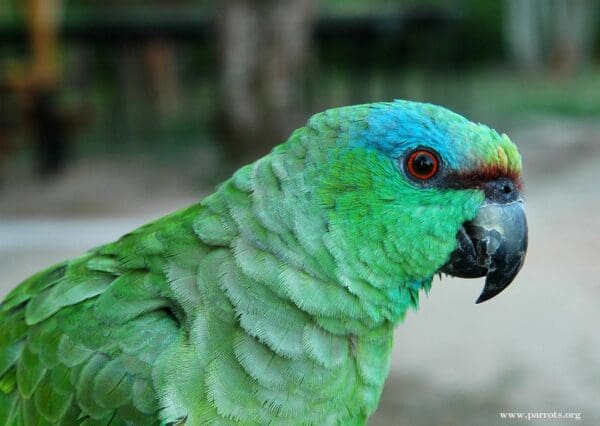
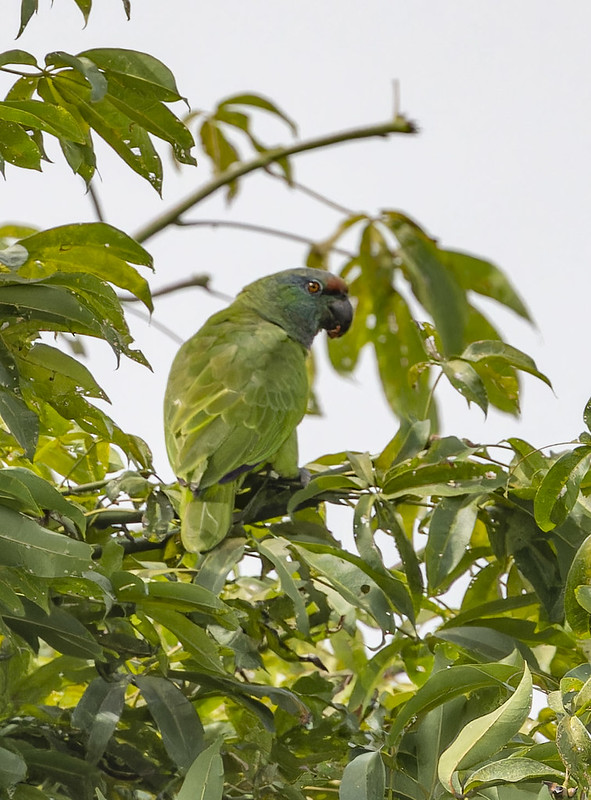
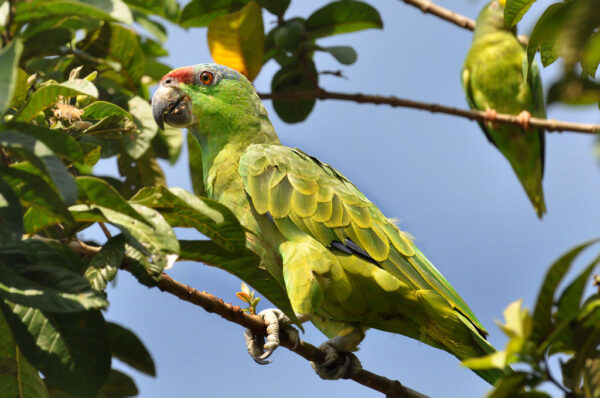
Festive Amazon

( Amazona festiva )

Also known as:
Festive Parrot, Red-backed Amazon or Parrot

Also known as:
Festive Parrot, Red-backed Amazon or Parrot

Geography:

DID YOU KNOW?

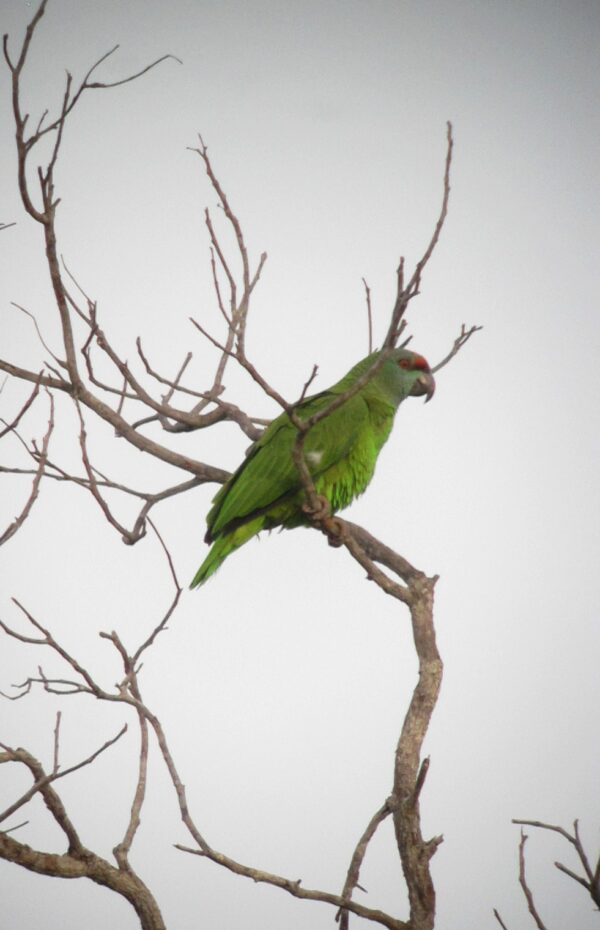
The Festive Amazon is the only Amazon species with a red back and rump.

<p><em>Amazona</em></p>
Genus:

Amazona

<p><em>festiva</em></p>
Species:

festiva

Size:

34 cm (13.3 in)

Weight:

370 g (13 oz)

Subspecies including nominate:

two: A.f. festiva, A.f. bodini

Colour Adult:

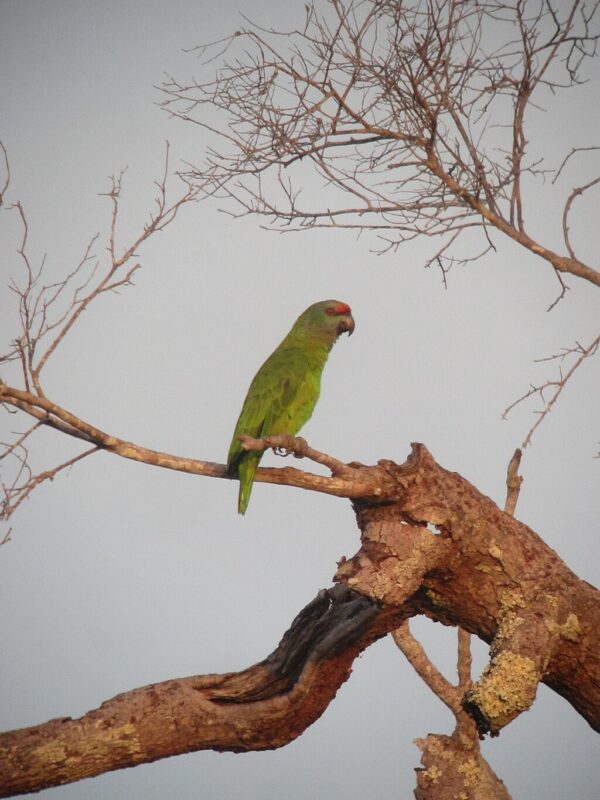
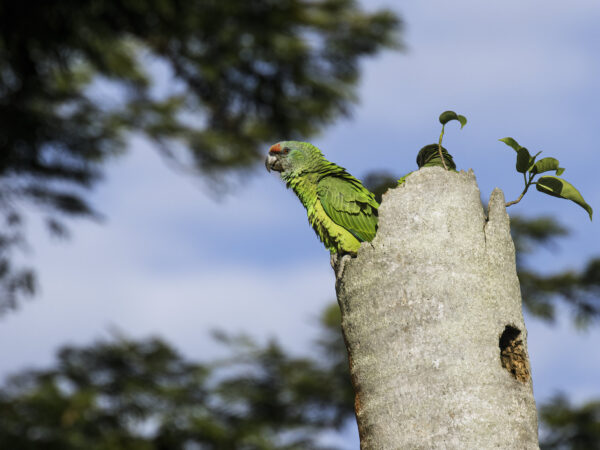
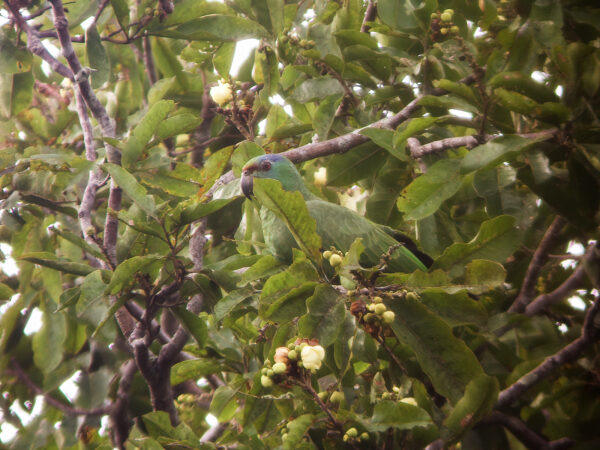
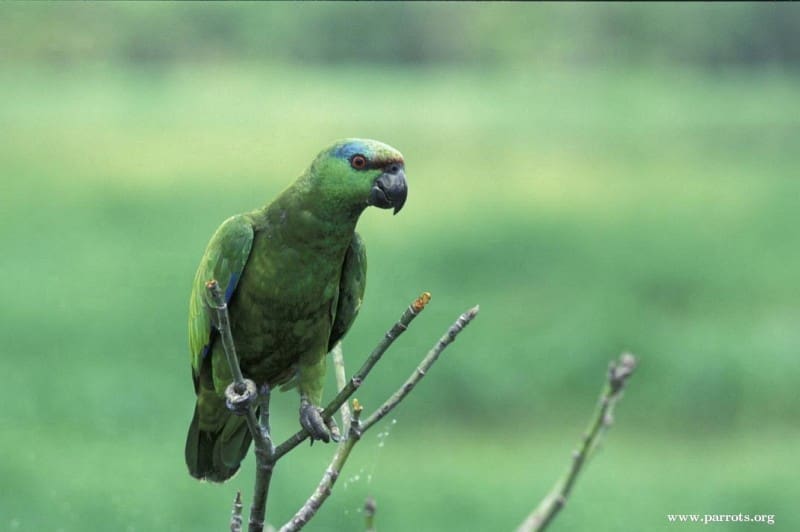
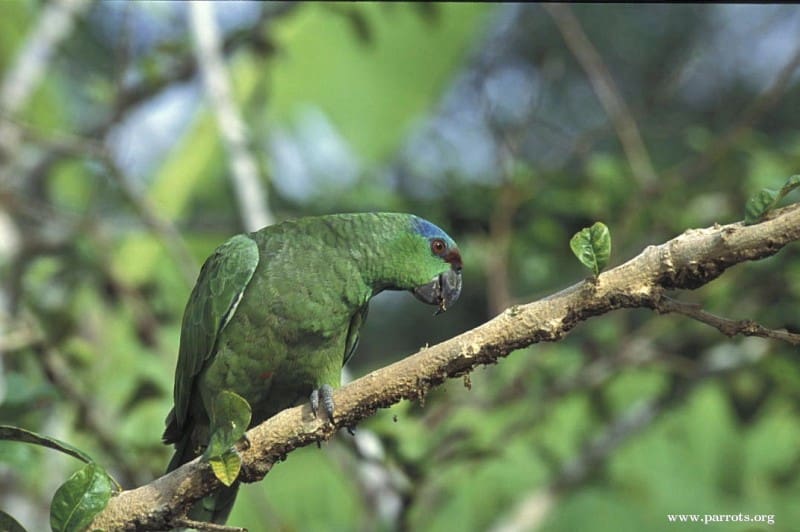
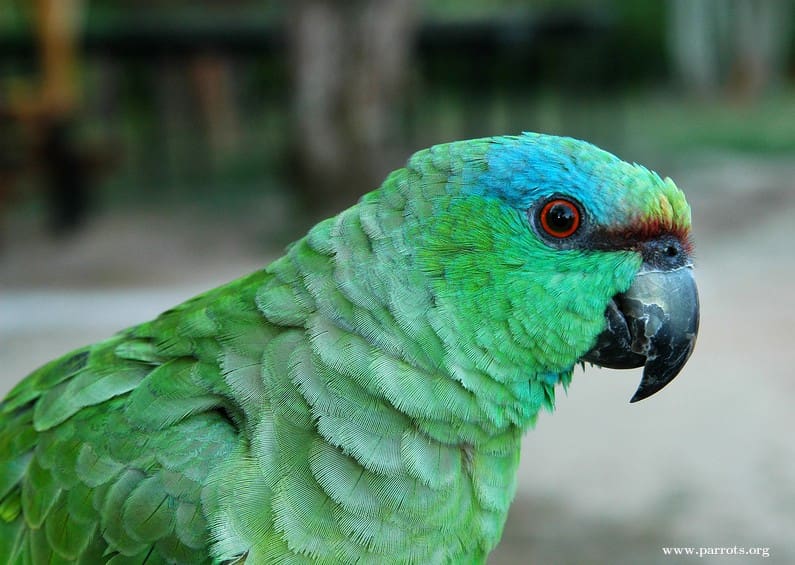
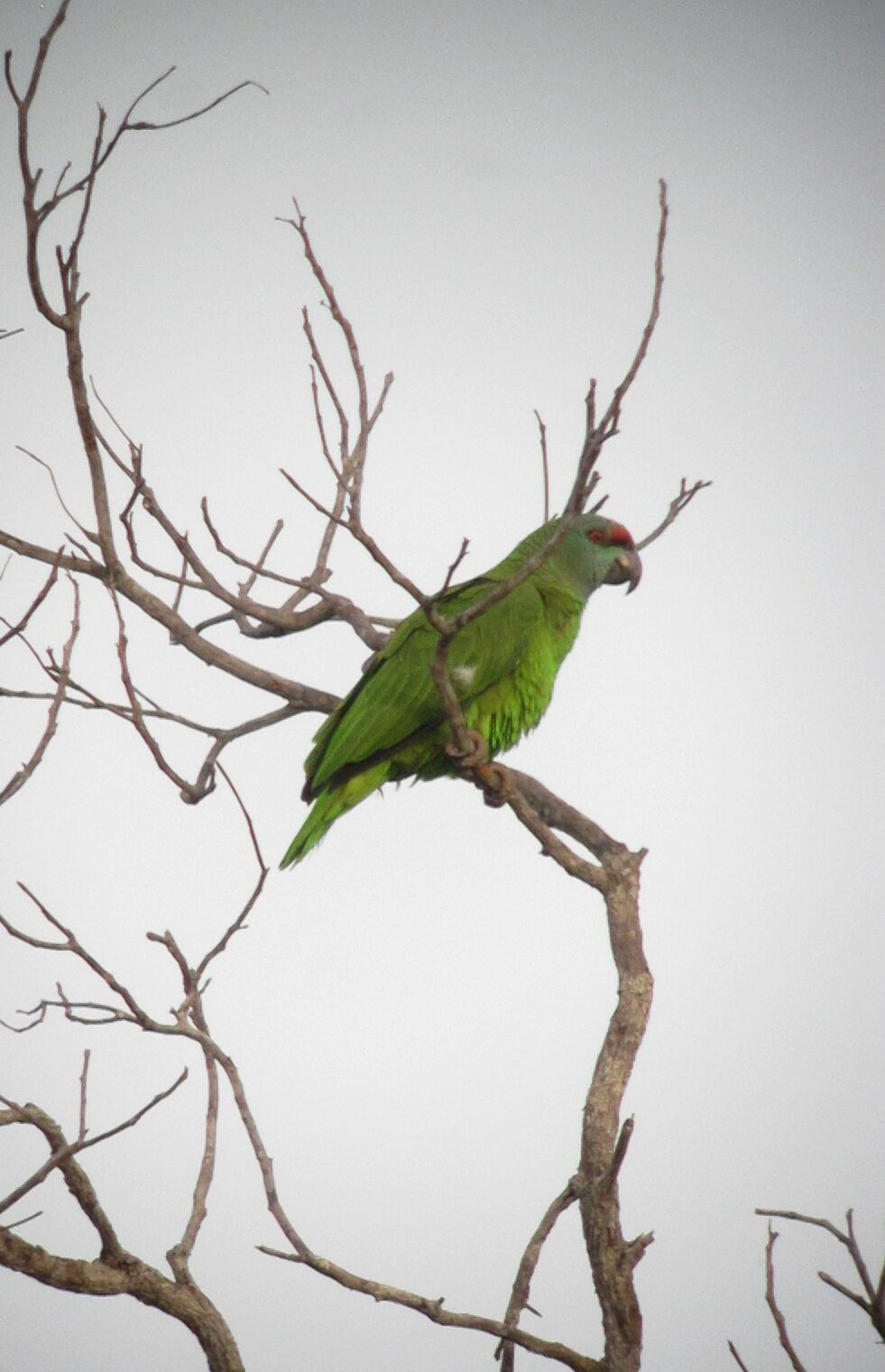
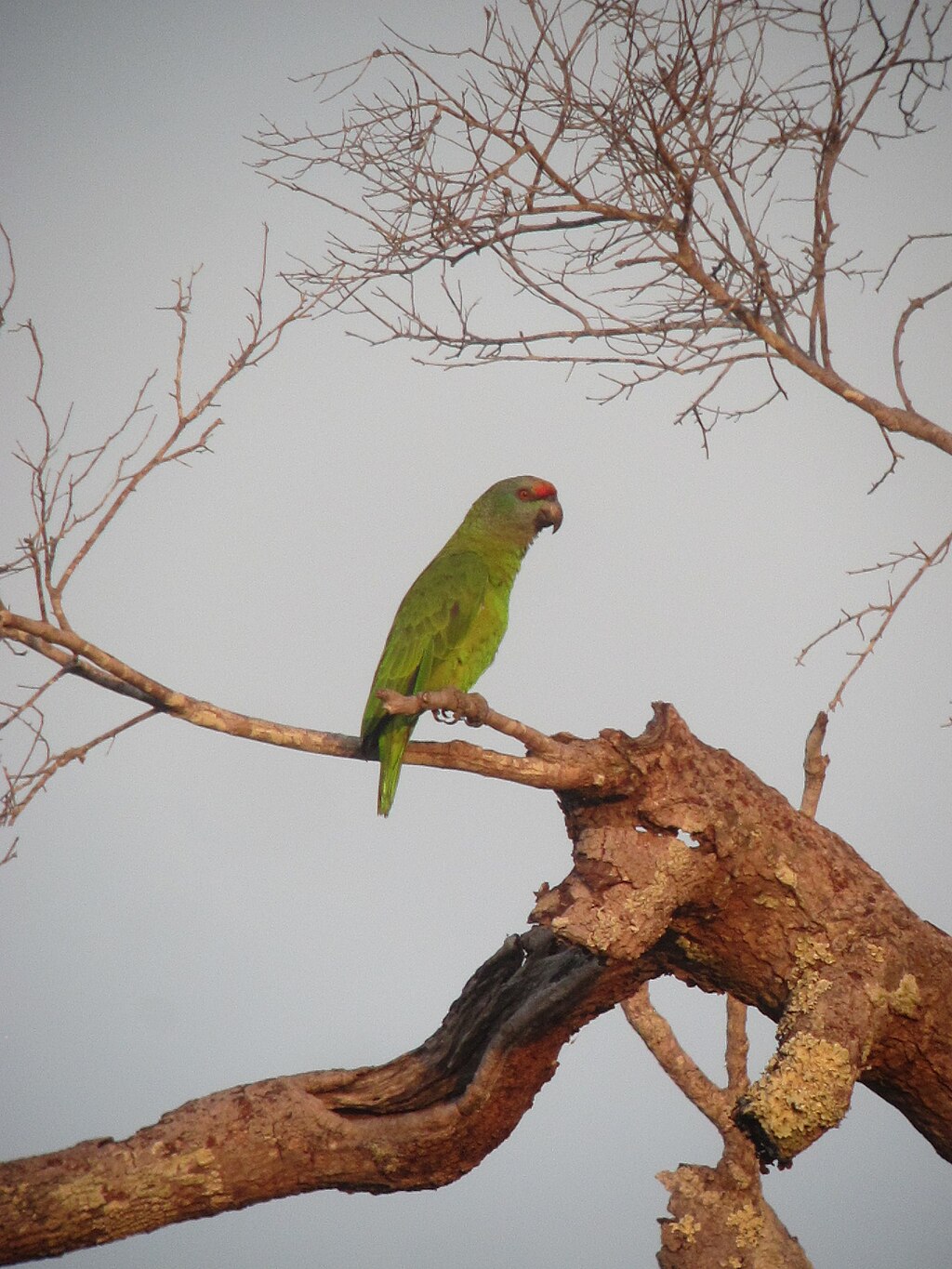
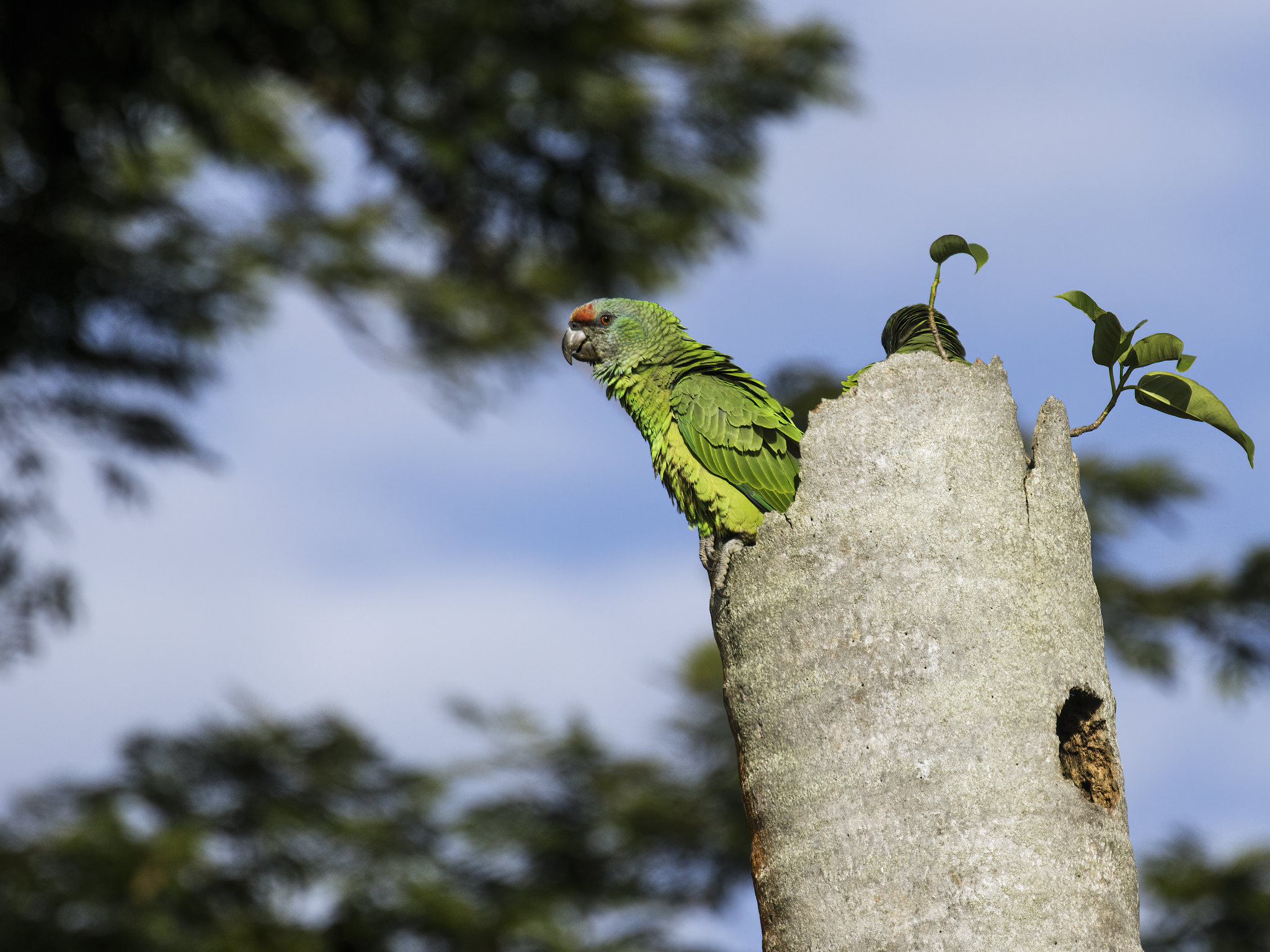
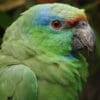
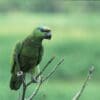
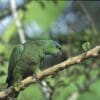
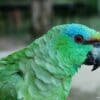
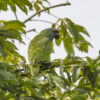
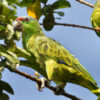
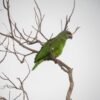
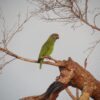
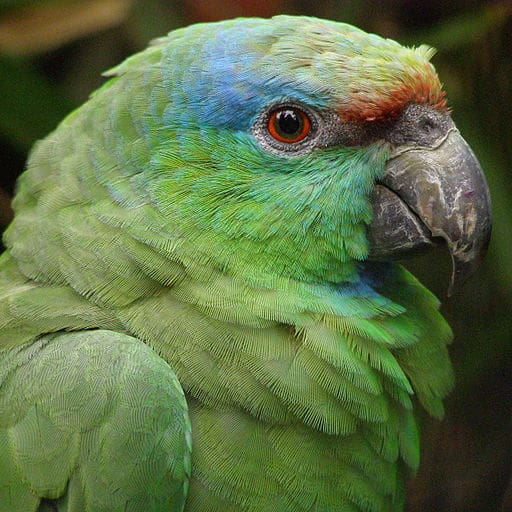
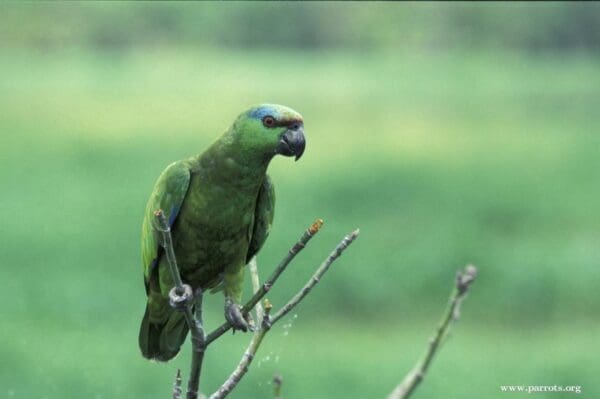
A.f. festiva: Both adults plumage green, the feathers of the neck faintly edged dusty black; wing coverts thinly edged yellow/green; lores and narrow frontal stripe dark red; blue above and behind eyes, sometimes bisecting occiput; blue chin; red lower back and rump; primary coverts violet/blue, edged green; primary feathers violet/blue; tail green. Beak grey/black. Eye ring grey, eye orange.

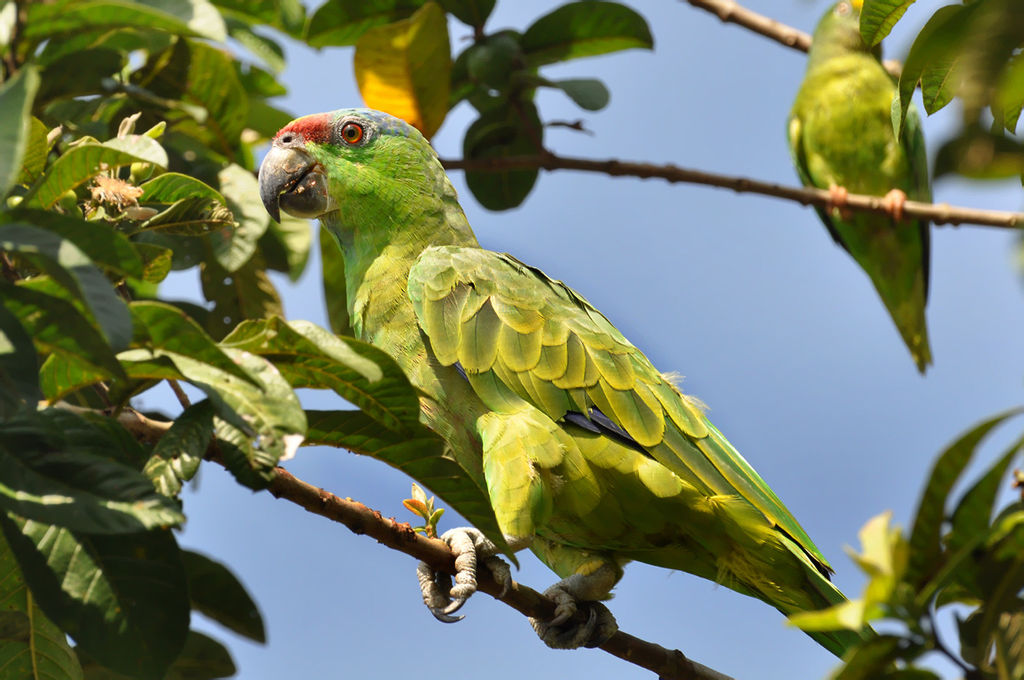
A.f. bodini: Both adults more yellow than nominate festiva, particularly on underparts; red frontal stripe extending to forehead and forecrown; feathers of crown and occiput edged dull purple; feathers of hindneck strongly edged dusty black (more so than festiva); lores black; feathers of cheeks edged violet/blue; primary coverts and outer webs of primary feathers green.

Colour Juvenile:

As in adults but duller; green lower back and rump with a few red feathers; some dull red at concealed bases of lateral tail feathers. Eye brown.

Call:

Call is nasal wah-wah in flight. Also wide variety of calls including screeches.

Xeno-canto Wildlife Sounds-Festive Amazon

More Information:

Avibase

Content Sources:

CITES
BirdLife International – Northern
BirdLife International – Southern
Cornell Lab of Ornithology/Birds of the World
Parrots: A Guide to Parrots of the World, Juniper and Parr, 1998
Amazona Society
Parrots of the World, Forshaw, 2006. 2010 edition
Parrots in Aviculture, Low, 1992.
Lexicon of Parrots, Thomas Arndt.

Captive Status:

Uncommon

Longevity:

40+ yrs

Housing:

Aviary or suspended enclosure, minimum length 3 m (9.8 ft).

Diet:

Fruit such as: apple, pear, orange, cactus fruits, pomegranate, etc, forming about 30 percent of the diet; vegetable such as: carrot, celery, green peas and beans, fresh corn, etc; also green leaves of Swiss chard, lettuce, sowthistle, dandelion, chickweed; spray millet; mix of small seeds: canary, millet and smaller amounts of oats, buckwheat, safflower; limited sunflower, soaked, dry or sprouted; cooked beans and pulses and boiled maize, and complete pellet.
Enrichment:

Nest Box Size:

Clutch Size:

3

Fledging Age:

Assume 8 weeks.

Hatch Weight:

Peak Weight:

Weaning Weight:

World Population:

Unknown, decreasing.

IUCN Red List Status:
Not Evaluated

CITES Listing:
Appendix II

Threat Summary:

Not globally threatened. Generally common and stable within restricted but largely intact forest possibly throughout range. The primary threat to this species is accelerating deforestation in the Amazon basin as land is cleared for agriculture. Also susceptible to trade and hunting, although rarely seen in trade internationally. Regularly harvested in NE Peru, Venezuela and Guyana. where people take young from nests.

Range:

A.f. festiva: Found in the Amazon River drainage from the mouth at Ilha do Mixiana, northeastern Brazil, west to southeast Colombia, in Vaupés and Amazonas, eastern Ecuador, mainly along Ríos Napo and Aguarico and tributaries in Sucumbíos and eastern Napo, and northeastern Peru, in Loreto.

A.f. bodini: Lower Ríos Meta and Casanare, eastern Colombia, and central Venezuela, from Río Meta in southern Apure north to Río Capanaparo and east along Río Oronoco from mouth to Río Meta to lower Río Caura, and in Delta Amacuro, with occasional sightings in northwestern Guyana.

Habitat:

Found from sea level up to 500 m (1640 ft) in várzea forest, riparian secondary growth and river islands. Rarely far from water. Found less commonly in gallery woodland or savanna with scattered trees and plantations. Bodini is found in humid lowland forest along major rivers, up to 1000m in Venezuela, in both seasonally and permanently flooded forest. Avoids dryland forest, but is recorded in cacao plantations in Brazil.

Wild Diet:

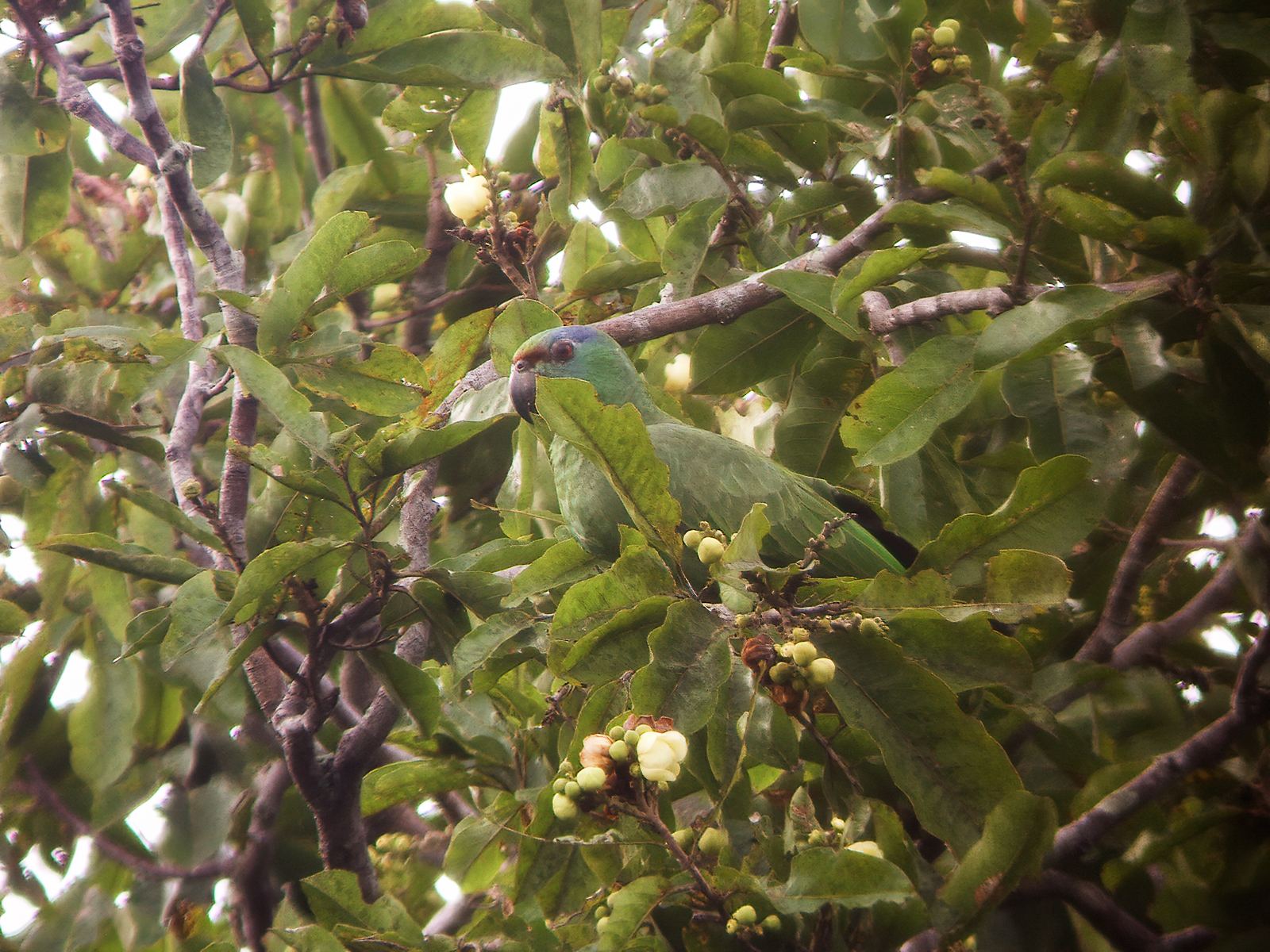
Fruits, including mangos (Mangifera indica) and peach palm (Bactris gasipaes); seeds, berries, nuts, flowers and leaf buds.

Ecology and Behaviour:

Habits poorly known, appears to be resident, with possible movements at extreme ends of range; usually in pairs or small flocks, but with large groups gathering at communal roosts for the night or at a localized food source. Often approachable. Noisy at dusk when coming to roost.

Clutch and Egg Size:

3, size unknown.

Breeding Season:

Recorded in December-March; nest is in cavity in Mauritia flexosa and Astrocaryum jauari palms.

Join Our Flock

FlockTalk our monthly newsletter for parrot people everywhere:

+ News from the world of parrots

+ Updates on wild parrot projects

+ Inspiring updates from partners

+ Real stories from the parrot flock

+ Plus, expert tips for caring for your feathered friends at home.


Stay In The Loop, Sign Up Now.

FlockTalk: our monthly newsletter for parrot people everywhere:

Parrot news. Conservation wins. Pet care tips. All in one monthly email.

We do not sell or share your information with anyone.