LEARN

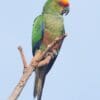
Golden-capped Conure

( Aratinga auricapillus )

Also known as:
Golden-capped Parakeet, Flame-capped Parakeet, Gold-capped Conure, Golden-headed Conure

Also known as:
Golden-capped Parakeet, Flame-capped Parakeet, Gold-capped Conure, Golden-headed Conure

Type :
Geography:

DID YOU KNOW?

The Golden-capped Conure is often seen with the more common Peach-fronted Conure (Eupsittula aurea).

<p><em>Aratinga</em></p>
Genus:

Aratinga

<p><em>auricapillus</em></p>
Species:

auricapillus

Size:

30 cm (11.7 in)

Weight:

140-150 g (4.9-5.25 oz)

Subspecies including nominate:

two: A.a. auricapillus, A.a. aurifrons

Colour Adult:

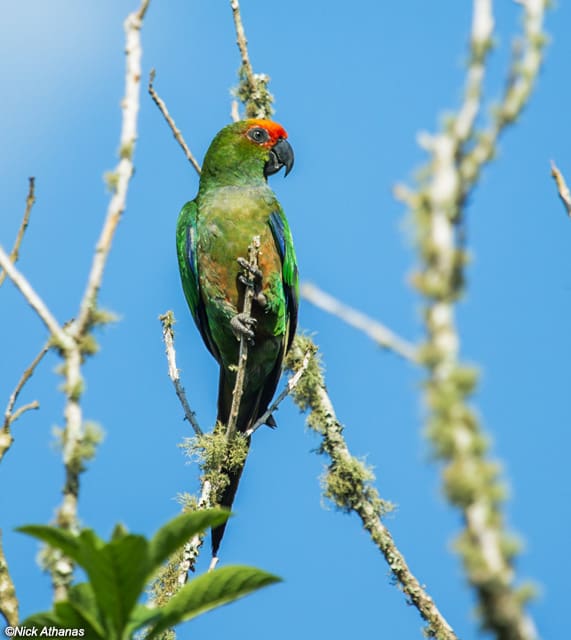
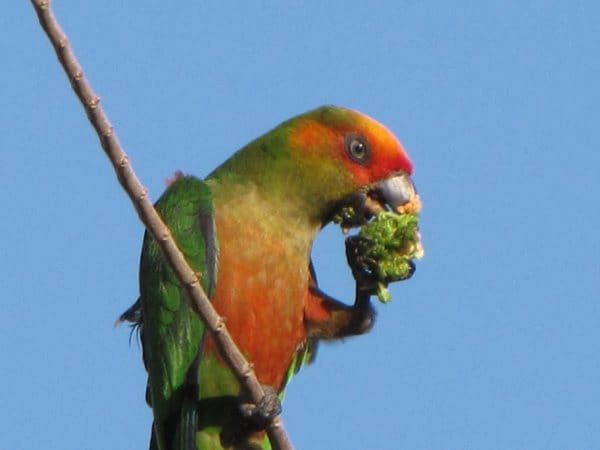
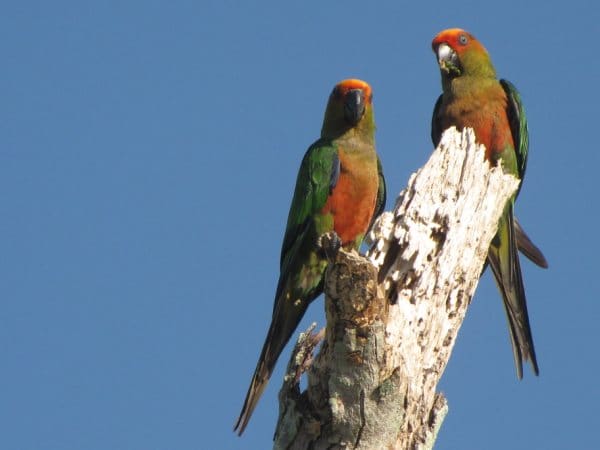
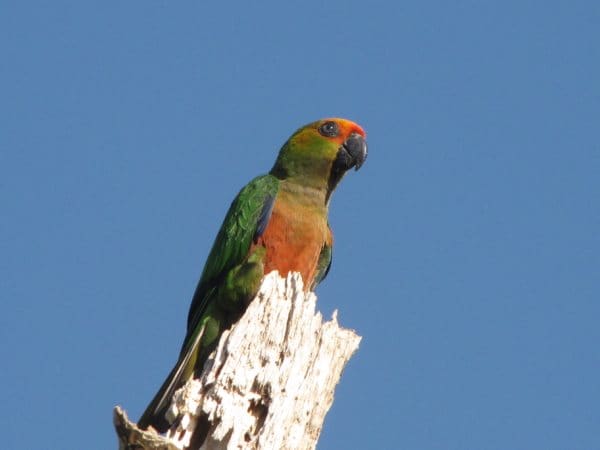
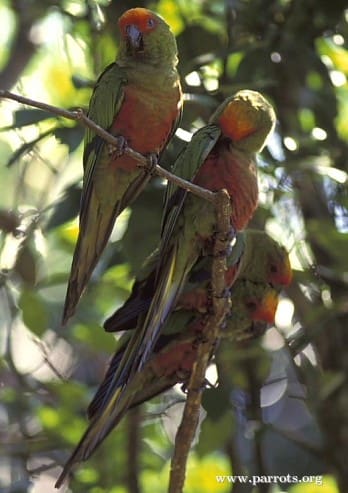
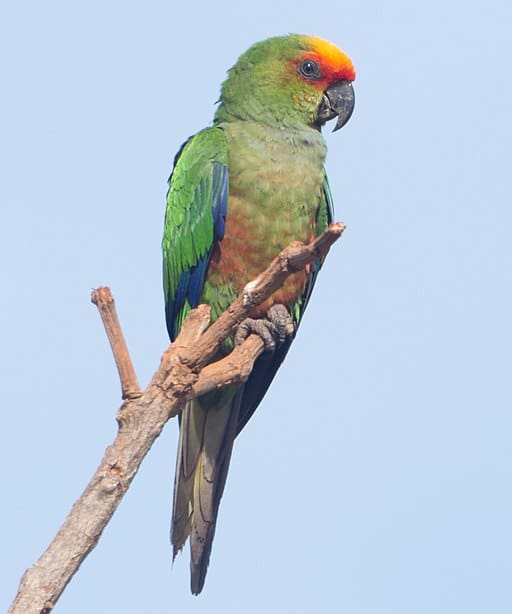
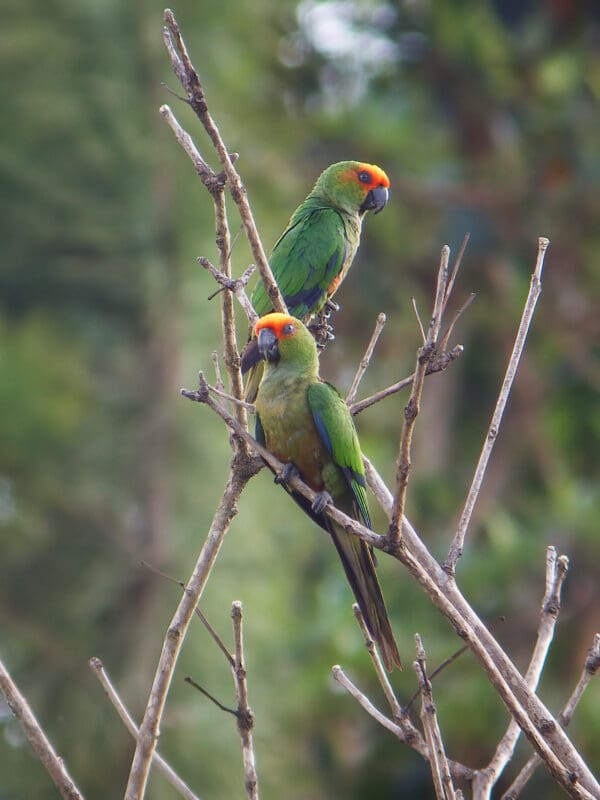
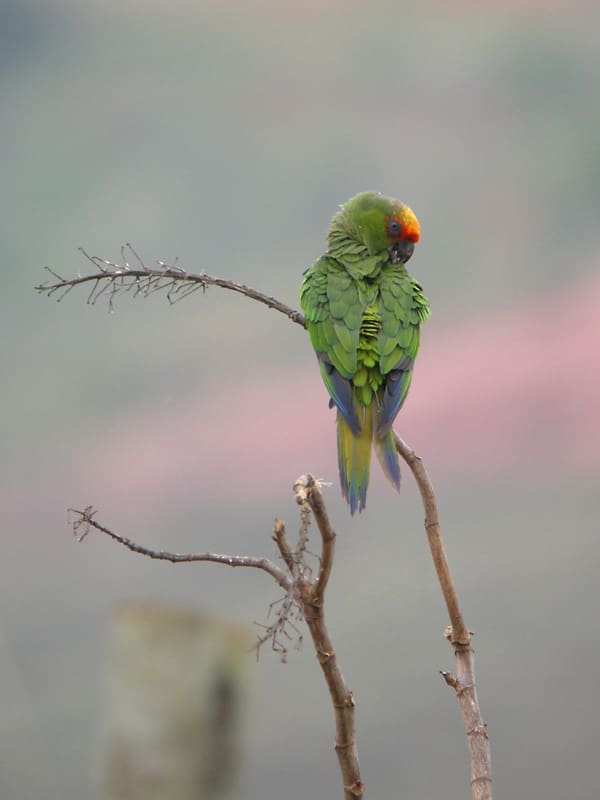
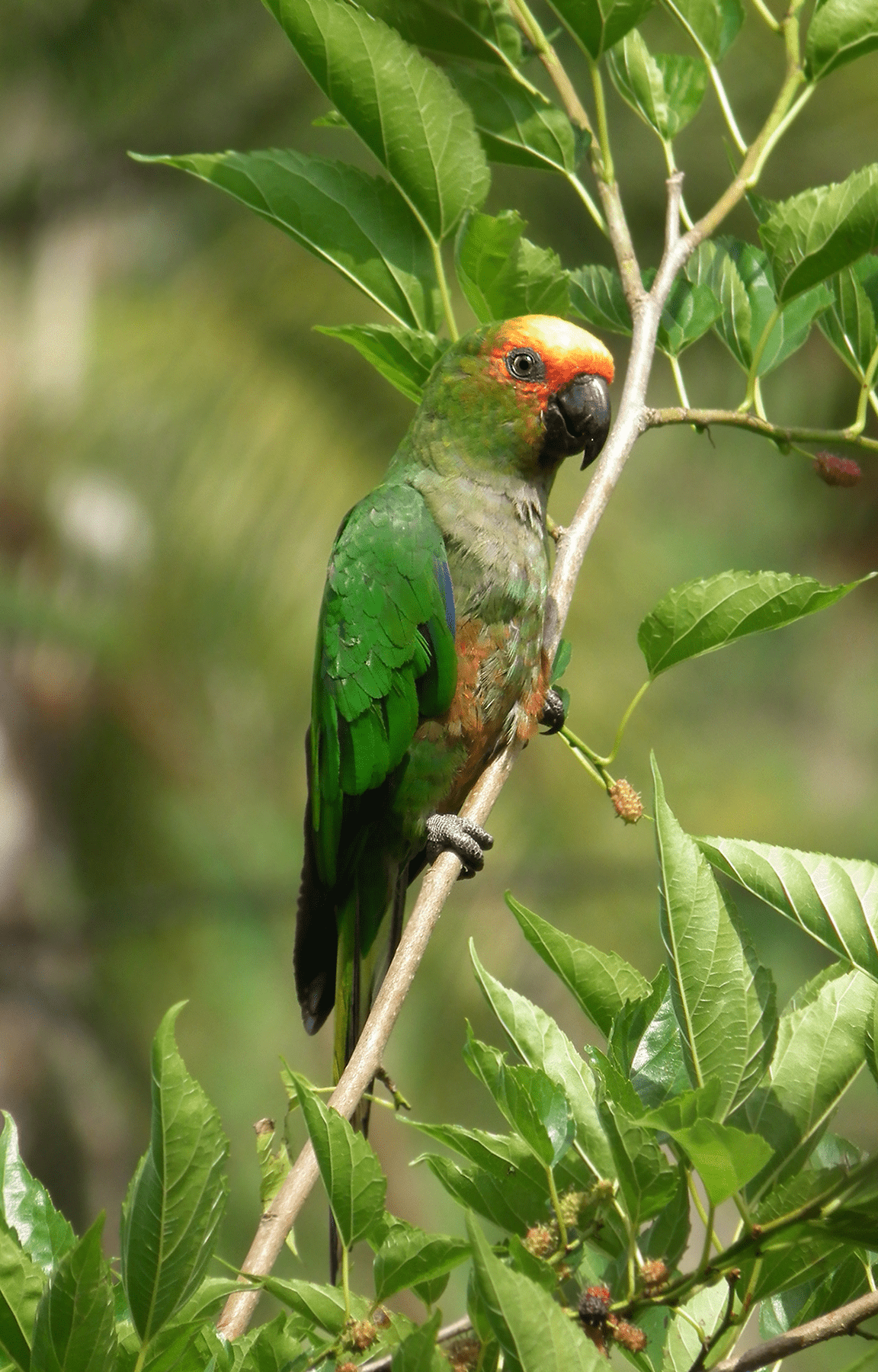
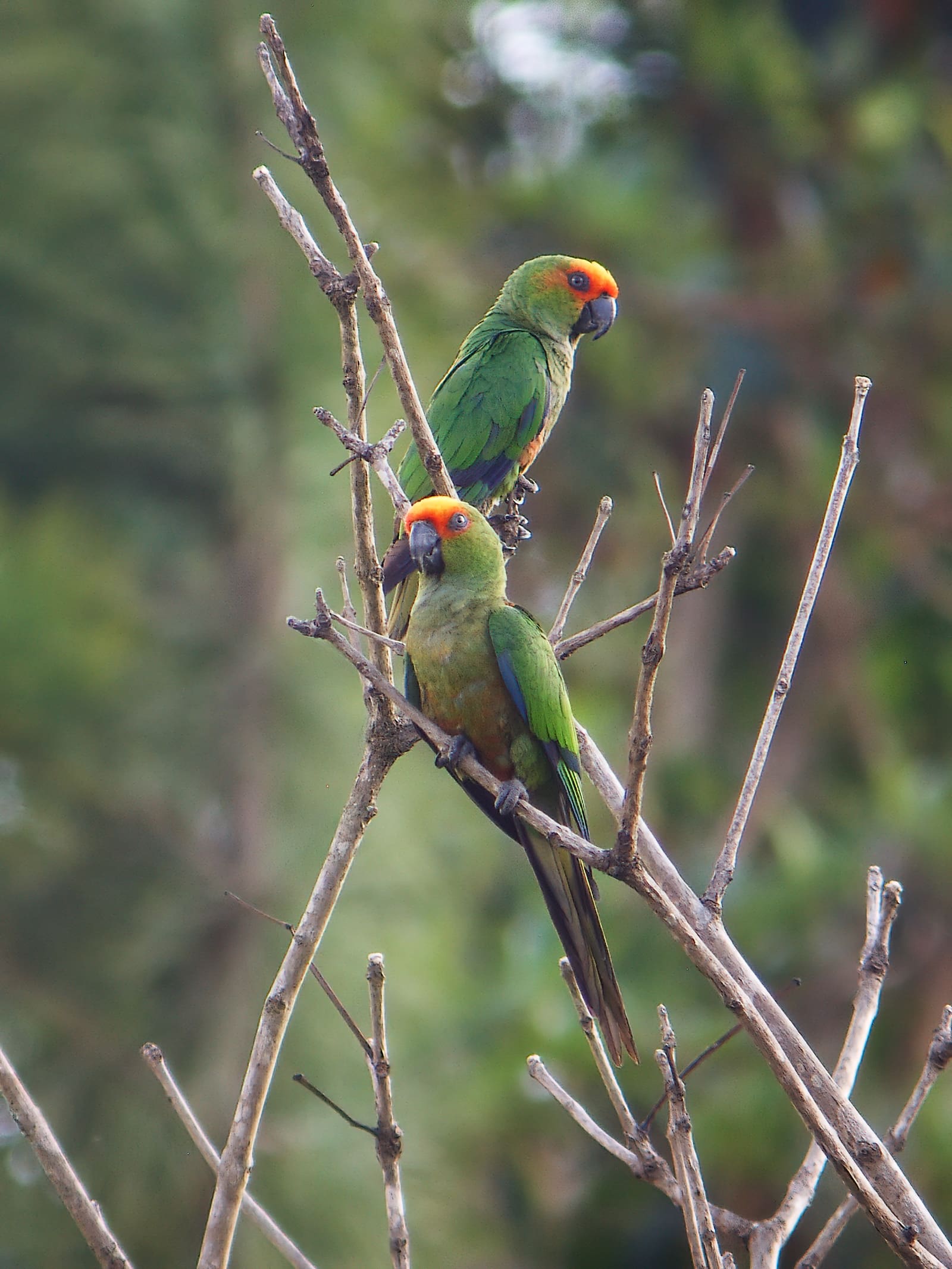
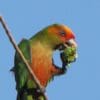
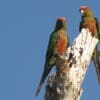
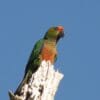
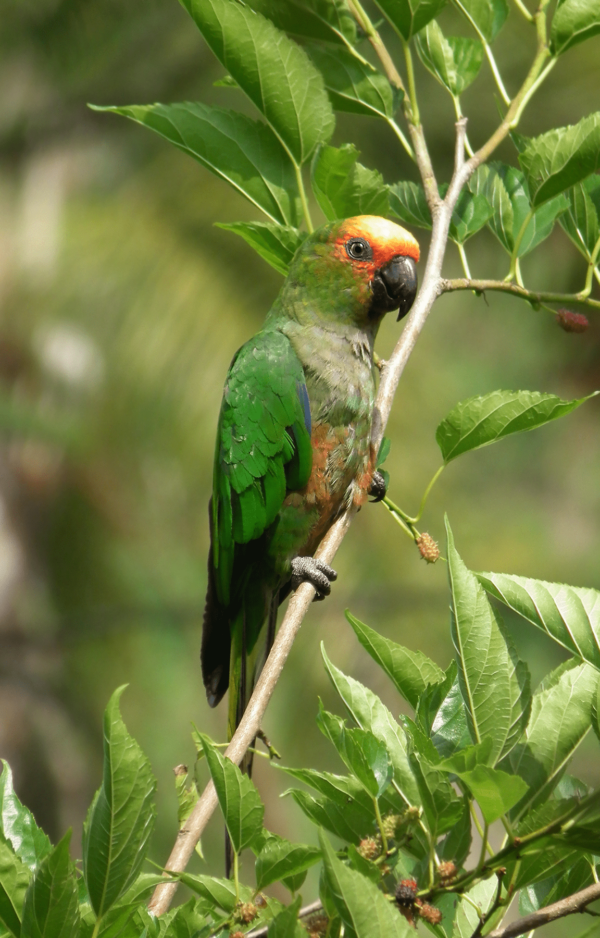
A.a. auricapillus: Both adults forehead and lores to area around eyes orange/red, yellow forecrown, some birds cheeks yellow as well; abdomen and lower breast red; rump and low back margined red. Beak black. Eye ring grey, eye dull yellow.
A.a. aurifrons: As in auricapillus, but sides of head, throat and upper breast darker green with no yellow; rump and low back red absent.

Colour Juvenile:

As in adult but with less evident head markings, in particular the yellow on the forecrown; cheeks deeper green; almost no red on rump and low back; red of underparts on flanks and centre of abdomen only. Eye ring pale grey, eye brown.

Call:

Like Aratinga jandaya; short, quick tweea tweea.

Xeno-canto Wildlife Sounds-Golden-capped Conure

More Information:

Avibase

Content Sources:

CITES
BirdLife International
Cornell Lab of Ornithology/Birds of the World
Parrots: A Guide to Parrots of the World, Juniper and Parr, 1998
Parrots: Status Survey and Conservation Plan 2000-2004, Snyder, McGowan, Gilardi and Grajal, 2000.
Parrots of the World, Forshaw and Cooper, 1977. 2010 edition
Parrots of the World, Forshaw, 2006.
Parrots in Aviculture, Low, 1992.
Psittacine Aviculture, Schubot, Clubb and Clubb, 1992.

Captive Status:

Established in the US; less so in Europe.

Longevity:

25-30 yrs

Housing:

Aviary or suspended enclosure, minimum length 2 or 3 m (6.5 or 9.8 ft).

Diet:

Fruit such as: apple, pear, orange, cactus fruits, pomegranate, forming about 30 percent of diet; fresh vegetables if taken, such as: carrot, celery, green beans and peas, corn on the cob, green leaves; spray millet, small seed, complete pellet.

Enrichment:

Provide overhead misters or shallow water bowls for bathing; bird-safe, unsprayed flowering, fir, pine, willow or elder branches, climbing toys (ladders, ropes, swings), puzzle toys, wooden block or vegetable tanned leather chew toys.

Nest Box Size:

Vertical box, 12″ x 12″ x 18″ (30.5 cm x 30.5 cm x 46 cm).

Clutch Size:

3 to 5

Fledging Age:

7-8 weeks

Hatch Weight:

Peak Weight:

Weaning Weight:

World Population:

Unknown, decreasing.

IUCN Red List Status:
Least Concern

CITES Listing:
Appendix II

Threat Summary:

The species’ population is suspected to be declining due to ongoing habitat loss, with tree cover being lost at a rate of 13% over three generations. Some trapping for the pet trade. Is still locally common in Goiás, Minas Gerais and Bahia. It is described as very common along the Rio Grande basin.

Range:

A.a. auricapillus: Restricted to north and central Bahia in eastern Brazil; birds from southern Bahia intermix between this subspecies and A. aurifrons.
A.a. aurifrons: Southeast Brazil, from Minas Gerais and southern Goiás south to Santa Catarina.

Habitat:

Occurs in forest, forest edge and clearings, including coastal moist evergreen Atlantic forest and deciduous, and cerrado-type woodlands of interior up to 2180 m (7150 ft). Less common in secondary growth and pastureland.

Wild Diet:

Feeds on fruits and seeds. In populated area in northwest of São Paulo state, birds foraged on 28 plant species, 16 of them non-native; major food items included seeds of Guazuma ulmifolia, Zea mays, Psidium guajava and Pterogyne nitens, as well as nectar of Ceiba speciosa and fruits of several species.

Ecology and Behaviour:

Gregarious, found in flocks of 12-20, rarely 40.

Clutch and Egg Size:

3 to 5 broadly elliptical eggs, 30.5 x 23.5 mm (1.2 x 0.9 in)

Breeding Season:

Possibly October start. Nest type is unknown.

Related Links:

Join Our Flock

FlockTalk our monthly newsletter for parrot people everywhere:

+ News from the world of parrots

+ Updates on wild parrot projects

+ Inspiring updates from partners

+ Real stories from the parrot flock

+ Plus, expert tips for caring for your feathered friends at home.


Stay In The Loop, Sign Up Now.
FlockTalk: our monthly newsletter for parrot people everywhere:

Parrot news. Conservation wins. Pet care tips. All in one monthly email.

We do not sell or share your information with anyone.