Also known as:
Blood-eared Parakeet, Red-eared Parakeet
Also known as:
Blood-eared Parakeet, Red-eared Parakeet

Pyrrhura

hoematotis
Size:
25 cm (9.75 in).
Weight:
64–74 g.
Subspecies including nominate:
two: P.h. hoematotis, P.h. immarginata
Colour Adult:
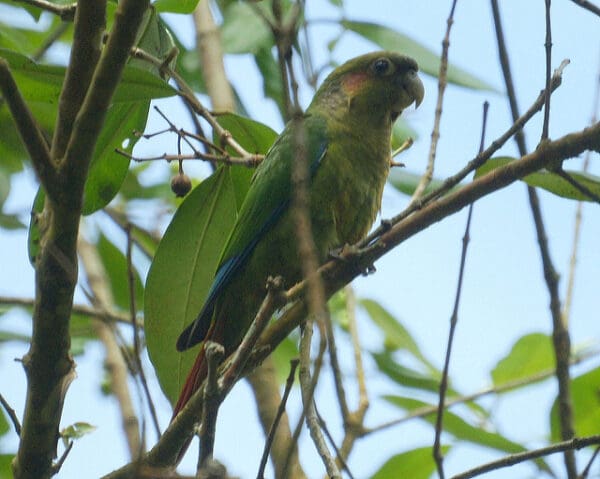
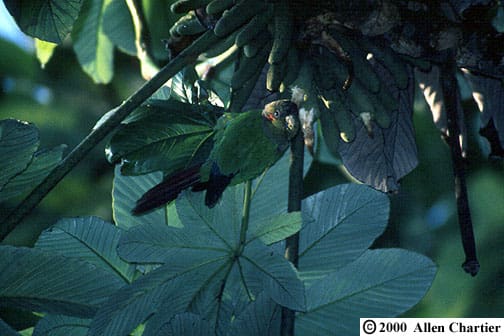
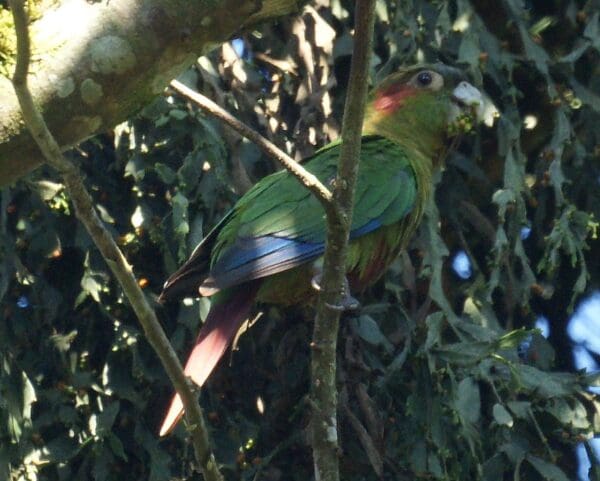
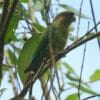
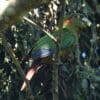
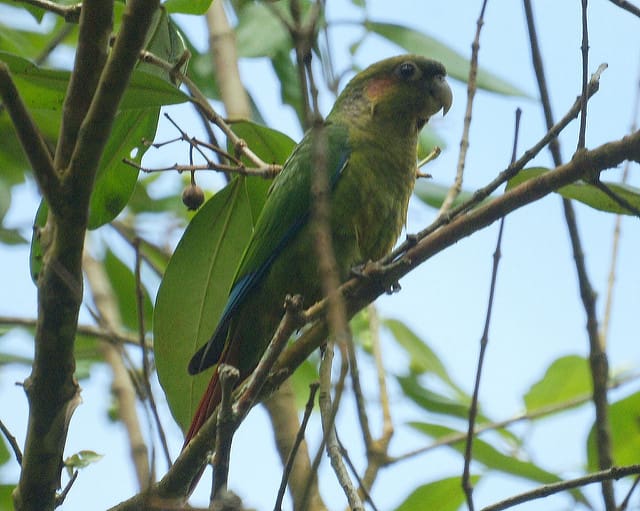
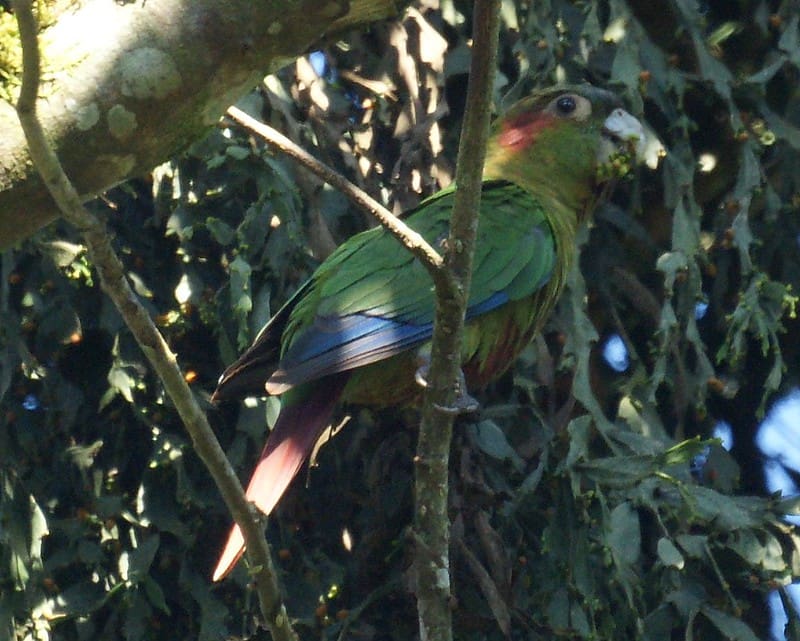
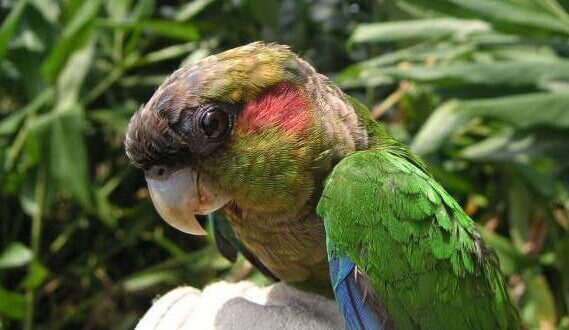
P.h. hoematotis: Both adults mostly green in general; brown/red ear coverts; brown/grey margins to feathers on sides of neck; green breast tinted with olive and barred with dusty grey; green/blue carpal edge; brown/red tail tipped with olive/green. Beak pale brown/grey. Eye ring bare and white. Eye brown.
P.h. immarginata: Both adults as in hoematotis, but without brown/grey margins to feathers on neck; light banding on breast, no grey barring.
Colour Juvenile:
Not recorded.
Call:
Calls are described as rapid and short notes, repeated to give rolling effect.
More Information:
Content Sources:
CITES
BirdLife International
Cornell Lab of Ornithology/Birds of the World
Parrots: A Guide to Parrots of the World, Juniper and Parr, 1998
Parrots of the World, Forshaw and Cooper, 1977. 2010 edition
Parrots of the World, Forshaw, 2006.
Parrots in Aviculture, Low, 1992.
Captive Status:
Not currently found in aviculture.
Longevity:
Probably about 10 yrs.
Housing:
Aviary or suspended enclosure, minimum length 2 m (6.5 ft).
Diet:
Fruits such as: apple, pear, orange, banana, guava, kiwi, pomegranate, cactus fruits, forming about 30 percent of diet; vegetables such as: carrot, celery, green beans and peas in the pod; green leaves such as: Swiss chard, lettuce, dandelion, sowthistle, chickweed; fresh corn; spray millet; small seed mix such as: canary, millet and smaller amounts of oats, buckwheat, safflower and a little hemp; soaked and sprouted sunflower seed; cooked beans and pulses, boiled maize and complete kibble.
Enrichment:
Probable chewers so provide bird-safe, unsprayed flowering, fir, willow, elder or pine branches, heat sterilized pine cones, wood or vegetable tanned leather toys, swings, ladders, ropes and puzzle/foraging toys. Also provide water for bathing.
Nest Box Size:
Vertical box 10″ x 10″ x 28″ (25.4 cm x 25.4 cm x 71.1 cm).
Clutch Size:
4-6
Fledging Age:
Probably 7 weeks.
Hatch Weight:
—
Peak Weight:
—
Weaning Weight:
—
World Population:
Unknown, decreasing.
IUCN Red List Status:
Near Threatened
CITES Listing:
Appendix II
Threat Summary:
Not globally threatened. Restricted-range species: present in Cordillera de la Costa Central Endemic Bird Area. Poorly-known. Generally common within its small range, especially in Henri Pittier National Park. Overall forest cover within the species’ range has declined by 2-3% over the past three generations, but shifting agriculture is causing additional degradation of habitat that is likely not captured by forest loss data.
Range:
P.h. hoematotis: Coastal range of N-C Venezuela.
P.h. immarginata: Recorded only from Cubiro, Lara, N Venezuela.
Habitat:
Found from 600-2400 m (1968-7872 ft) in montane and cloud forest with open areas, areas with low scattered trees, and near clearings.
Wild Diet:
Diet includes petioles of broadleaved trees, possibly to access insect larvae. Also includes fruit of Tetrorchidium rubrivenium, Alchornea triplinervia, Geonoma undata, Cecropia angustifolia, Guettarda crispiflora and unripe fruits of Sapium stylare, cultivated Psidium guajava, seeds of Euphorbiaceae and Croton gossypifolius, Inga oerstediana pods and flowers of Erythrina and Ocotea.
Ecology and Behaviour:
Social; seen mainly in groups of 3-12 outside of breeding season; rarely to a hundred. Resident, with local movements according to food availability and breeding. Very active and conspicuous while feeding.
Clutch and Egg Size:
4-6 rounded eggs, 24.0 x 21.5 mm (0.9 x 0.8 in).
Breeding Season:
Likely August, during the wet season.