Rose-fronted Conure
Also known as:
Rose-fronted Parakeet, Red-crowned Conure or Parakeet, Wavy-breasted Conure or Parakeet
Also known as:
Rose-fronted Parakeet, Red-crowned Conure or Parakeet, Wavy-breasted Conure or Parakeet
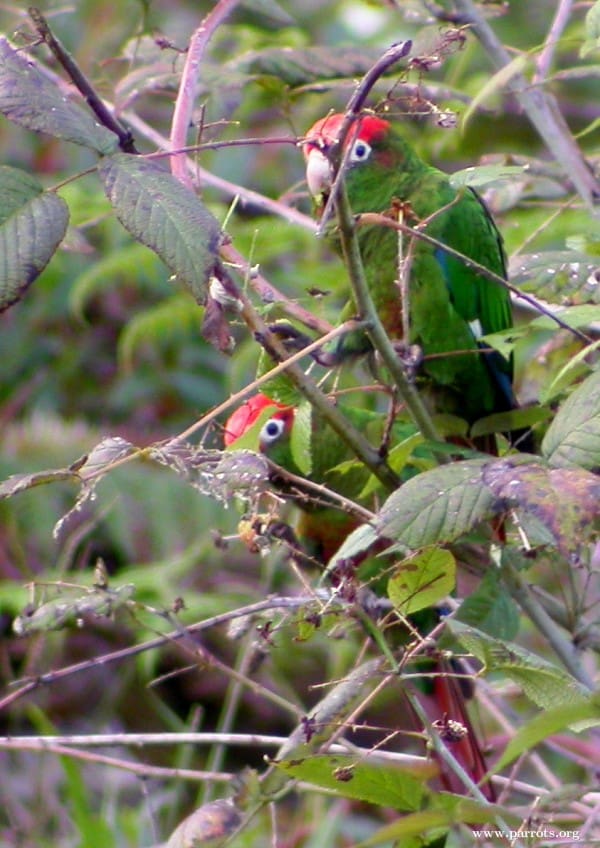
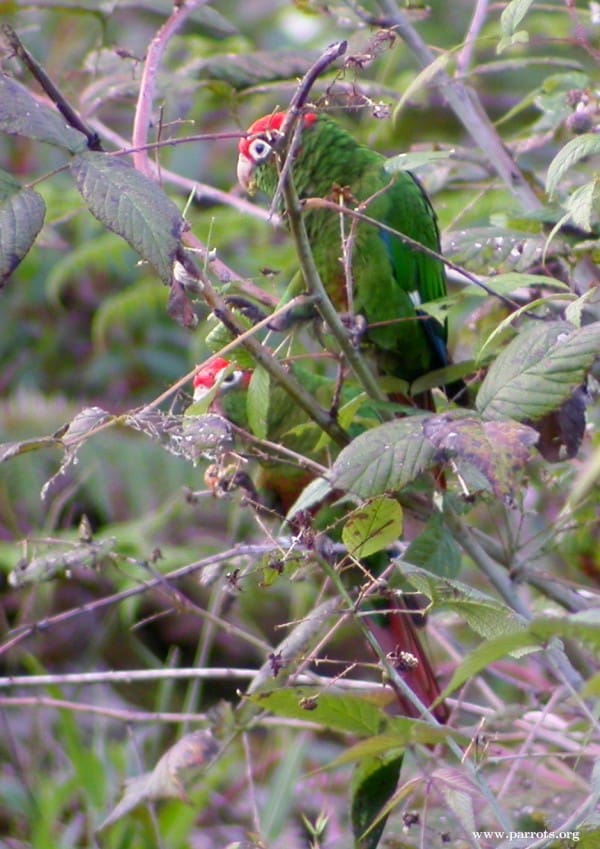

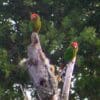
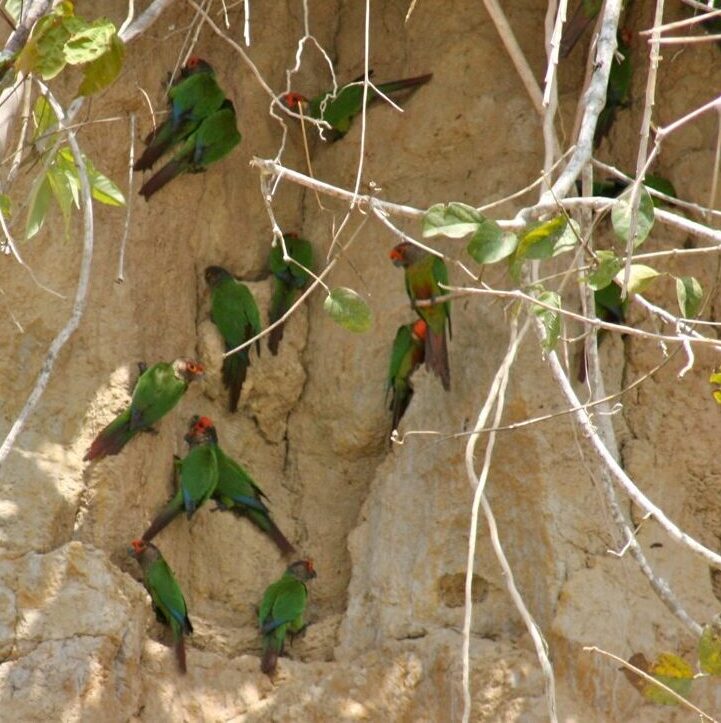
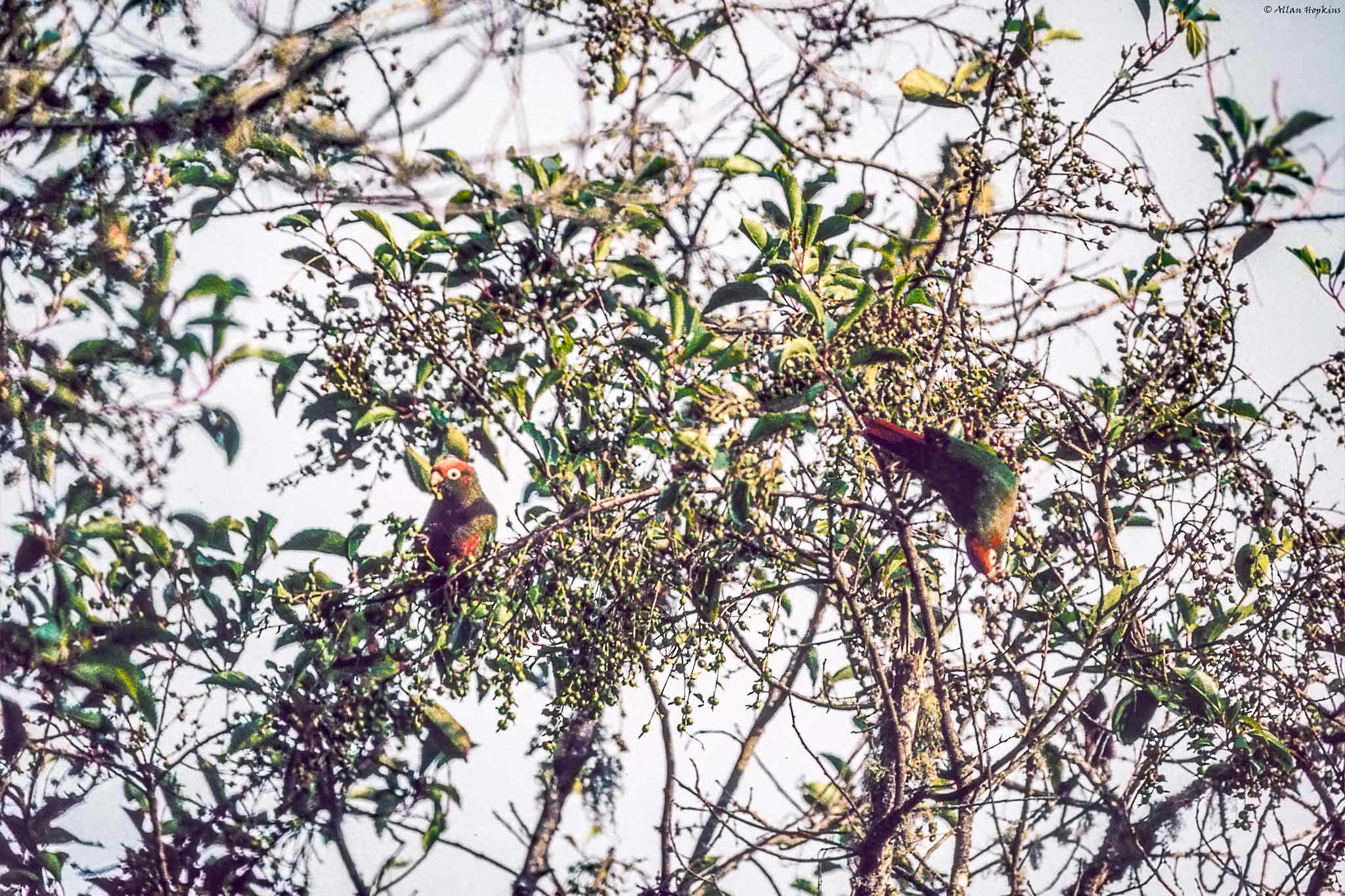
DID YOU KNOW?
The Rose-fronted Conure is one of only two Pyrrhura conures to have bright rose/red on its crown, the other being conspecific Rose-crowned Conure (P. r. rhodocephala).

Pyrrhura
roseifrons
Size:
22 cm (8.6 in)
Weight:
54-70 g (1.9-2.5 oz)
Subspecies including nominate:
four: P.r. roseifrons, P.r. peruviana, P.r. dilutissima, P.r. parvifrons
Colour Adult:
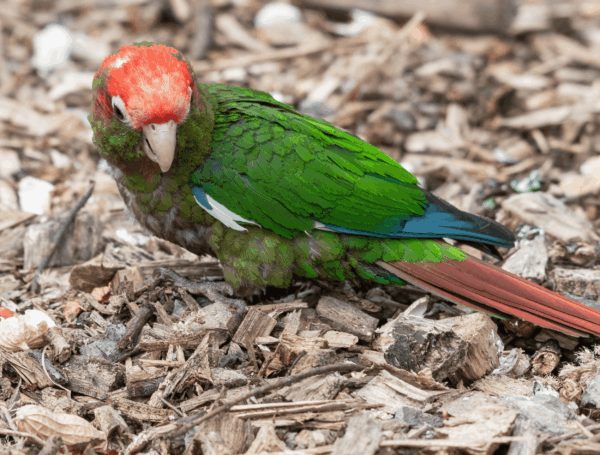
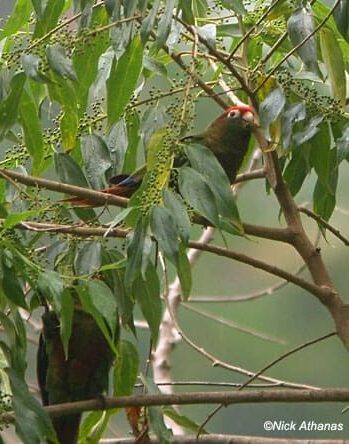
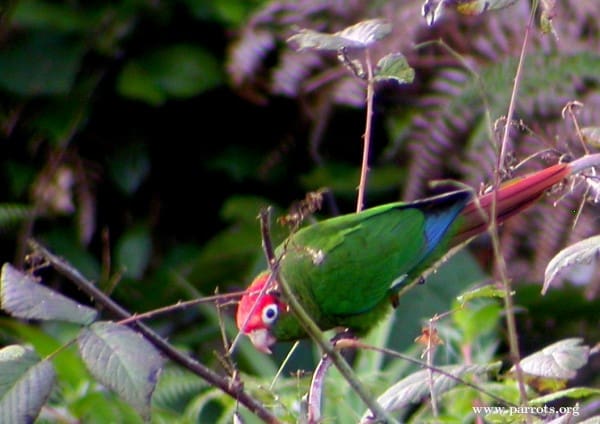
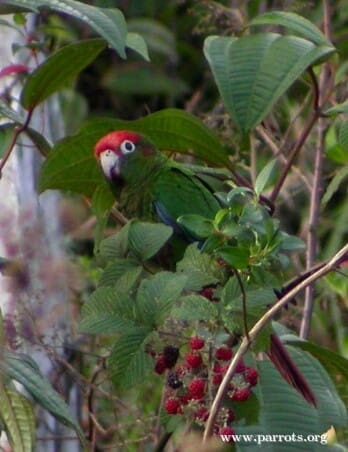
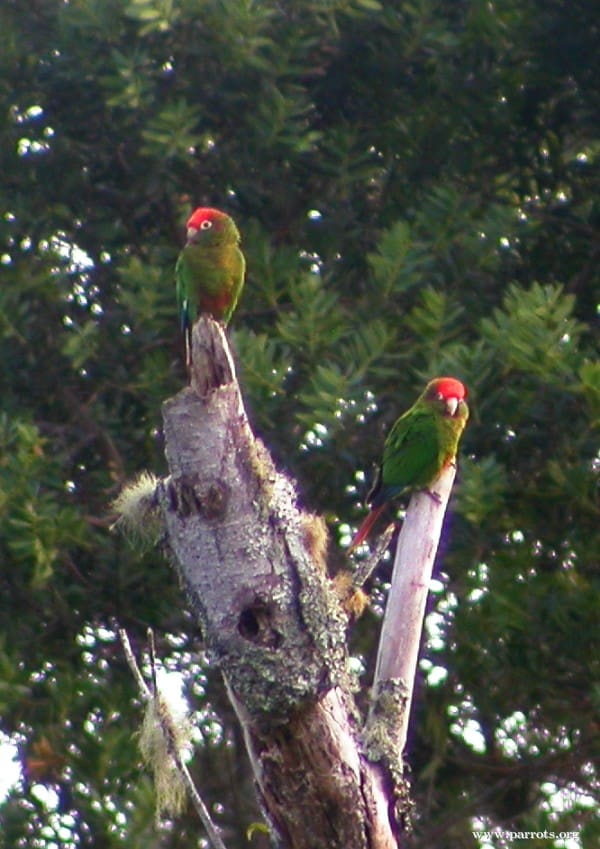
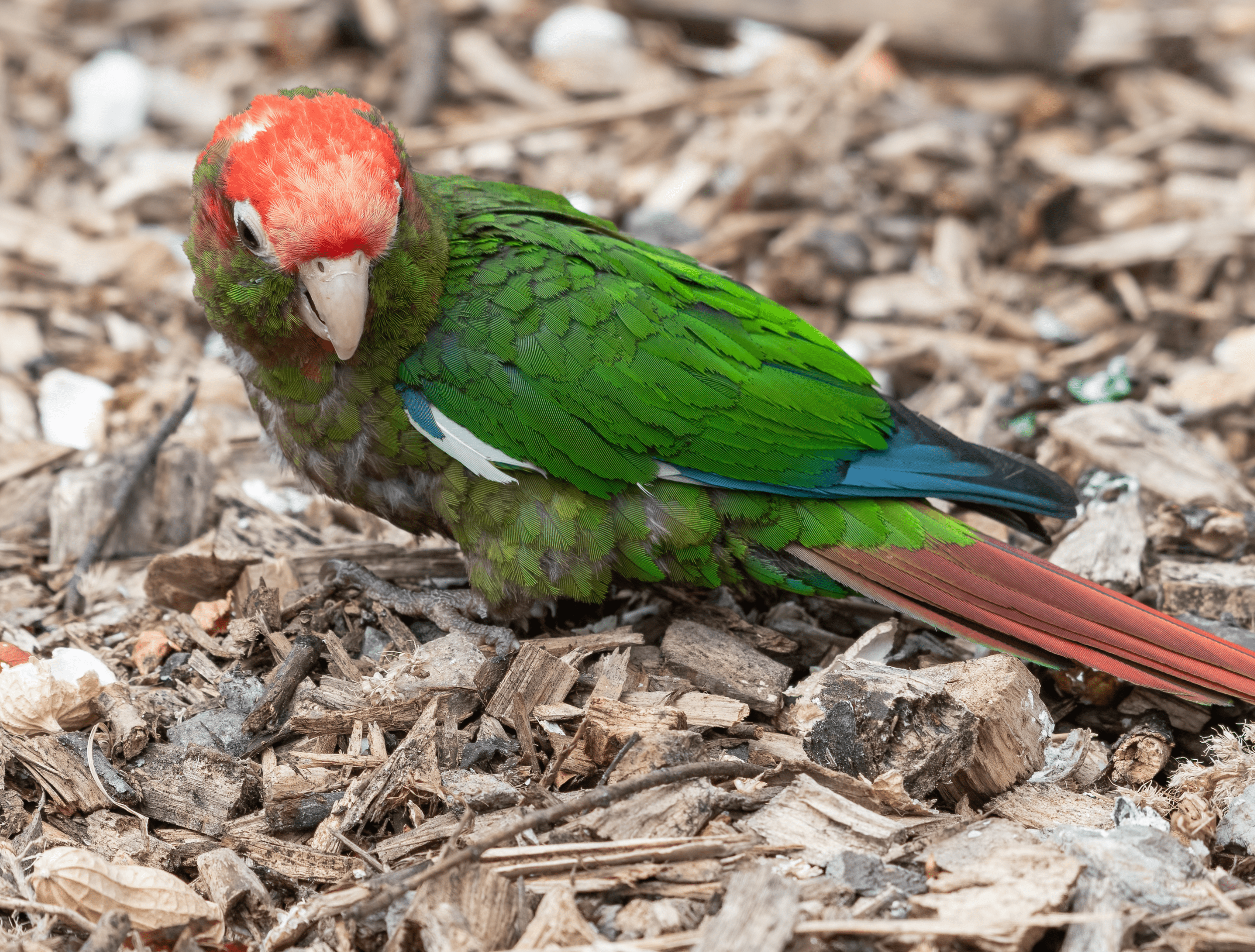
P.r. roseifrons: Both adults partly green; rose/red forehead and face; maroon/brown lower cheeks; pale yellow ear coverts; dull green/brown breast scalloped with green/yellow; red bend of wing and carpal edge; brown/maroon patch on abdomen; brown/red tail becoming green at base. Beak dark grey. Eye ring bare and cream/white. Eye brown.
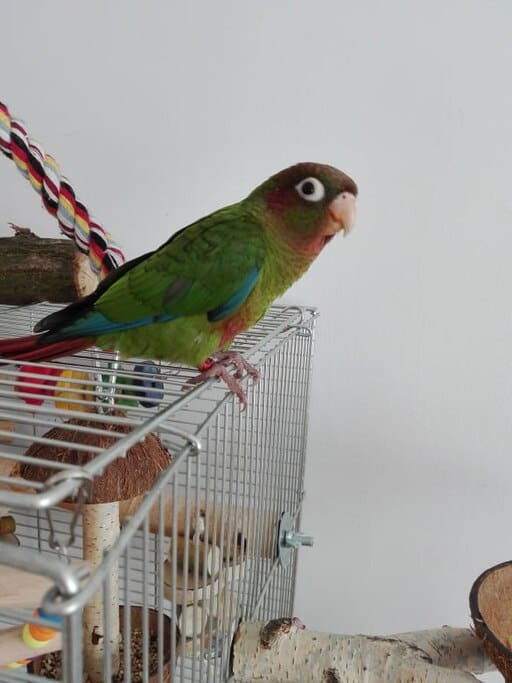
P.r. peruviana: Both adults blue forehead; crown to nape dark brown; off-white ear coverts; upper breast dark brown scalloped with yellow, green lower breast scalloped with yellow. Beak black. Bare eye ring grey/white. Eye orange.
P.r. dilutissima: Similar to peruviana, but less bluish on forecrown, the face redder (rusty red rather than maroon); a small but contrasting whitish-cream or pale-yellowish crescent before eye, the centres of breast feathers are more grey, less blackish and the scallops are noticeably yellower; iris darker brown.
P.r. parvifrons: Both adults largely green in colour, with long, maroon-red tails, dark red belly patch and bright blue primaries. Face and crown dark grey-brown. Rose-red colour on the head restricted to a narrow band on the frons and a few scattered feathers in the crown. Upper breast brownish grey scalloped with grey/white. Ear coverts paler grey-brown. Eye ring white.
Colour Juvenile:
P.r. roseifrons: Dark maroon/brown forehead and face; buff/white ear coverts; grey/green upper breast scalloped with yellow/green; green lower breast; green bend of wing and carpal edge; brown/red patch on abdomen less evident; shorter tail.
Call:
Calls made in flight are coarse and forceful staccato notes.
More Information:
Content Sources:
AviList
BirdLife International
Cornell Lab of Ornithology/Birds of the World
A Guide to Parrots of the World, Juniper and Parr, 1998
Parrots of the World, Forshaw, 2006. 2010 edition
Parrots in Aviculture, Low, 1992.
Lexicon of Parrots, Thomas Arndt.
Captive Status:
Uncommon.
Longevity:
Probably 13-15 yrs.
Housing:
As for P. picta: aviary or suspended enclosure, minimum length 2 m (6.5 ft).
Diet:
As in P. picta: Fruits such as: apple, pear, oranges, bananas, cactus fruits, pomegranate, kiwi, papaya, forming about 30 percent of the diet; vegetables such as: carrot, celery, green beans and peas in the pod; fresh corn; green leaves such as: Swiss chard, lettuce, sowthistle, kale, dandelion, chickweed; spray millet; small seed mix such as: canary, millet and smaller amounts of oats, buckwheat, safflower and a little hemp; soaked or sprouted sunflower seed; cooked beans and pulses, boiled maize and complete kibble.
Enrichment:
Vigorous chewers so provide bird-safe, unsprayed flowering, fir, pine, willow or elder branches; wooden block or vegetable tanned leather chew toys, heat sterilized pine cones. Also provide overhead misters or shallow bowls of water for bathing.
Nest Box Size:
As for P. picta: vertical box 8″ x 8″ x 28″ (20.3 cm x 20.3 cm x 71.1 cm).
Clutch Size:
Probably 5-7.
Fledging Age:
About 40-51 days.
Hatch Weight:
—
Peak Weight:
—
Weaning Weight:
—
World Population:
Unknown, decreasing.
IUCN Red List Status:
Not Evaluated
CITES Listing:
Appendix II
As conspecific with Pyrrhura picta.
Threat Summary:
This species is at threat from trapping for the wild bird trade, hunting and habitat loss. Its global population size is unknown given recent taxonomic splits. This species is considered to have a medium dependency on forest habitat, and tree cover is estimated to have declined by 3.3% in its range over the past 10 years. As a precautionary measure, it is tentatively suspected that forest loss may have led to a 1-19% decline in the species’ population over the same period.
Range:
P.r. roseifrons: Western Amazonas from northern Brazil and eastern Peru south to northwestern Bolivia in La Paz, Pando and Santa Cruz.
P.r. peruviana: Southeastern Ecuador, along Río Zamora and Río Santiago and northeastern Peru along Río Santiago, Río Cenepa, and Río Kagka to Chamicuros and Chyavitas.
P.r. dilutissima: Central Peru around Río Ene at confluence with Río Quipachiari, and at Luisiana, in Cordillera Vilcabamba.
P.r. parvifrons: Two populations, both in western Amazonia of northern Peru; one by the San Martín–Loreto border from Shanusi to Yurimaguas and Sarayacu, and possibly Río Cushabatay, the other in eastern Loreto, in the Santa Cecilia region and Quebrada Vainilla along Río Amazon to the mouth of Río Orosa.
Habitat:
Found from 875-1200 m (2870-3936 ft) in humid forest in foothills and in lowland terra firme and varzea forests; also in margins and adjacent clearings with tall trees. Seen in stunted forest along riverways with large bamboo patches.
Wild Diet:
Probably ripe and unripe fruits, berries, flowers, seeds, buds, shoots and insects and their larvae.
Ecology and Behaviour:
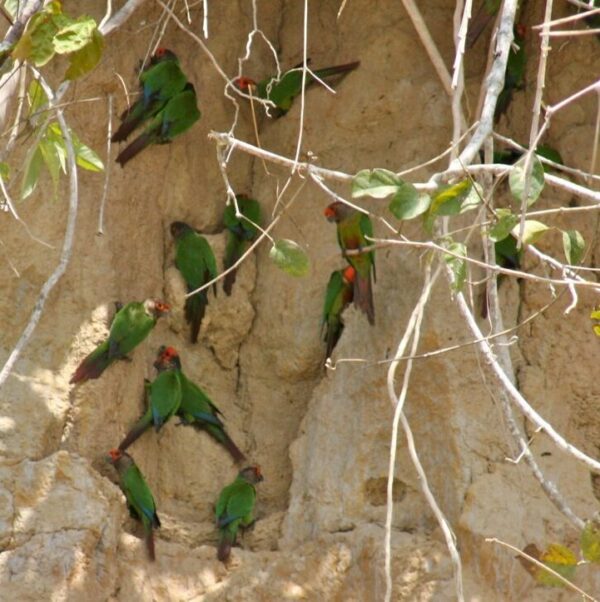
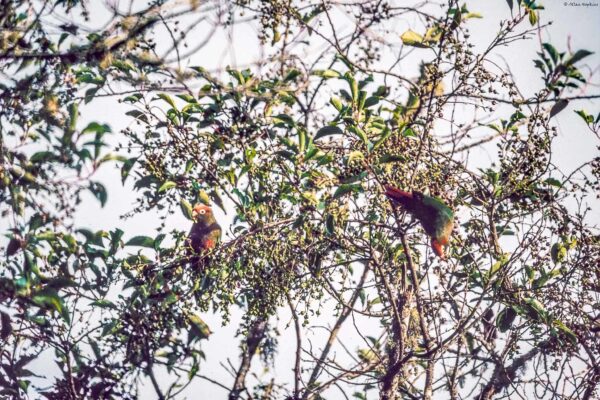
Seen in groups of up to 15 birds; inconspicuous while feeding or resting. Otherwise noisy and active in flight through or above forest canopy.
Clutch and Egg Size:
Probably 5-7 eggs, 25.5 x 19.0 mm (1 x 0.7 in).
Breeding Season:
Probably July-December. Nest is in tree cavity.