LEARN

Sinú Conure

( Pyrrhura subandina )

Also known as:
Sinú Parakeet

Also known as:
Sinú Parakeet

Type :
Geography:

DID YOU KNOW?

The Sinú Conure belongs to the Pyrrhura pictacomplex.

<p><em>Pyrrhura</em></p>
Genus:

Pyrrhura

<p><em>subandina</em></p>
Species:

subandina

Size:

21 cm (8.2 in)

Weight:

Not recorded.

Subspecies including nominate:

two: P.s. subandina, P.s. eisenmanni

Colour Adult:

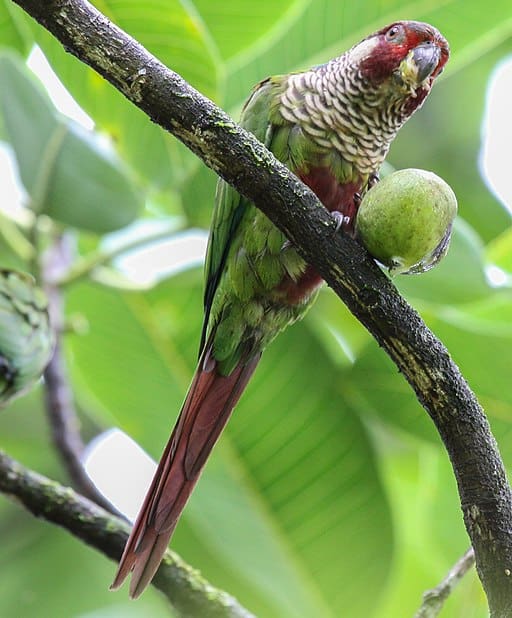
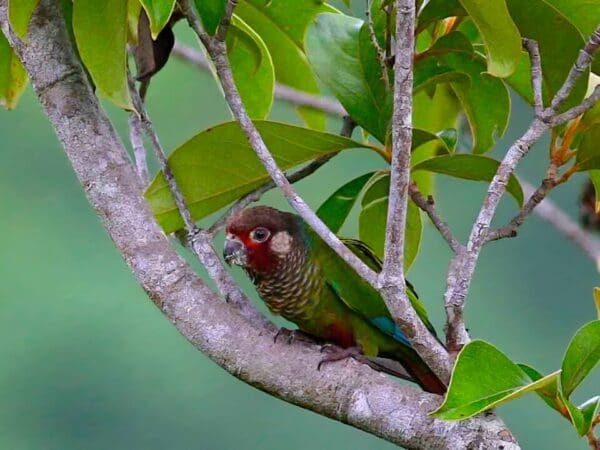
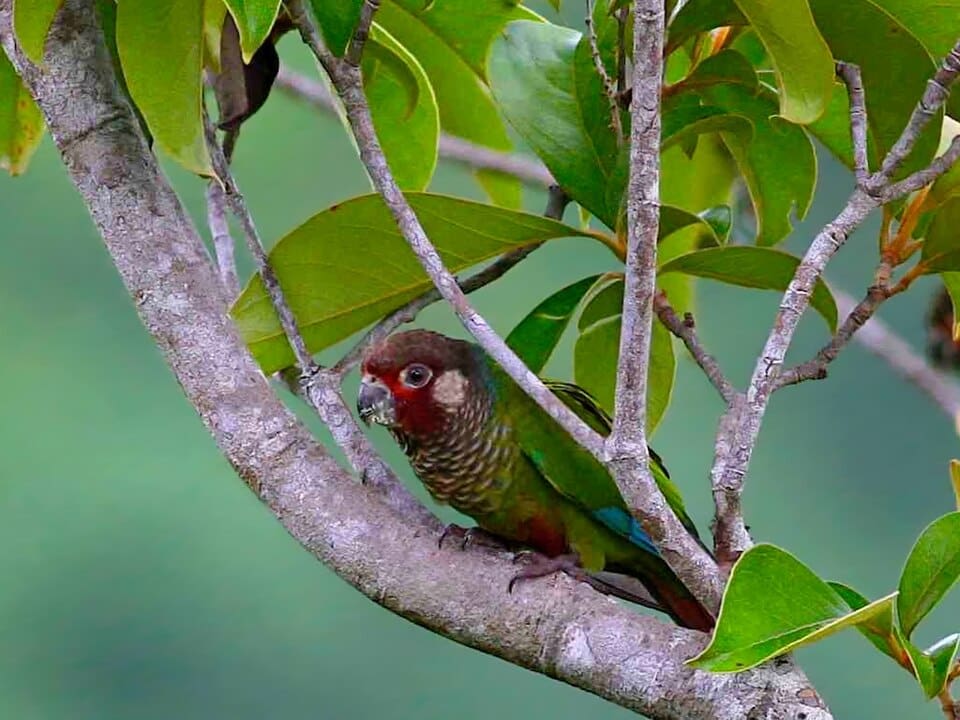
P.s. subandina: Both adults frontal band dull red and blue; red/brown ear coverts; dusky brown breast, more green on lower breast with grey/off-white scalloping; green bend of wing. Bill grey/black. Eye yellow/orange.
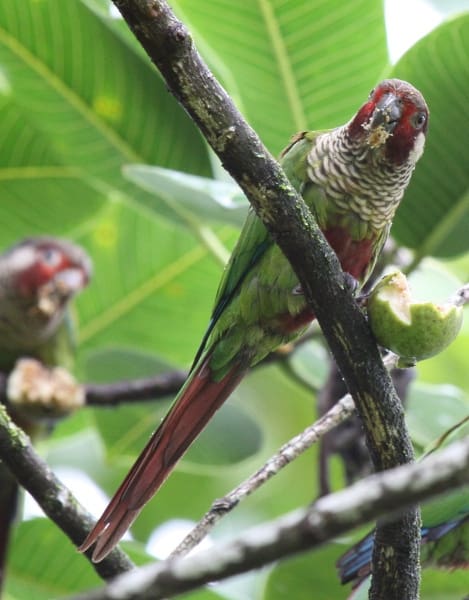
P.s. eisenmanni: Both adults mainly green; black/brown forehead and crown to nape; frontal band to lores and around eyes thin and red; buff/white ear coverts; faint, blue nuchal collar; dark brown upper breast scalloped with white; dark green/blue lower breast scalloped with buff/white and yellow; green bend of wing. Beak black. Eye ring bare and grey/brown. Eye brown yellow.

Colour Juvenile:

Not recorded.

Call:

Eisenmanni: calls given in flight are short; some single loud notes from birds contact calling flock; while perched harsh, gutteral notes; soft notes while preening.

Xeno-canto Wildlife Sounds-Sinú Conure

More Information:

Avibase

Content Sources:

AviList
Birdlife International
Cornell Lab of Ornithology/Birds of the World
Parrots of the World, Forshaw, 2006. 2010 edition
Vanished and Vanishing Parrots, Forshaw, 2017.
Lexicon of Parrots, Thomas Arndt.

Captive Status:

Not found in captivity.

Longevity:

Housing:

Diet:

Enrichment:

Nest Box Size:

Clutch Size:

4-5 eggs.

Fledging Age:

Hatch Weight:

Peak Weight:

Weaning Weight:

World Population:

Subandina: 1-49 mature individuals. Possibly extinct. Eisenmanni: 1,000–2,500 mature individuals, decreasing.

IUCN Red List Status:
Not Evaluated

CITES Listing:
Appendix II

Threat Summary:

Subandina known with certainty only from Sinú Valley in N Colombia, from which 18 specimens collected at just four locations. Recent searches have failed to locate it. Small areas of apparently suitable habitat still occur, but there has been significant habitat loss throughout its restricted range. Further potential threats include trapping for the cage-bird trade, hunting for food and pollution with agrochemicals. Eisenmanni: Concern has been expressed that its conservation status is deteriorating due to ongoing deforestation (and conversion to pasture), especially in the north and northeast of the species’ range, although Cerro Hoyo National Park appears largely intact.

Range:

P.s. subandina: Restricted to Lower Rio Sinú valley, Cordoba, NW Colombia.
P.s. eisenmanni: SW Azuero Peninsula, C Panama.

Habitat:

Found up to 1660 m (5445 ft) in humid forest and tall secondary growth forest in lowlands and foothills. Also seen at forest margins and in nearby clearings with patches of forest.

Wild Diet:

Feeds on fruits, flowers, seeds, algae and invertebrates.

Ecology and Behaviour:

Unknown, but presumably similar to that of P. picta.

Clutch and Egg Size:

4-5 elliptical eggs, 26.5 x 19.1 mm (1 x 0.7 in).

Breeding Season:

Birds in breeding condition found between March and June.

Related Links:

Join Our Flock

FlockTalk our monthly newsletter for parrot people everywhere:

+ News from the world of parrots

+ Updates on wild parrot projects

+ Inspiring updates from partners

+ Real stories from the parrot flock

+ Plus, expert tips for caring for your feathered friends at home.


Stay In The Loop, Sign Up Now.
FlockTalk: our monthly newsletter for parrot people everywhere:

Parrot news. Conservation wins. Pet care tips. All in one monthly email.

We do not sell or share your information with anyone.