LEARN

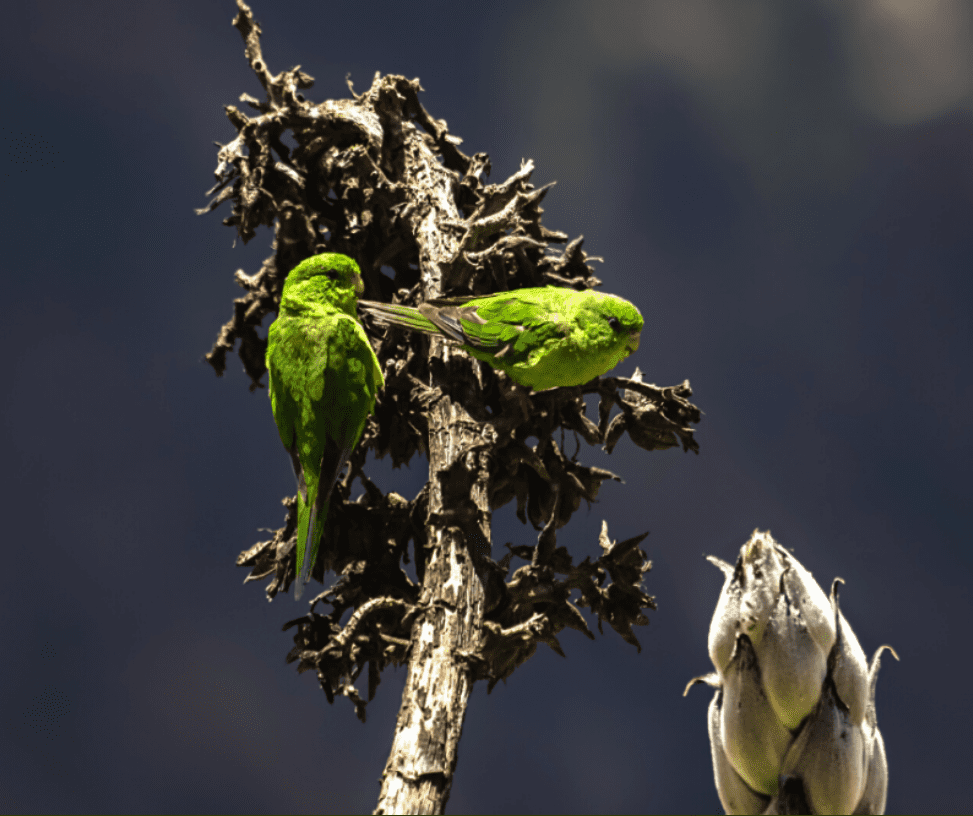
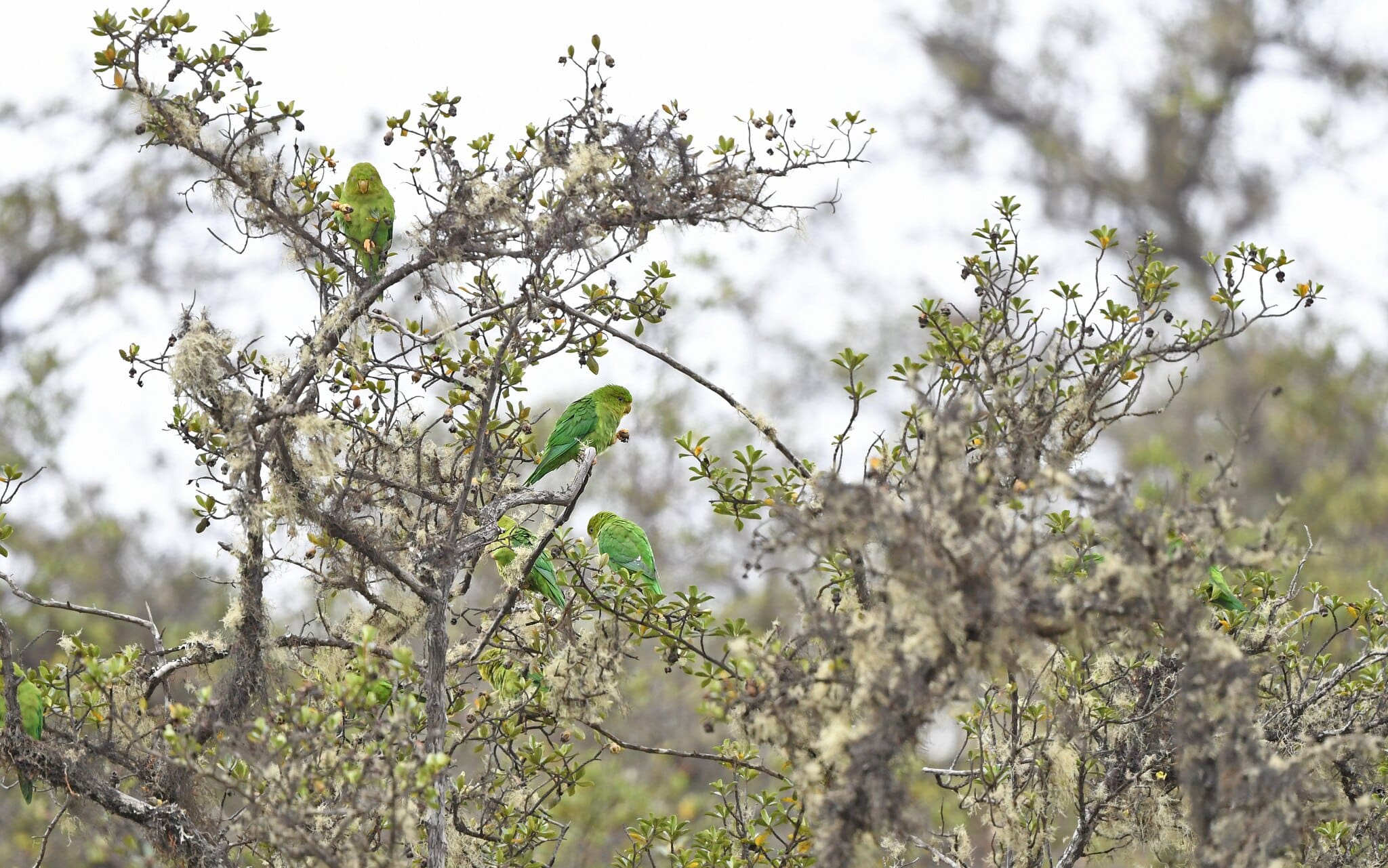
Andean Parakeet

( Bolborhynchus orbygnesius )

Geography:

DID YOU KNOW?

The Andean Parakeet nests in burrows in steep banks.

<p><em>Bolborhynchus</em></p>
Genus:

Bolborhynchus

<p><em>orbygnesius</em></p>
Species:

orbygnesius

Size:

17 cm (6.63 in)

Weight:

Not recorded.

Subspecies including nominate:

one

Colour Adult:

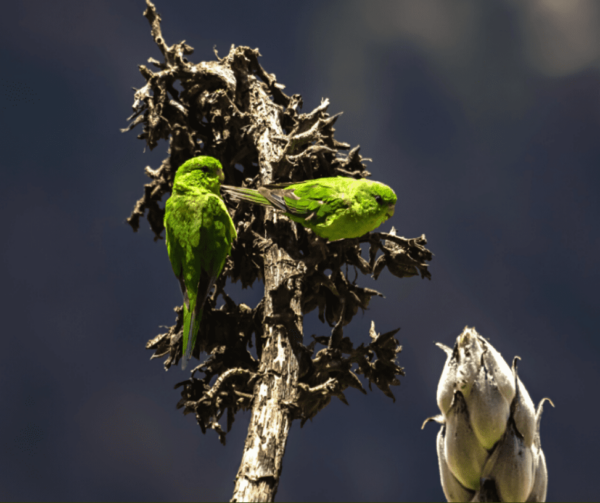
Both adults green in general; yellow tinge to forehead and lores, less evident in female; blue/green greater underwing coverts and undersides of flight feathers. Beak pale yellow/green with grey at base. Eye dark brown.

Colour Juvenile:

As in adults but with shorter tail.

Call:

Calls made in flight are chattering and rapid notes. Alarm calls are heard as rolling rrueet-ee, rrueet-ee.

Xeno-canto Wildlife Sounds-Andean Parakeet

More Information:

Avibase

Captive Status:

Rare in captivity.

Longevity:

Housing:

Colony type housing in spacious indoor or outdoor (if in warm climate) aviary 5 x 3 x 2 m (16.4 x 9.84 x 6.56 ft).

Diet:

Seed mix such as: millet, canary, hemp, oats and niger; wild bird food; fruits such as: apple, pear, orange, banana, dried mountain ash berries, pomegranate, cactus fruits; vegetables such as: carrot, celery, green beans and peas in the pod; green leaves such as: Swiss chard, lettuce, dandelion, chickweed, sowthistle; vitamin C and other supplements; eggfood for rearing; complete kibble if taken.
Enrichment:

Provide fresh, unsprayed branches with buds for chewing, plenty of perches.

Nest Box Size:

Vertical box 8″ x 8″ x 12″ (20.3 cm x 20.3 cm x 30.5 cm)

Clutch Size:

4-6

Fledging Age:

6-7 weeks

Hatch Weight:

Peak Weight:

Weaning Weight:

World Population:

Unknown, decreasing.

IUCN Red List Status:
Least Concern

CITES Listing:
Appendix II

Threat Summary:

This species is considered to have a medium dependency on forest, and tree cover is estimated to have declined by 0.9% within its range over the past decade. As a precautionary measure, it is tentatively suspected that this habitat loss may have led to a decline of 1-19% in the species’ population size.

Range:

Occurs in the highlands of N Peru (Cajamarca and La Libertad), south to west-central Bolivia (Cochabamba and W Santa Cruz); recently recorded in NW Argentina (Jujuy, Salta)

Habitat:

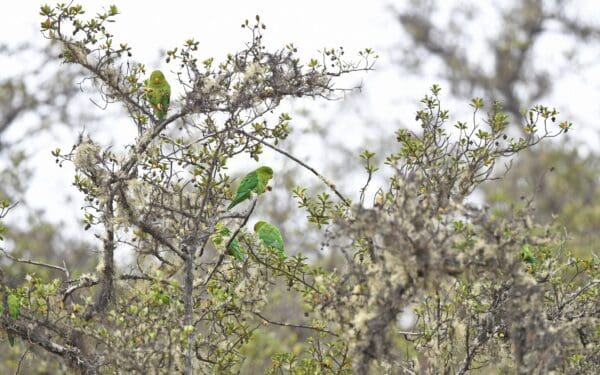
Found from 3000-4000 and occasionally to 6000 m (9840-19,685 ft) in semi-arid upland woods in subtropical and temperate zones, including drier cloud forests, bushy habitats in ravines in open country, elfin woodland at edge of paramo and grassy slopes with bromeliads and scattered woodland patches. May also visit rural areas and farmland.

Wild Diet:

Diet consists of seeds, fruits and berries, taken in bushes, bamboo, leguminous trees and on the ground.

Ecology and Behaviour:

Gregarious; seen in pairs, small groups and occasionally large flocks of over 300 birds. Feeds in bamboo, brambles and leguminaceous trees. Forages in vegetation or on the ground.

Clutch and Egg Size:

4-6 eggs

Breeding Season:

Possibly a cliff bank nest; no other information.

Join Our Flock

FlockTalk our monthly newsletter for parrot people everywhere:

+ News from the world of parrots

+ Updates on wild parrot projects

+ Inspiring updates from partners

+ Real stories from the parrot flock

+ Plus, expert tips for caring for your feathered friends at home.


Stay In The Loop, Sign Up Now.

FlockTalk: our monthly newsletter for parrot people everywhere:

Parrot news. Conservation wins. Pet care tips. All in one monthly email.

We do not sell or share your information with anyone.