LEARN

Black-fronted Fig Parrot

( Nannopsittacus nigrifrons )

Geography: ,

DID YOU KNOW?

The Black-fronted Fig Parrot is considered a subspecies of Nannopsittaca gulielmitertii by some authors.
<p><em>Nannopsittacus</p></em>
Genus:

Nannopsittacus

<p><em>nigrifrons</p></em>
Species:

nigrifrons

Size:

13 cm (5.1 in)

Weight:

28-35 g (1-1.2 oz)

Subspecies including nominate:

two: N. n. nigrifrons, N. n. amabilis

Colour Adult:

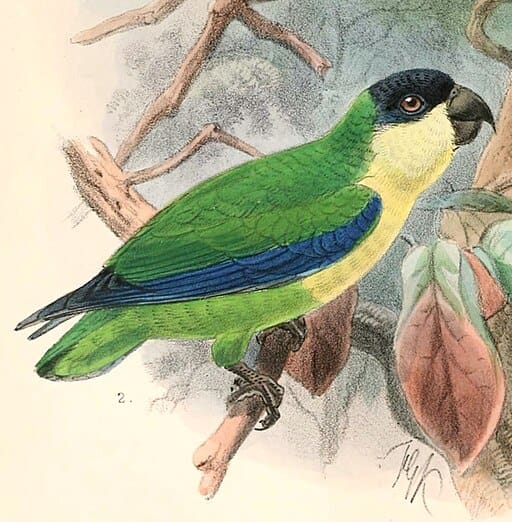
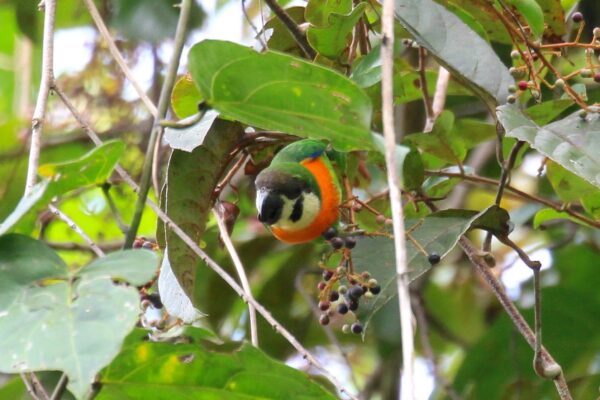
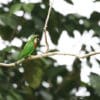
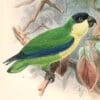
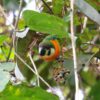
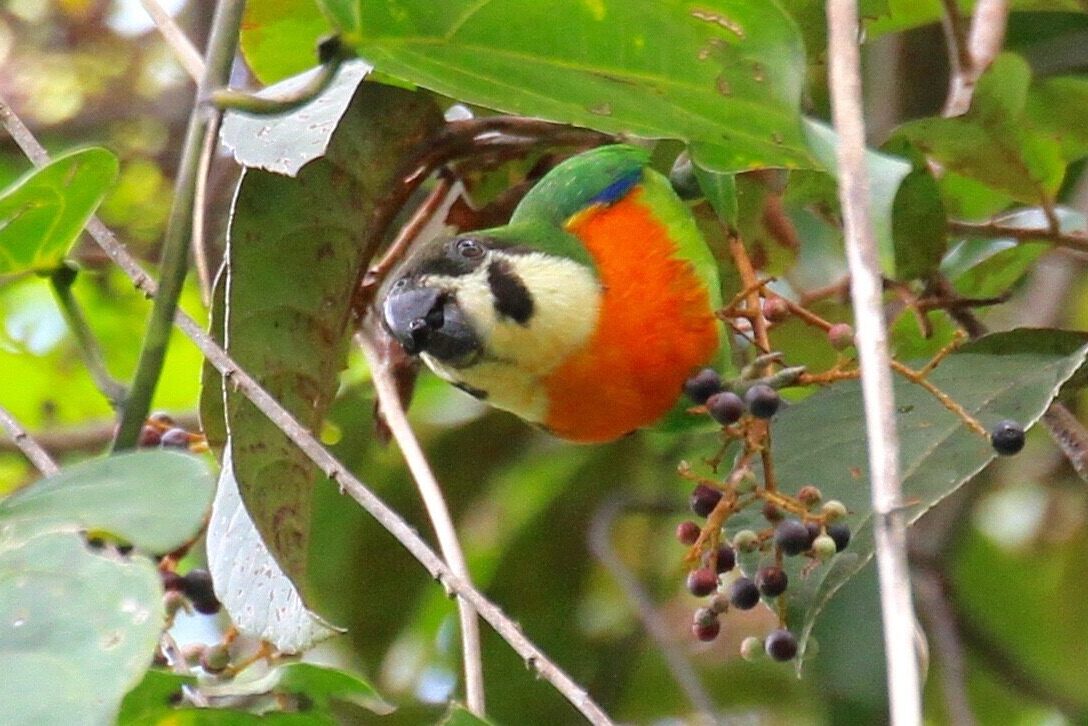
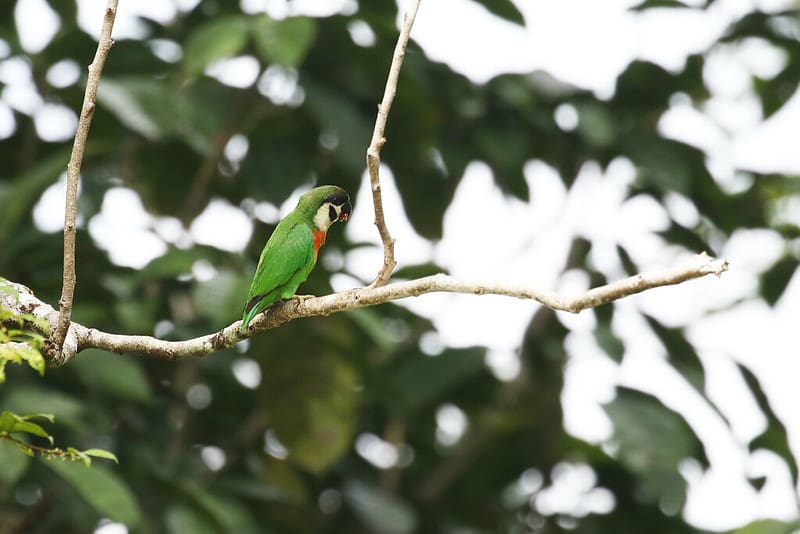
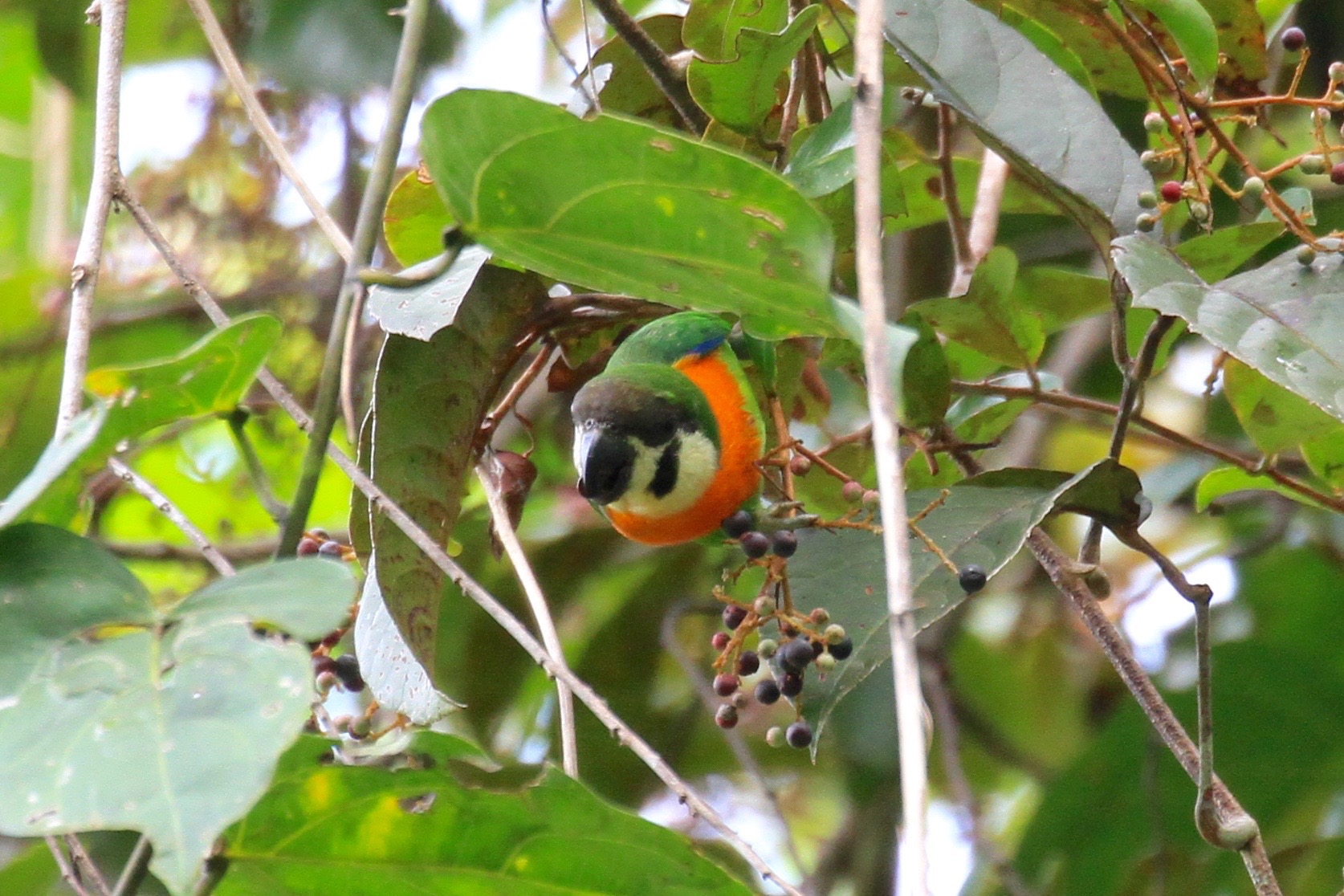
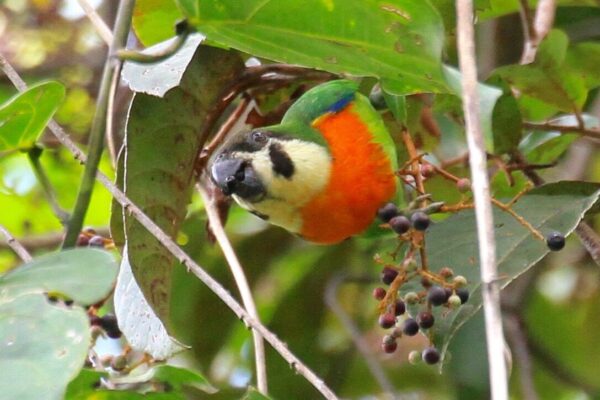
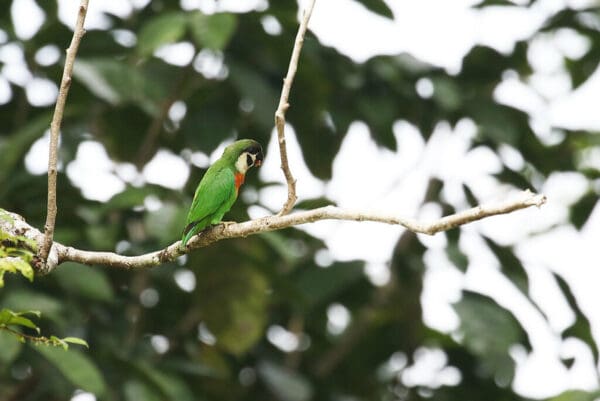
N.n. nigrifrons: Both adults as in similar gulielmitertii, but forehead and forecrown to area behind eyes black.
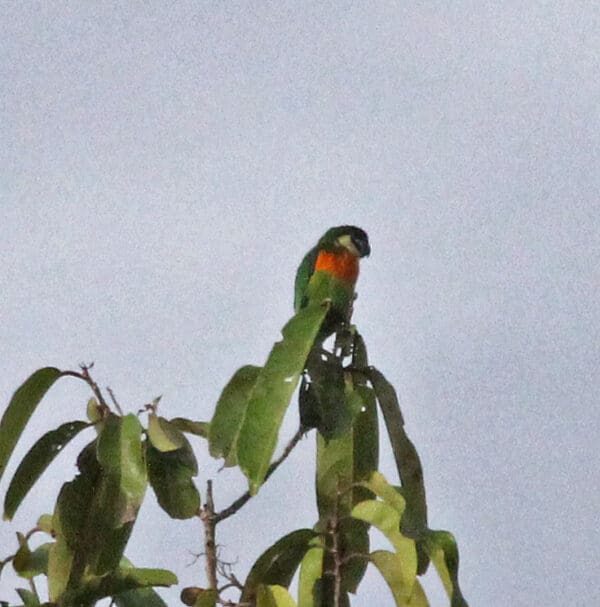
N.n. amabilis: Male-forehead and crown to area below eyes black; pale yellow upper abdomen, breast, and sides of head; black on ear coverts absent; smaller in size.  Female-breast to upper abdomen orange; lower cheeks dusty black, joining black crown behind eyes; lores, throat and cheeks pale yellow.

Colour Juvenile:

N.g. nigrifrons: As in adults.
N.g. amabilis: As in adult female but breast more green.

Call:

Similar to Orange-breasted Fig Parrot (N. gulielmitertii): in flight, gives a shrill, frequently repeated tseet, an explosive and chirping chip-chip-chip and chattering and wheezing calls while feeding.

More Information:

Avibase

Captive Status:

Rare

Longevity:

Not recorded.

Housing:

Walk-in enclosure, minimum length 2.1 m (7 ft). Planted if possible.

Diet:

Dried soaked figs (soak in water a few hours), two or more per bird per day; once daily, a drop of Konakion (Roche) or other vitamin K additive; fruit such as: apple, pear, orange, banana, pomegranate, forming at least 50 percent of diet; soaked sultanas; berries such as: elder, mountain ash, pyracantha; spray millet; small seed mixture such as: canary, oats safflower, limited sunflower; cooked beans and pulses; rearing food: hard-boiled egg, wholegrain bread and carrot, all ground to crumbly consistency. Complete pellet, if taken. Breeding diet: some pairs consume mealworms mainly for first 3 weeks of chicks’ lives, also well-cleaned maggots or proprietary insectivorous food. Withhold seed for first 3 weeks of chicks’ lives.
Enrichment:

Provide planted aviary. Also provide lots of bird-safe branches and browse to chew on.

Nest Box Size:

Nest log 4″ (10.1 cm) wide x 10″ (25.4 cm) high.

Clutch Size:

2

Fledging Age:

5.5-7.5 weeks

Hatch Weight:

Peak Weight:

Weaning Weight:

World Population:

Unknown, decreasing.

IUCN Red List Status:
Not Evaluated

CITES Listing:
Appendix II

Threat Summary:

Is considered to have a medium dependency on forest habitat, and tree cover is estimated to have declined by 2.4% within its mapped range over the past 10 years. Therefore, it is tentatively suspected that this may have led to a population decline of between 1-19% over the same period.

Range:

N. n. nigrifrons: N West Papua between eastern Geelvink Bay and Sepik River.
N. n. amabilis: NE Papua New Guinea (Huon Peninsula to Milne Bay).

Habitat:

Rain-and-monsoon forest, gallery and savanna woodland, Melaleuca swamp forest, partly cleared areas, in lowlands and hills up to 1100 m (but rarely recorded above 800 m). Presumably sedentary.

Wild Diet:

Presumably similar to Orange-breasted Fig-Parrot (N. gulielmitertii): seeds of Ficus figs probably main staple, but also seeds of Glochidion, whose fruits are broken apart, and Acacia auriculaeformis; also apparently the inflorescences of Poikilospermum.

Ecology and Behaviour:

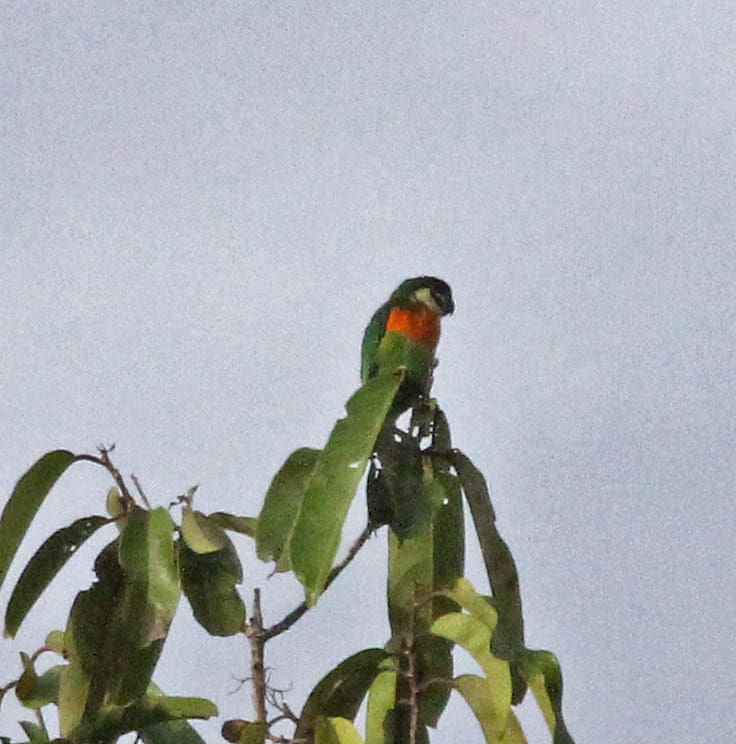
Presumably similar to the Orange-breasted Fig-Parrot (N. gulielmitertii): typically encountered in small groups of 6–10 birds, especially in the canopy but also regularly in lower stories.

Clutch and Egg Size:

2 eggs.

Breeding Season:

December-June; nest is in arboreal termitarium or sometimes an epiphyte.

Related Links:

Join Our Flock

FlockTalk our monthly newsletter for parrot people everywhere:

+ News from the world of parrots

+ Updates on wild parrot projects

+ Inspiring updates from partners

+ Real stories from the parrot flock

+ Plus, expert tips for caring for your feathered friends at home.


Stay In The Loop, Sign Up Now.

FlockTalk: our monthly newsletter for parrot people everywhere:

Parrot news. Conservation wins. Pet care tips. All in one monthly email.

We do not sell or share your information with anyone.