Also known as:
Malay Hanging Parrot, Malay Loriquet, Blue-topped Hanging Parrot, Sapphire-crowned Hanging Parrot
Also known as:
Malay Hanging Parrot, Malay Loriquet, Blue-topped Hanging Parrot, Sapphire-crowned Hanging Parrot

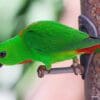
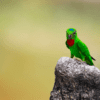
![© Kristi via [CC BY-ND 2.0] via Flickr A wild male Blue-crowned Hanging Parrot feeds on seeds](https://foowd.com/wp-content/uploads/2023/01/wpt_Blue-crowned-Hanging-Parrot_1165-16-e1731352128690-100x100.jpg)


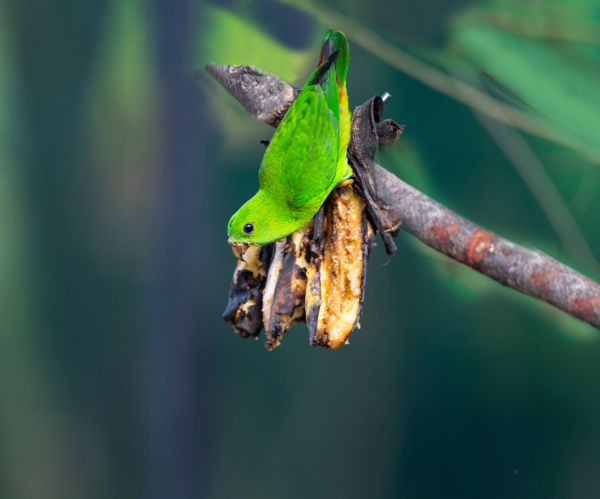
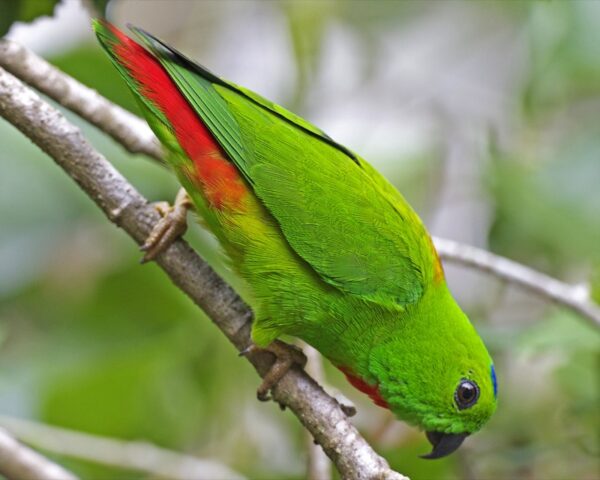
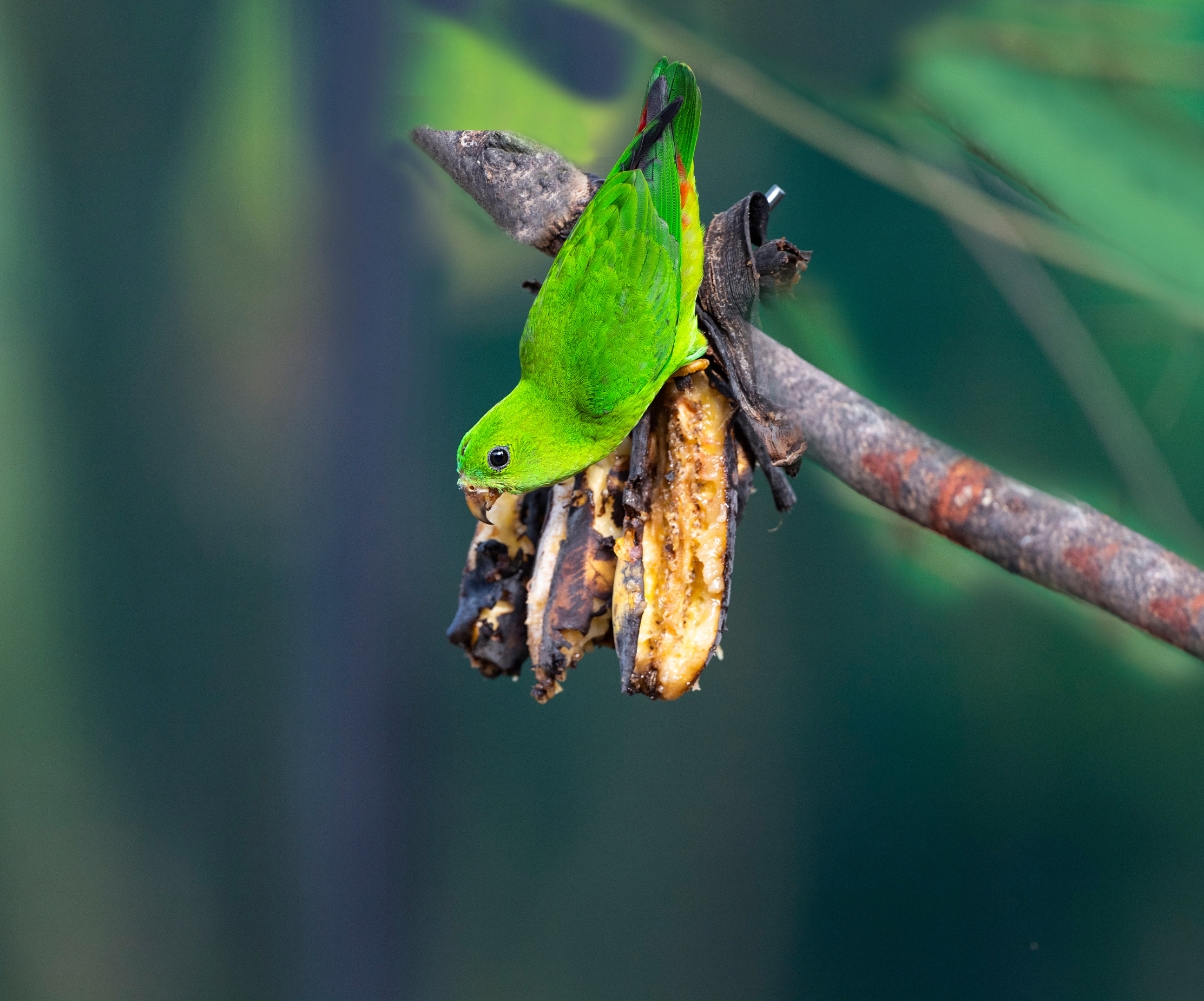
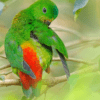
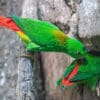
Like other Hanging Parrots, this species roosts upside down and may also take a bath in the rain in the same position.

Loriculus

galgulus
Size:
12 cm (4.7 in)
Weight:
28 g (1 oz)
Subspecies including nominate:
one
Colour Adult:
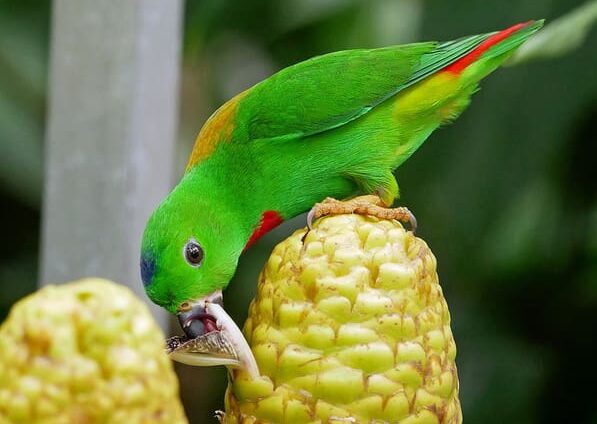
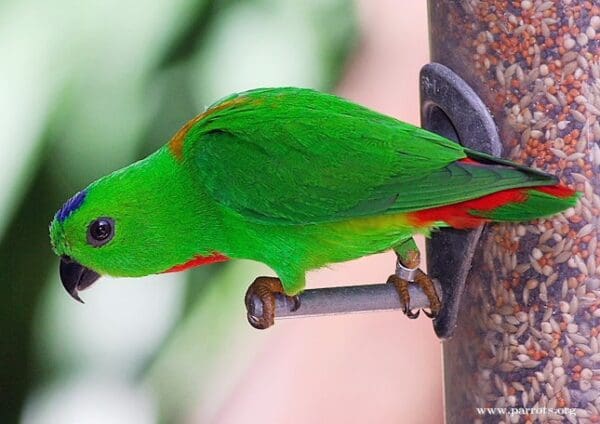
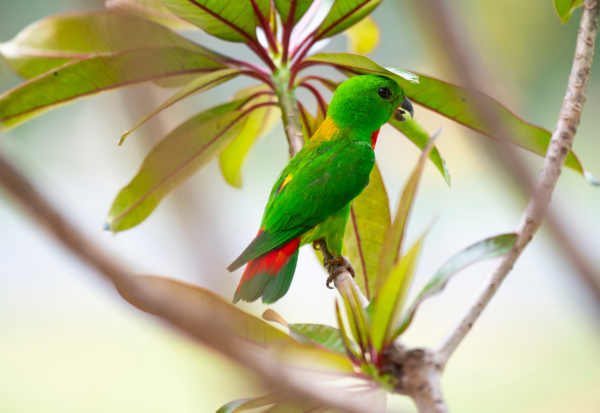
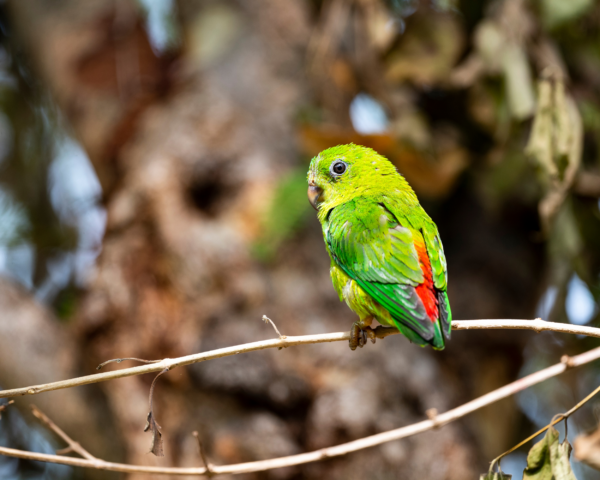
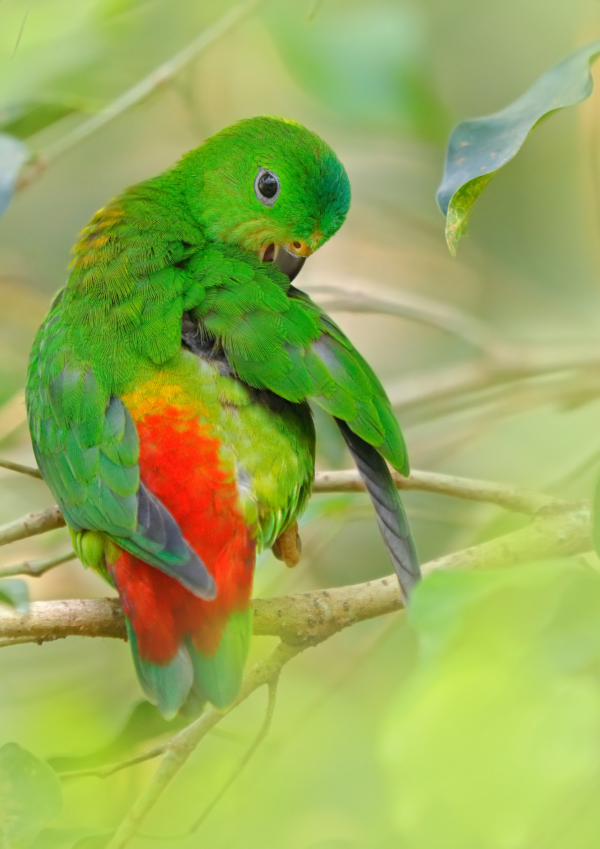
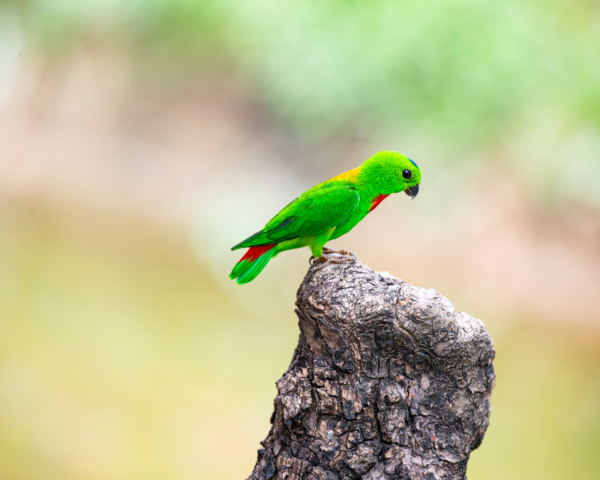
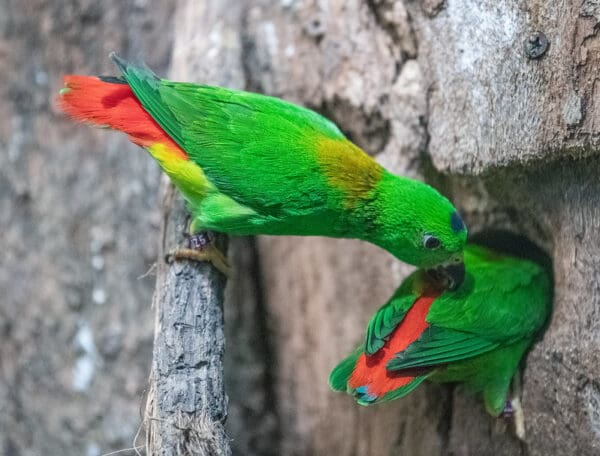
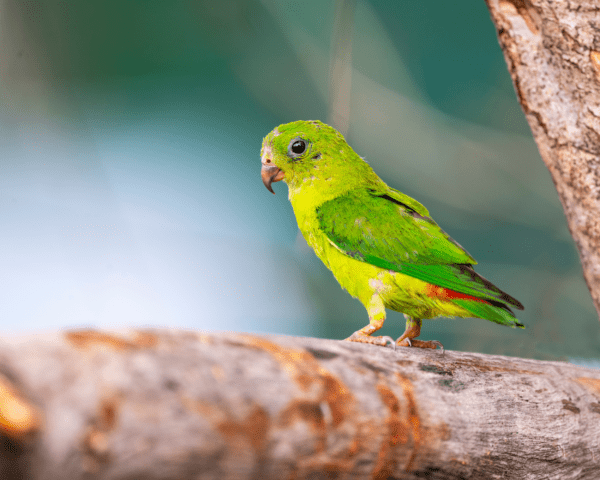
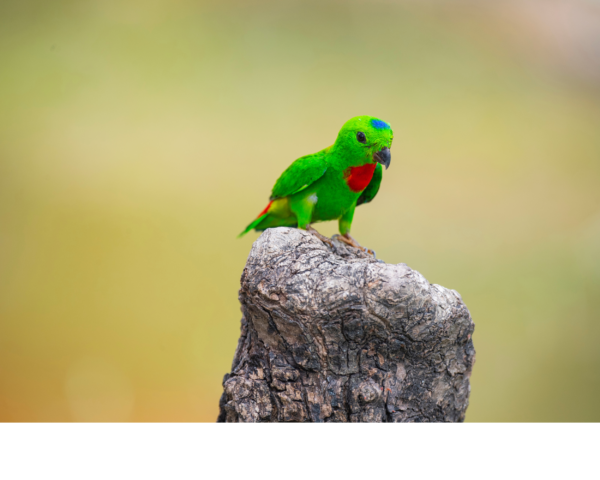
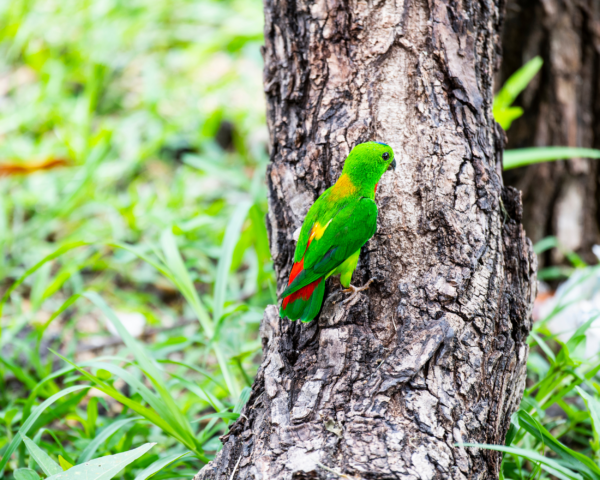
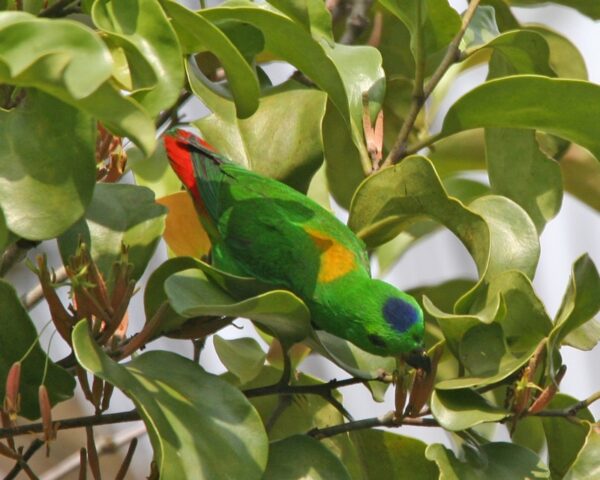
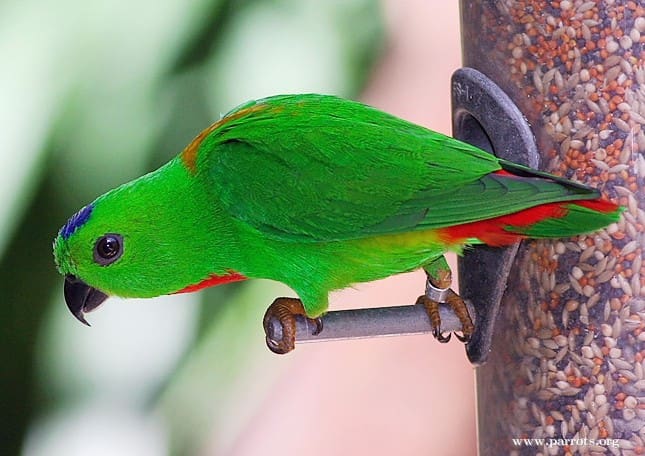
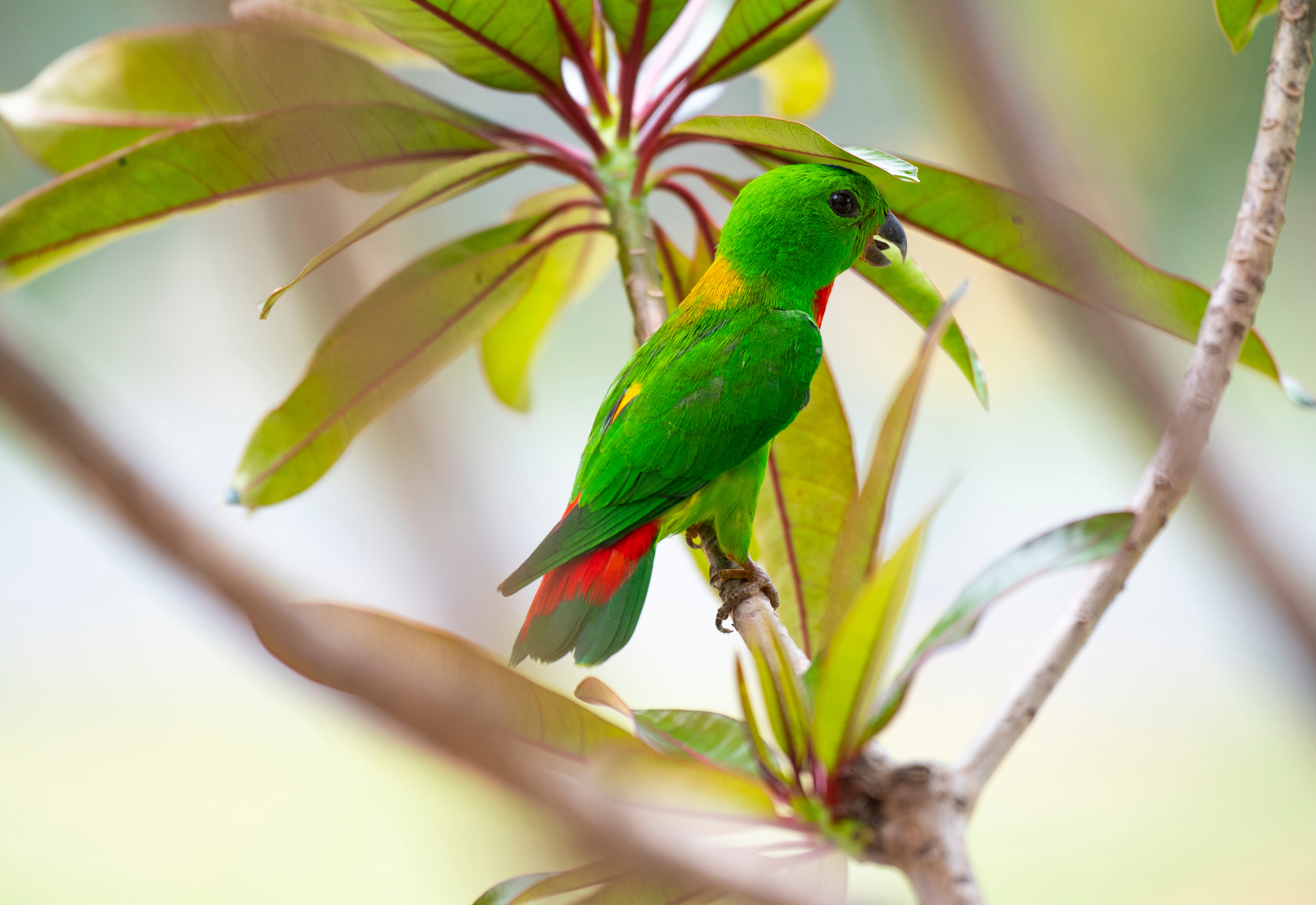
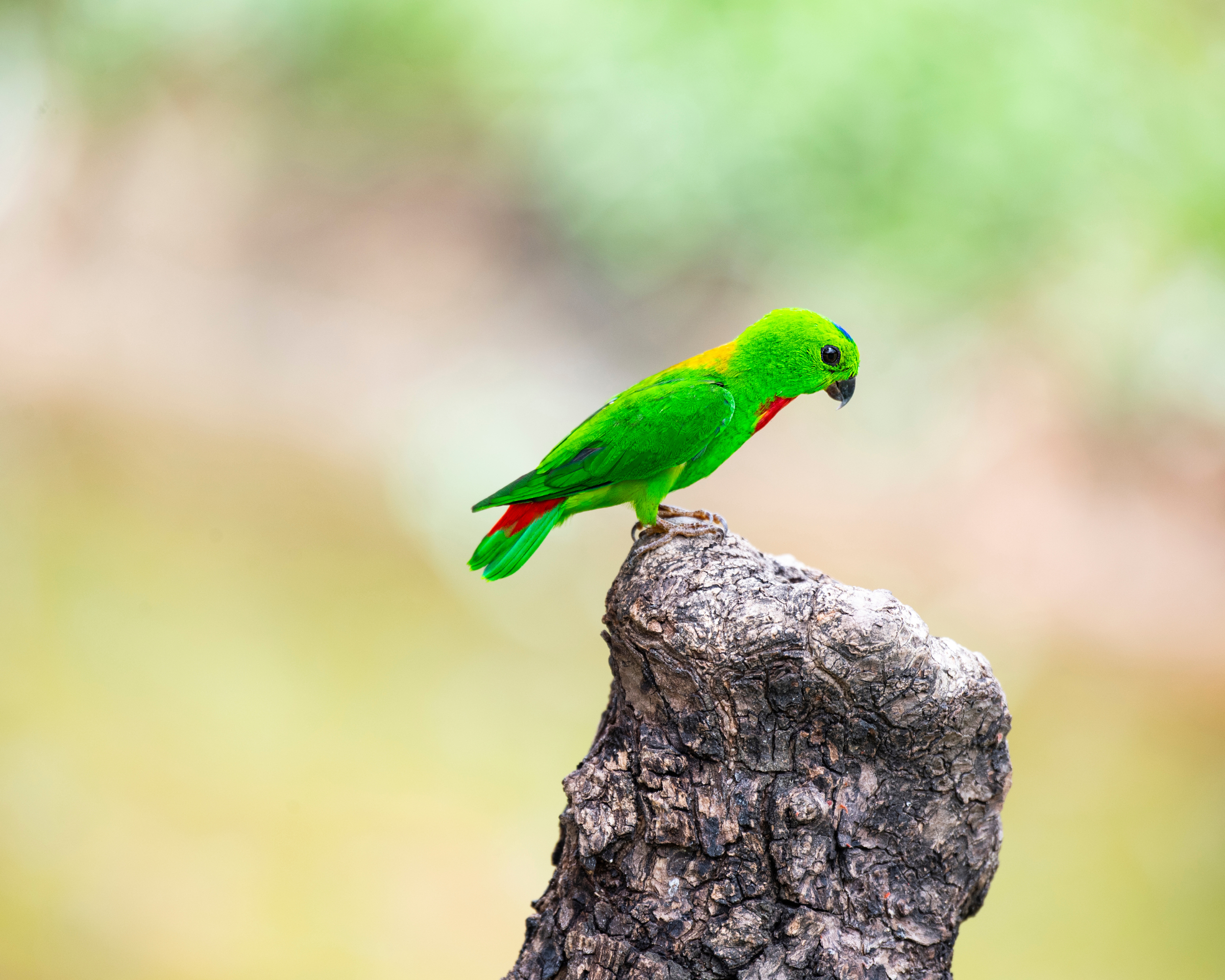
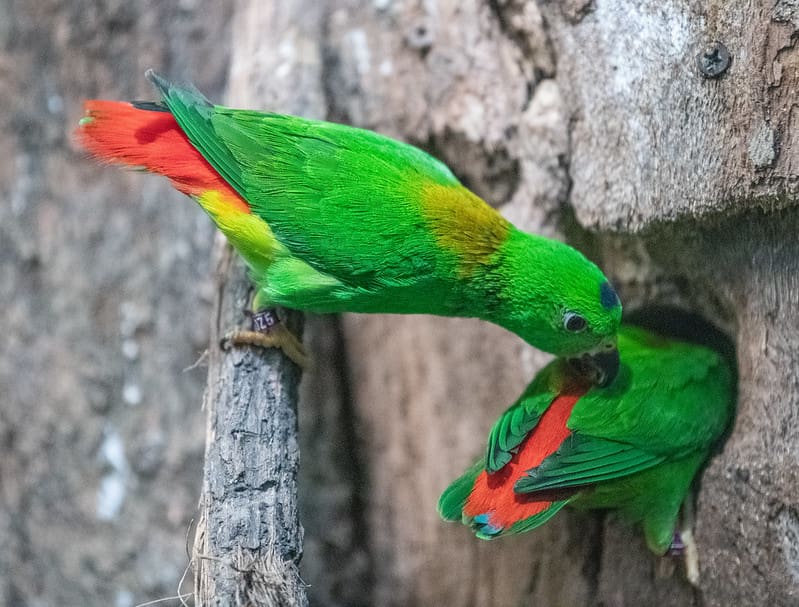
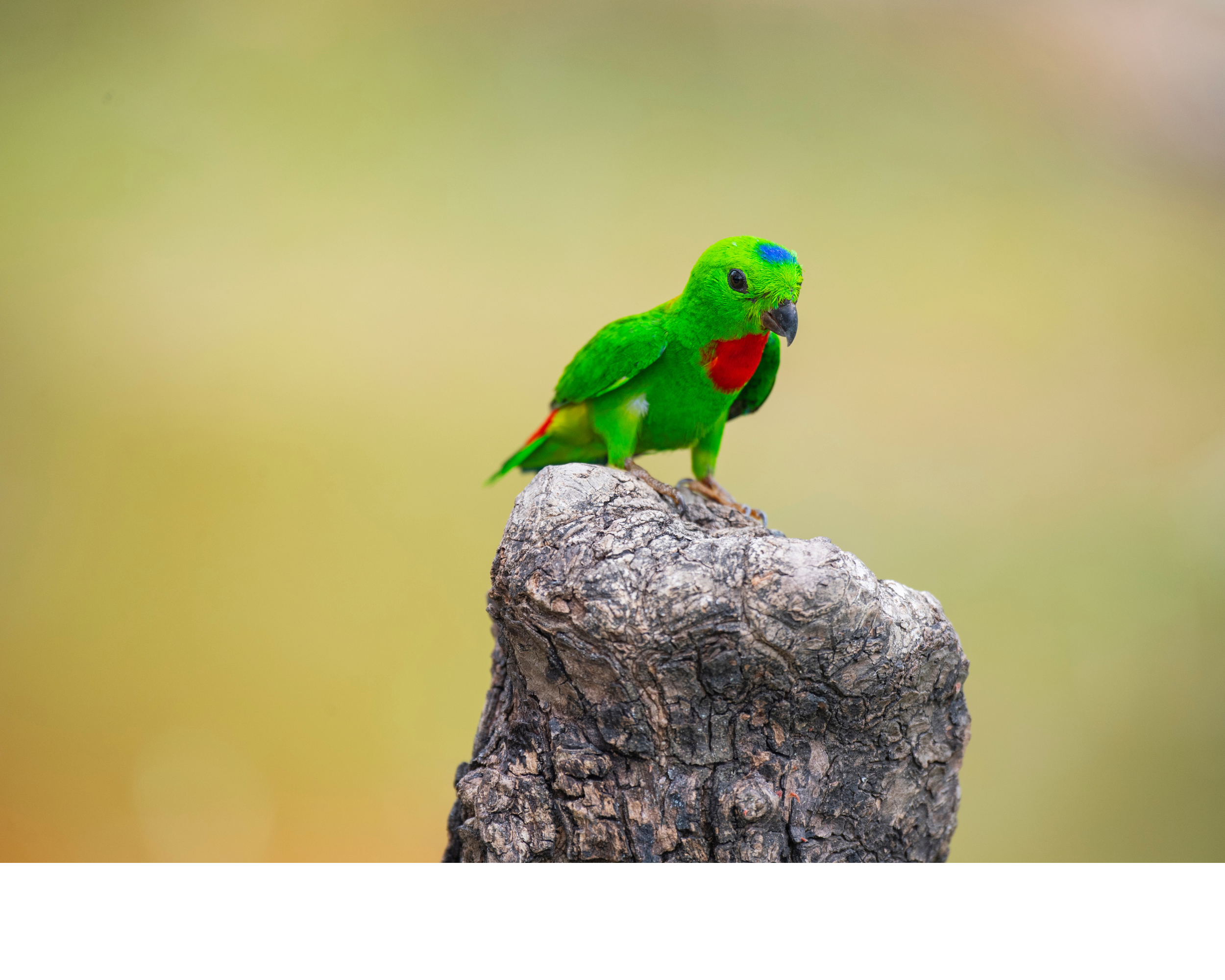
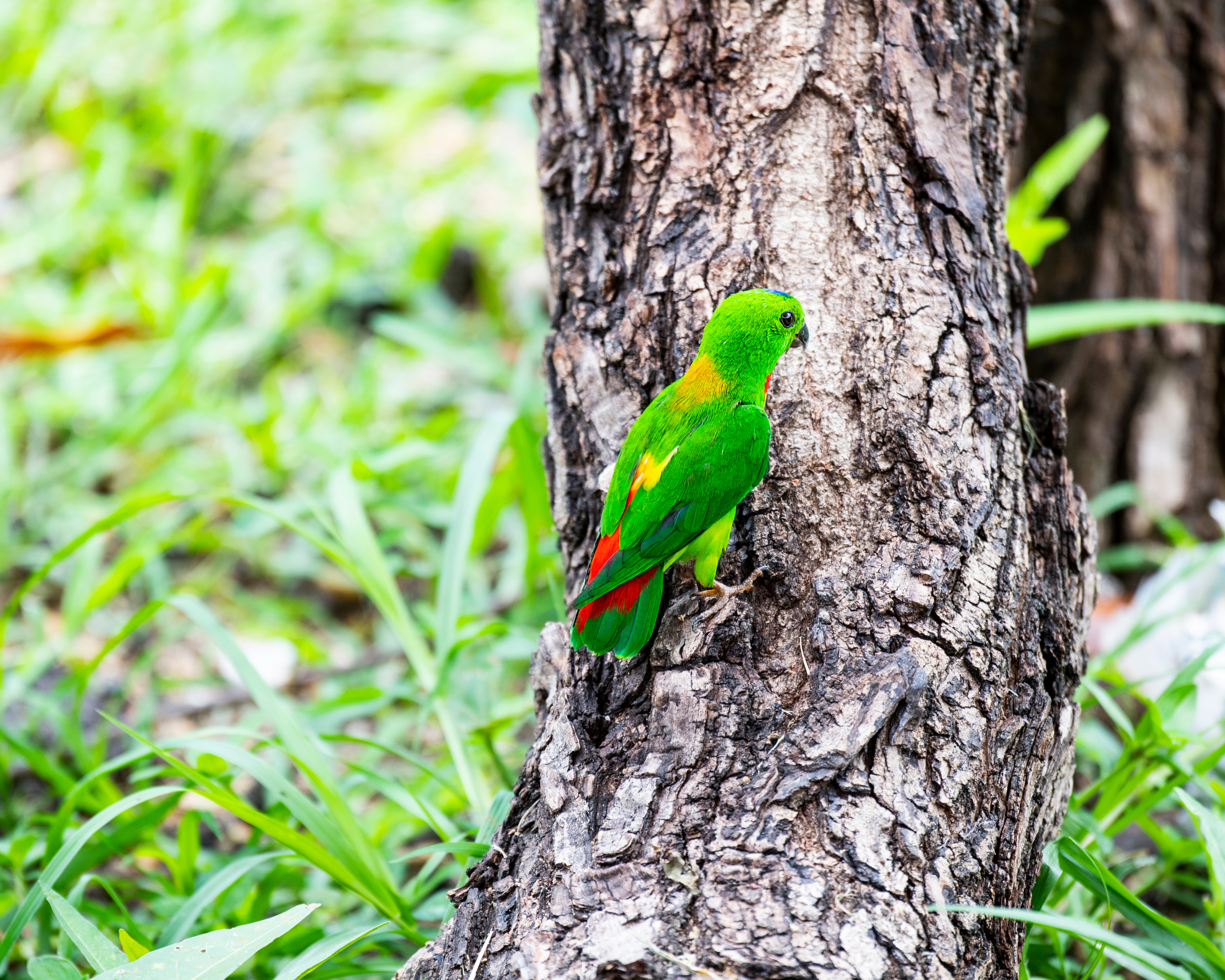
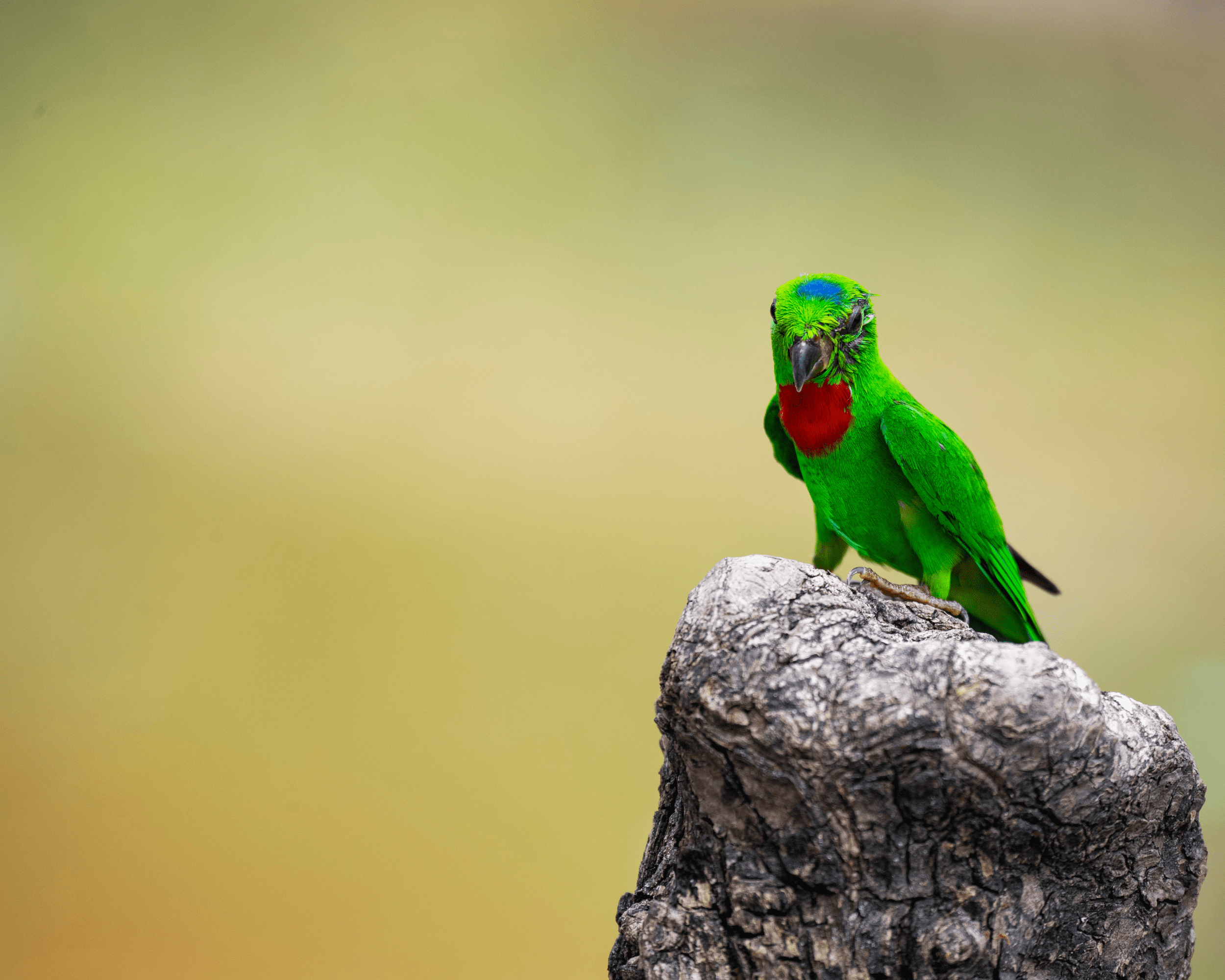
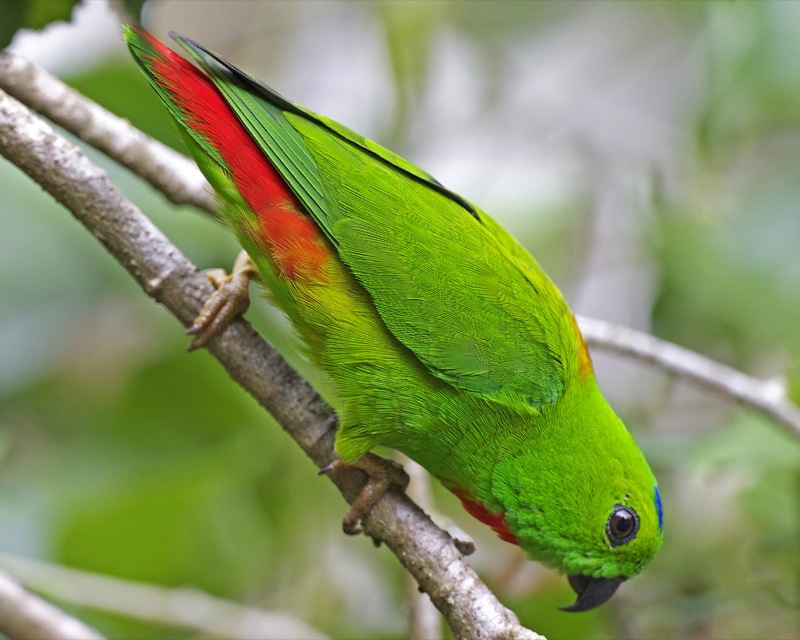
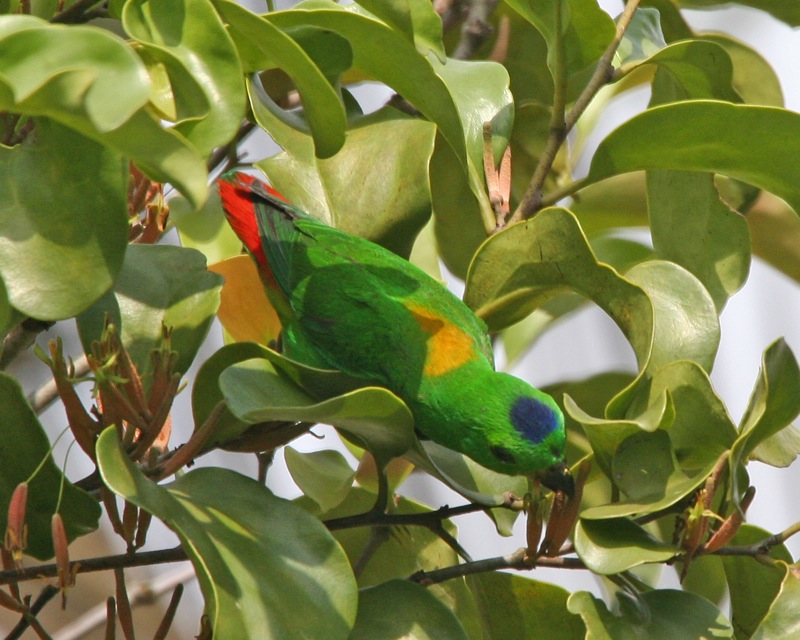
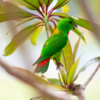
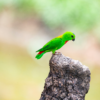
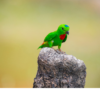
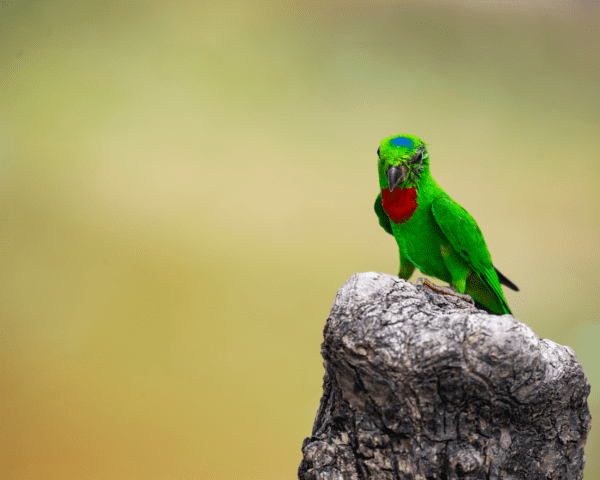
Male-in general green plumage; dark blue patch on crown; orange/yellow wash on mantle; red rump and upper tail coverts; band across lower back yellow; red throat patch. Beak black. Eye dark brown. Female-minimal blue on crown and orange/yellow on mantle; red throat patch absent; yellow band on lower back absent.
Colour Juvenile:
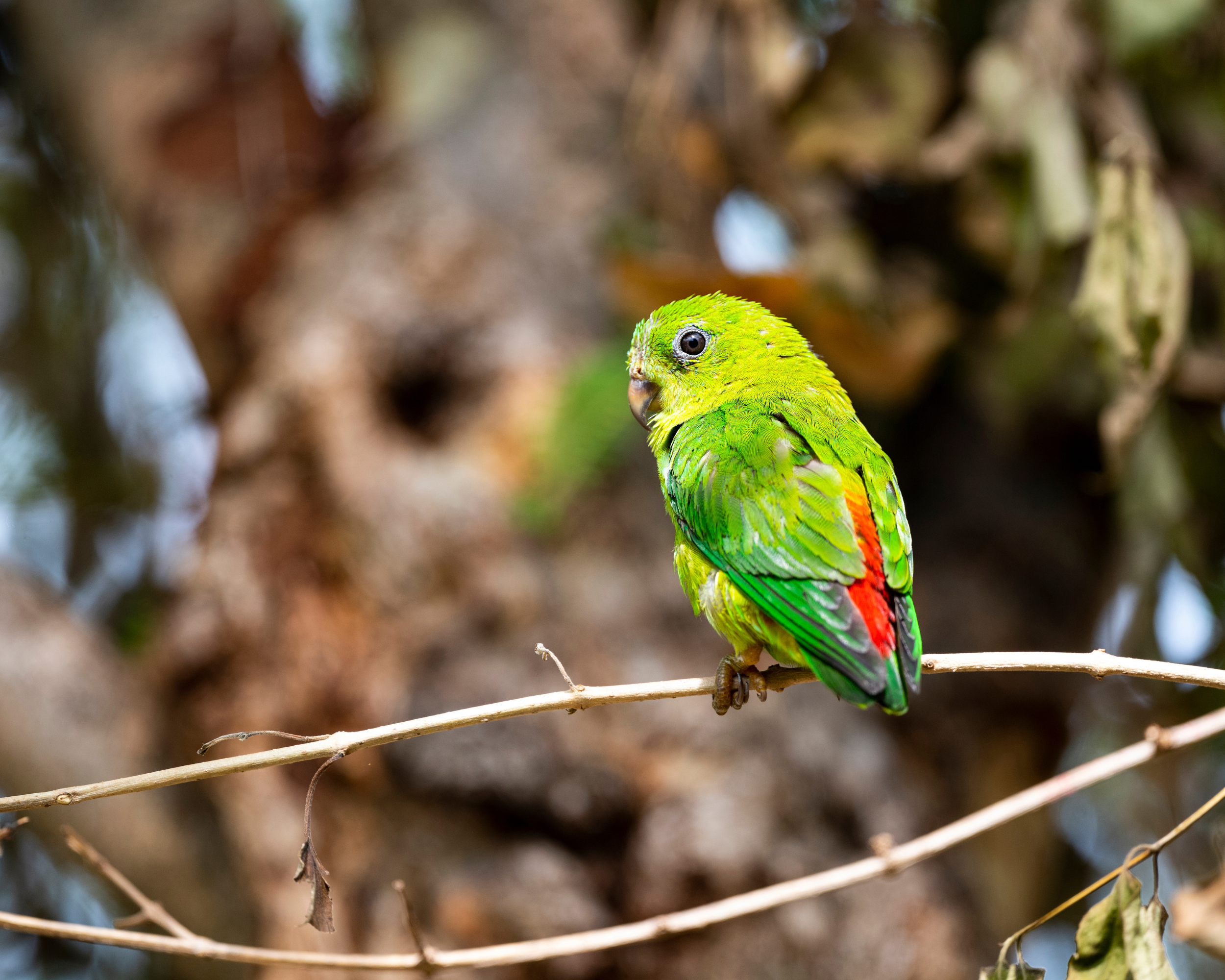
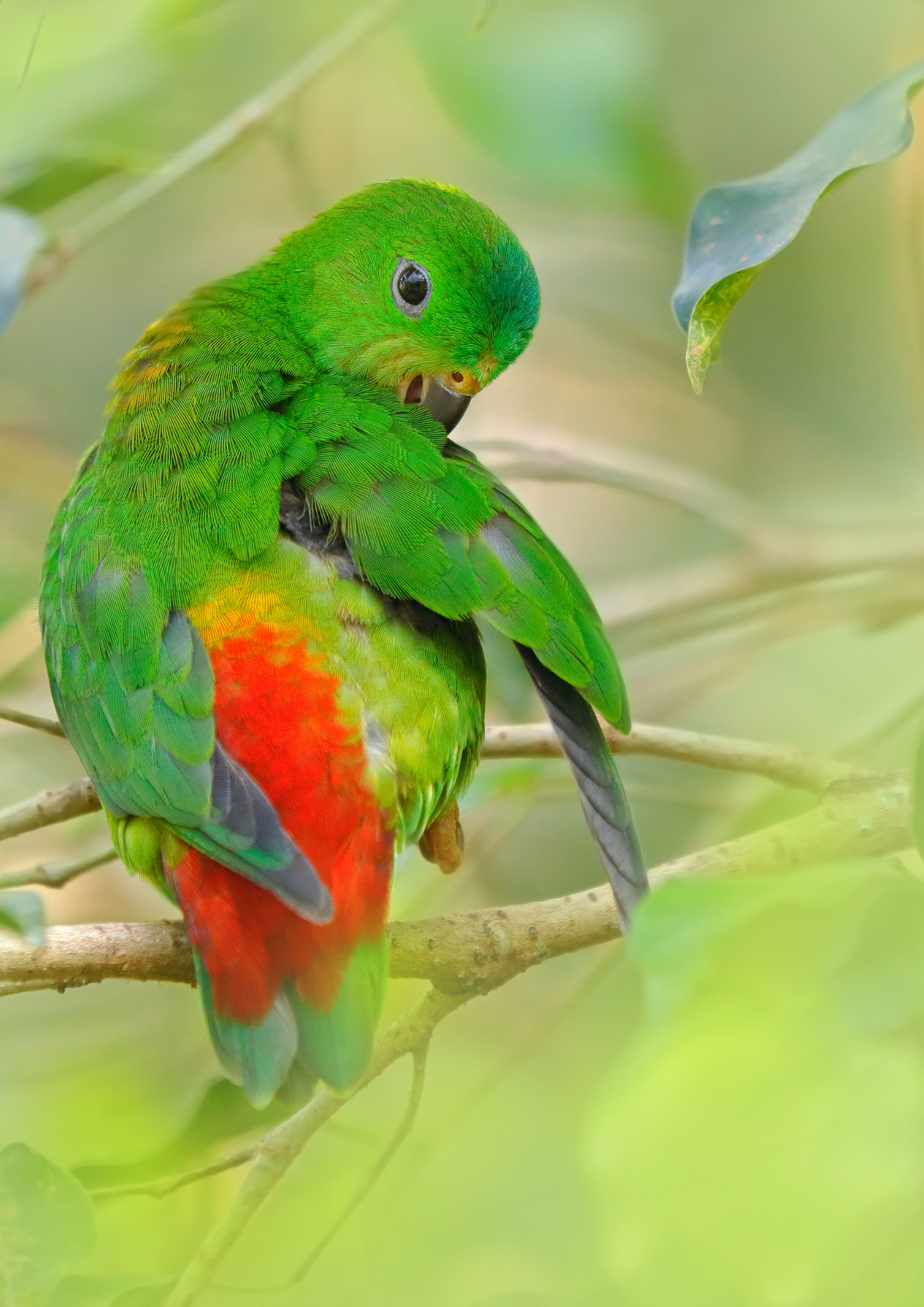
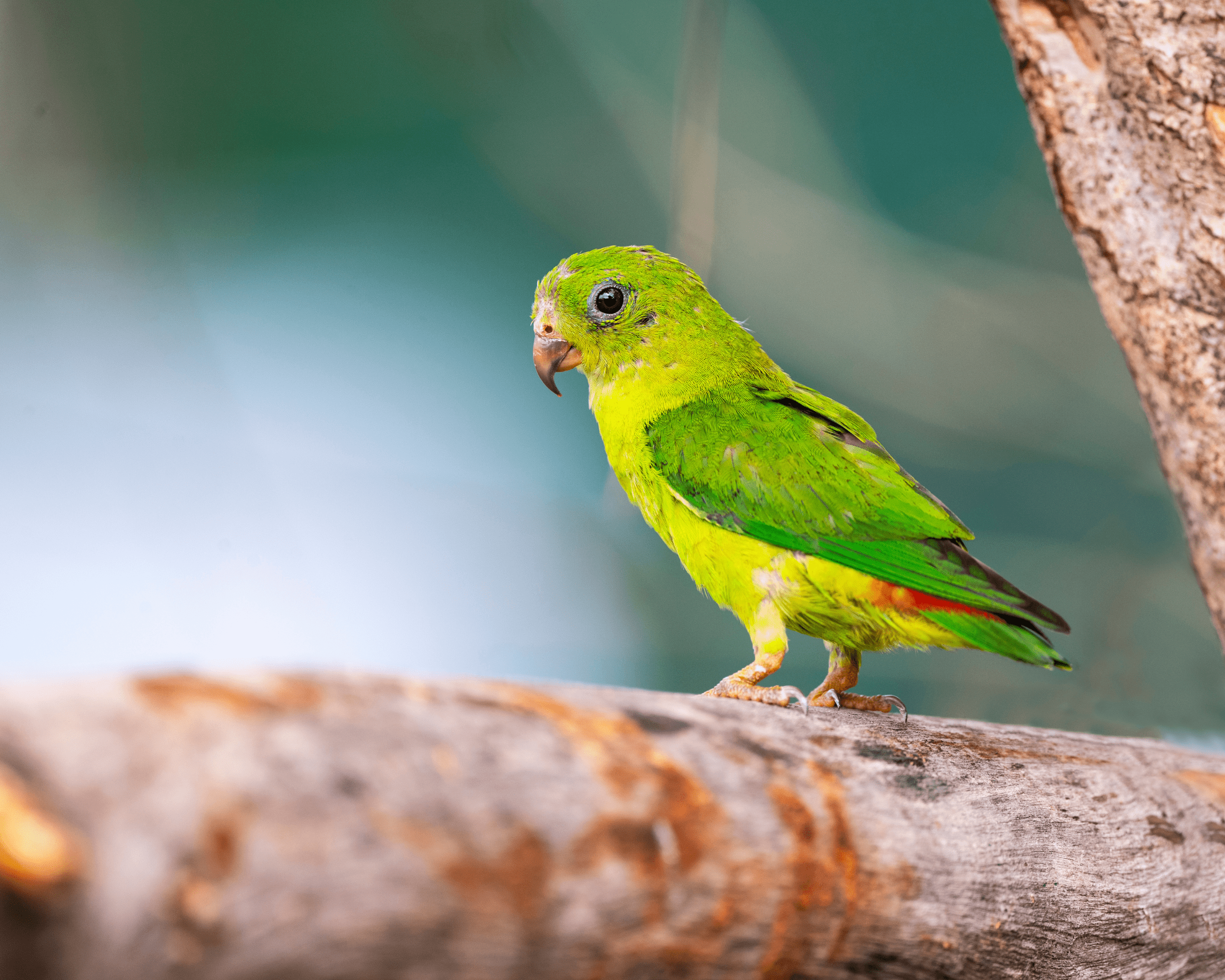
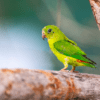
As in adult female but with grey forehead washed with blue; blue on crown and orange/yellow on mantle absent; green rump with feathers margined red. Beak yellow/brown.
Call:
Calls made in flight shrill and squeaky. Group calls rapidly repeated or ringing. While feeding notes are occasionally shrill and with two syllables.
More Information:
Content Sources:
CITES
BirdLife International
Cornell Lab of Ornithology/Birds of the World
Parrots: A Guide to Parrots of the World, Juniper and Parr, 1998
Parrots of the World, Forshaw and Cooper, 1977. 2010 edition
Parrots of the World, Forshaw, 2006.
Parrots in Aviculture, Low, 1992.
UNEP-WCMC CITES Trade Database, January 2005.
Captive Status:
Uncommon
Longevity:
—
Housing:
Planted walk-in aviary, minimum length 1.5 m (5 ft); outdoors if in warm climate, with small attached shelter.
Diet:
Fruits such as: apple, pear, pomegranate, guavas where available, the large fruits halved and not chopped; berries such as: blackberries, red currants; small seeds such as: canary, millet; soaked oats; spray millet; sponge cake and nectar; insectivorous food; clean mealworms, maggots and ant pupae; complete pellet if taken.
Enrichment:
House with other individuals, provide daily bathing bowls. Provide unsprayed flowering branches, and willow and elder branches to strip.
Nest Box Size:
Nest log 15 cm x 40 cm (6 x 15.6 in).
Clutch Size:
3-4
Fledging Age:
5 weeks
Hatch Weight:
—
Peak Weight:
—
Weaning Weight:
—
World Population:
Unknown, decreasing.
IUCN Red List Status:
Least Concern
CITES Listing:
Appendix II
Threat Summary:
Not globally threatened. Heavily trapped: since 1981, 75,239 individuals have been recorded in international trade. Is to some extent dependent on primary and secondary forests, but also persists in more heavily degraded areas (particularly where adjacent to intact areas). In response to widespread Sundaic forest loss, this species is suspected of having declined by 10-19 % over 10 years.
Range:
Occurs in southern Thailand and extreme S Myanmar (Tenasserim), Peninsular Malaysia, Singapore, Sumatra and associated islands (Nias, Mentawai Is), Anambas Is, Riau Archipelago, Bangka, Mendanau Is, Belitung, and Borneo and associated islands (Labuan, Maratua Is); also, western Java where, in part, introduced.
Habitat:
Found in forest and forest edge, secondary growth, peatswamp and riverine forest, bamboo patches, landward edge of mangroves, beach-strand woodland, especially with casuaÂrinas, wooded gardens, coconut groves, plantations, up to 1300 m (4264 ft), exceptionally to 2000 m (6562 ft), in Indonesia up to 500 m; possibly more abundant in selectively logged than primary forest.
Wild Diet:
Diet includes flowers, buds, fruits of various figs, including Ficus caulocarpa, F. virens, F. delosyce, F. pisocarpa, F. kerkenhovenii, F. crassiramea and F. stupenda, also flowers of Erythrina and durian Durio zibethinus, and mesocarp of oil-palm fruits.
Ecology and Behaviour:
Birds travel the canopy and middle storey. They are seen singly, in pairs or, outside the breeding season, in parties of 150 or more individuals. Roosting is done upside down, hence the name “hanging parrot”.
Clutch and Egg Size:
3-4 rounded-oval eggs, 18.0 x 15.5 mm (0.7 x 0.6 in)
Breeding Season:
January-August; nest is in hollow in living or dead tree.
Related Links:
—