Brown-necked Parrot
Also known as:
Grey-headed Parrot (P. f. suahelicus)
Also known as:
Grey-headed Parrot (P. f. suahelicus)
DID YOU KNOW?
The Brown-necked Parrot’s very large beak gives it a “top heavy” appearance in flight.

Poicephalus
fuscicollis
Size:
32 cm (12.5 in)
Weight:
310-400 g (10.9-14 oz)
Subspecies including nominate:
two: P.f. fuscicollis, P.f. suahelicus
Colour Adult:
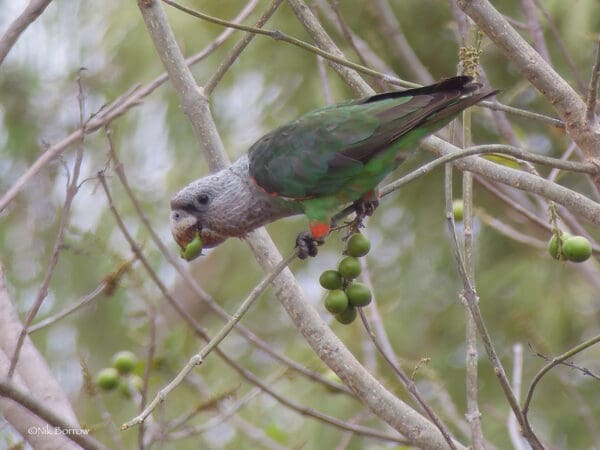
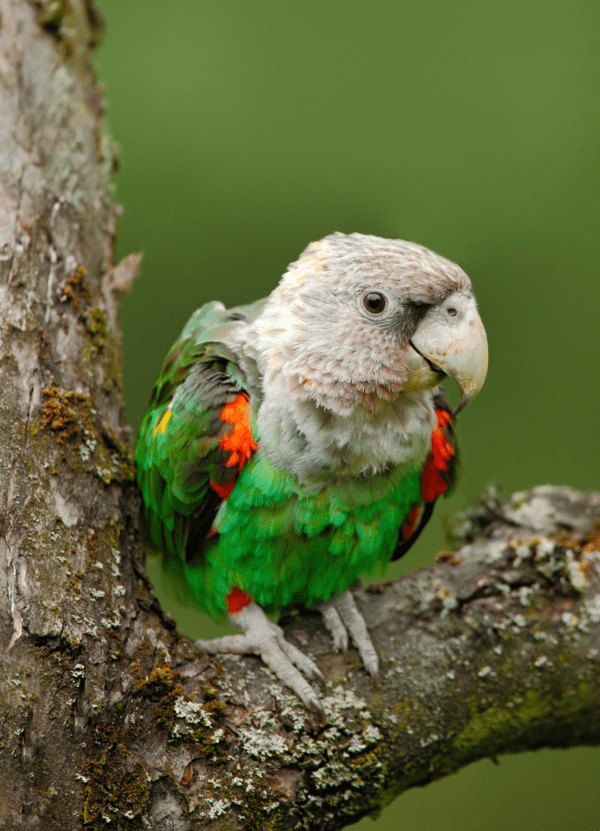
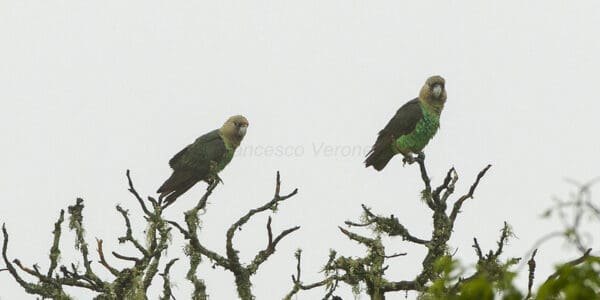
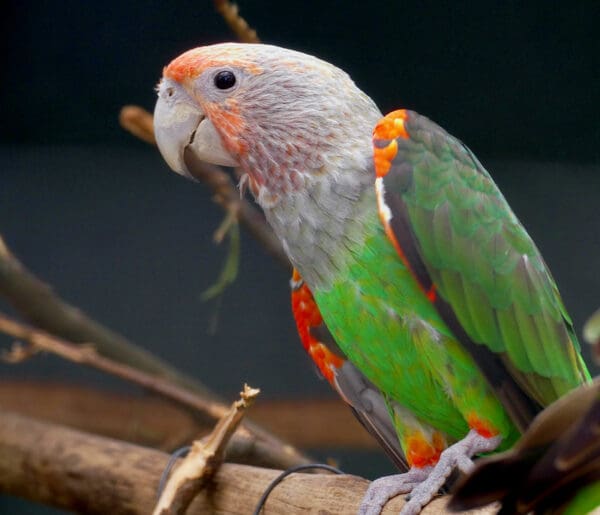
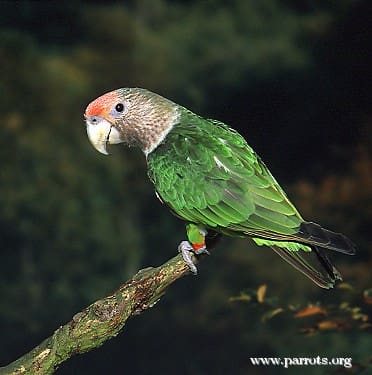
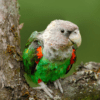
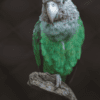
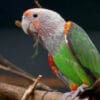
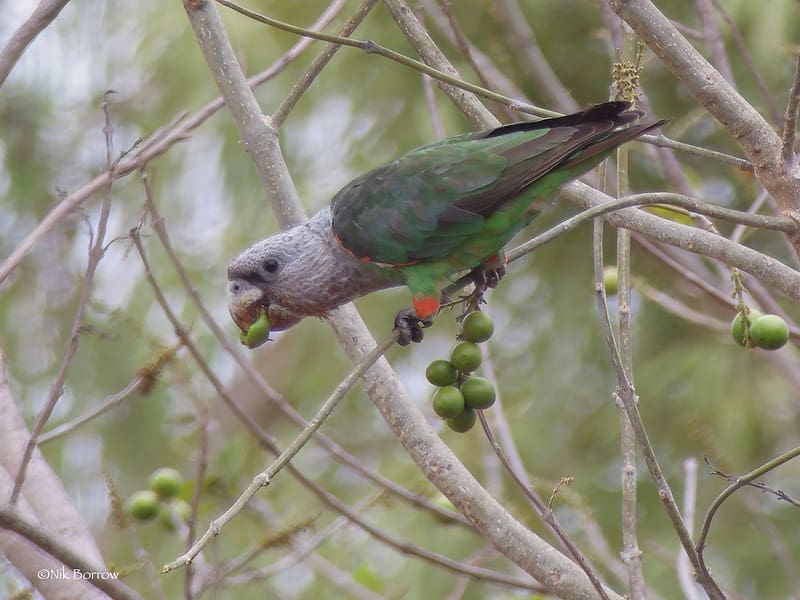
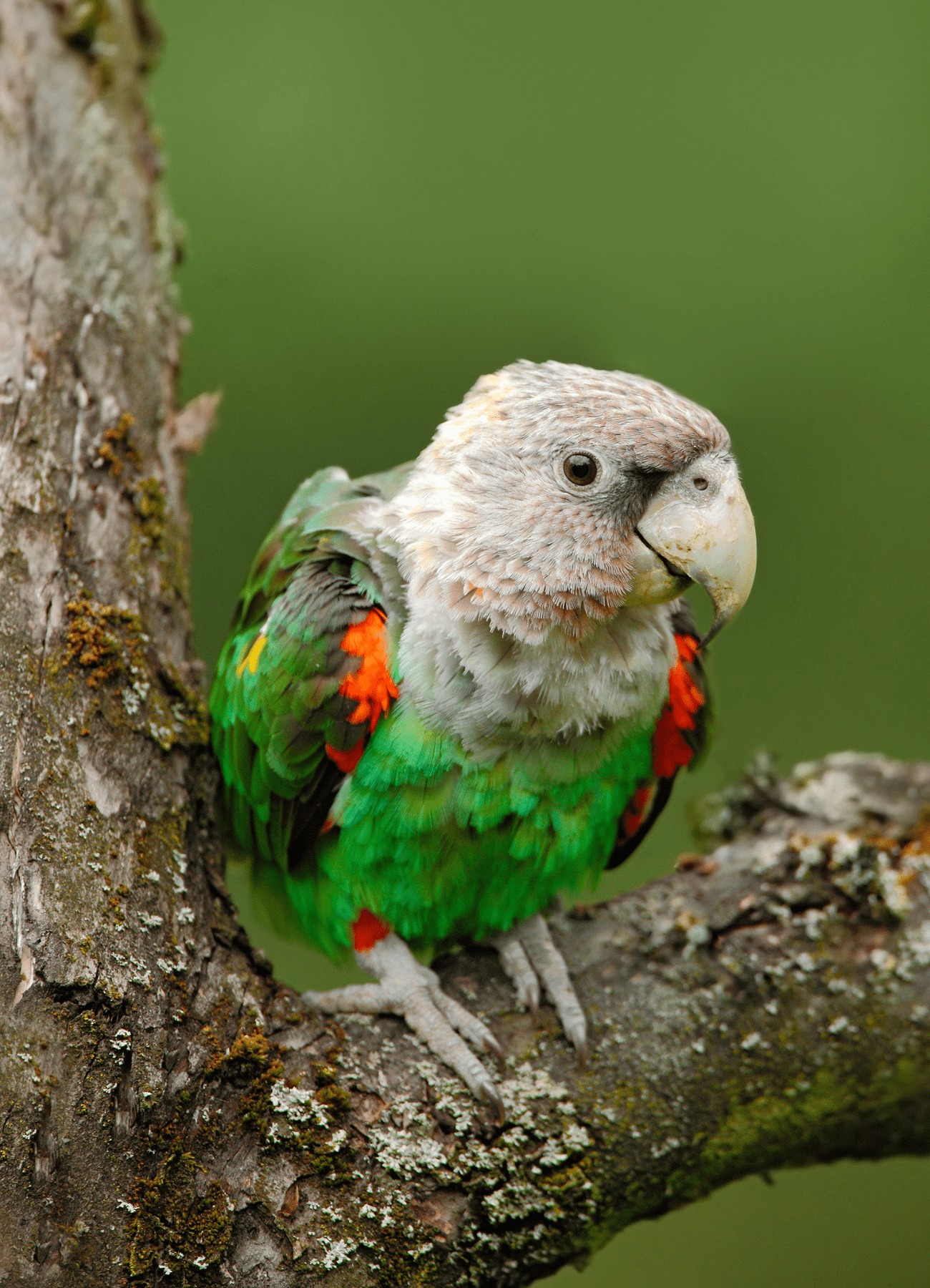
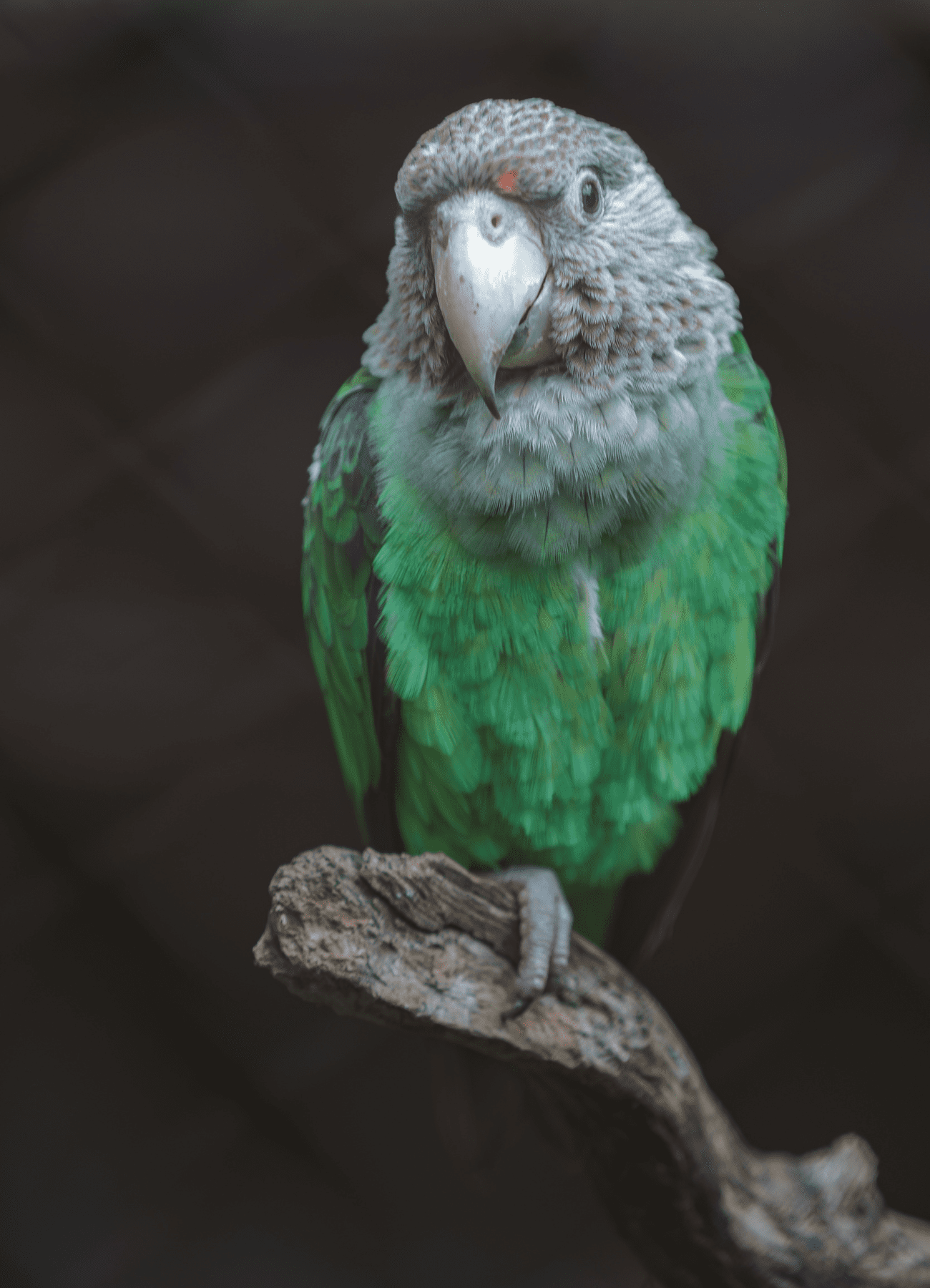
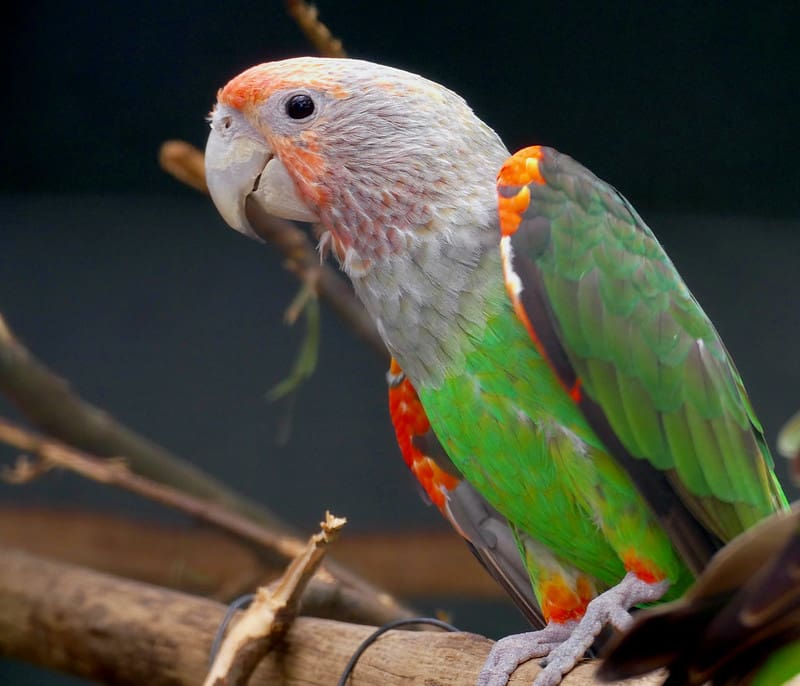
P.f. fuscicollis: Both adults have varying plumage; head and neck grey to light brown/pink, scalloped lightly orange/brown; orange/red band across the crown in female (absent in males); dark green back and wings; green rump and underparts; orange/red thighs, bend of wing, and carpal edge; black/brown tail; dark brown eye; white/grey eye ring (bare) and horn-coloured beak.
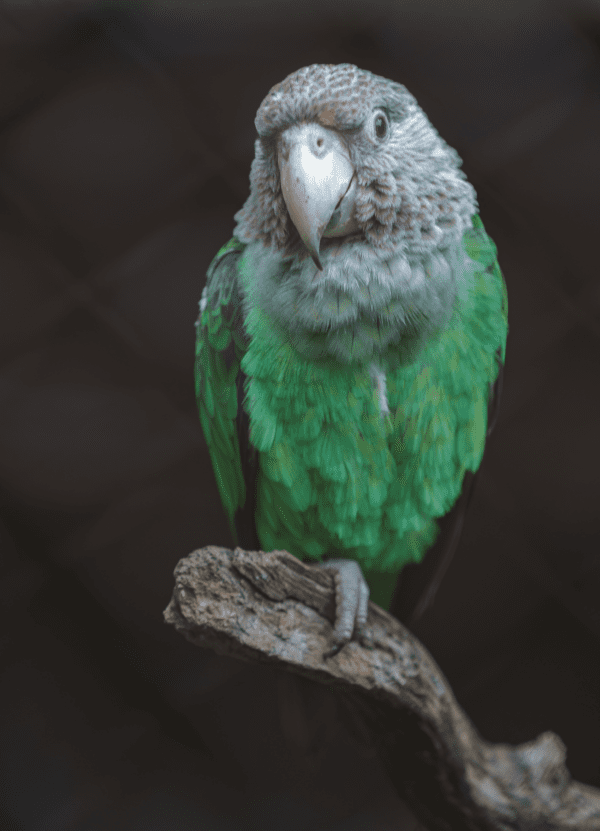
P.f. suahelicus: Both adults have varying plumage; head and neck silver/grey, scalloped lightly orange/brown; orange/red band across the crown in female (absent in males); dark green back and wings; green/blue rump and underparts; orange/red thighs, bend of wing, and carpal edge; black/brown tail; dark brown eye; white/grey eye ring (bare) and horn-coloured beak.
Colour Juvenile:
Green to yellow/brown head and neck, body dark green/olive. Male and female P.f. fuscicollis and P.f. suahelicus have orange forehead until 6 – 7 months then females regain orange marking at about 9 months; head remains silver in males.
Call:
Long-distance contact calls include a loud, raucous tzu-wee, zu-wee, zeu-wee, zz-keek, and a nasal zeek given continuously during flight. Similar to P. robustus, but louder and more frequent in flight and softer when socialising at roost. Captive birds mimic human and other sounds.
More Information:
Content Sources:
CITES
BirdLife International
Cornell Lab of Ornithology/Birds of the World
Parrots: A Guide to Parrots of the World, Juniper and Parr, 1998
Parrots: Status Survey and Conservation Plan 2000-2004, Snyder, McGowan, Gilardi and Grajal, 2000.
Parrots of the World, Forshaw and Cooper, 1989. 2010 edition
Parrots of the World, Forshaw, 2006.
Parrots in Aviculture, Low, 1992.
Captive Status:
Rare
Longevity:
20-25 yrs
Housing:
Walk-in aviariy, minimum length 2.1 m (7 ft), or indoor cage minimum length 1.8 m (6 ft).
Diet:
Cooked beans and pulses, boiled corn; sunflower, dry, soaked or sprouted; walnuts greatly favoured, fruit, especially apple, orange, banana, rearing food made from: hard-boiled egg, wholegrain bread and carrot, all ground to crumbly consistency; fresh vegetables such as: carrot, celery, green beans and peas in the pod; complete pellet.
Enrichment:
Bathing; foot toys, destructible (non-toxic) toys such as wooden blocks, vegetable-tanned leather and heat sterilised pine cones; non-destructible (non-toxic plastic) toys, food-finder toys, preening toys, different texture and size hanging perch toys, fir, pine, elder or willow branches, push-and-pull toys (sliding up and down), vegetable-tanned leather toys.
Nest Box Size:
Vertical box, 12″ x 12″ x 24″ (30.5 cm x 30.5 cm x 61 cm).
Clutch Size:
2 to 4
Fledging Age:
10-11 weeks
Hatch Weight:
—
Peak Weight:
—
Weaning Weight:
—
World Population:
Unknown, decreasing.
IUCN Red List Status:
Least Concern
CITES Listing:
Appendix II
Threat Summary:
Not globally threatened. Reported as generally scarce but patchily common. This species is likely impacted by the wild bird trade: between 1975 and 2011, 16,243 wild-caught individuals were exported (UNEP-WCMC 2013). Nest trees are lost during poaching activities. Nominate fuscicollis is also threatened by commercial logging, wood harvesting, and land conversion to agriculture.
Range:
P.f. fuscicollis: Patchily from the Gambia to east-central Nigeria, lower River Congo, and northern Angola (Cabinda).
P. f. suahelicus: Extreme northeast South Africa (Limpopo Province), Mozambique, Zimbabwe, northern Botswana, and northern regions of Namibia to south-central Angola (including Cabinda), southern Democratic Republic of Congo, Rwanda, and east-central Tanzania.
Habitat:
Subspecies suahelicus uses many woodland types, mainly riparian forest, intervening mopane and baobab woodland, undisturbed Baikiaea, and open or dense tall Brachystegia, with lowland or mid-altitude evergreen forest used for roosting. Nominate of species uses mature wooded savanna; in the Ivory Coast, it is mainly in Borassus aethiopum palm woodland in forest–savanna; in Gambia, in Rhizophora mangroves; in Ghana, it frequents rich Daniellia woodland and dry Sudanian forest types, and visits semi-evergreen rainforests.
Wild Diet:
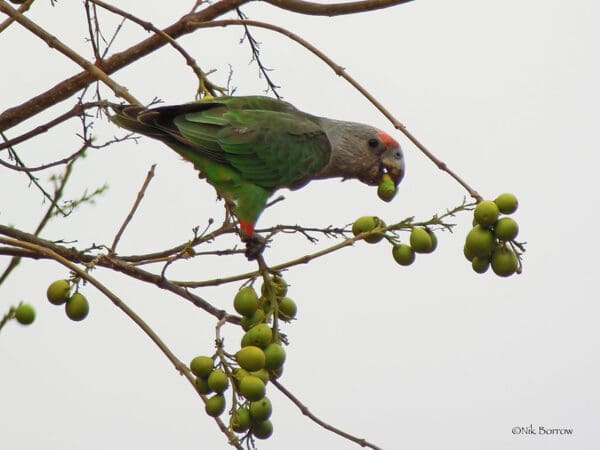
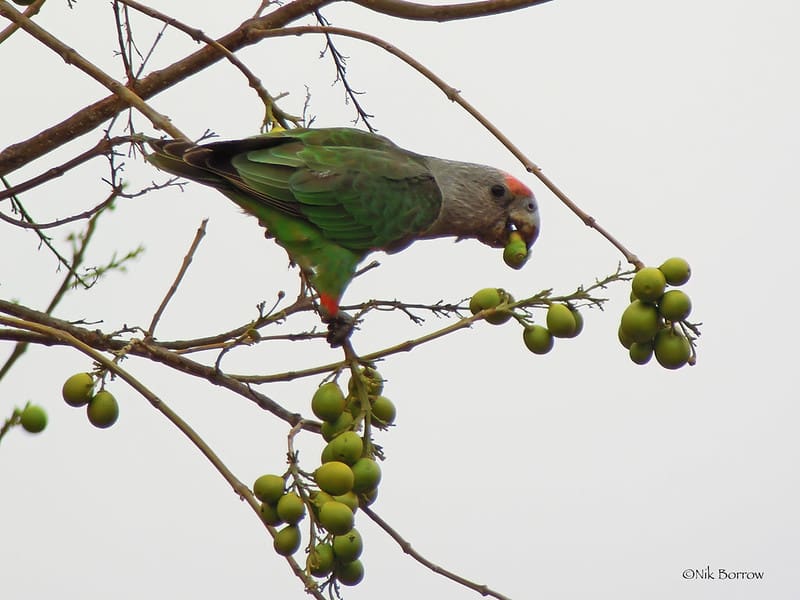
Feeds on a wide variety of fruits, nuts, including Mobola Parinari curatellifolia, seeds including Adansonia digitata, Aningeria adolfi-friedericii, Gmelina arborea, Monotes glaber, Erythrina (seeds and nectar), Uapaca, Pseudolachnostylis maprouneifolia, Syzygium cordatum, S. guineense, Lannea discolor, Celtis africana, Ricinodendron rautanenii, Parinari excelsa, Daniellia oliveri, Afzelia africana, Ceiba pentandra, Celtis mildbraedii and Diospyros mespiliformis. In addition, Ziziphus abyssinica berries and fruits of Parinari curatellifolia and P. excels taken; also Podocarpus seeds and young pods of Acacia polyacantha and Erythrina abyssinica. Later in the season, it also takes the bark of native and non-native plants, including Gmelina arborea, Sclerocarya birrea, Parinari curatellifolia, and Melia azaderach.
Ecology and Behaviour:
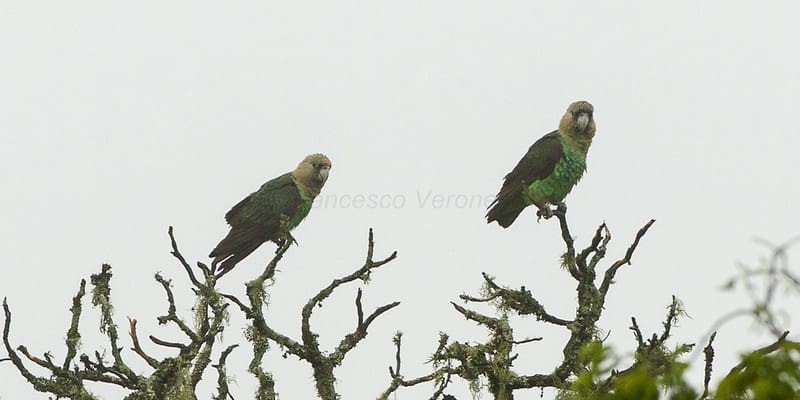
Arboreal, roosts communally; forms flocks with other Poicephalus sp. Partially nomadic.
Clutch and Egg Size:
2 to 4, rounded, glossy eggs, 34 x 28 mm (1.3 x 1.0 in)
Breeding Season:
Gambia, February-April; Zimbabwe, March–June and October–November; Zambia, April–June; Tanzania, April–July; Malawi, March–April; Democratic Republic of the Congo, July. Nest is in tree hollow.