Also known as:
Shell Parakeet, Parakeet, Budgie
Also known as:
Shell Parakeet, Parakeet, Budgie
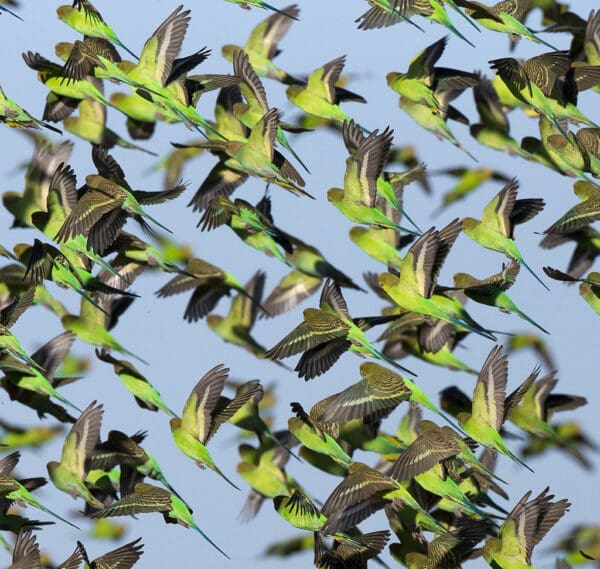
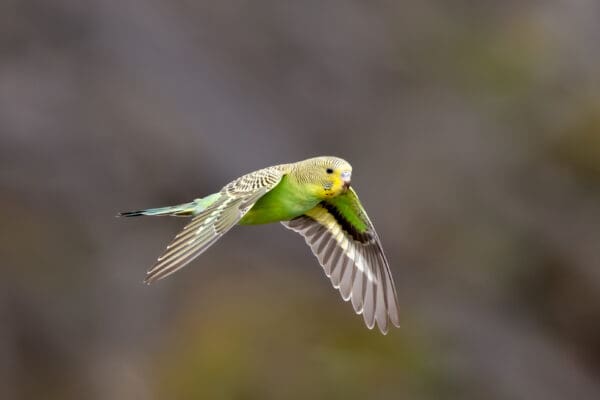
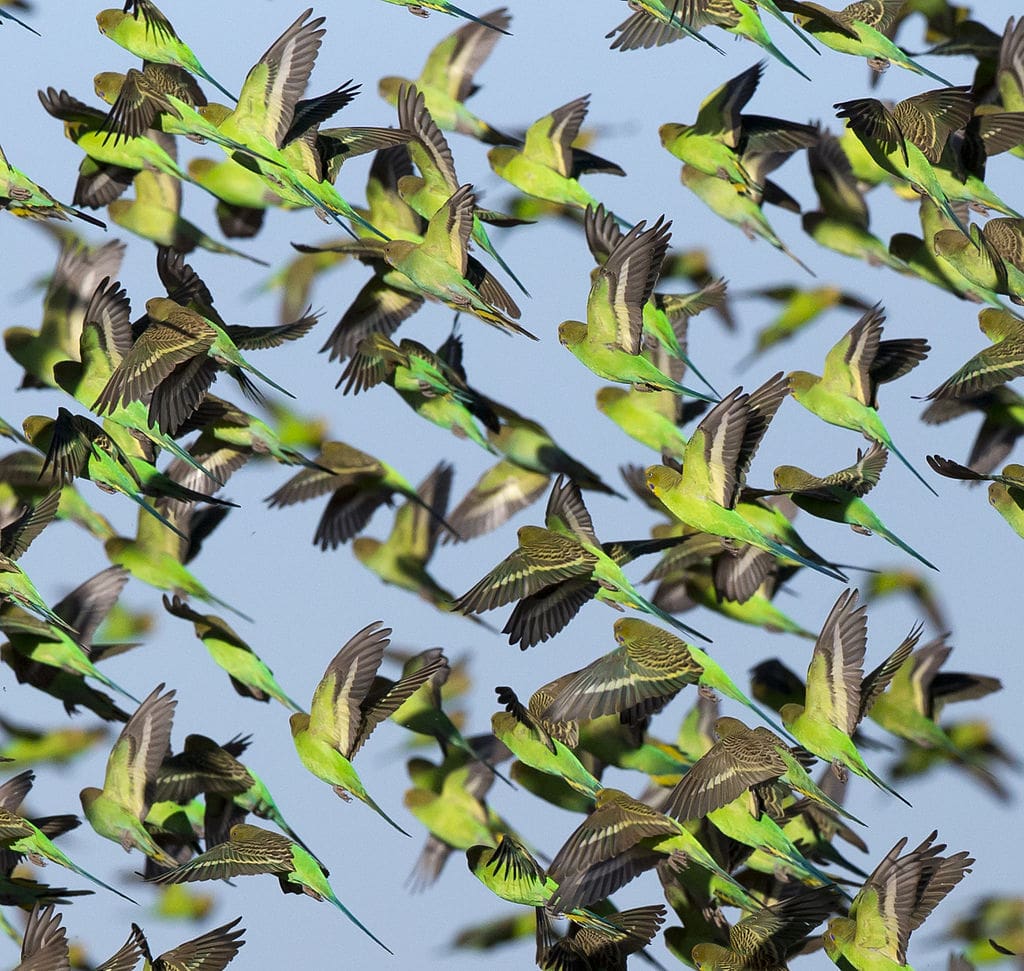
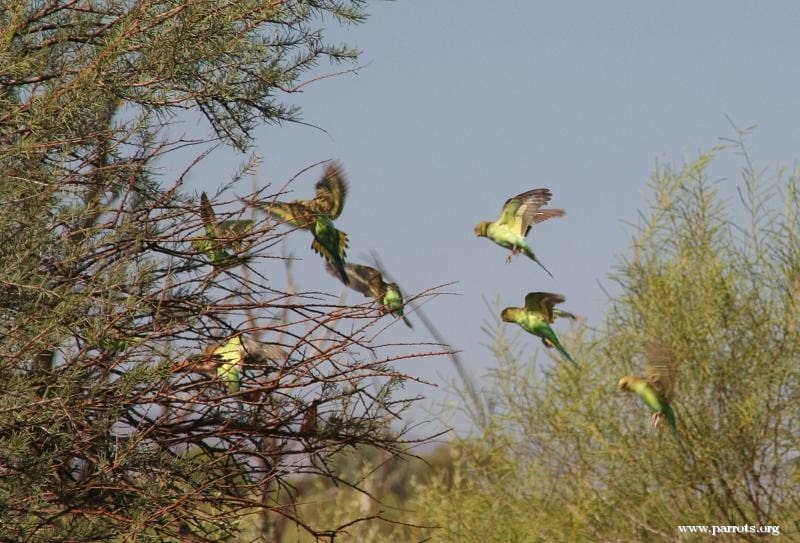
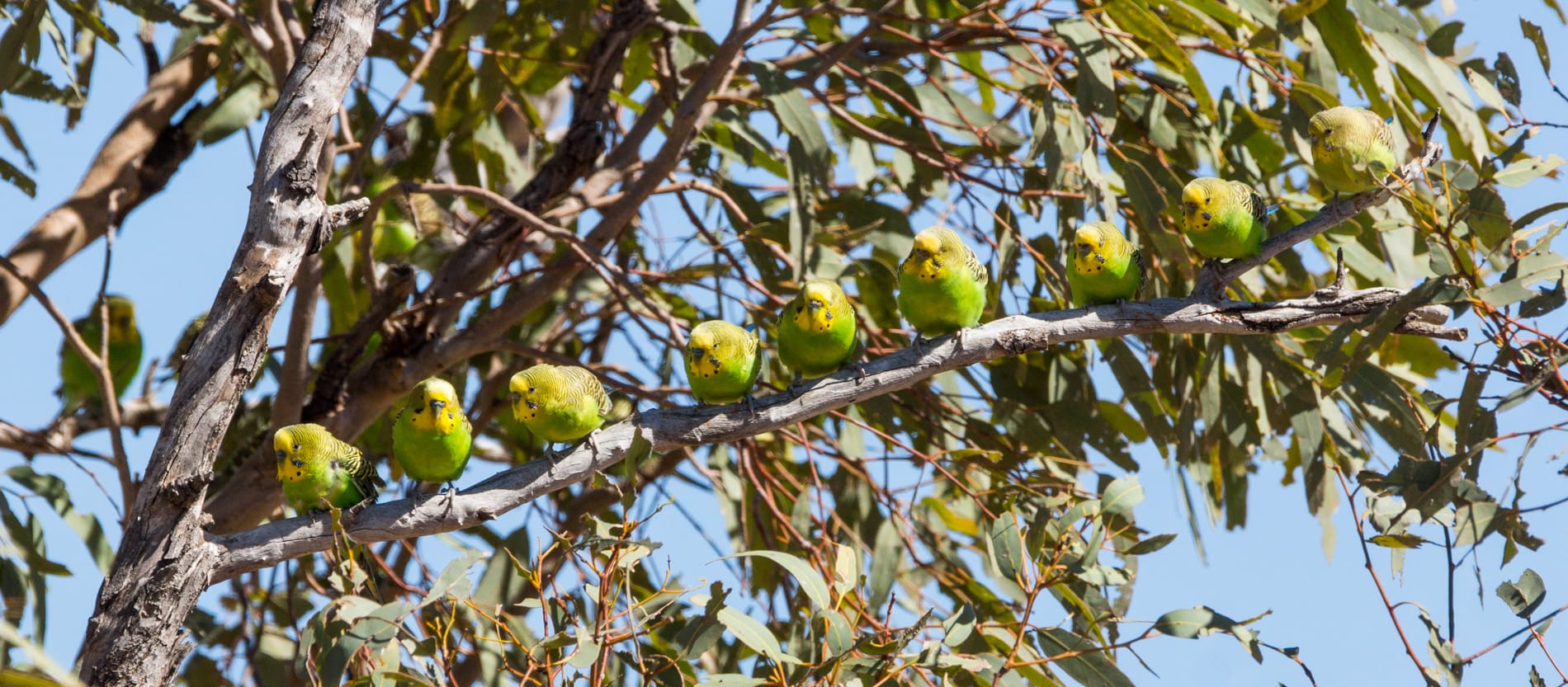
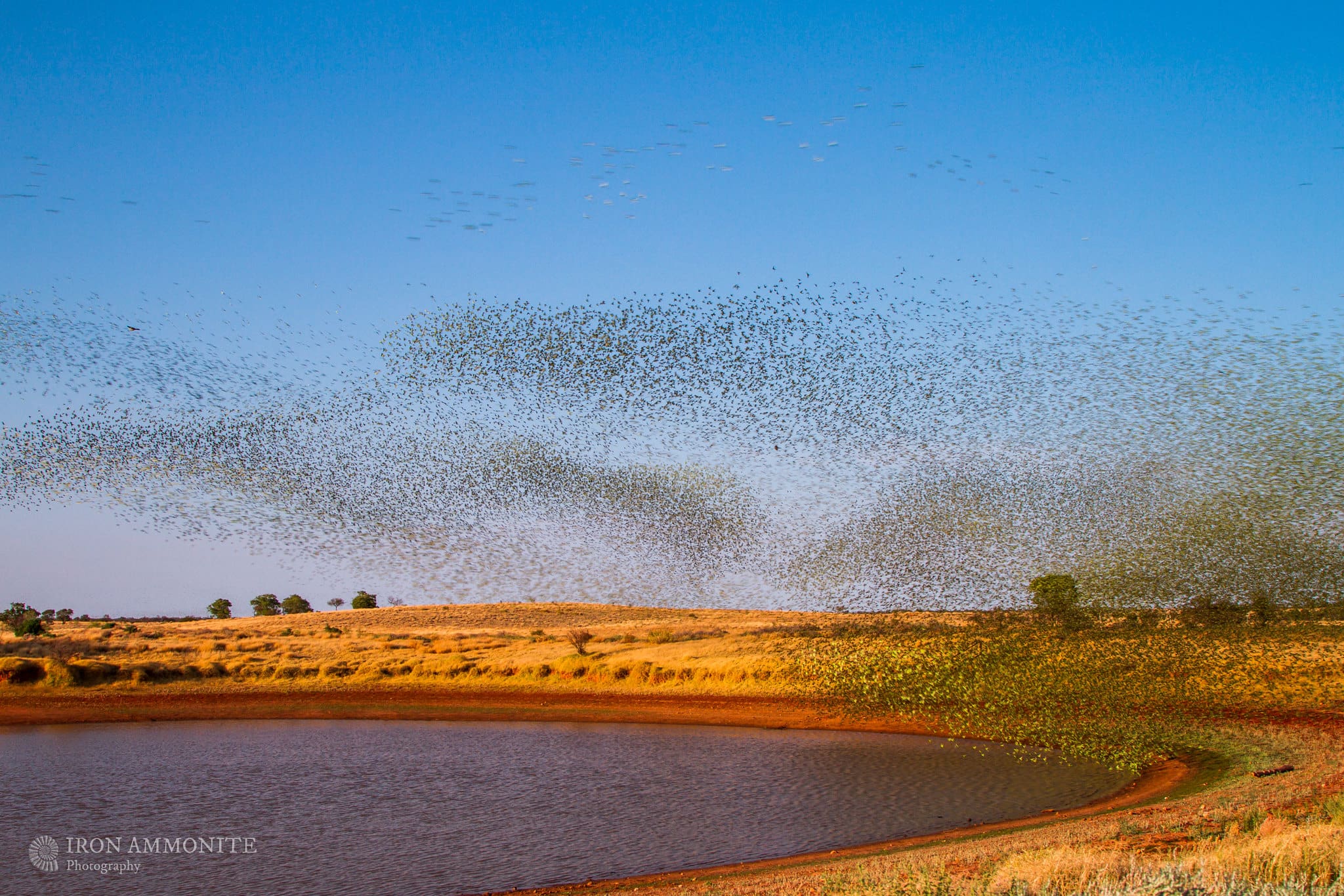
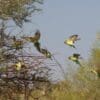
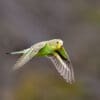
![© Jim Bendon [CC BY-SA 2.0] via Wikimedia Commons A flock of wild Budgerigars takes flight](https://foowd.com/wp-content/uploads/1990/03/Budgerigar-flock-Jim-Bendon-from-Karratha-Australia-CC-BY-SA-2.0-via-Wikimedia-Commons-100x100.jpg)
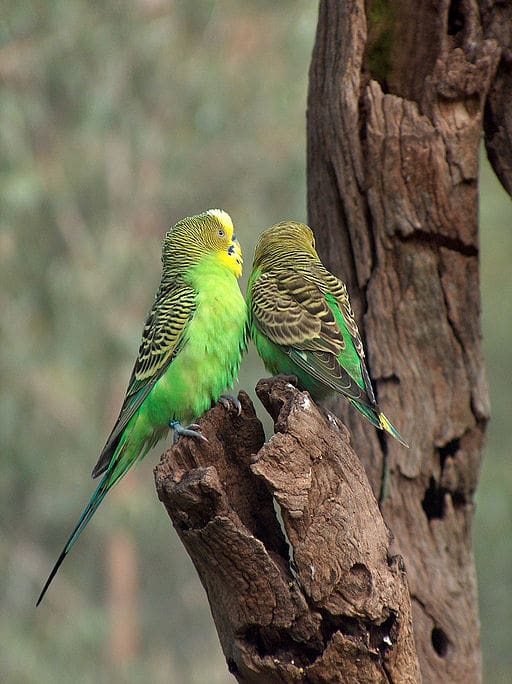
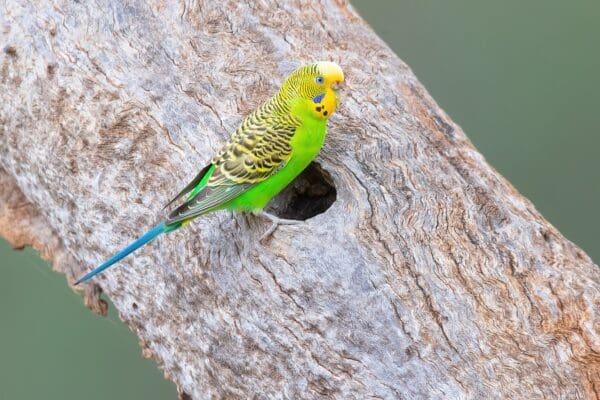
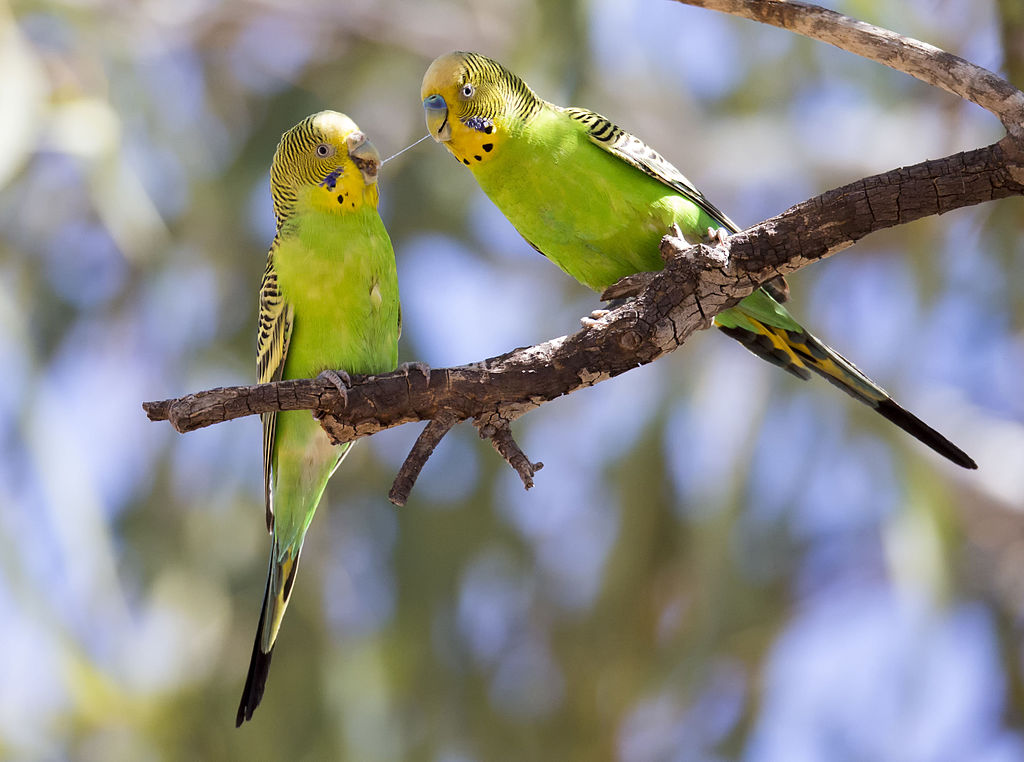
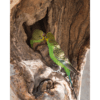
![© Guillaume PILLET [CC BY 2.0] via Flickr A wild pair of Budgerigars inspect a tree cavity](https://foowd.com/wp-content/uploads/2023/01/wpt_Budgerigar_1099-11-100x100.jpg)


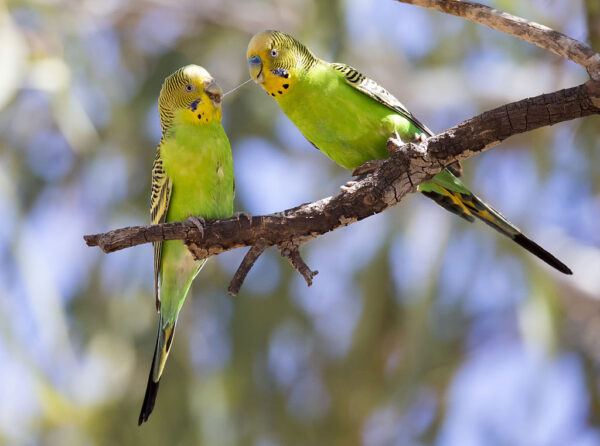
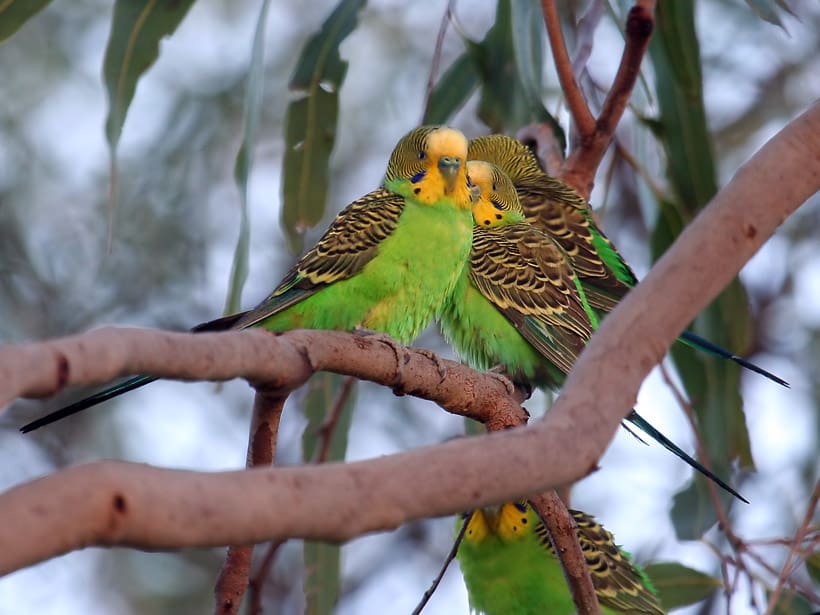
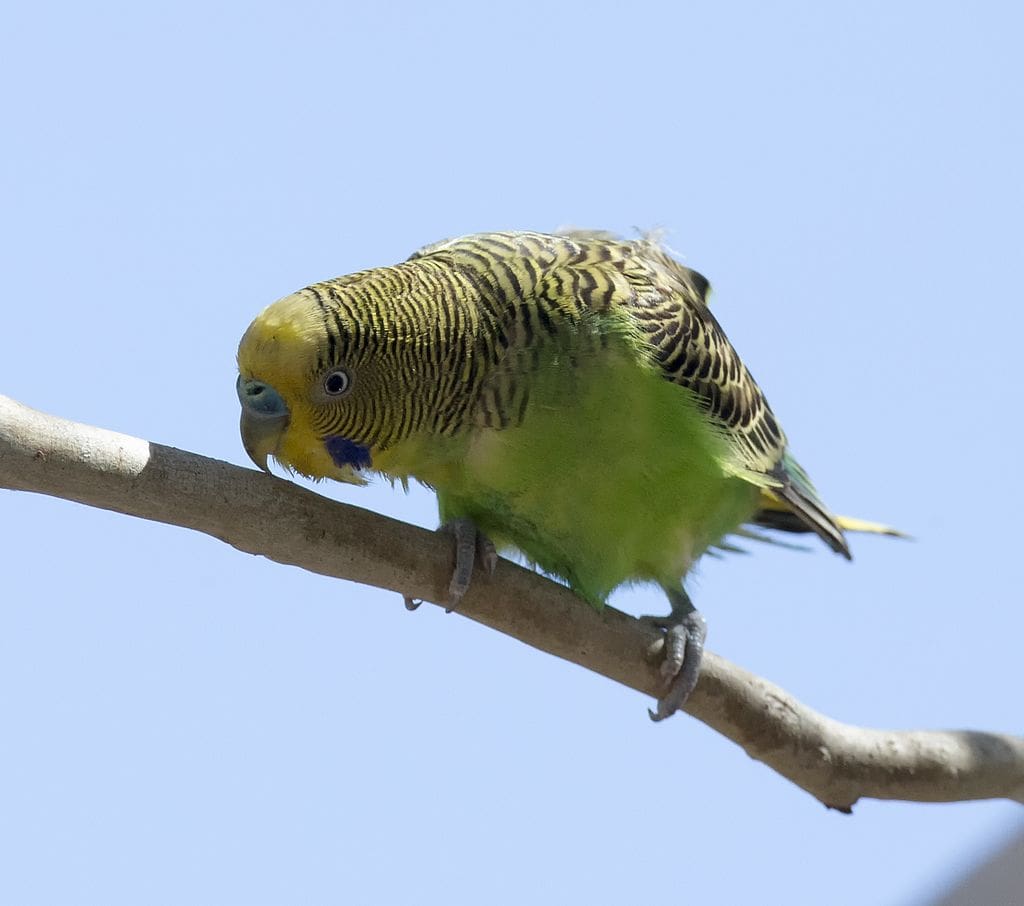
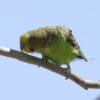
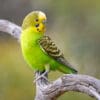
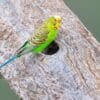
![© Jim Bendon [CC BY-SA 2.0] via Wikimedia Commons A wild Budgerigar perches on a branch](https://foowd.com/wp-content/uploads/1990/03/Budgerigar-3-Jim-Bendon-100x100.jpg)


The genus name Melopsittacus means “melodious parrot.” The species name undulatus means “undulated” or “wave-patterned.”

Melopsittacus

undulatus
Size:
18-20 cm (7-7.8 in)
Weight:
22-32 g (0.8-1.1 oz)
Subspecies including nominate:
one, with many colour mutations
Colour Adult:
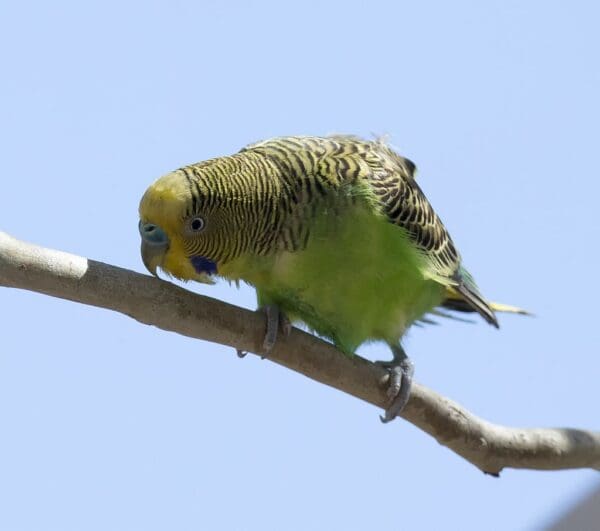
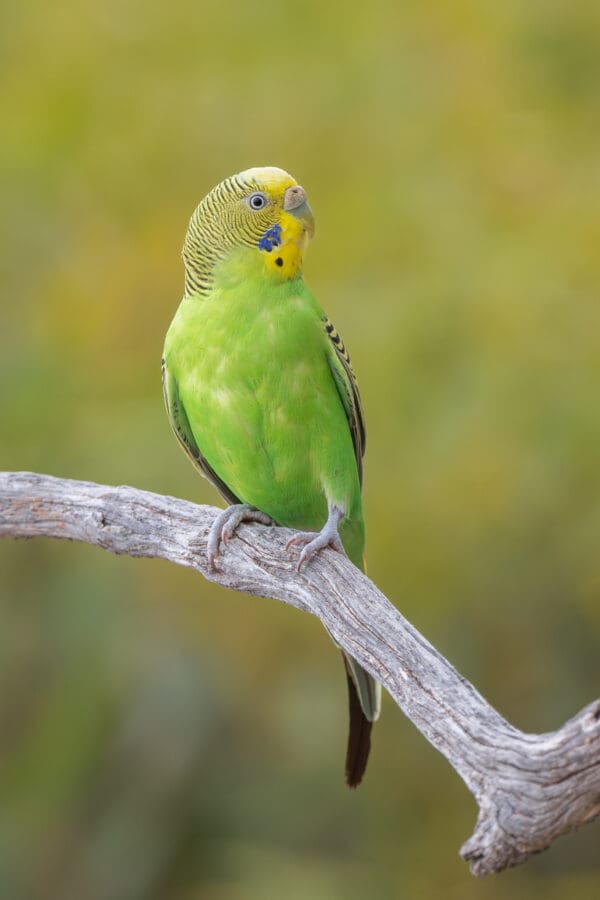
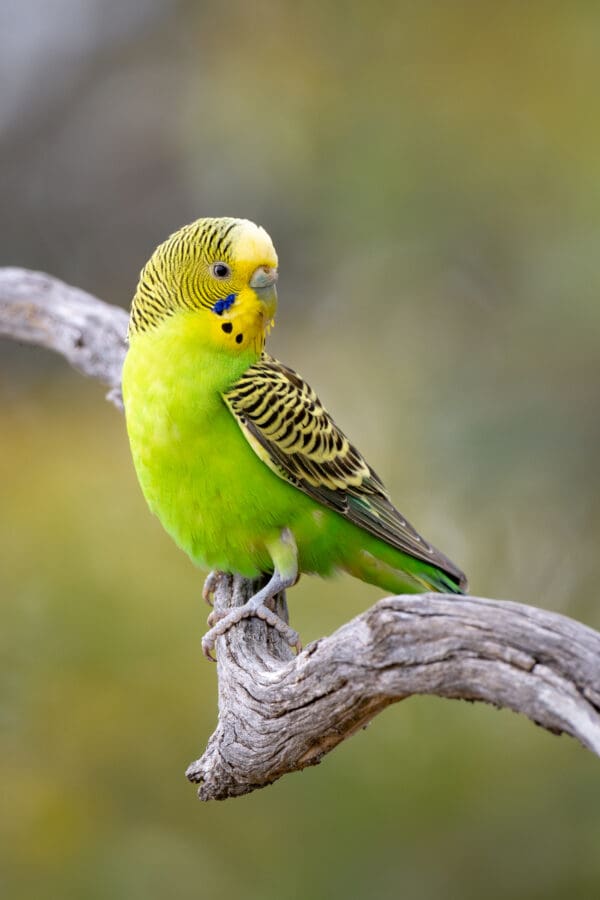
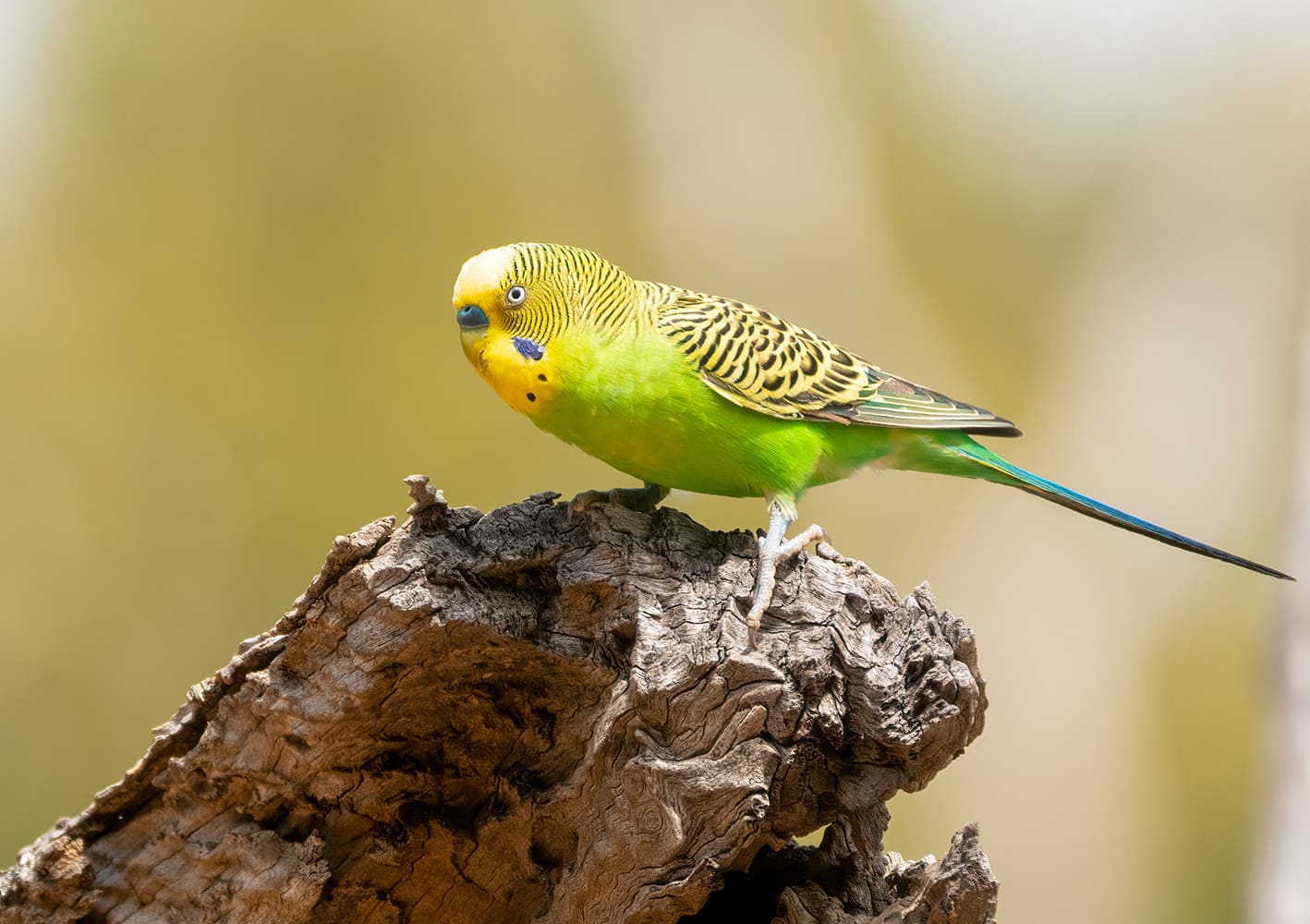
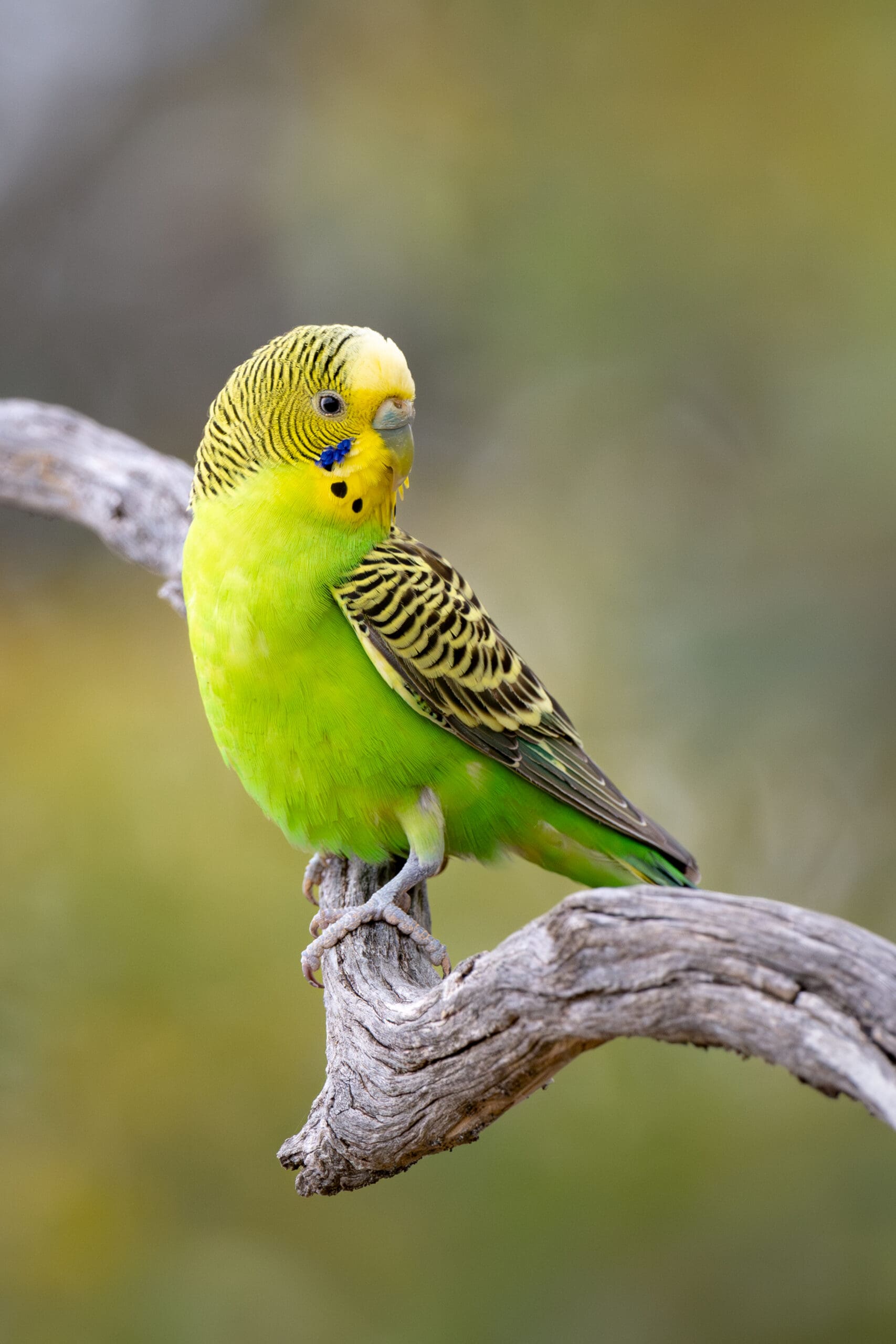
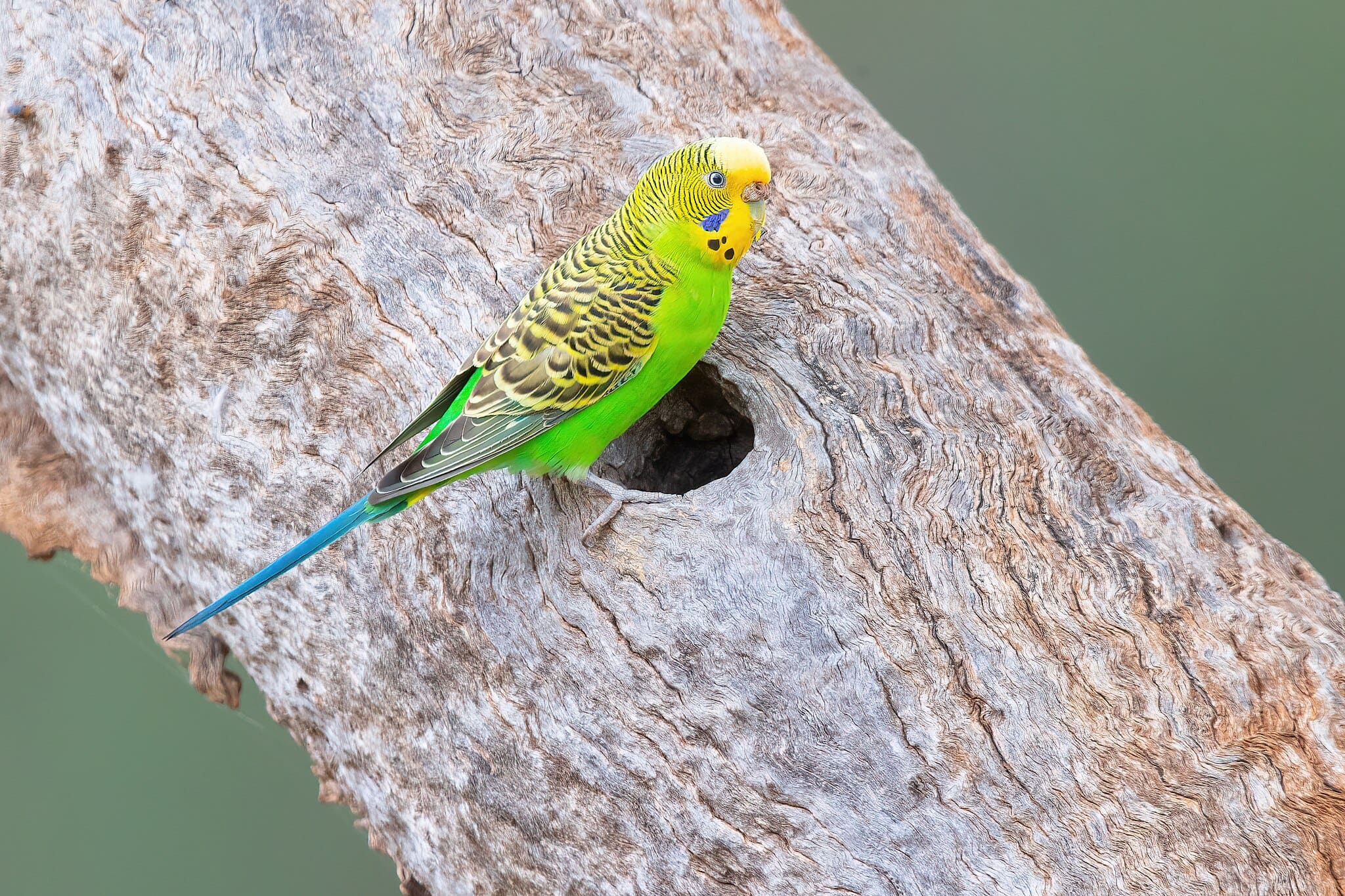
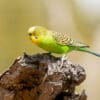
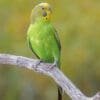
Both adults yellow with scalloped upper parts, yellow face, lower cheeks tipped violet/blue, more so in the female; black spots under throat; green underparts, blue tail; blue cere in male, brown in female. Beak olive/horn in colour. Eye white.
Colour Juvenile:
Immatures duller; less spots on throat or none at all; yellow forehead barred black; tail shorter. Eye dark brown.
More Information:
Content Sources:
BirdLife International
Cornell Lab of Ornithology/Birds of the World
A Guide to Parrots of the World, Juniper and Parr, 1998
Parrots of the World, Forshaw and Cooper, 1989.
Parrots of the World, Forshaw, 2006.
Parrots: Their Care and Breeding, Low, 1986.
Psittacine Aviculture, Schubot, Clubb and Clubb, 1992.
Captive Status:
Widespread in captivity.
Longevity:
15 yrs
Housing:
Not less than 76 cm (30 in) long.
Diet:
Complete kibble for budgerigars, seed mixture for budgerigars; fresh fruits and vegetables.
Enrichment:
Bathing; foot toys, destructible (non-toxic) toys, non-destructible (non-toxic plastic) toys, food-finder toys, preening toys, different texture and size hanging perch toys, fir branches, push-and-pull toys (sliding up and down), vegetable-tanned leather toys.
Nest Box Size:
8″ x 6″ x 6″ (20.3 cm x 15 cm x 15 cm) or 6″ x 6′ x 6″ (15 cm x 15 cm x 15 cm) vertical box.
Clutch Size:
4 to 8
Fledging Age:
30 days
Hatch Weight:
—
Peak Weight:
—
Weaning Weight:
—
World Population:
Unknown, increasing.
IUCN Red List Status:
Least Concern
CITES Listing:
Not categorised
Threat Summary:
Not globally threatened. Reported as abundant. Large population fluctuations occur during drought periods, either from die-off or migration. Has been helped in some areas by the introduction of watering for agriculture.
Range:
Widely distributed throughout the interior of Australia, but rare in eastern coastal districts and the extreme south west. Absent from Cape York Peninsula. Introduced in Florida and now number 3000 there.
Habitat:
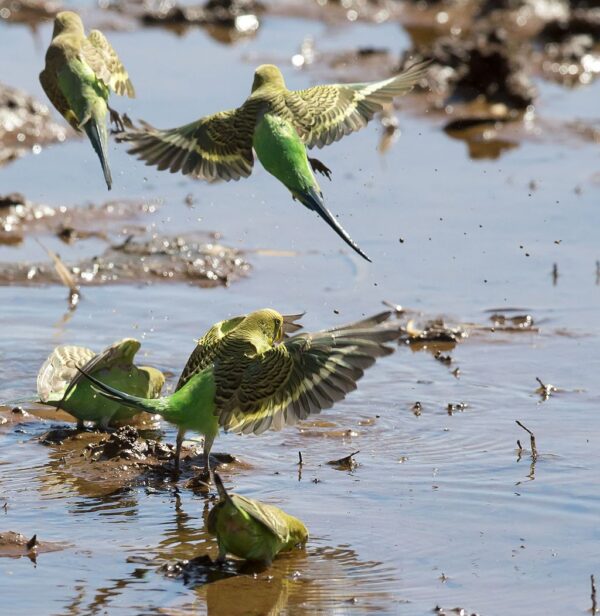
Found in a wide range of areas in the arid interior of Australia, as well as semi-arid and subhumid parts. Some seasonal movements, northward during winter. Found in spinifex, savanna, dry mallee and mulga scrub, riverine woodland and farmland. Although capable of surviving long periods without water, birds are rarely found far from a source.
Wild Diet:
Birds take grass and chenopod seeds on or near the ground, as well as seeds of crop plants. Boerhavia diffusa, Atriplex and Astrebla pectinata are taken in the hot months, with Iseilema important in the colder period. Occasionally attacks ripening grain crops.
Ecology and Behaviour:
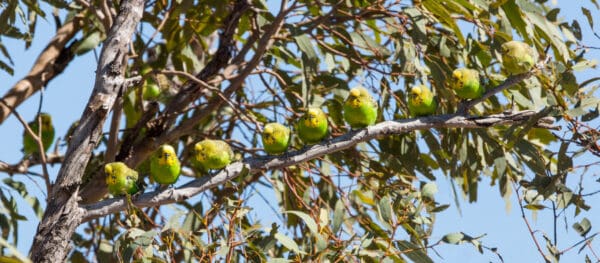
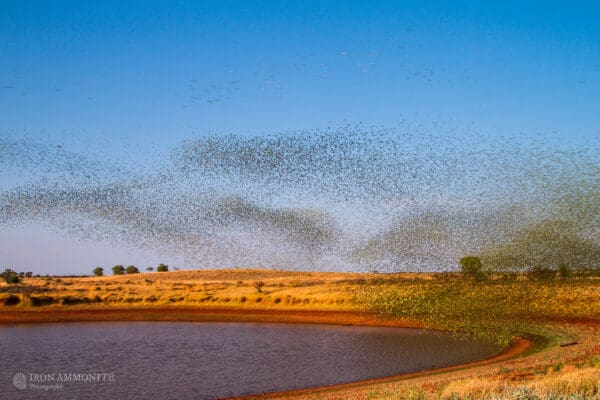
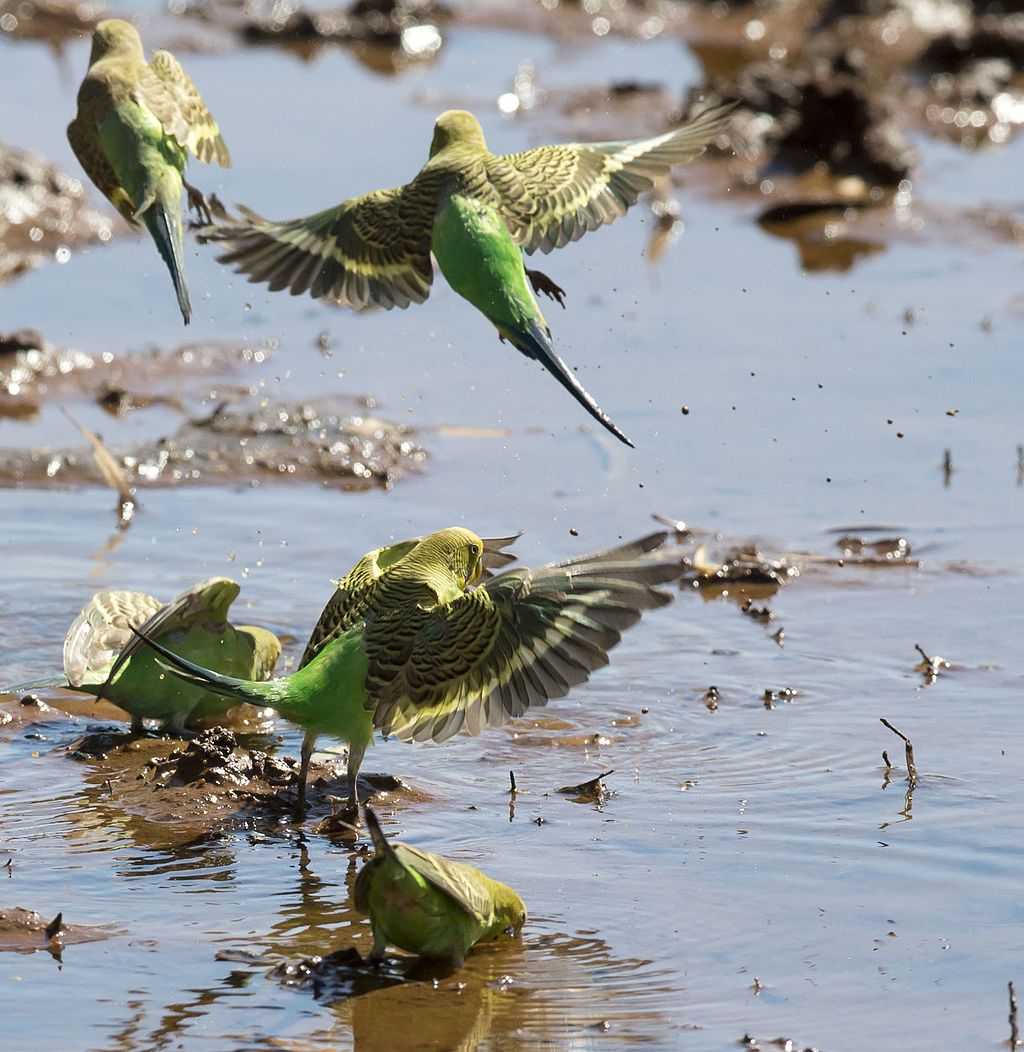
Gather in large numbers, nest communally, and are frequently found at watering holes in large groups. Most active during day.
Clutch and Egg Size:
4 to 8, rounded eggs, 19 x 14 mm (0.7 x 0.5 in)
Breeding Season:
Can take place at any time of year, with pairs capable of producing more than one clutch; nests communally.
Related Links:
—