LEARN

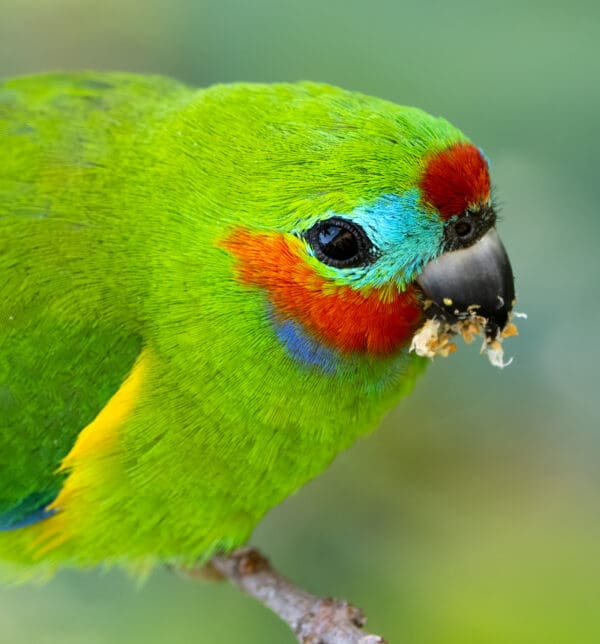
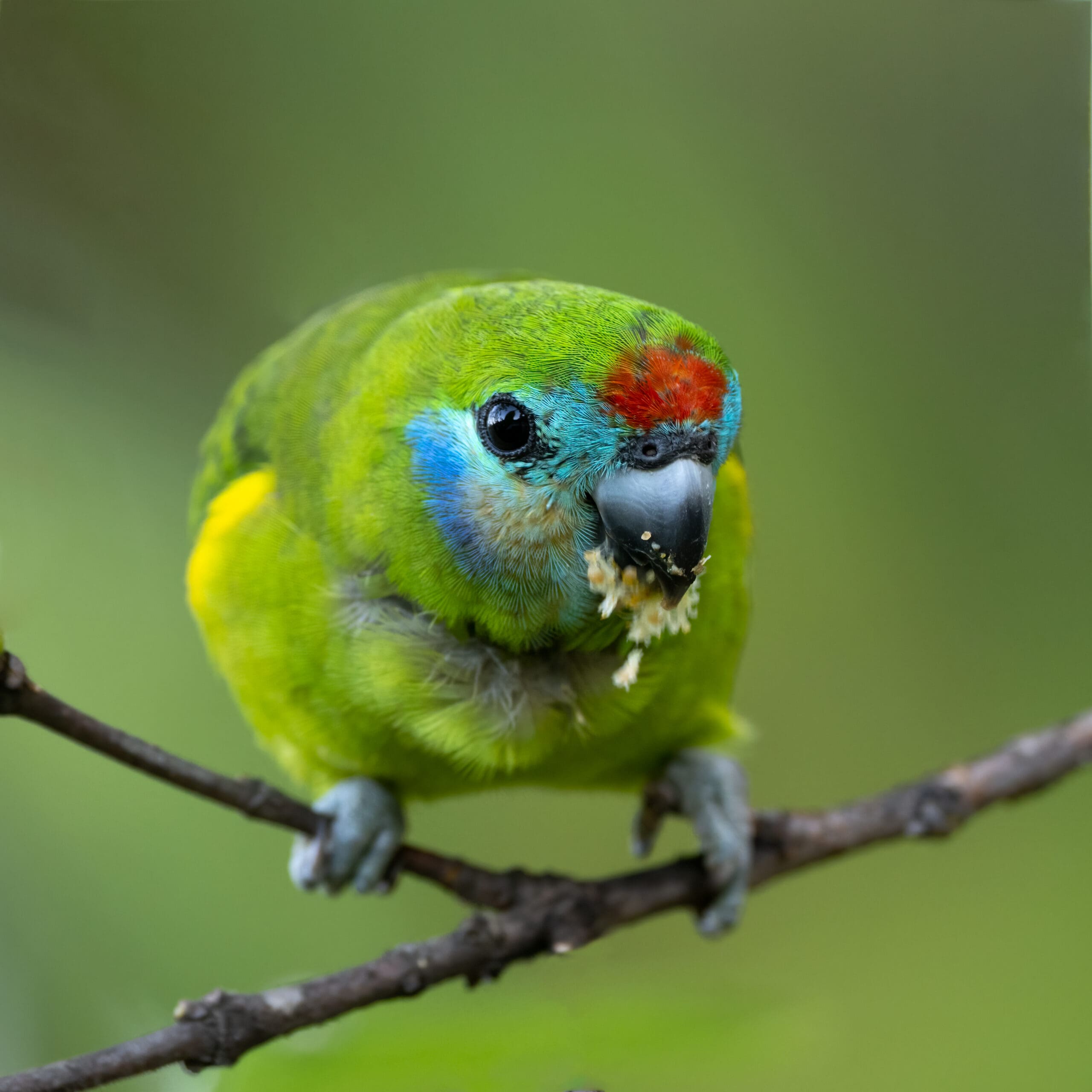
Double-eyed Fig Parrot

( Cyclopsitta diophthalma )

Geography: , ,

DID YOU KNOW?

The Double-eyed Fig Parrot will respond to imitation of contact call by circling back, while in flight, to alight nearby.

<p><em>Cyclopsitta</em></p>
Genus:

Cyclopsitta

<p><em>diophthalma</em></p>
Species:

diophthalma

Size:

13-16 cm (5-6.2 in)

Weight:

42-55 g (1.5-2 oz)

Subspecies including nominate:

eight: C.d. diophthalma, C.d. coccineifrons, C.d. aruensis, C.d. virago, C.d. inseparabilis, C.d. marshalli, C.d. macleayana, C.d. coxeni

Colour Adult:

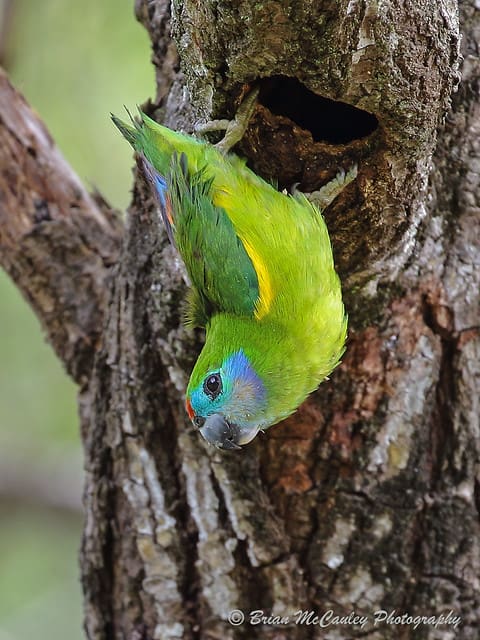
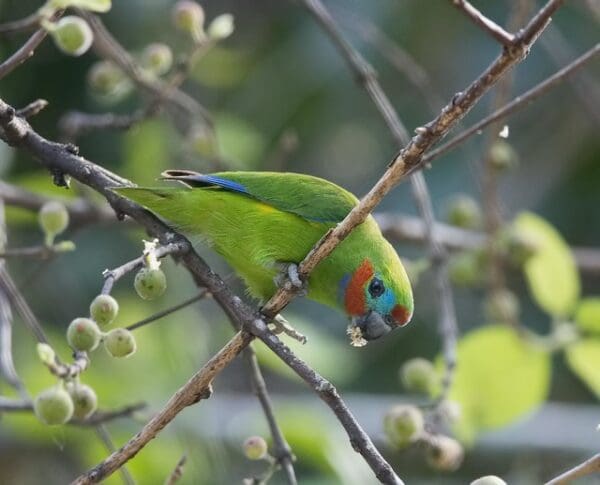
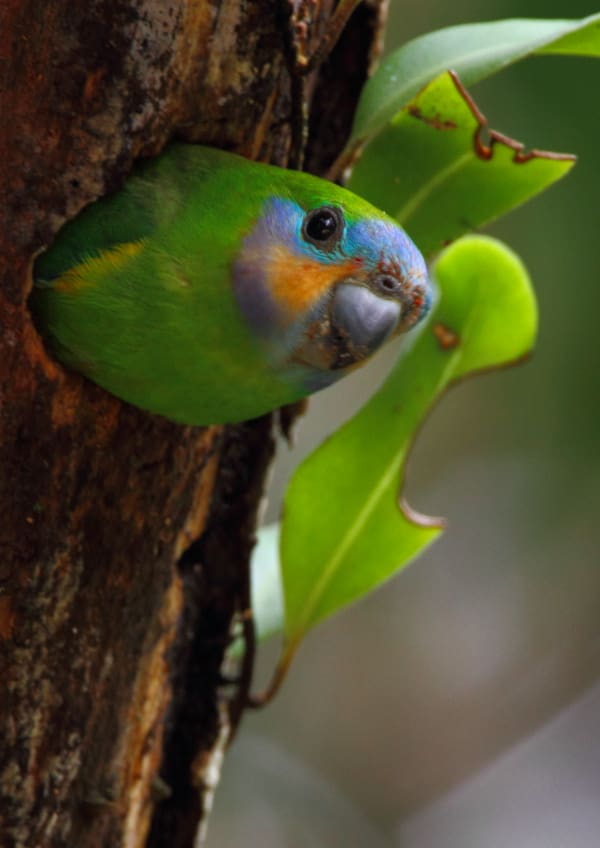
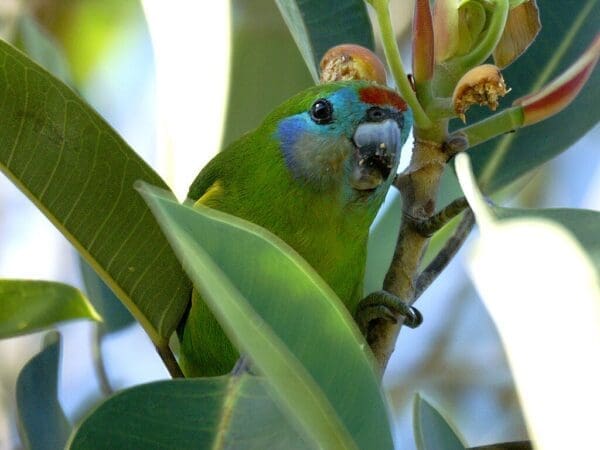
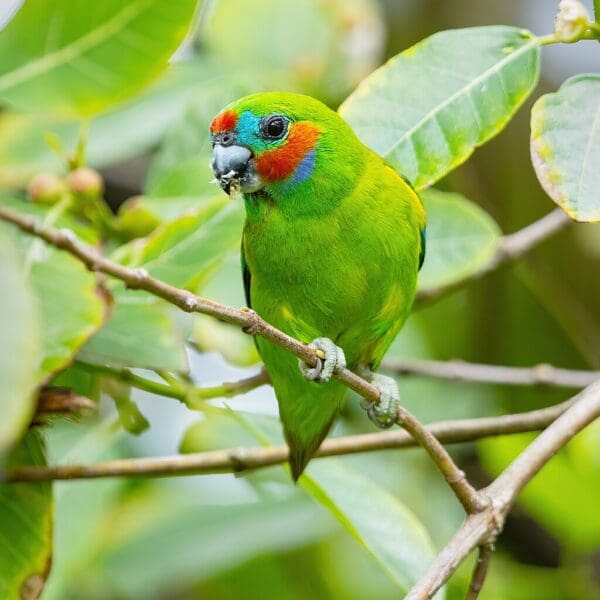
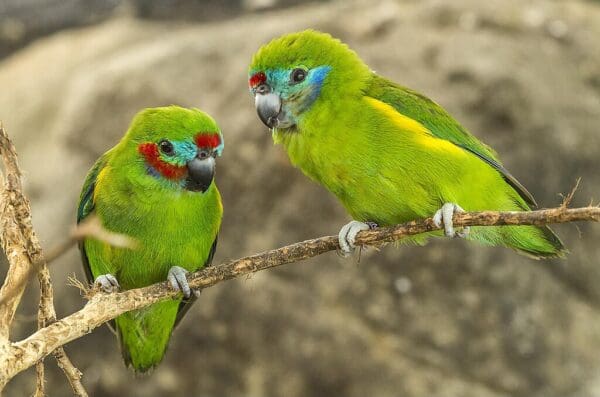
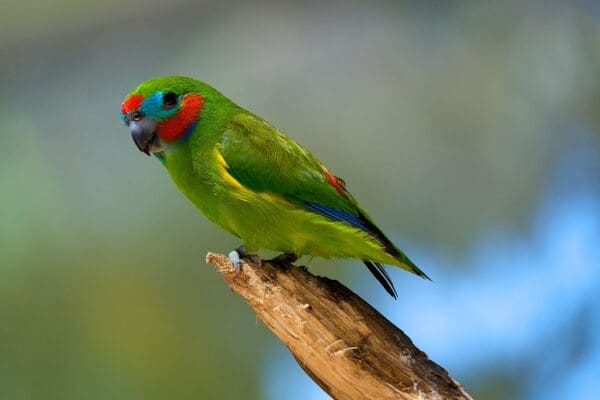
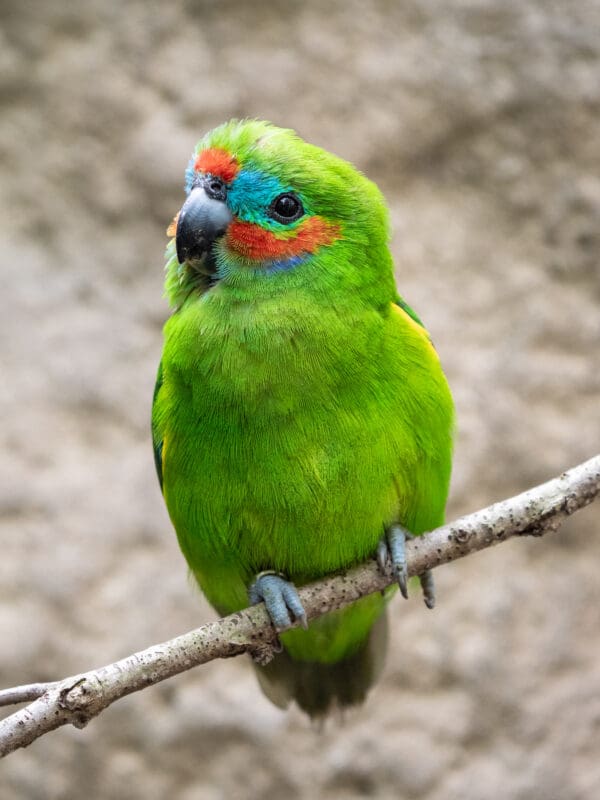
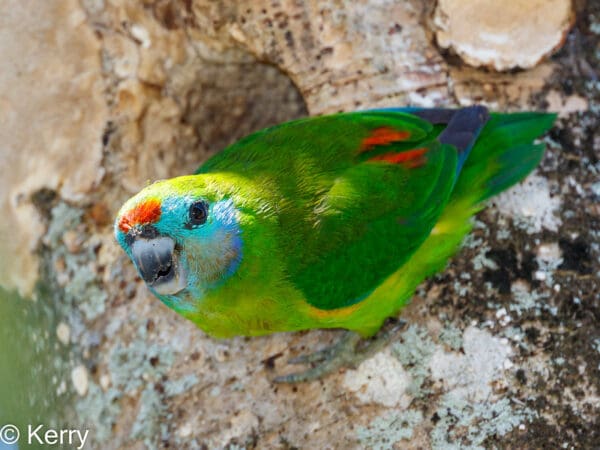
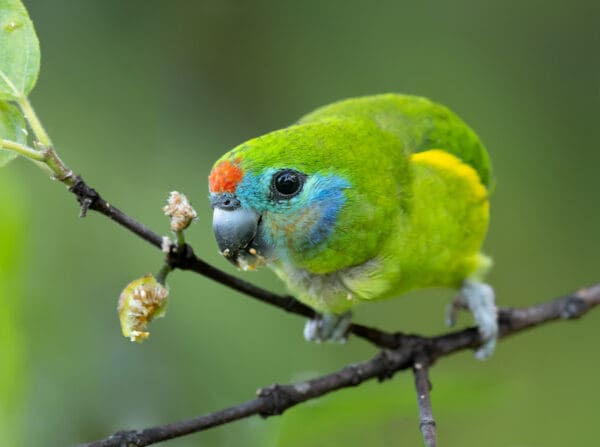
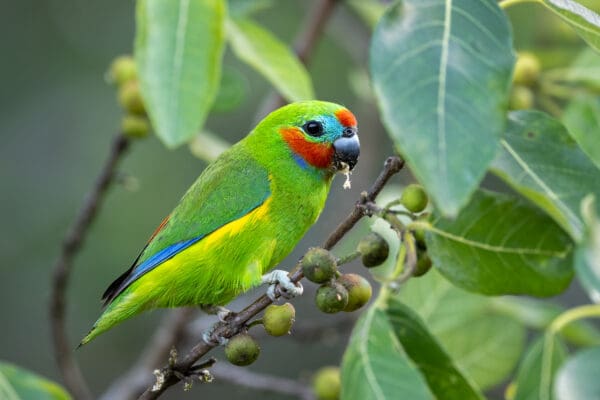
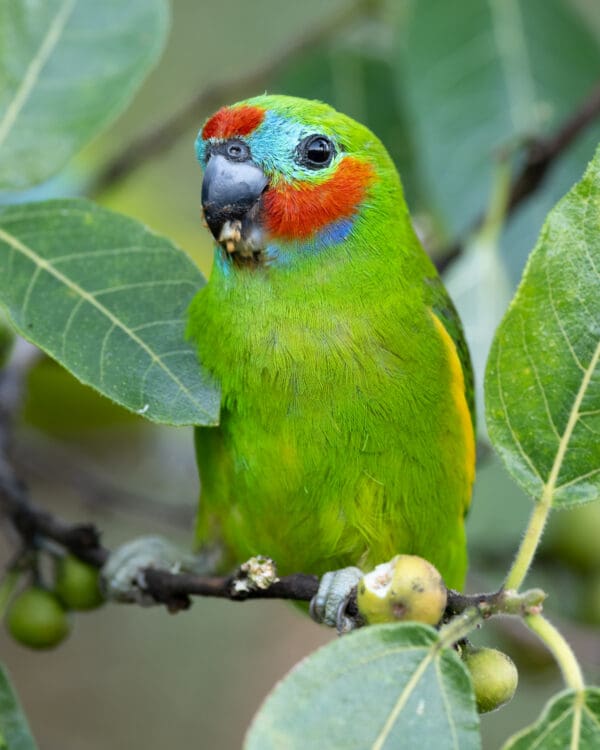
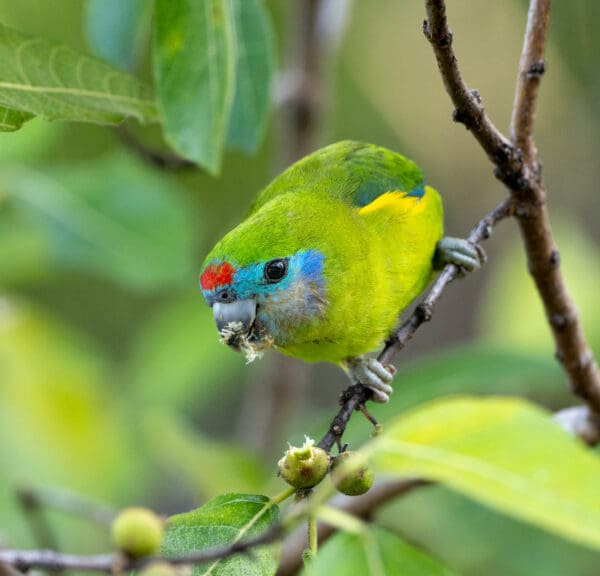
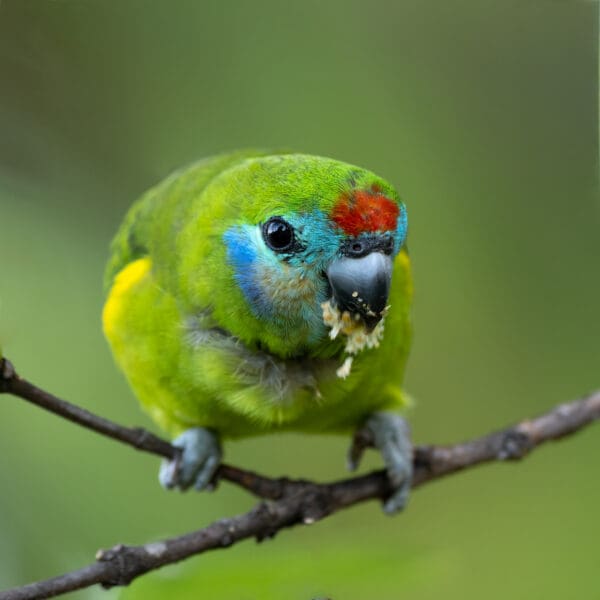
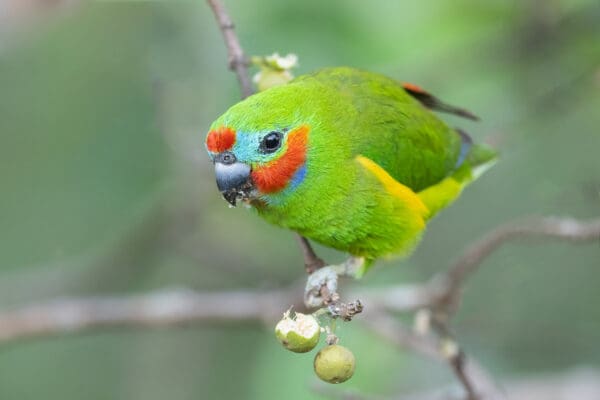
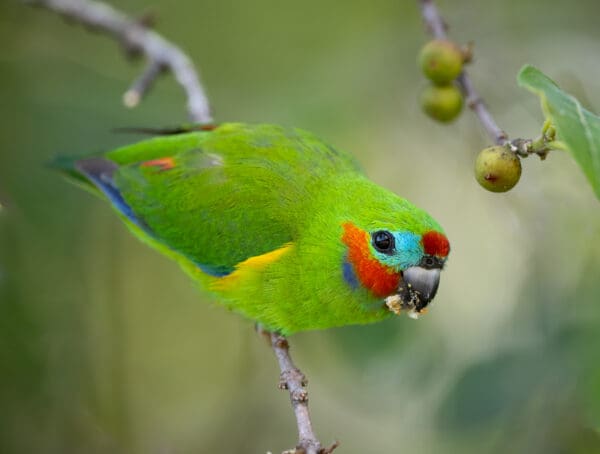
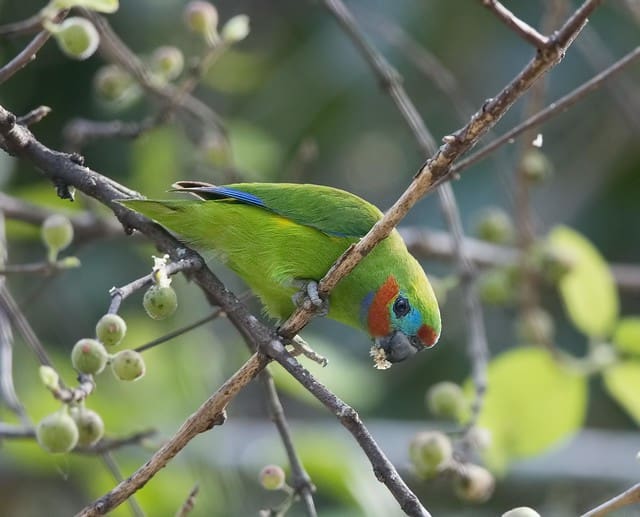
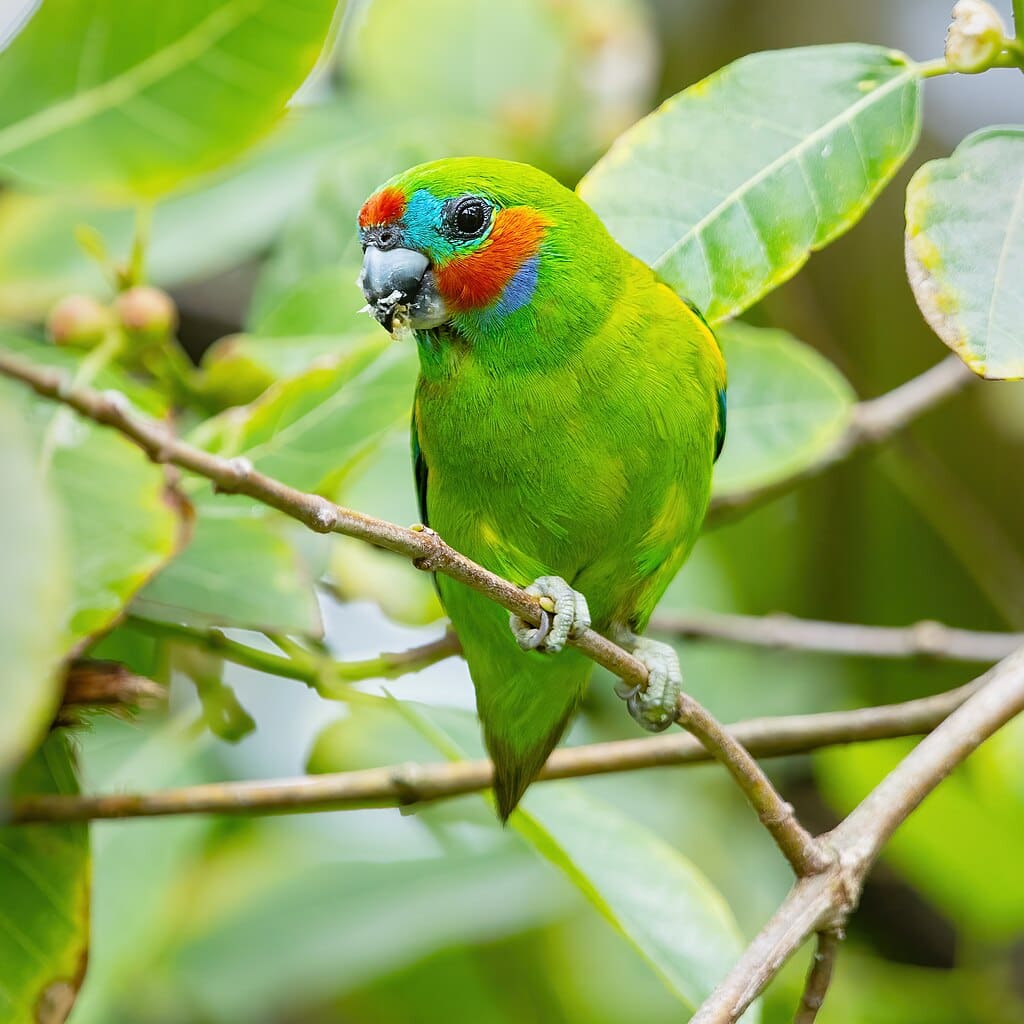
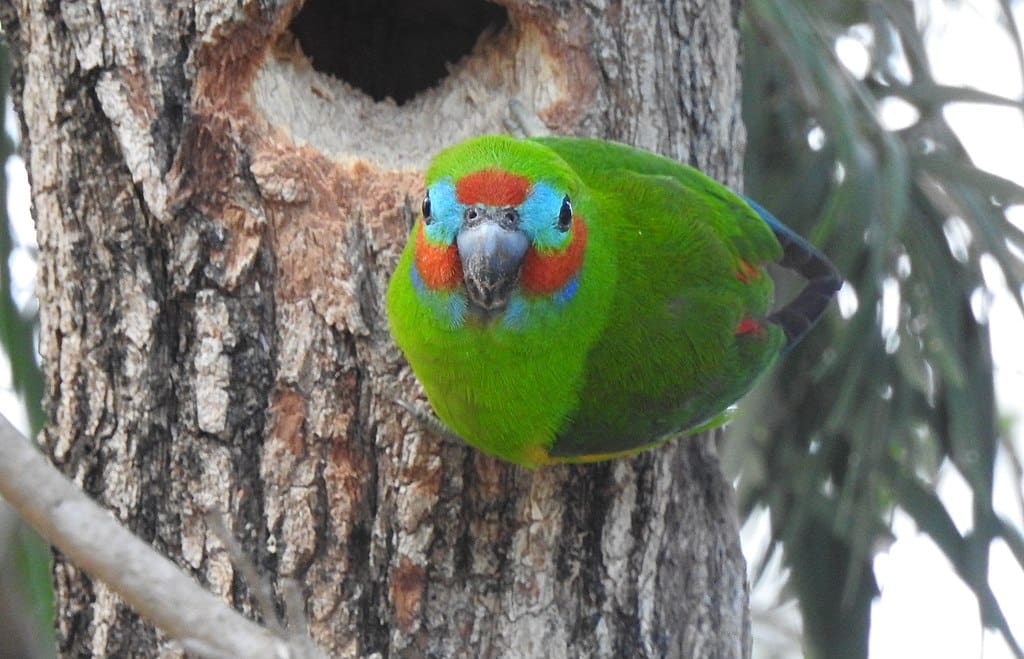
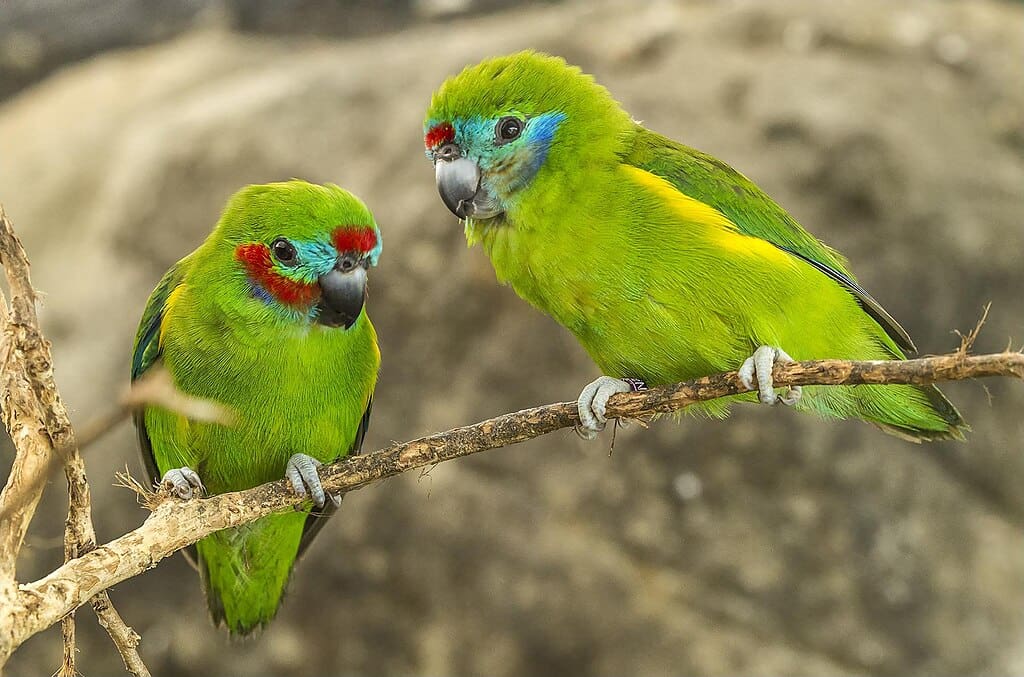
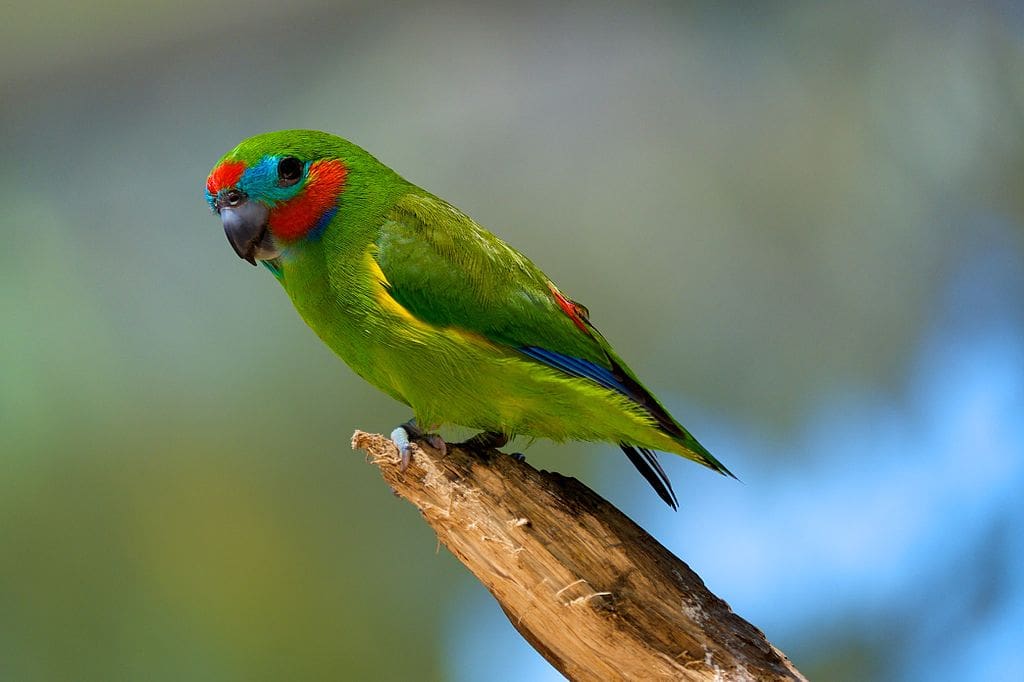
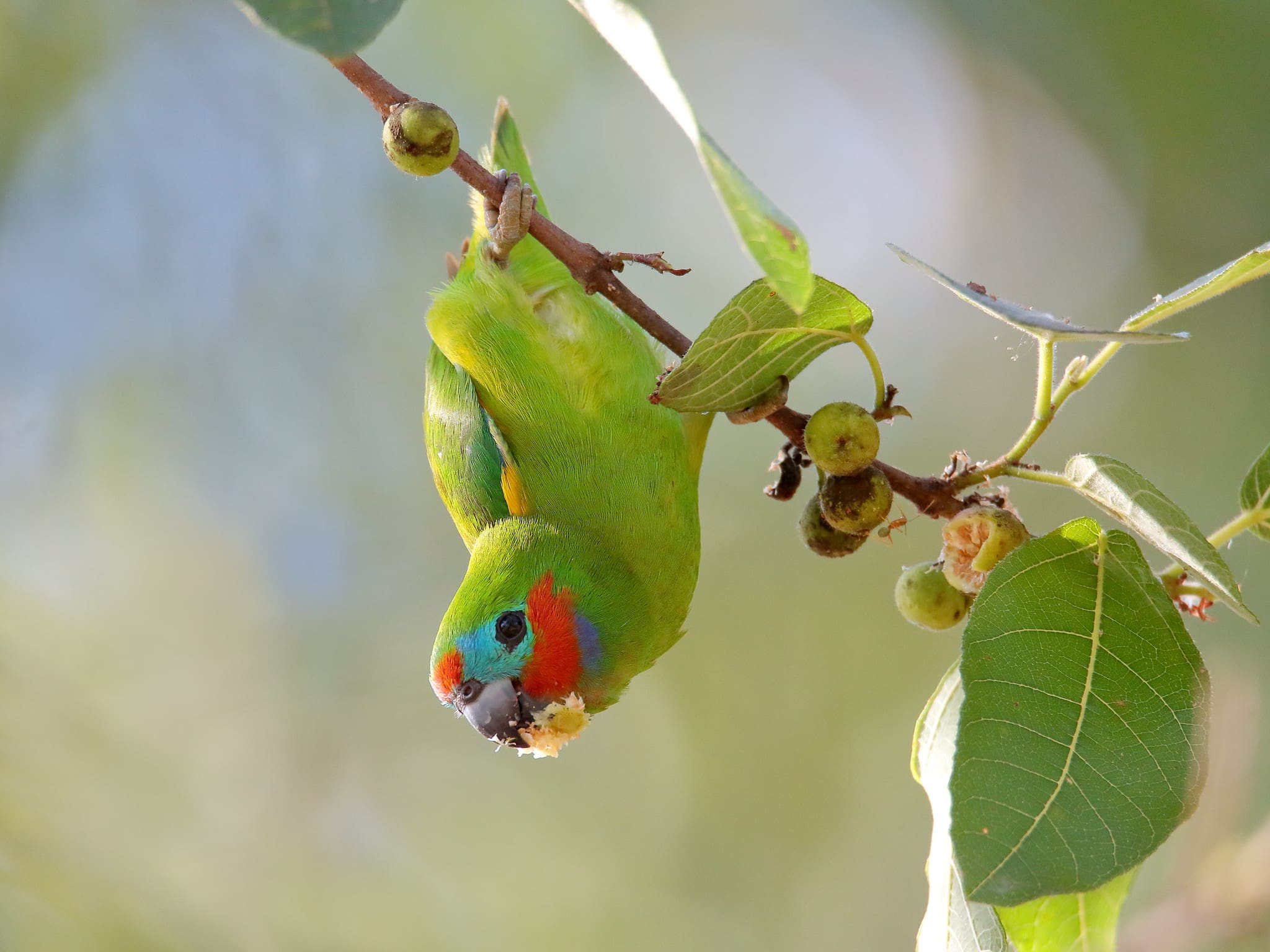
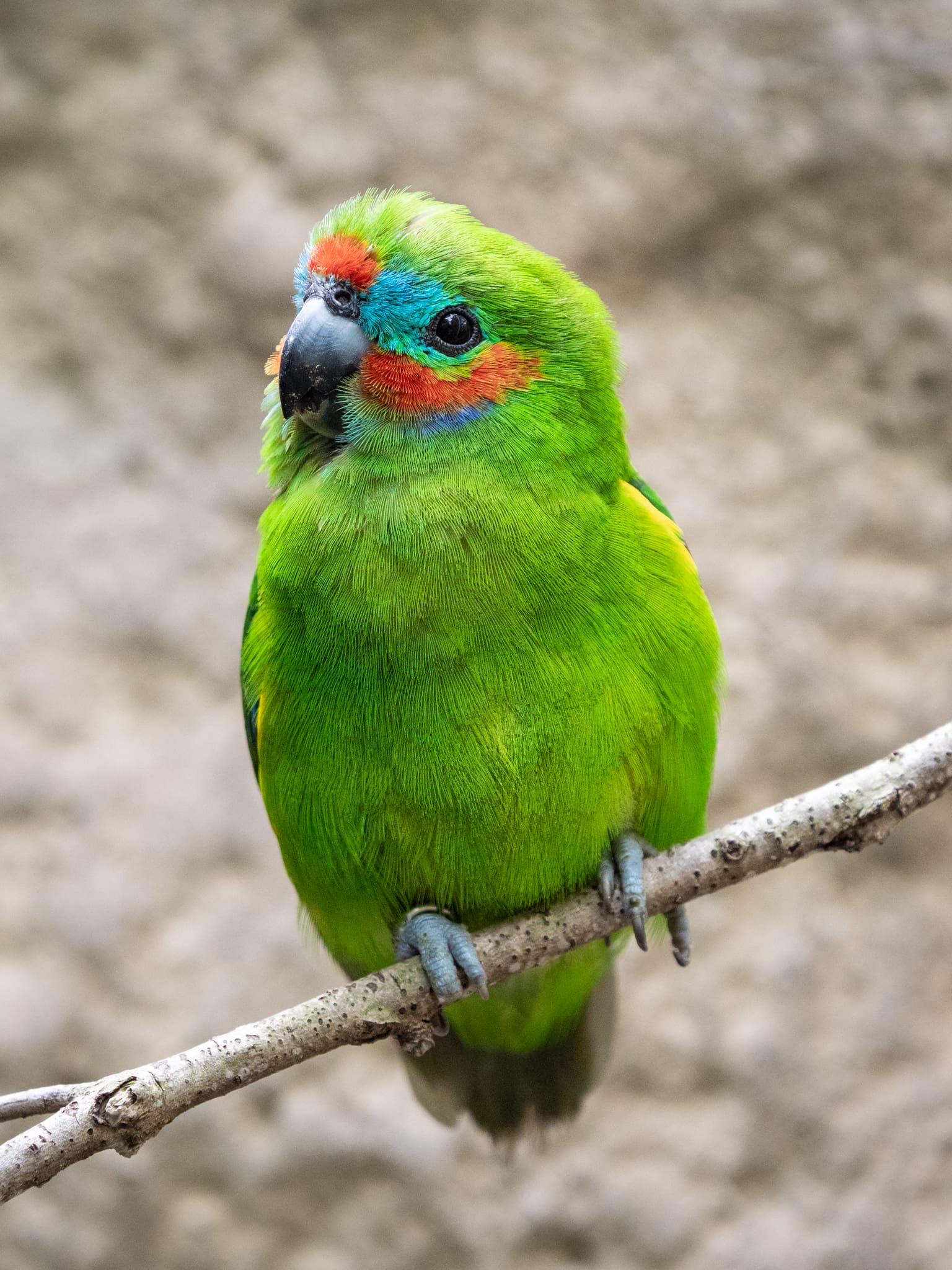
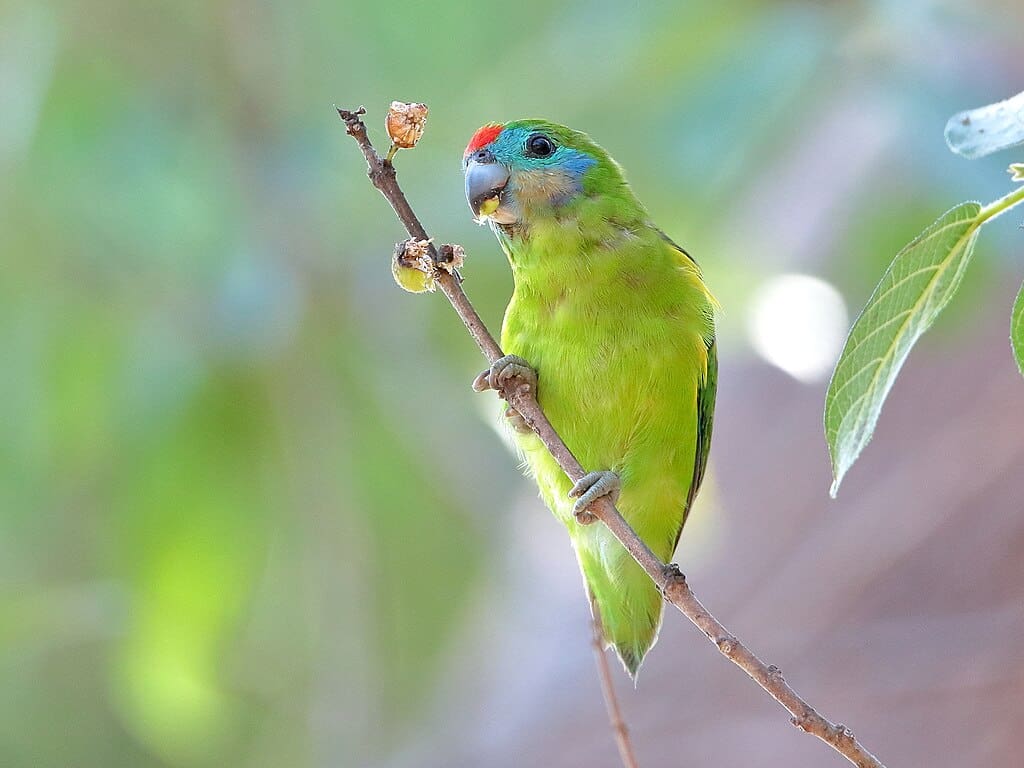
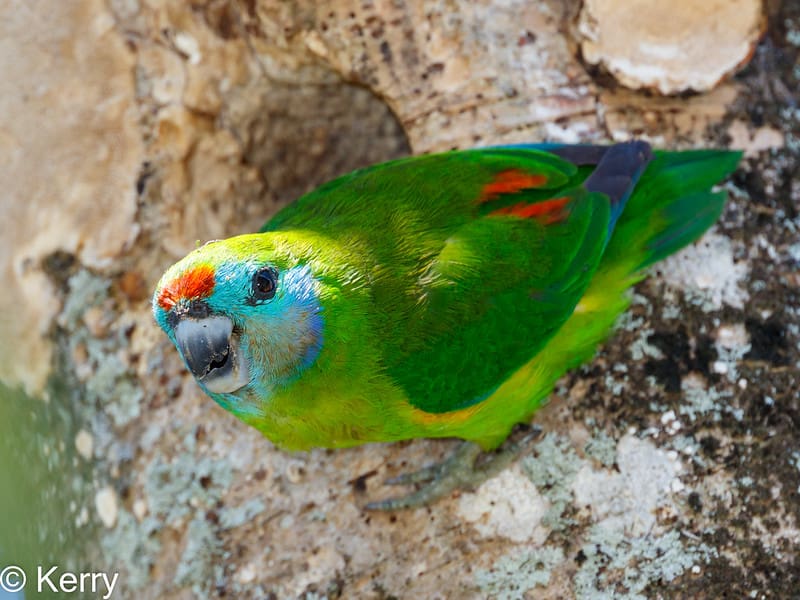
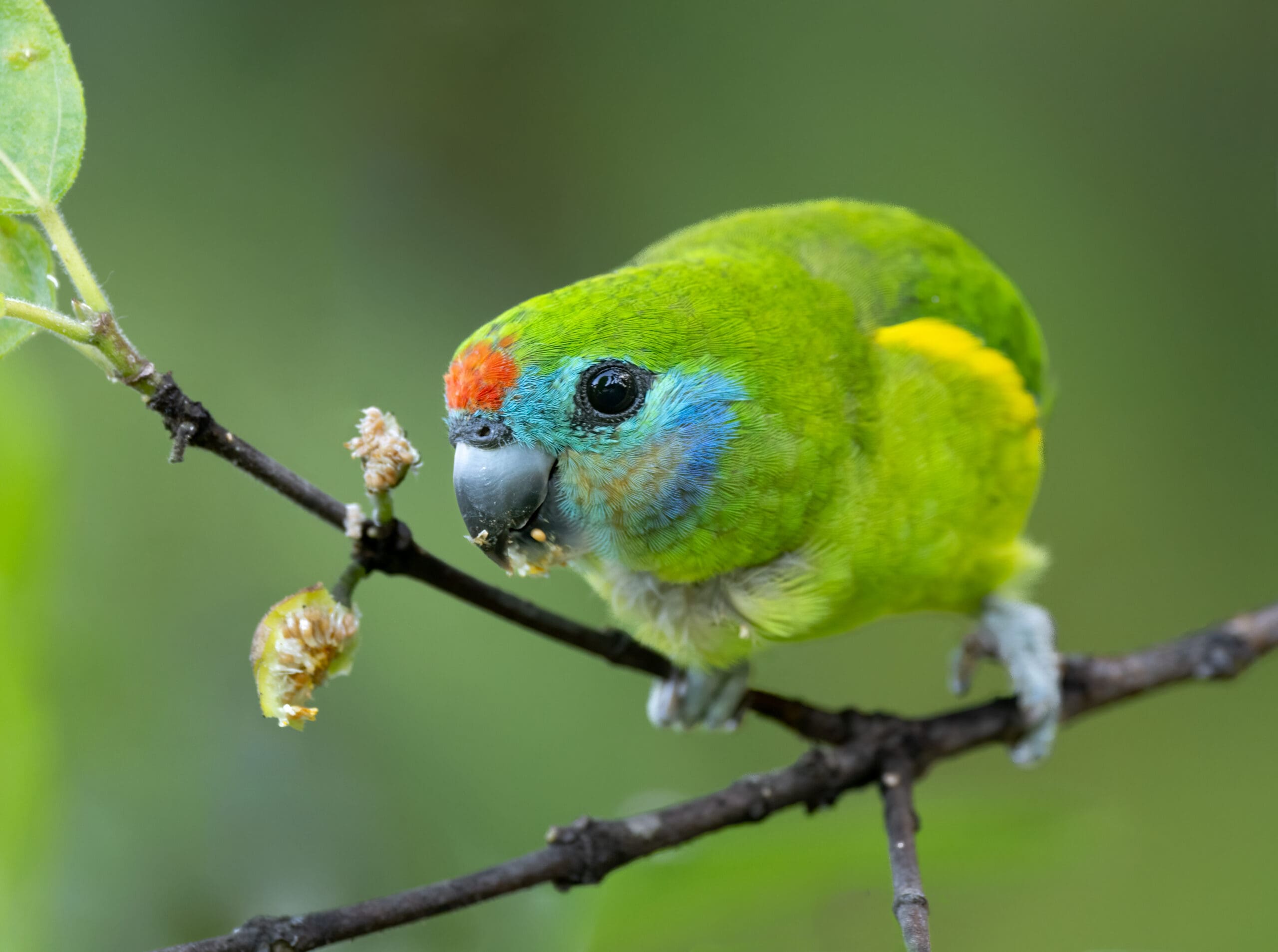
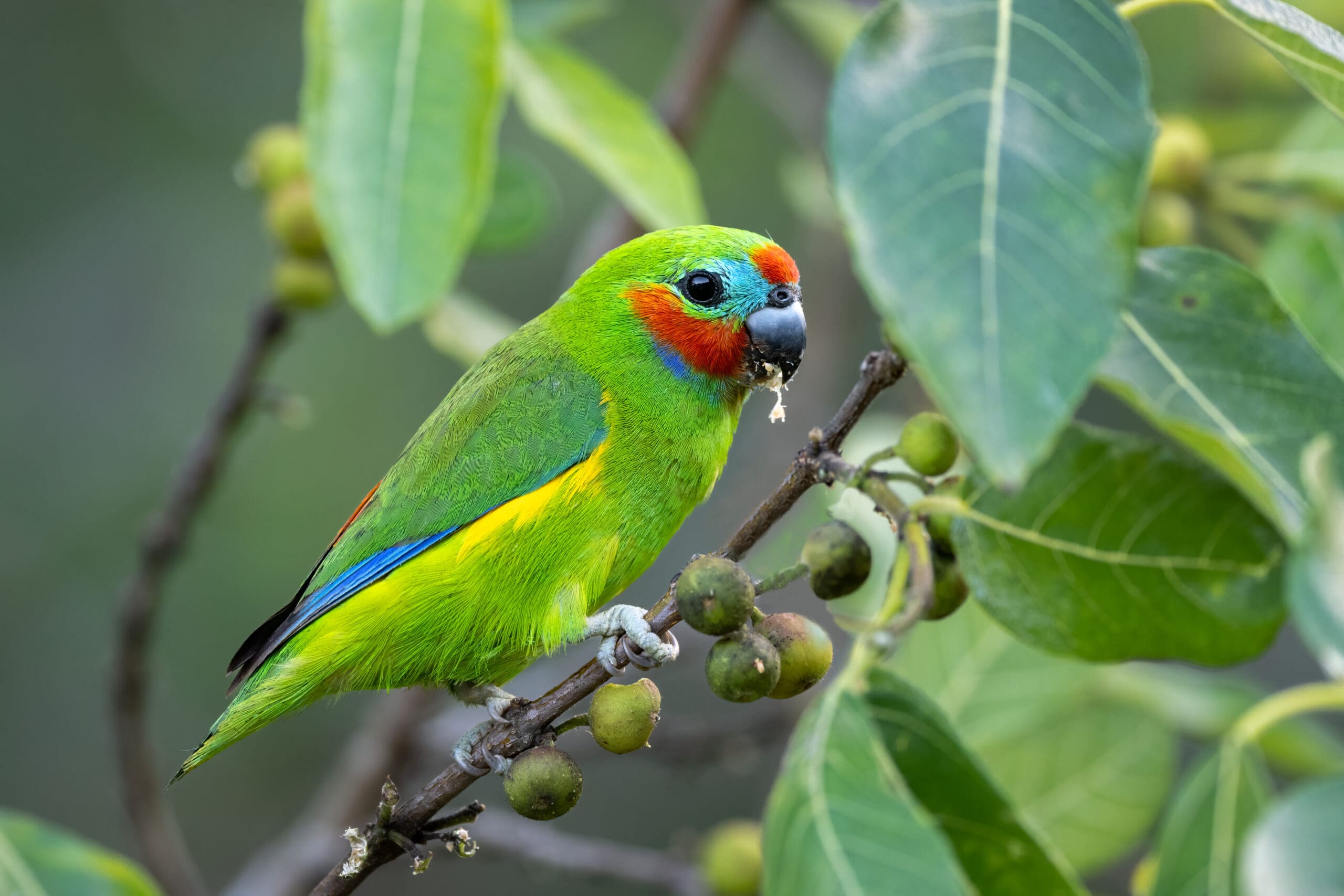
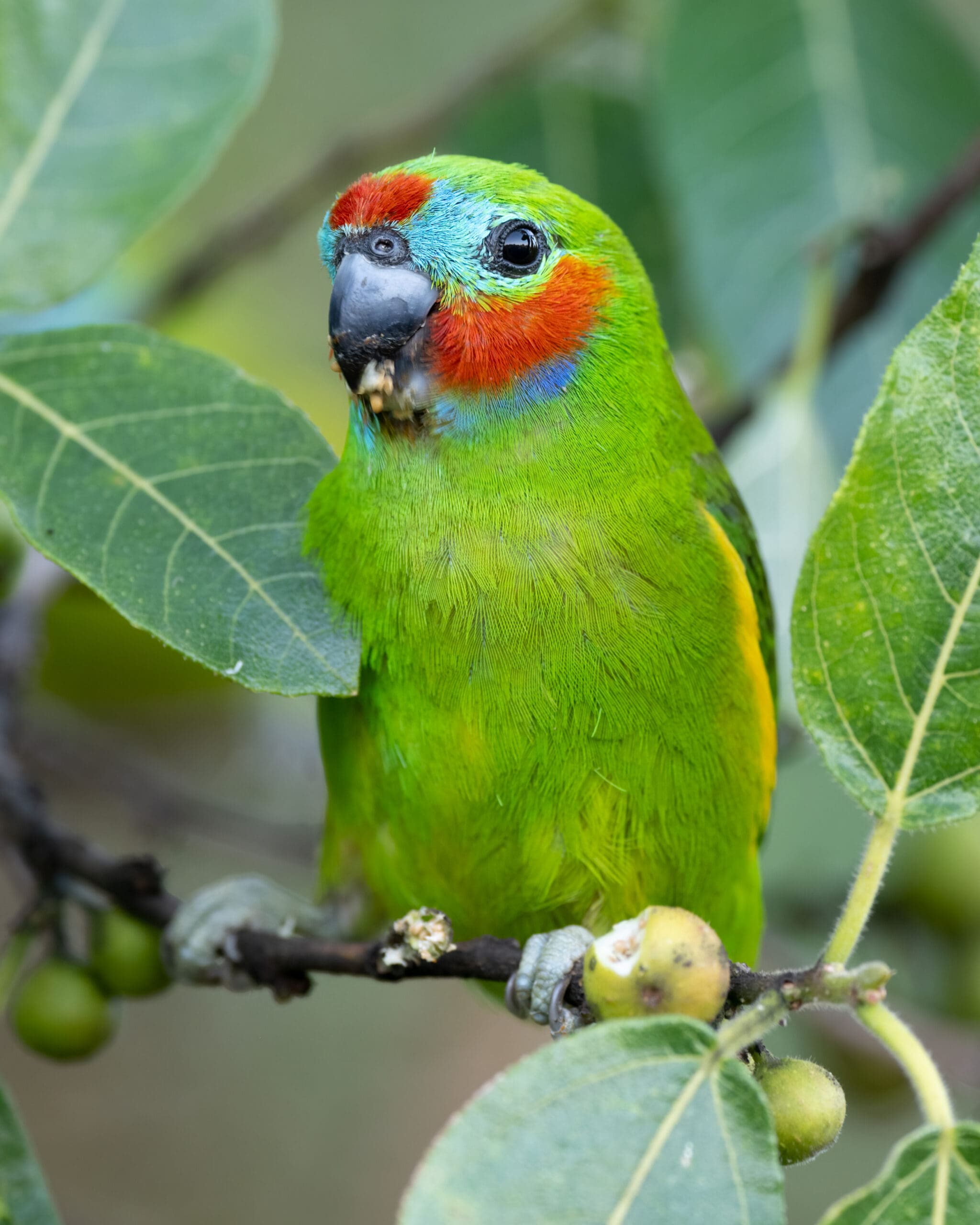
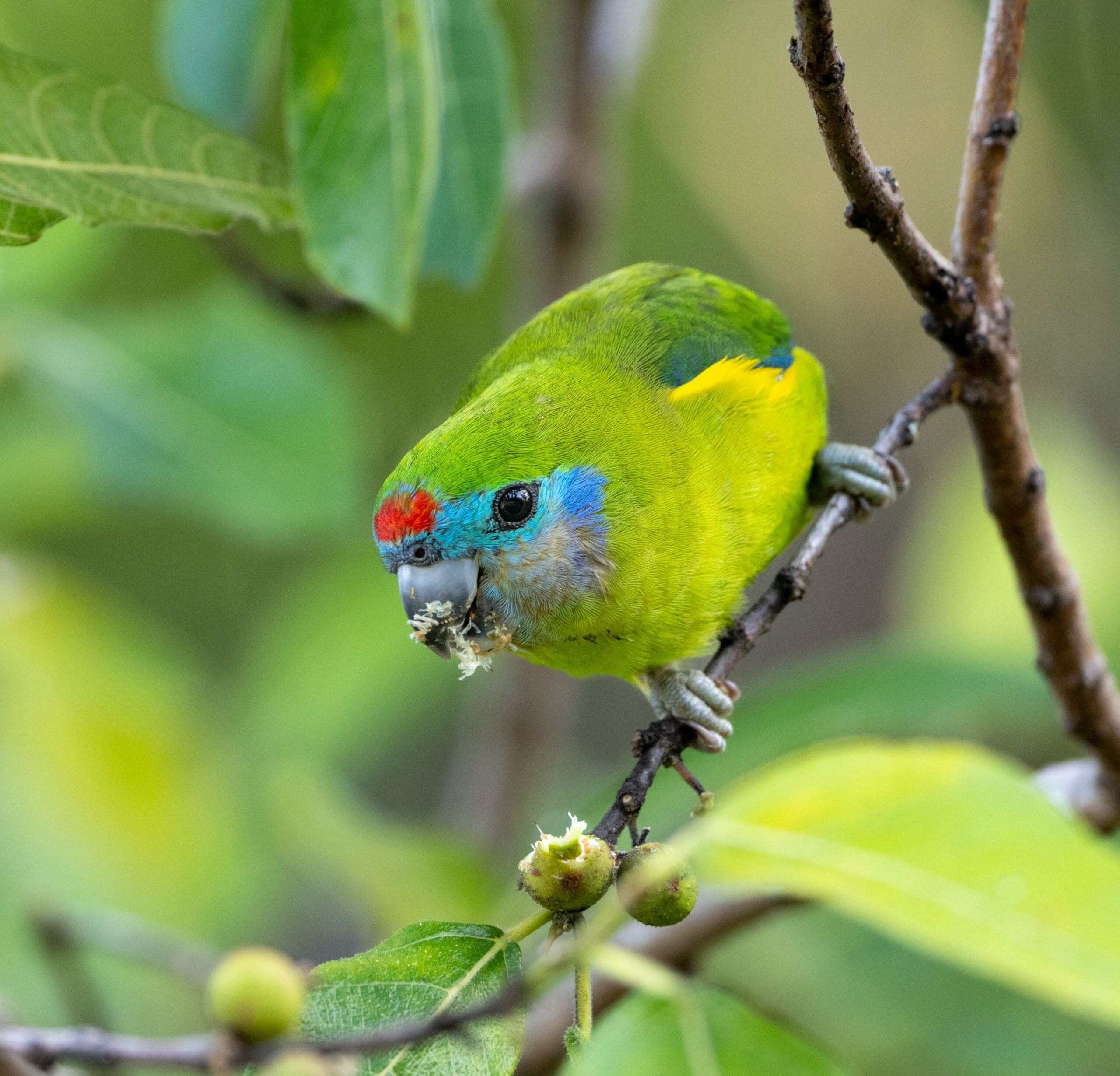
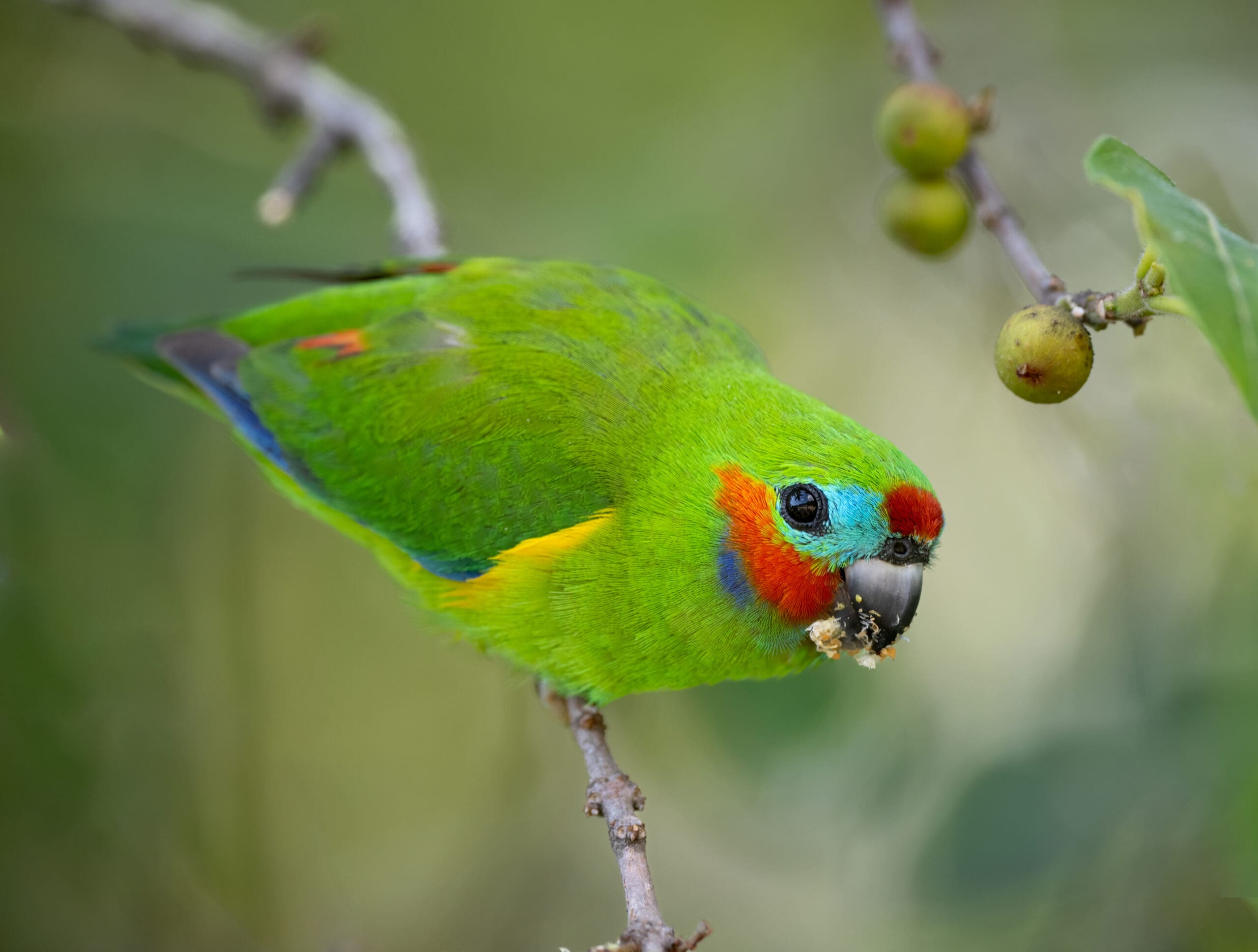
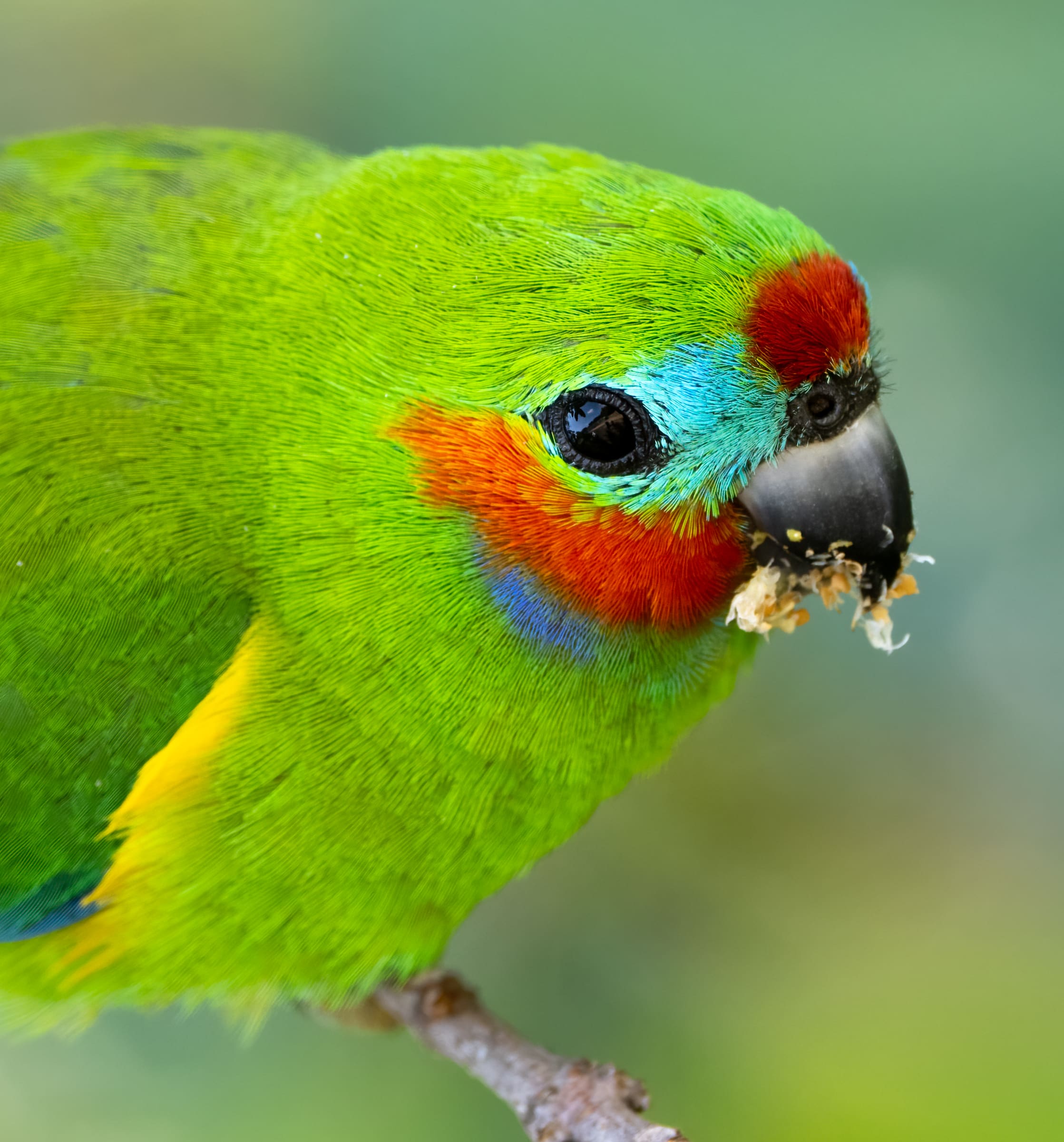
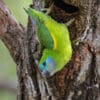
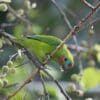
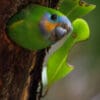
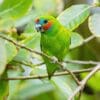
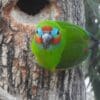
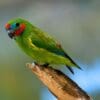
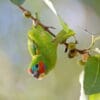
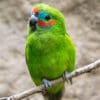
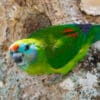
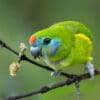
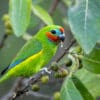
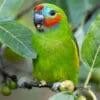
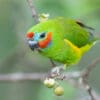
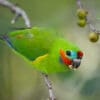
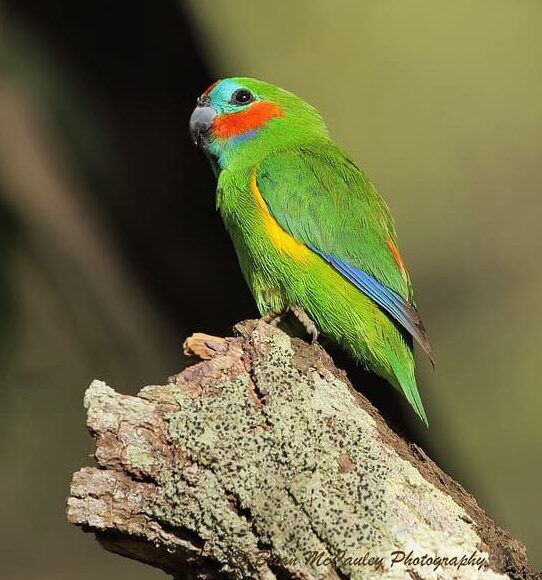
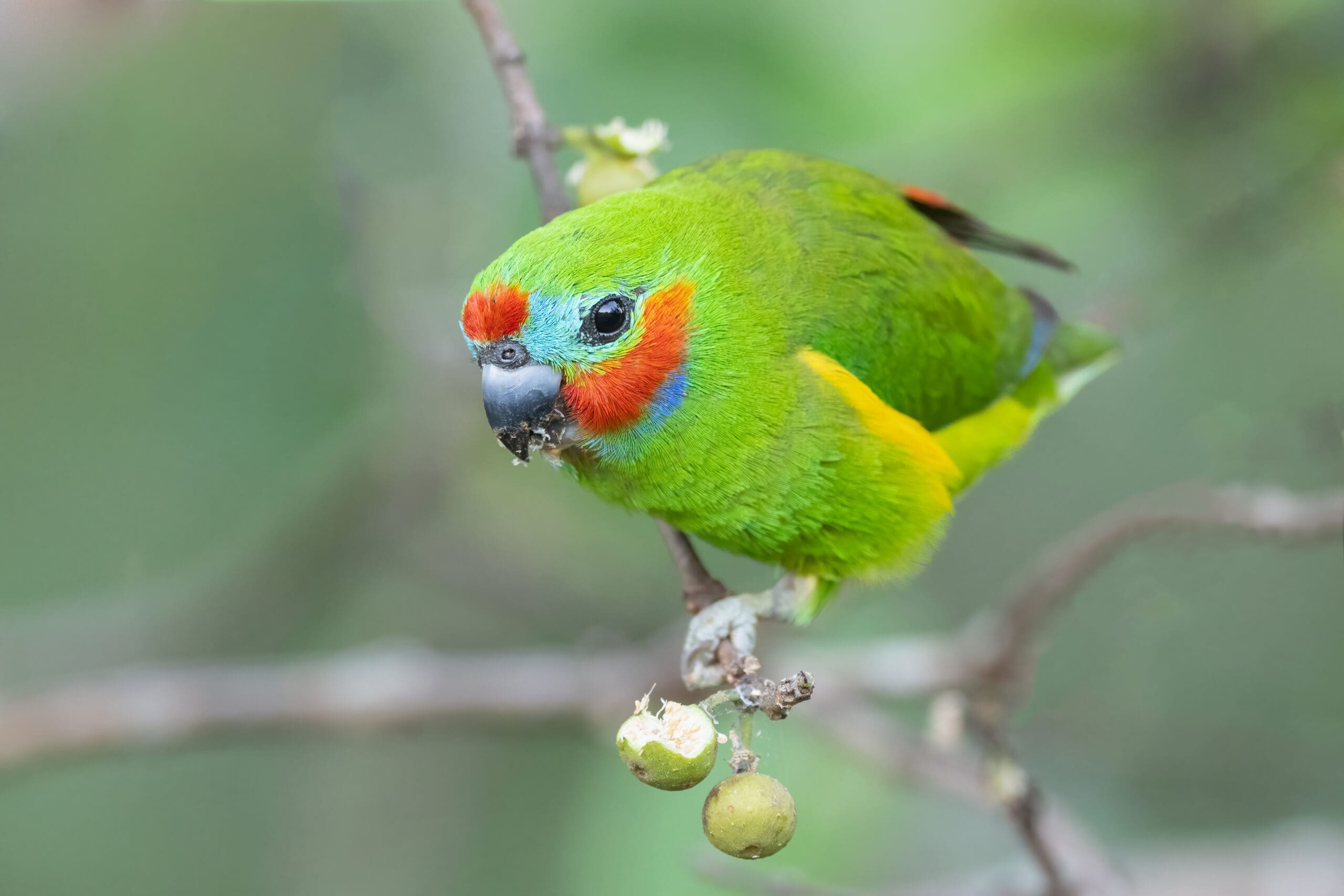
C.d. diophthalma: Male-red lores, forehead and forecrown, with orange/yellow band at hindcrown; blue above and in front of eye; red cheeks; red ear coverts, bordered underneath by lilac/blue stripe; inner wing coverts edged orange/red; pale yellow wide underwing bands. Beak pale grey with black near tip. Eye dark brown. Female-as in male but with buff/brown cheeks.
C.d. coccineifrons: Both adults darker in general, especially the red on the face and inner wing coverts; broader more pronounced orange/yellow band on hindcrown.
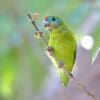
C.d. aruensis: Male-more green/blue above and in front of eye; lilac/blue band below cheek extending to chin; orange/yellow band on hindcrown diminished or absent; more yellow/green upperparts. Female-red on face absent, replaced by pale blue; orange/yellow band at hindcrown absent.
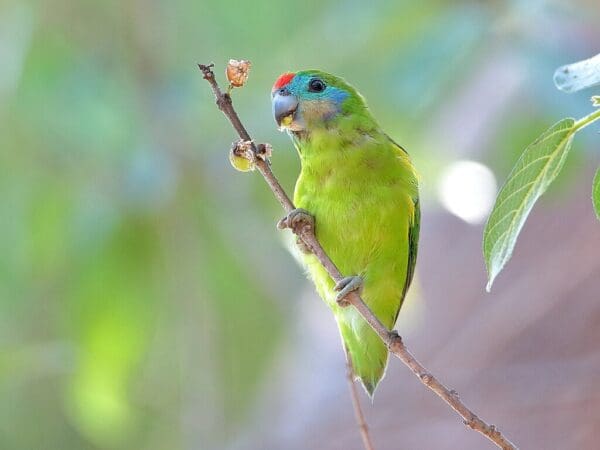
C.d. virago: Male-paler red on crown and cheeks; blue around eye area absent; lilac/blue band below cheek reduced to spot. Female-red spot on centre of blue forehead; green face, lilac/blue bands below cheeks absent.
C.d. inseparabilis: Both adults face all green with red spot in middle of forehead.
C.d. marshalli: Male-as in aruensis, but darker blue above and in front of eye and without green tinge; smaller in size. Female-as in aruensis, but deep violet/blue on forehead and forecrown; smaller in size.
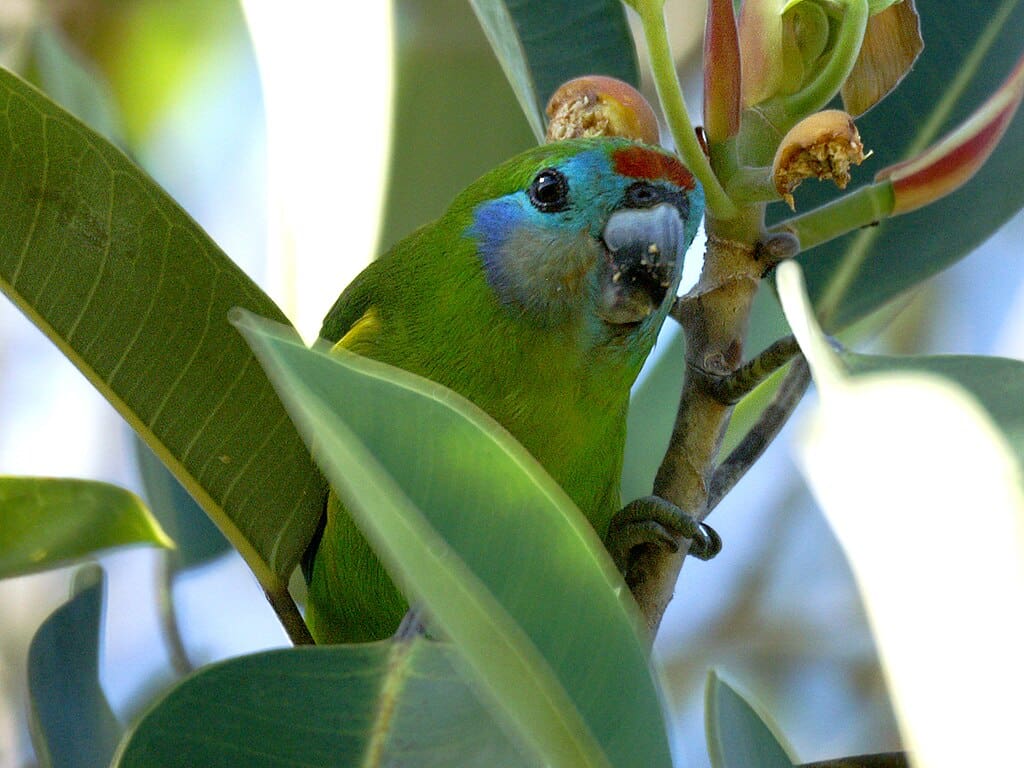
C.d. macleayana: Male-red on centre of forehead, lower cheeks out to ear coverts; remainder of face blue, being darker on sides of forehead and paler with green tinge around eyes. Female-as in male but buff/brown on lower cheeks to ear coverts.
C.d. coxeni: Both adults blue in centre of forehead; red feathers on lores and sides of forehead at base of beak; above and in front of eye bright yellow/green; red on lower cheeks to ear coverts, bordered beneath by lilac/blue band; larger.

Colour Juvenile:

C.d. diophthalma: As in adult female.
C.d. coccineifrons: As in adults.
C.d. aruensis: As in adult female.
C.d. virago: As in adult female.
C.d. inseparabilis: As in adults.
C.d. marshalli: As in adult female.
C.d. macleayana: As in adult female.

Call:

Voice thin and high-pitched double notes in flight, other calls chattering, twittering and high-pitched screech (alarm). Notes described as staccato and harsh.

More Information:

Avibase

Content Sources:

CITES
BirdLife International
Cornell Lab of Ornithology/Birds of the World
Parrots: A Guide to Parrots of the World, Juniper and Parr, 1998
Parrots of the World, Forshaw and Cooper, 1989. 2010 edition
Parrots of the World, Forshaw, 2006.
Parrots in Aviculture, Low, 1992.
S. Goldie pers. comm.

Captive Status:

Uncommon

Longevity:

Housing:

Walk-in enclosure, minimum length 2.1 m (7 ft) or indoor suspended cage 1.8 m (6 ft) long with easy-to-clean floor and walls.

Diet:

Soaked figs, two or more per bird daily; a drop of vitamin K additive once daily, other fruits forming at least 50 percent of diet; soaked raisins, berries (elder, montain ash, pyracantha), spray millet, small seed mixture, cooked beans, rearing food (hard-boiled egg, wholegrain bread and carrot all ground to crumbly consistency) Breeding diet: mealworms, small, well-cleaned maggots, insectivorous food. Withhold seeds first three weeks of chicks’ lives.

Enrichment:

Provide lots of bird-safe, unsprayed branches (fir, pine, elder or willow) for them to chew; their beaks may become overgrown.

Nest Box Size:

60 cm (23.4″) log.

Clutch Size:

2

Fledging Age:

27-52 days

Hatch Weight:

Peak Weight:

Weaning Weight:

World Population:

Unknown, decreasing; coxeni  50-249 individuals.

IUCN Red List Status:
Not Evaluated

CITES Listing:
Appendix II

Coxeni listed on Appendix I.

Threat Summary:

C. diophthalma coxeni has suffered from the loss of lowland rainforest throughout its range. Population is stable but low at 50-249 mature individuals. Coxeni is CITES Appendix I, other conspecifics Appendix II. This species is considered to have a medium dependency on forest habitat, and tree cover is estimated to have declined by 2% within its range over the past 10 years. As a precautionary measure, it is tentatively suspected that this may have led to a 1-19% decline in the species’ population over the same time frame.

Range:

C.d. diophthalma: W Papuan islands (Waigeo, Kofiau, Salawati, Misool), west and north New Guinea.
C.d. coccineifrons: East-central to southeastern New Guinea; east from central highlands.
C.d. aruensis: Aru Island.
C.d. virago: Fergusson and Goodenough Islands.
C.d. inseparabilis: Tagula Island (Louisiade Archipelago).
C.d. marshalli: Extreme N Queensland (east Cape York Peninsula), in extreme northeast Australia.
C.d. macleayana: NE Queensland from Cooktown to Townsville.
C.d. coxeni: formerly SE Queensland and NE South Wales in coastal eastern Australia; range now limited.

Habitat:

Found in a variety of areas, including rainforest, secondary growth forest, lowland and montane forest and edge, riverine forest, occasionally dry forest and open Eucalypt woodland. Australian birds are also found in parks, gardens, scrub, mangrove and cultivated areas. Found up to 1600 m (5248 ft). Subspecies coxeni occurs in small patches of subtropical rainforest or edges, and often at rainforest and sclerophyll boundaries, especially areas with large Ficus trees. Was formerly likely found in alluvial forest.

Wild Diet:

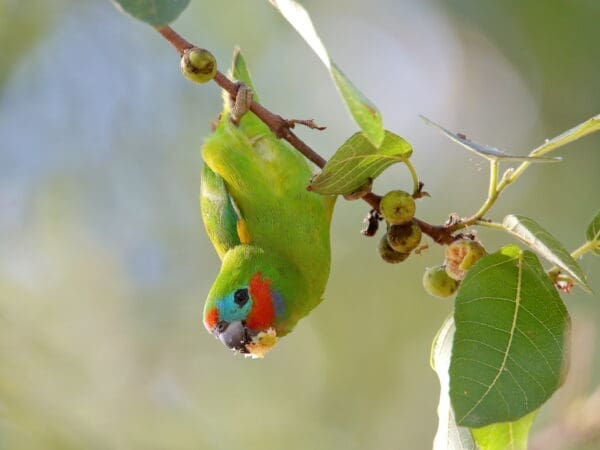
Ficus seeds are the principal food item, including F. eugenioides, F. copiosa, F. destruans, F. drupacea, F. hispida, F. ehretii, F. macrophylla, F. benjamina, F. opposita, F. pleurocarpa, F. racemosa, F. variegata and F. watkinsiana; also small whole fruits, nectar, insects such as Coleoptera and Diptera and fungus and lichen.
Ecology and Behaviour:

Quiet feeders. Outside breeding season groups of up to 200 birds gather to roost. Alarm displays include wing flicking and agitated calls. May be in company of other fig parrots, rosellas and lorikeets.
Clutch and Egg Size:

2 rounded eggs, 21 x 17.5 mm (0.8 x 0.7 in)

Breeding Season:

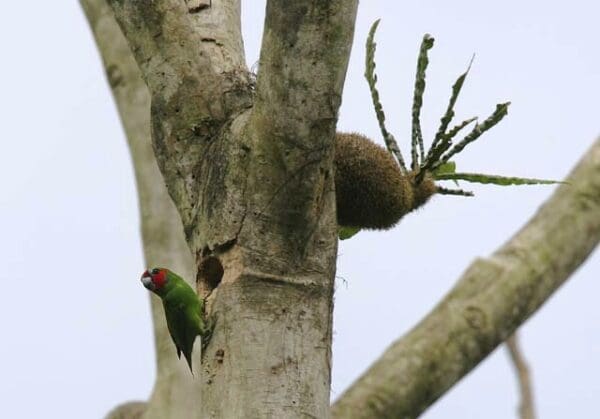
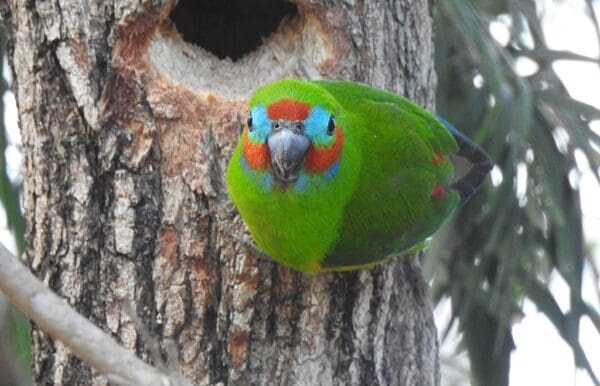
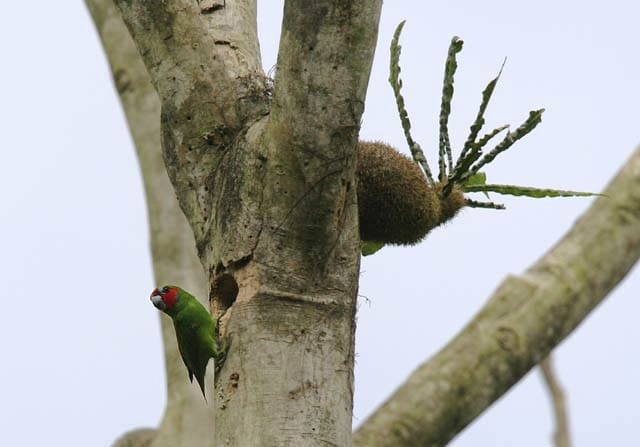
March-December depending on location; nest is in hollow tree or limb.

Related Links:

Join Our Flock

FlockTalk our monthly newsletter for parrot people everywhere:

+ News from the world of parrots

+ Updates on wild parrot projects

+ Inspiring updates from partners

+ Real stories from the parrot flock

+ Plus, expert tips for caring for your feathered friends at home.


Stay In The Loop, Sign Up Now.

FlockTalk: our monthly newsletter for parrot people everywhere:

Parrot news. Conservation wins. Pet care tips. All in one monthly email.

We do not sell or share your information with anyone.