LEARN

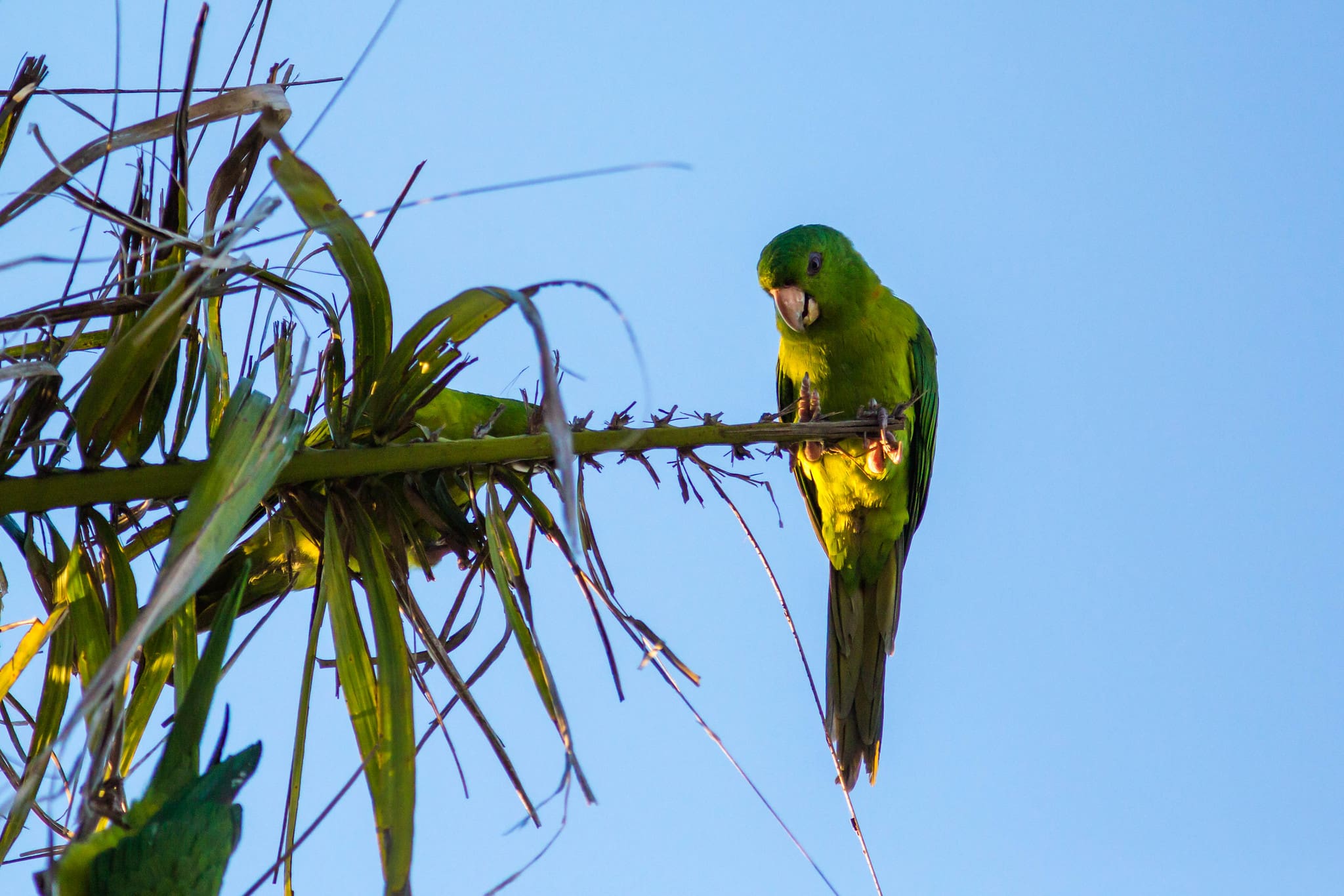
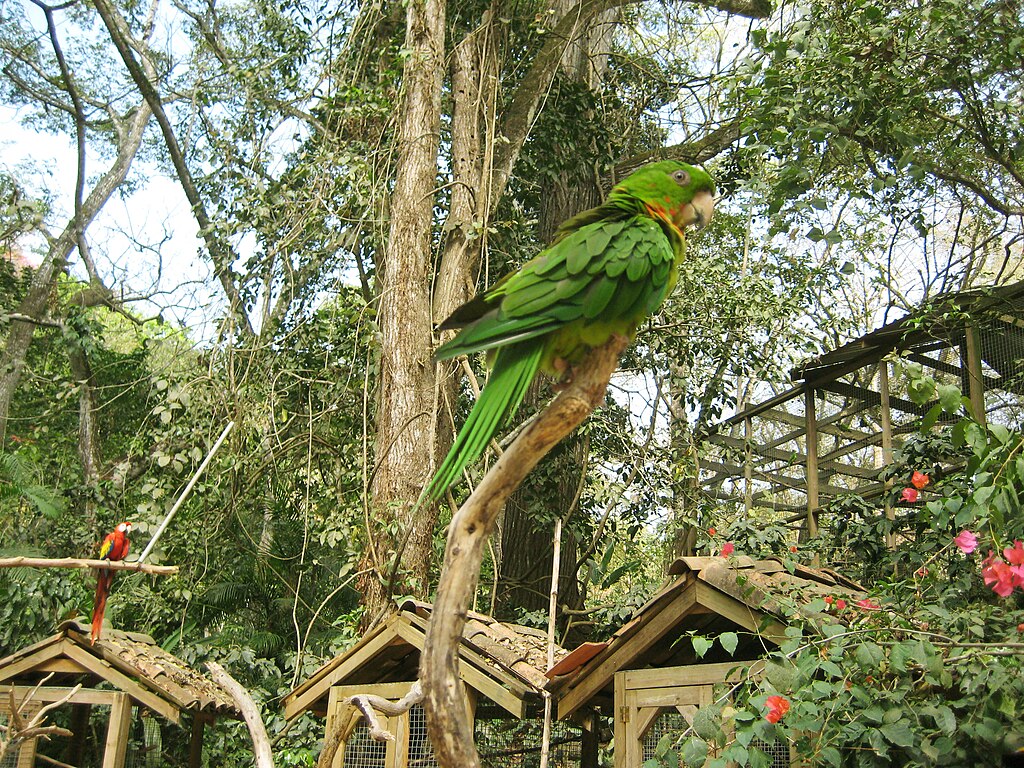
Green Conure

( Psittacara holochlorus )

Also known as:
Green Parakeet, Mexican Green Conure, Red-throated Conure

Also known as:
Green Parakeet, Mexican Green Conure, Red-throated Conure

Type :
Geography:

DID YOU KNOW?

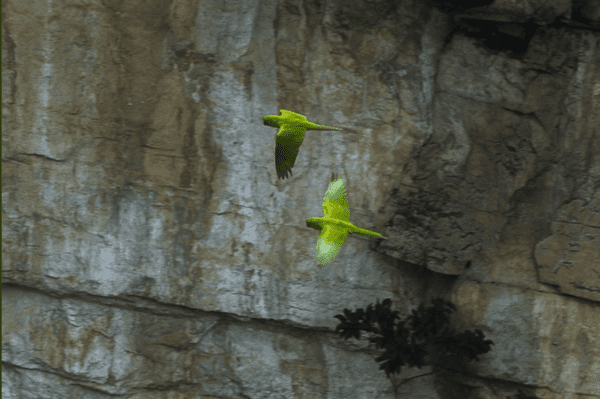
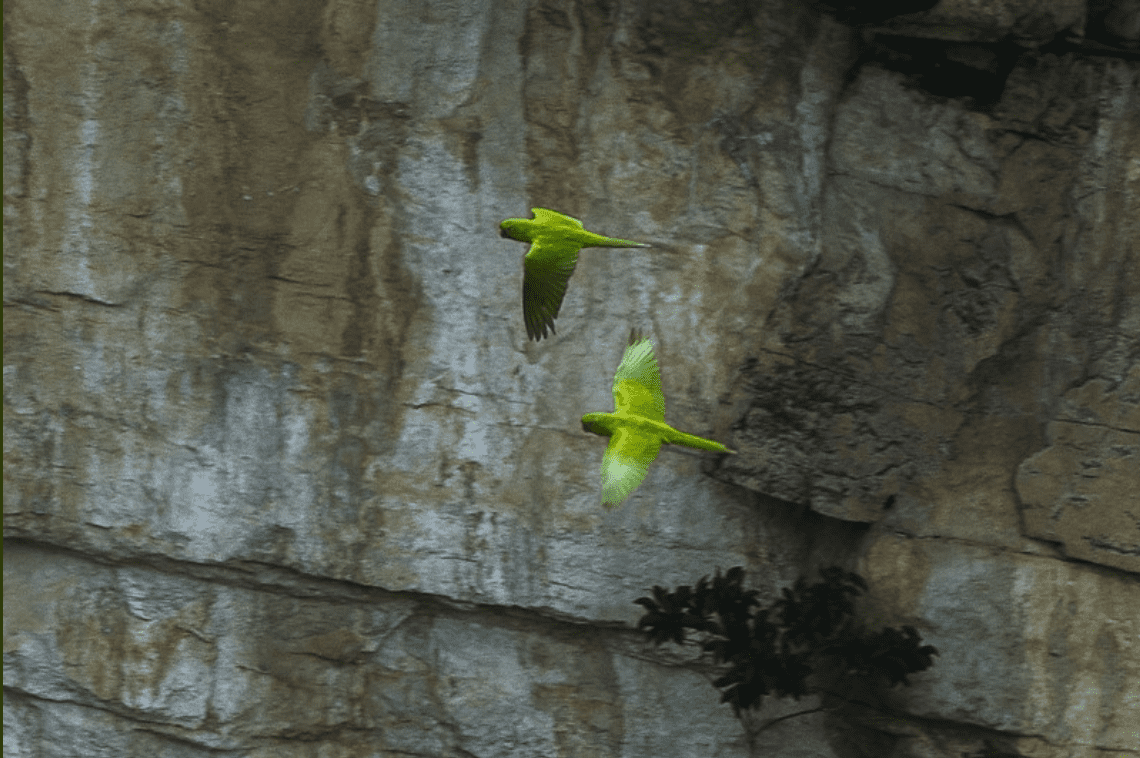
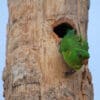
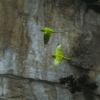
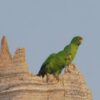
The Green Conure has been reported nesting in a colony in a cave in E Mexico.

<p><em>Psittacara</em></p>
Genus:

Psittacara

<p><em>holochlorus</em></p>
Species:

holochlorus

Size:

30 cm (11.7 in)

Weight:

230 g

Subspecies including nominate:

three: P.h. holochlorus, P.h. brewsteri, P.h. rubritorquis

Colour Adult:

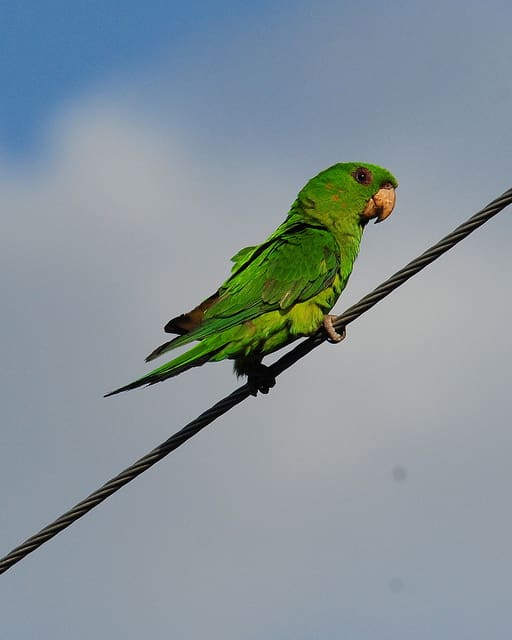
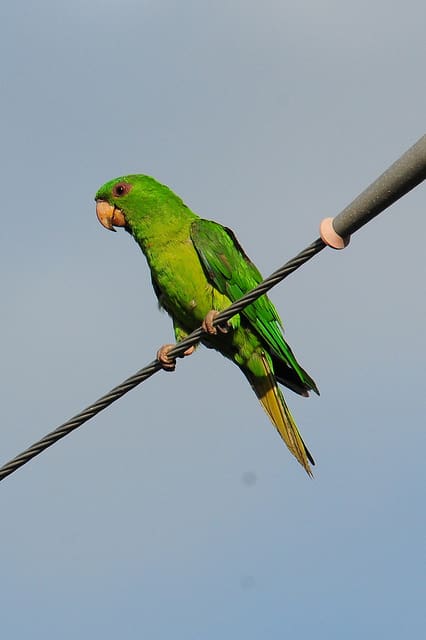
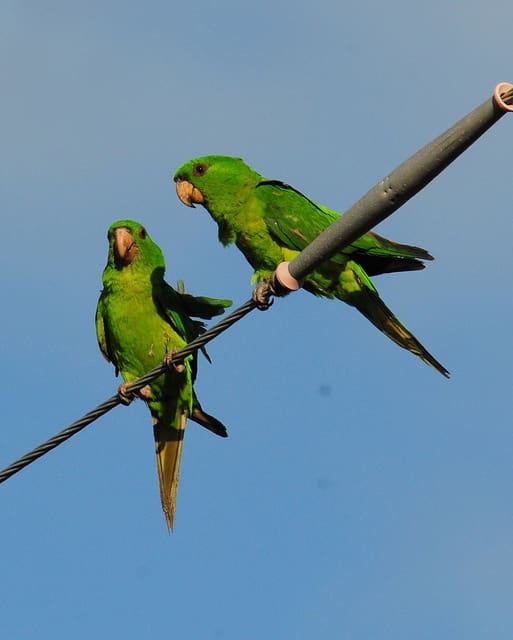
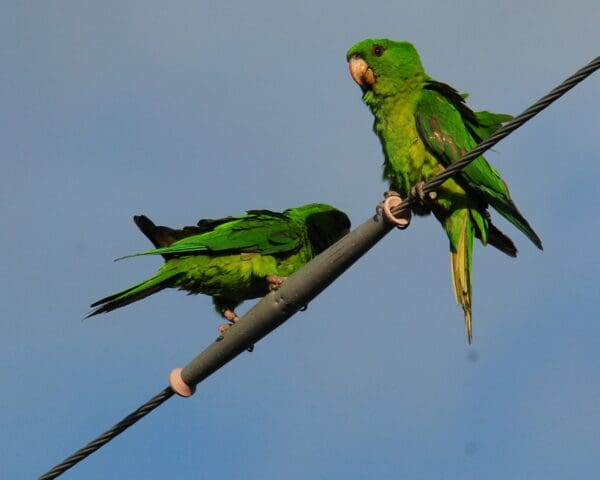
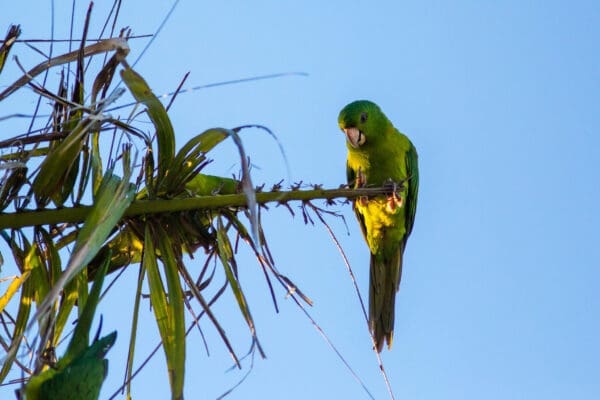
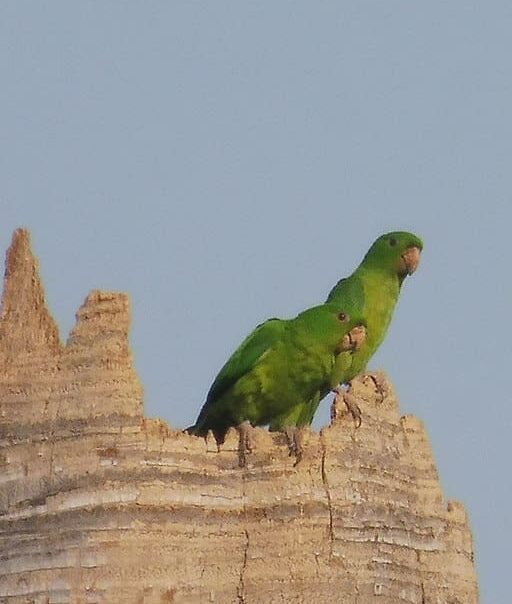
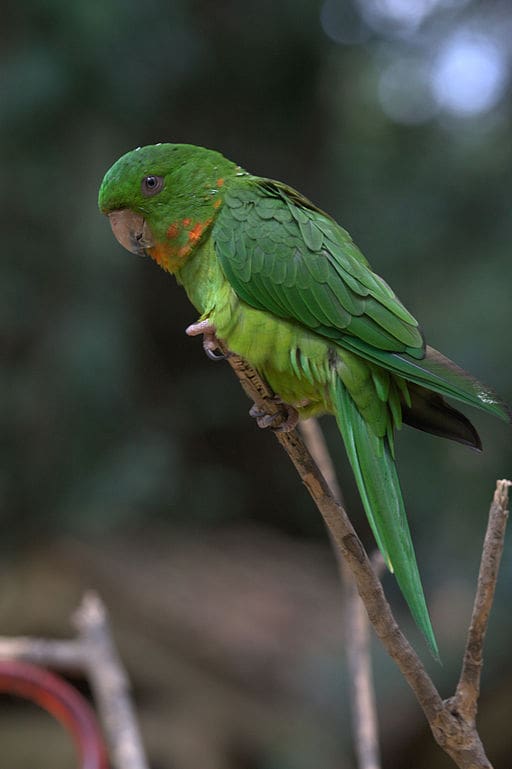
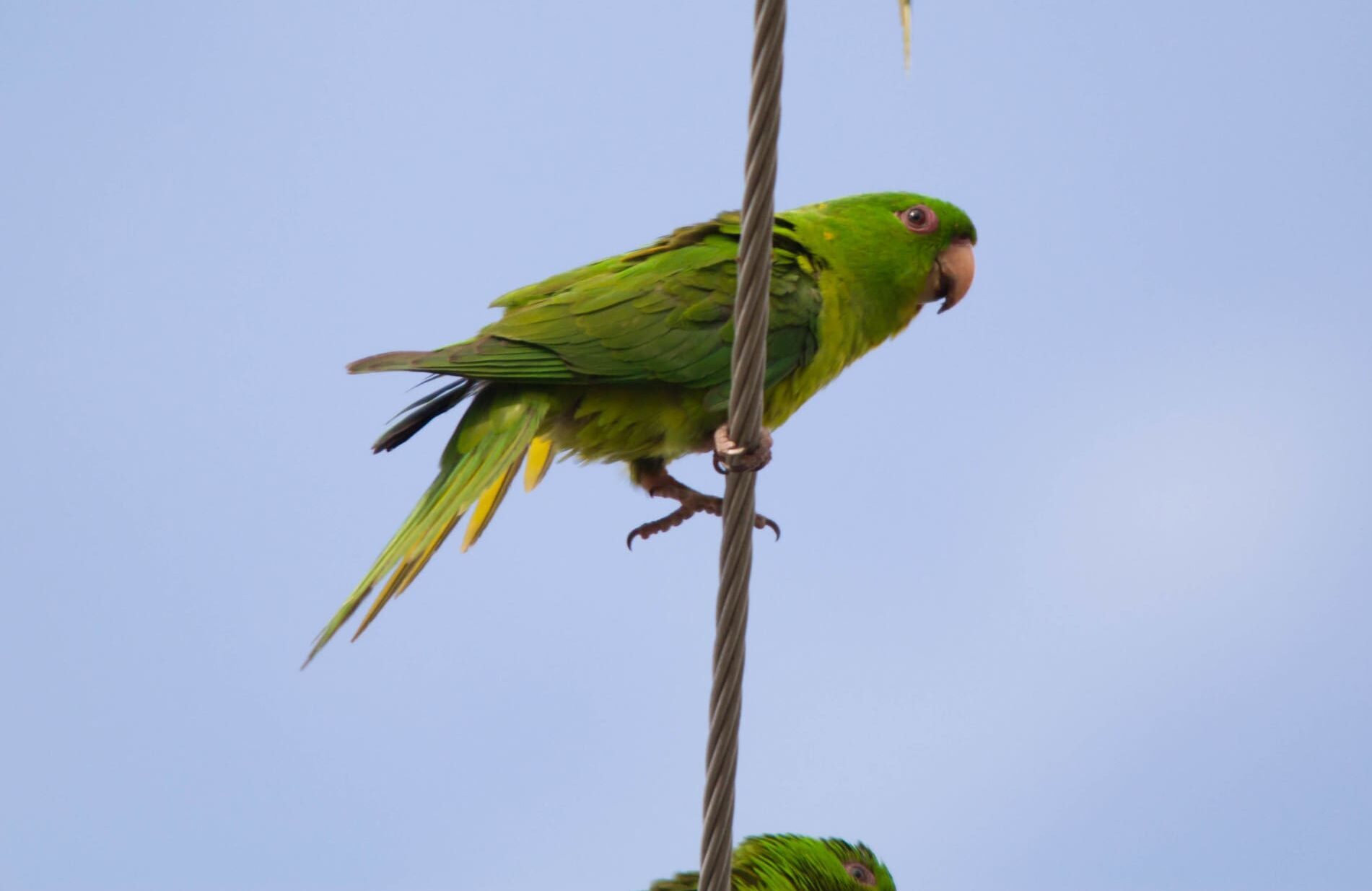
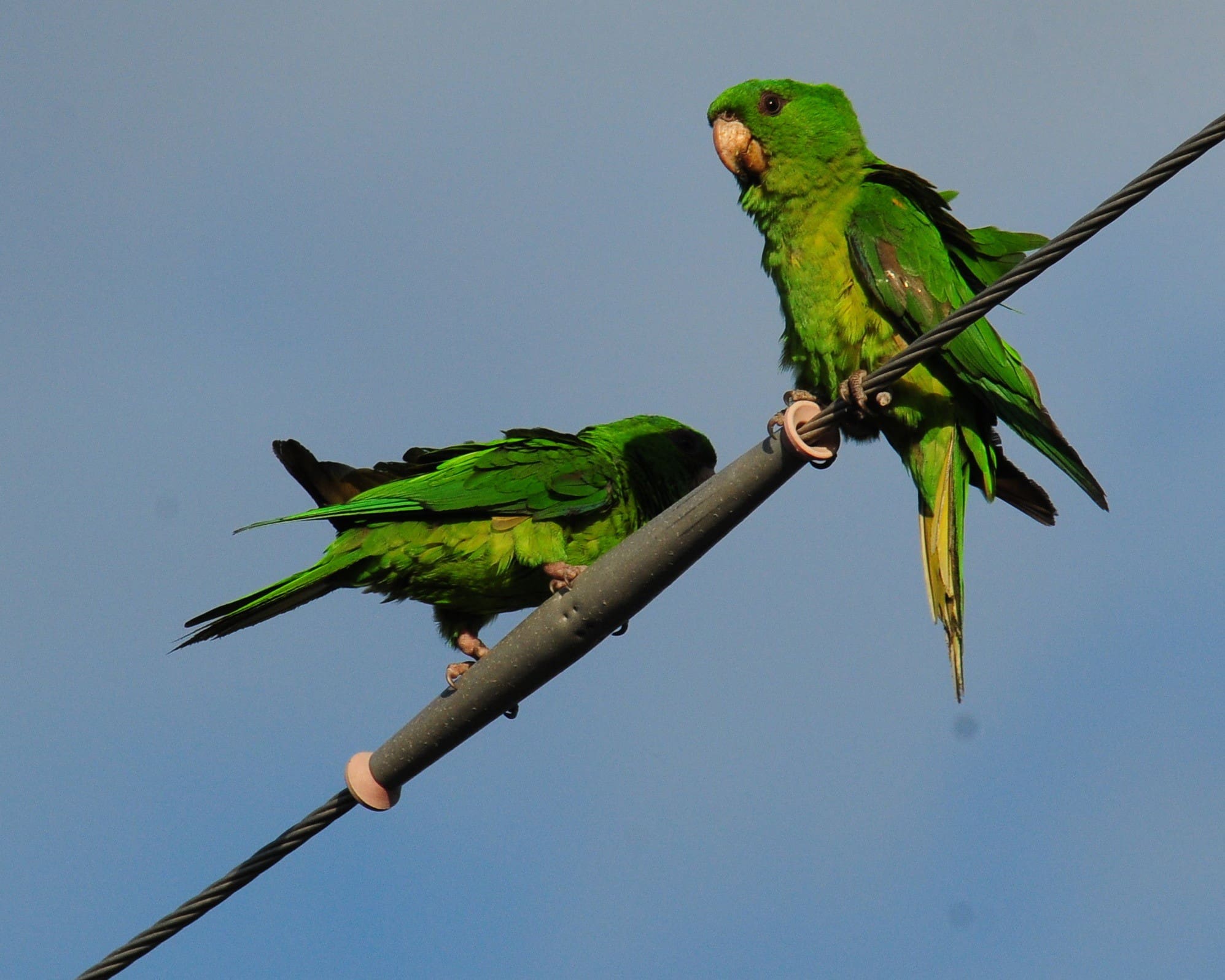
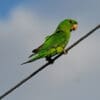
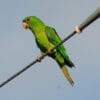
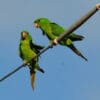
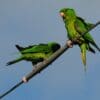
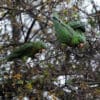
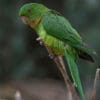
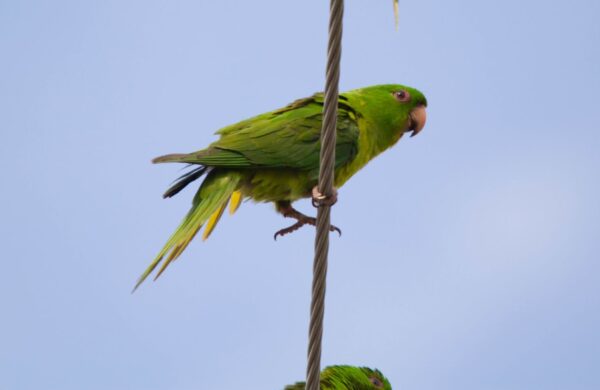
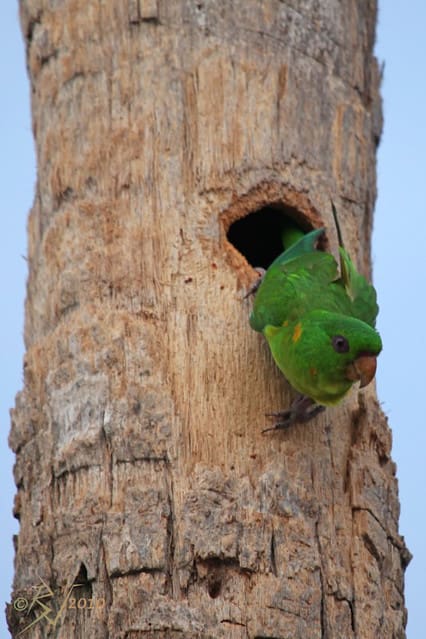
P.h. holochlorus: Both adults green in general; green/yellow on underparts; scattered red feathers on heads of some birds; blue tinge to primary coverts and outer webs of flight feathers; dull yellow/green underwing coverts; olive/yellow underside of flight feathers. Beak horn-coloured. Eye ring bare and pink/grey. Eye orange/brown.
P.h. brewsteri: Both adults as in holochlora, but a darker green with less yellow; crown with blue wash.
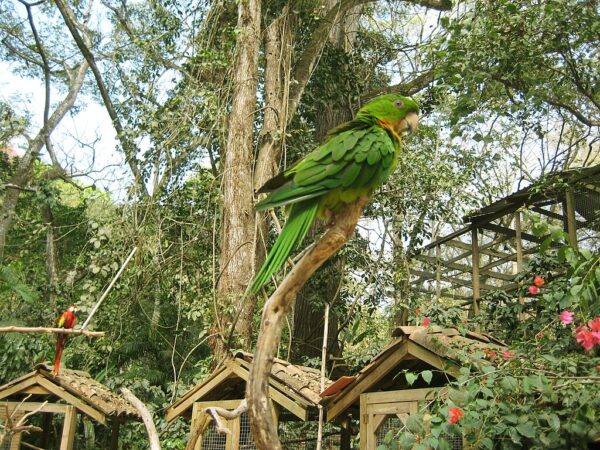
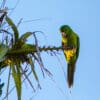
P.h. rubritorquis: Both adults in general green, with yellow on underparts; orange/red throat and foreneck, with scattered orange/yellow feathers; varying orange/red feathers scattered on lower cheeks and sides of neck; blue tinge to primary coverts and outer webs of flight feathers; yellow/green underwing coverts; dull yellow undersides of flight feathers. Beak horn in colour. Eye ring bare and brown/grey. Eye orange.

Colour Juvenile:

P.h. holochlorus: As in adults but with brown eye.
P.h. rubritorquis: Red on throat, cheeks and sides of neck minimal or absent. Eye brown.

Call:

Calls made in flight are rolling, shrill and harsh; also deeper, stronger notes.

Xeno-canto Wildlife Sounds-Green Conure

More Information:

Avibase

Content Sources:

CITES
AviList
BirdLife International
Cornell Lab of Ornithology/Birds of the World
Parrots: A Guide to Parrots of the World, Juniper and Parr, 1998
Parrots of the World, Forshaw and Cooper, 1989. 2010 edition
Parrots of the World, Forshaw, 2006.
Lexicon of Parrots, Thomas Arndt.
Parrots in Aviculture, Low, 1992.

Captive Status:

Rare

Longevity:

Probably up to 30 yrs.

Housing:

Enclosure or suspended aviary, minimum length 2-3 m (6.5-9.8 ft).

Diet:

Fruit such as: apple, pear, orange, cactus fruits, guava, mango, pomegranate, forming at least 30 percent of diet; vegetables such as: carrots, celery, green beans and peas in the pod; fresh corn; green leaves such as: Swiss chard, lettuce, kale, sowthistle, dandelion, chickweed; spray millet; small seed mix such as: canary, millet and smaller amounts of oats, buckwheat, safflower and a little hemp; soaked and sprouted sunflower seed; cooked beans and pulses and boiled maize and complete pellet.
Enrichment:

Provide plenty of bird-safe, unsprayed flowering, fir, pine, willow or elder branches, wooden block or vegetable-tanned leather toys, heat sterilised pine cones. Enjoys bathing so provide overhead misters or shallow water bowls.

Nest Box Size:

Diagonal nest box 25 cm x 40 cm x 30 cm (10 x 16 x 12 in).

Clutch Size:

3-4

Fledging Age:

8 weeks

Hatch Weight:

Peak Weight:

Weaning Weight:

World Population:

200,000 mature individuals, decreasing.

IUCN Red List Status:
Not Evaluated

CITES Listing:
Appendix II

Threat Summary:

Not globally threatened. An overall decline has occurred due to forest loss to agriculture and mainly local trade.

Range:

P.h. holochlorus: From southern Texas, US, to eastern Nuevo Leon and Tamaulipas, to central Veracruz and from southeast Veracruz and eastern Oaxaca to eastern Chiapas, with seasonal movements to the Pacific slope on the Isthmus of Tehuantepec.
P.h. brewsteri: Highlands of northwestern Mexico, in Sonora, northern Sinaloa and southwestern Chihuahua.
P.h. rubritorquis: Central highlands and the nearby Pacific slope of eastern Guatemala to western Nicaragua.

Habitat:

Found up to 2500 m (6560 ft) in various wooded habitats (deciduous and gallery woodland, scrub, clearing and forest edge) except tropical rainforest. Rubritorquis is found almost exclusively in highland pine forest (Monroe 1968). Other subspecies are primarily found in foothill and lower highland areas.

Wild Diet:

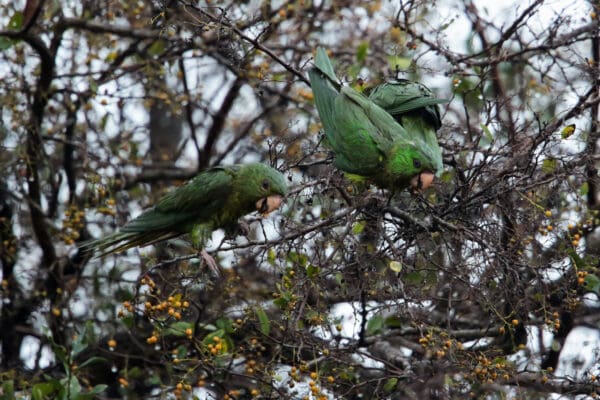
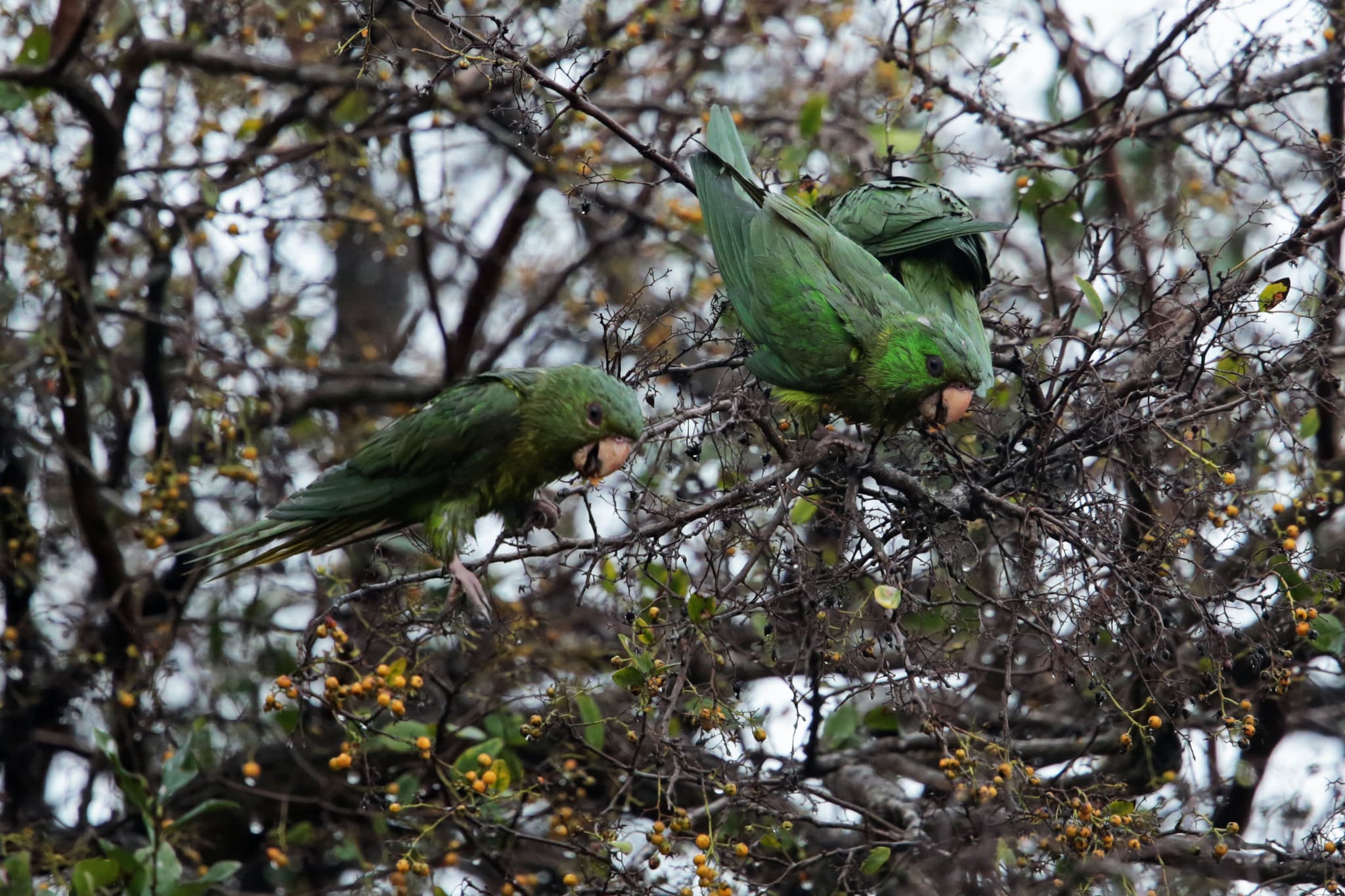
Diet not well known but has been recorded feeding on seeds of Mimosa, fruits of Myrica mexicana, Ehretia anacua, Ceitis laevigata, Washingtonia, Melia azedarach and maize. Also, buds of Populus and acorns of Quercus, along with wool-bearing gall wasp larvae, in Texas birds.

Ecology and Behaviour:

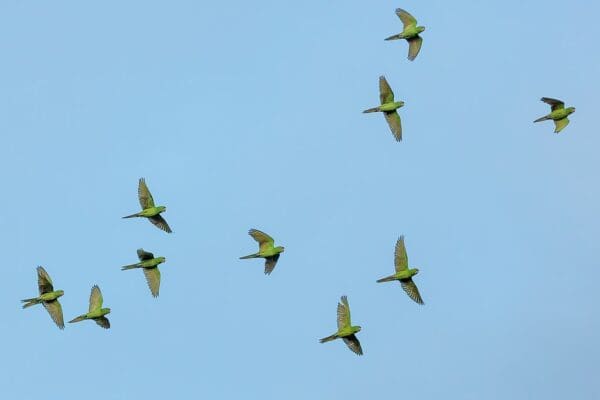
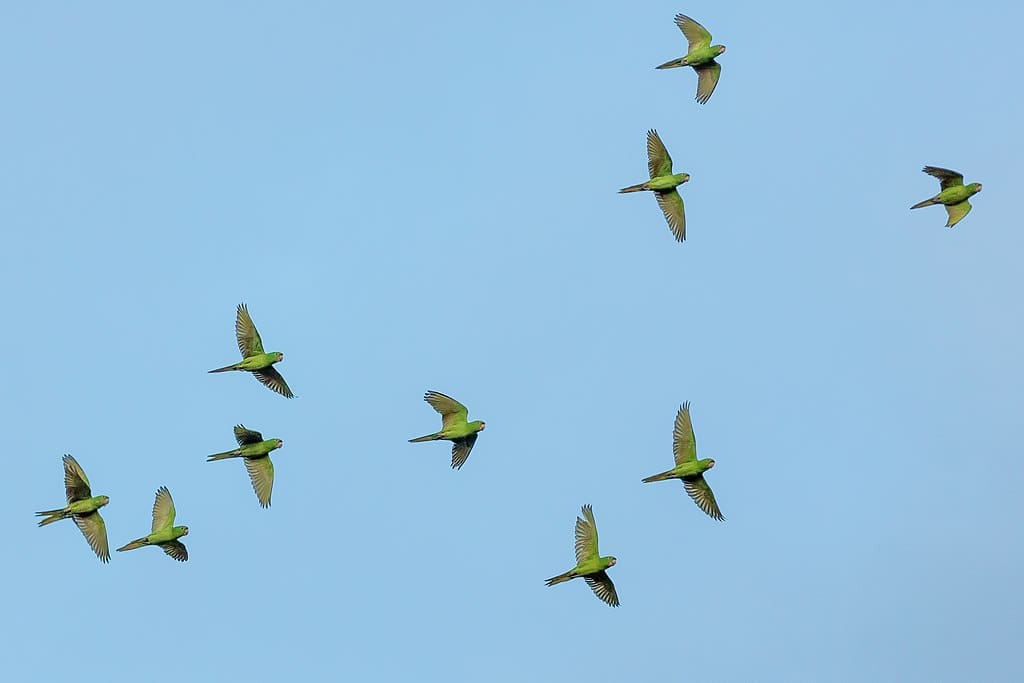
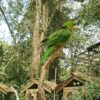
Seen in large noisy flocks outside the breeding season, particularly where food abundant. Nest is usually located in tree cavity, rock crevice, hole in building or termite mound.

Clutch and Egg Size:

3-4 eggs, 38.0 x 25.5 mm (1.5 x 1 in).

Breeding Season:

January-August depending on location. Nest is in tree cavity, termitarium or, colonially, in rock crevices in cliff faces and caves.

Join Our Flock

FlockTalk our monthly newsletter for parrot people everywhere:

+ News from the world of parrots

+ Updates on wild parrot projects

+ Inspiring updates from partners

+ Real stories from the parrot flock

+ Plus, expert tips for caring for your feathered friends at home.


Stay In The Loop, Sign Up Now.

FlockTalk: our monthly newsletter for parrot people everywhere:

Parrot news. Conservation wins. Pet care tips. All in one monthly email.

We do not sell or share your information with anyone.