LEARN

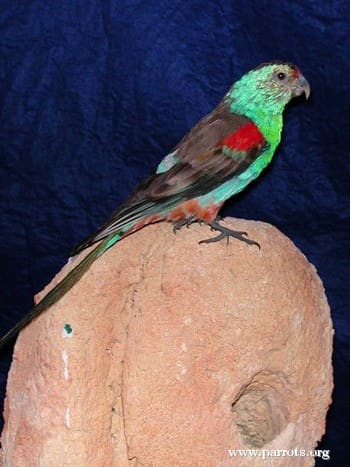
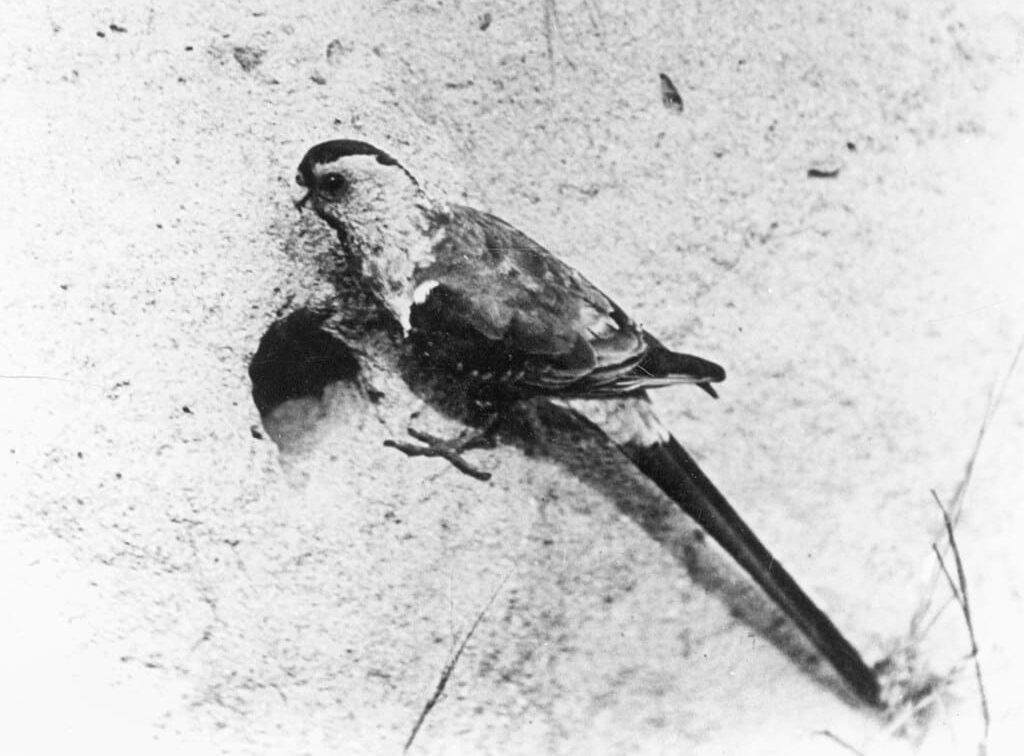
Paradise Parrot

( Psephotellus pulcherrimus )

Also known as:
Beautiful Parrot, Red-shouldered Parrot or Parakeet, Scarlet-shouldered Parrot, Soldier Parrot, Ground Parrot, Ground Rosella, Grass Parrot, Anthill Parrot, Elegant Parrot

Also known as:
Beautiful Parrot, Red-shouldered Parrot or Parakeet, Scarlet-shouldered Parrot, Soldier Parrot, Ground Parrot, Ground Rosella, Grass Parrot, Anthill Parrot, Elegant Parrot

Geography:

DID YOU KNOW?

The last confirmed sighting of this bird was in 1927.

<p><em>Psephotellus</em></p>
Genus:

Psephotellus

<p><em>pulcherrimus</em></p>
Species:

pulcherrimus

Size:

27 cm (10.5 in)

Weight:

Probably as in other Psephotellus sp. at 50-70 g.

Subspecies including nominate:

one

Colour Adult:

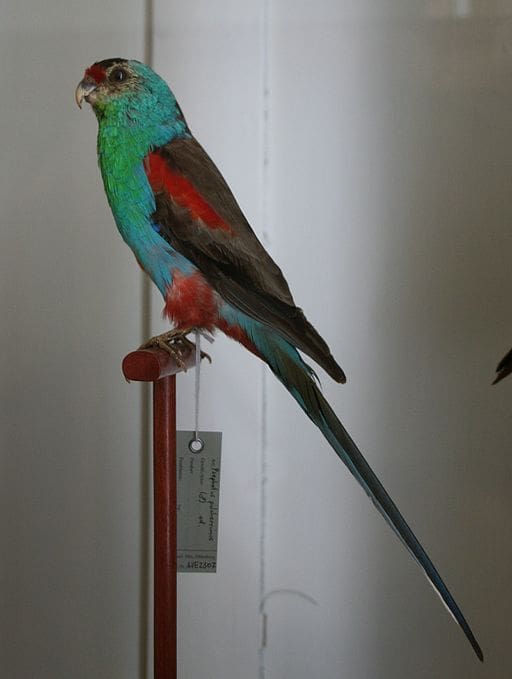
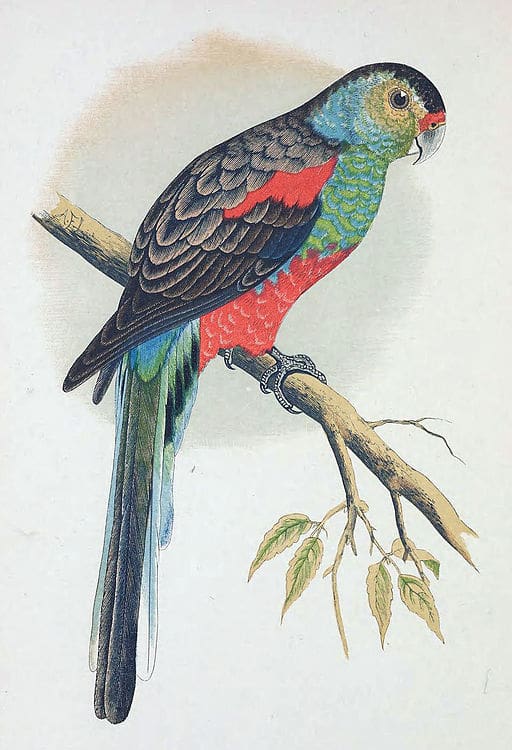
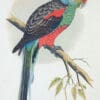
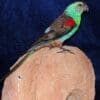
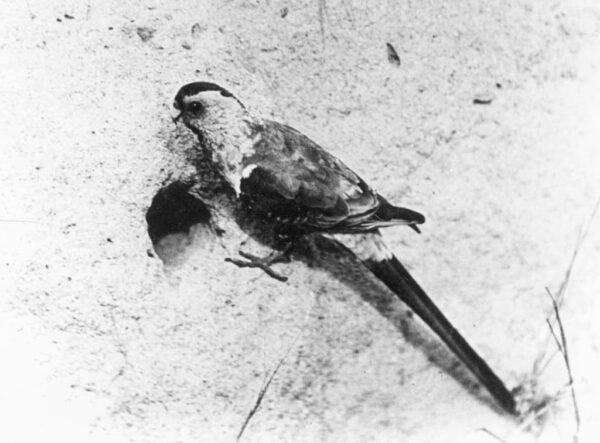
Male-red forehead; crown and nape brown/black; upperparts red/brown; green/blue rump, flanks and sides of abdomen; emerald green upper tail coverts; face and underparts emerald green; red undertail coverts and centre of abdomen; middle and outer lesser wing coverts red; tail bronze/green widely tipped blue/white. Beak grey/white. Eye brown.  Female-forehead and area around eye yellow/tan; black/brown crown and nape; face and breast dusty tan/yellow washed with brown/orange; abdomen to under tail coverts pale blue, centre of abdomen red; dull red confined to lesser and innermost median wing coverts; underwing band present.

Colour Juvenile:

As in female; with some emerald green on face and breast of male; underwing band present.

Call:

Calls described as sweet and plaintive piping sounds; also sharp musical notes reported from pair bothered by honey-eaters.

More Information:

Wikipedia

Content Sources:

CITES
BirdLife International
Cornell Lab of Ornithology/Birds of the World
Parrots: A Guide to Parrots of the World, Juniper and Parr, 1998
Parrots of the World, Forshaw and Cooper, 1977. 2010 edition
Vanished and Vanishing Parrots, Forshaw, 2017.
Parrots of the World, Forshaw, 2006.

Captive Status:

Not found in captivity.

Longevity:

Housing:

Diet:

Enrichment:

Nest Box Size:

Clutch Size:

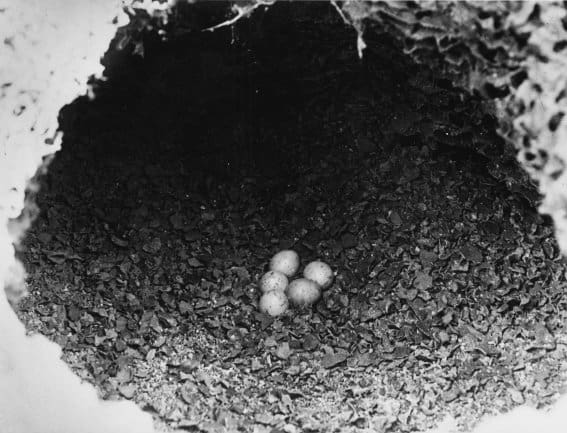
3-5 eggs.

Fledging Age:

Hatch Weight:

Peak Weight:

Weaning Weight:

World Population:

None.

IUCN Red List Status:
Extinct

CITES Listing:
Appendix I

Threat Summary:

Extinction attributed to burning seeding grass to provide green growth for cattle, the effects of drought, overgrazing, the spread of prickly pears and possibly also disease, trapping and egg-collecting. Last recorded with certainty in 1927.

Range:

Formerly CE Australia, from the Tropic of Capricorn, C Queensland, south to NE New South Wales at lat. 29 degrees, 40 min S.

Habitat:

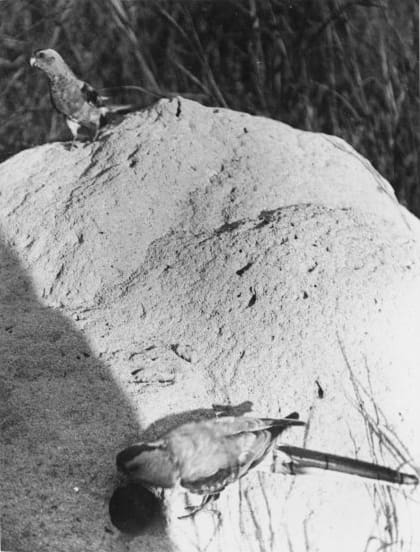
Formerly found in open grassy habitats, with Eucalypt and scattered termite mounds. Also found in scrubby grassland and along wooded watercourses.

Wild Diet:

Foraged for native grass seeds.

Ecology and Behaviour:

Usually found in pairs; gathered fallen seeds from ground or stipped seedheads from standing grasses. Were fairly approachable.

Clutch and Egg Size:

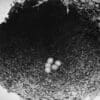
3-5 rounded eggs, 21.0 x 17.5 mm (0.8 x 0.7 in).

Breeding Season:

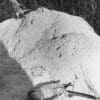
Records from September, December, and March. Nest was a chamber in a terrestrial termitarium.

Join Our Flock

FlockTalk our monthly newsletter for parrot people everywhere:

+ News from the world of parrots

+ Updates on wild parrot projects

+ Inspiring updates from partners

+ Real stories from the parrot flock

+ Plus, expert tips for caring for your feathered friends at home.


Stay In The Loop, Sign Up Now.
FlockTalk: our monthly newsletter for parrot people everywhere:

Parrot news. Conservation wins. Pet care tips. All in one monthly email.

We do not sell or share your information with anyone.