Also known as:
Plum-crowned Pionus, Tschudi's Parrot, Restless Parrot, Speckle-faced Parrot
Also known as:
Plum-crowned Pionus, Tschudi's Parrot, Restless Parrot, Speckle-faced Parrot

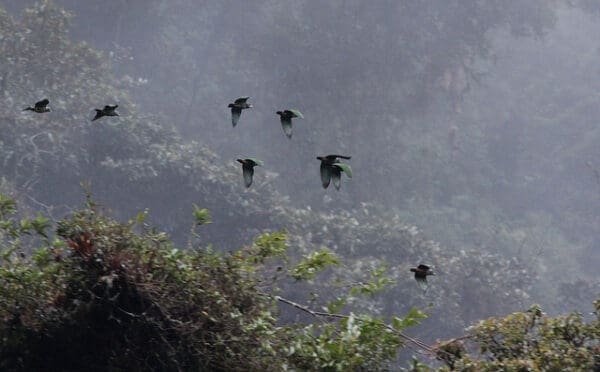
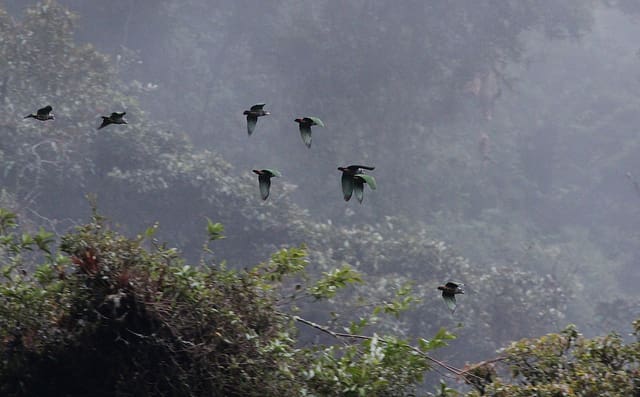
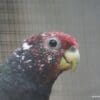
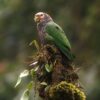
![© Gary Leavens [CC BY-NC 2.0] via Flickr Wild Plum-crowned Parrots fly above the forest](https://foowd.com/wp-content/uploads/2023/01/wpt_Plum-crowned-Parrot_1405-3-100x100.jpg)


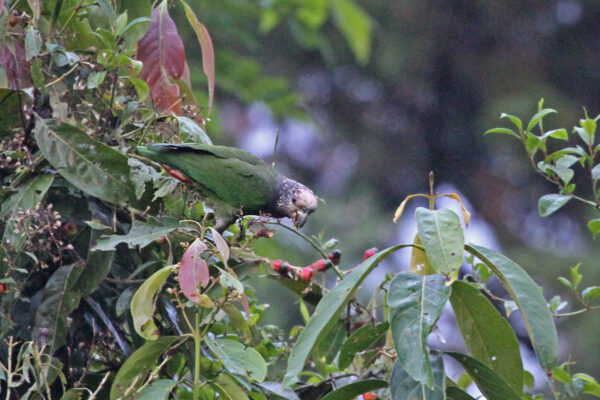
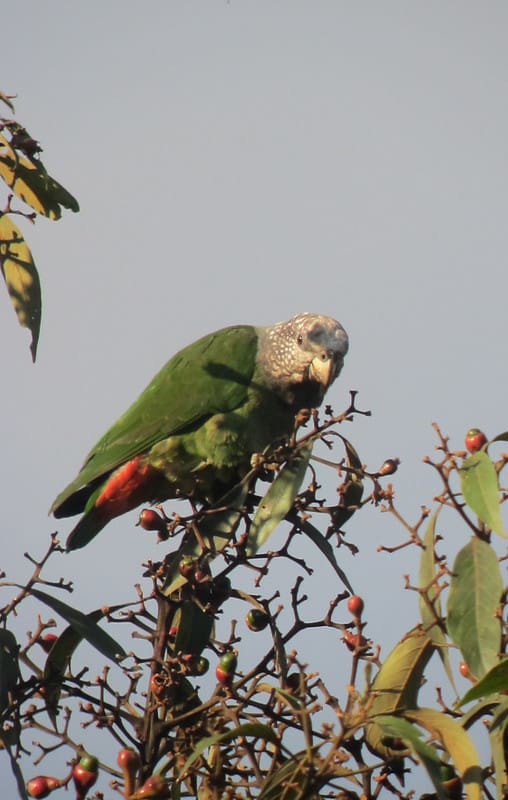
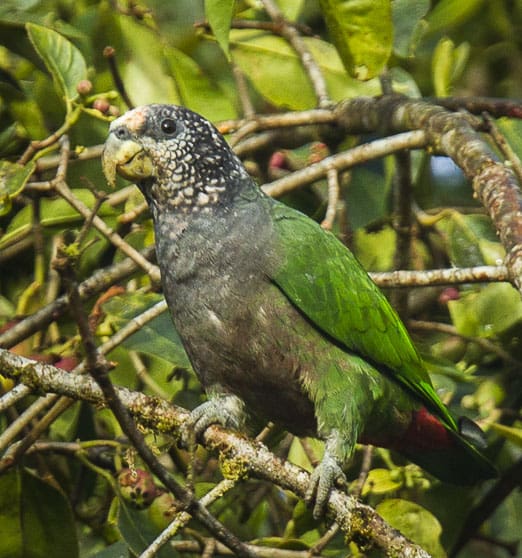
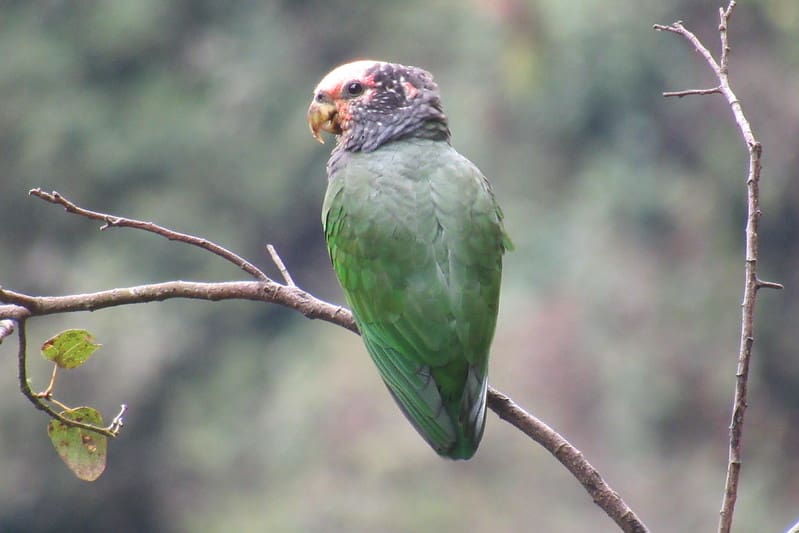
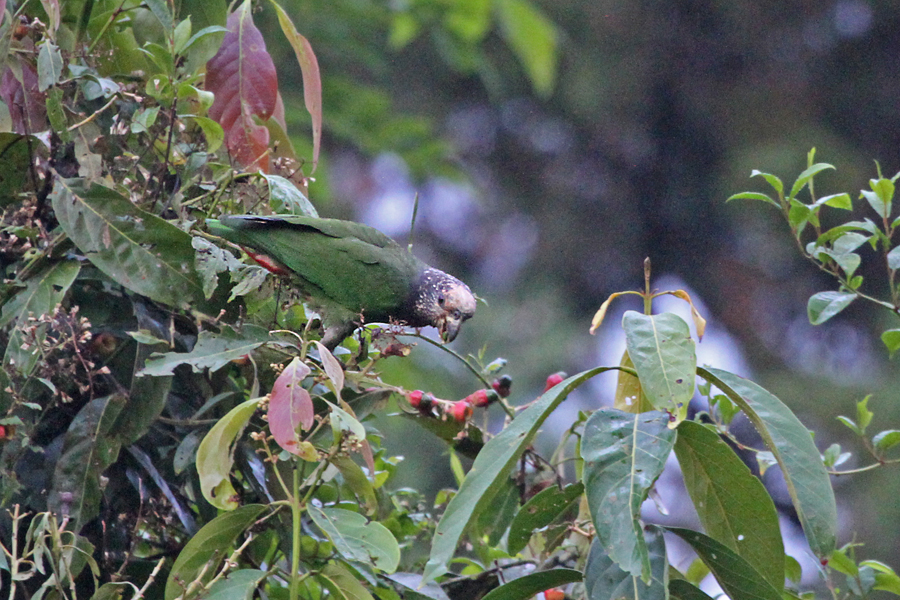
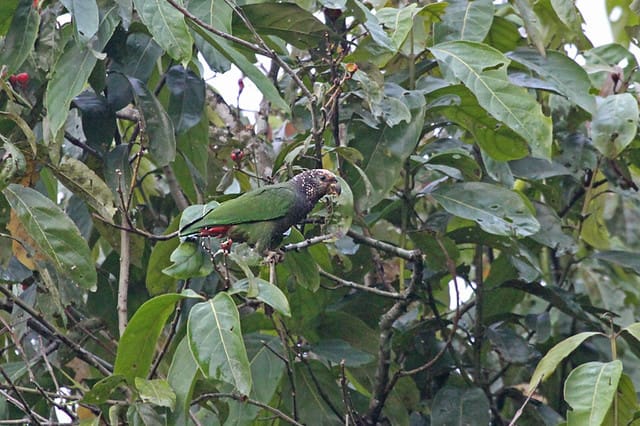
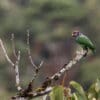
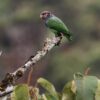
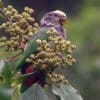
![© Felix Uribe [CC BY-SA 2.0] via Flickr A wild White-capped Parrot feeds on berries](https://foowd.com/wp-content/uploads/2023/01/wpt_White-capped-Parrot_1406-7-100x100.jpg)
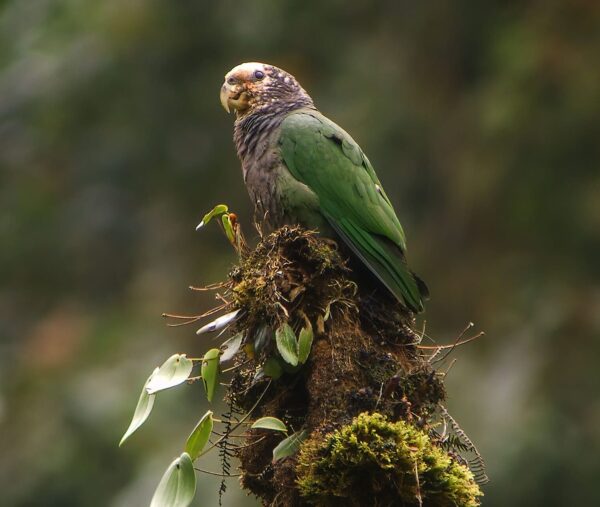
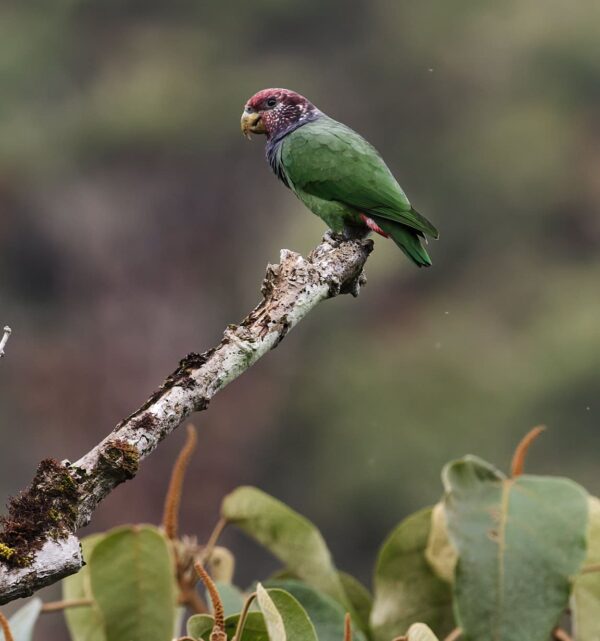
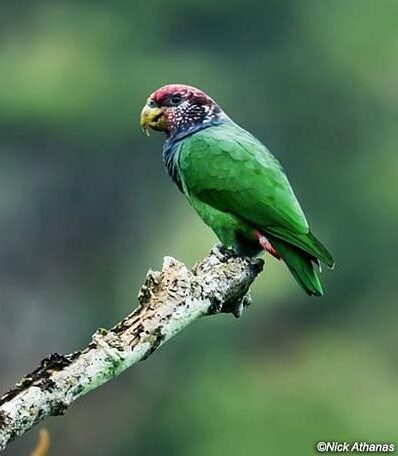
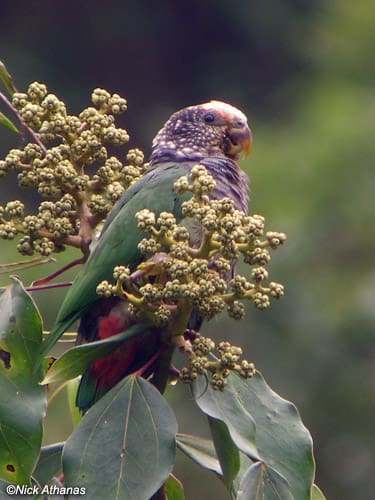
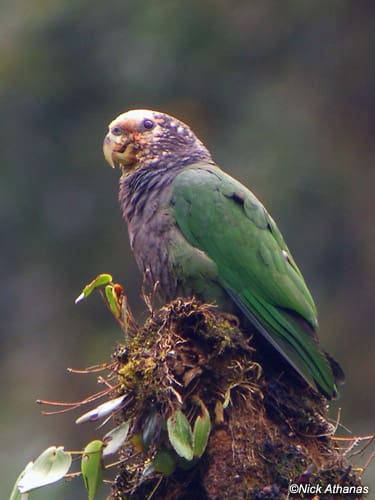
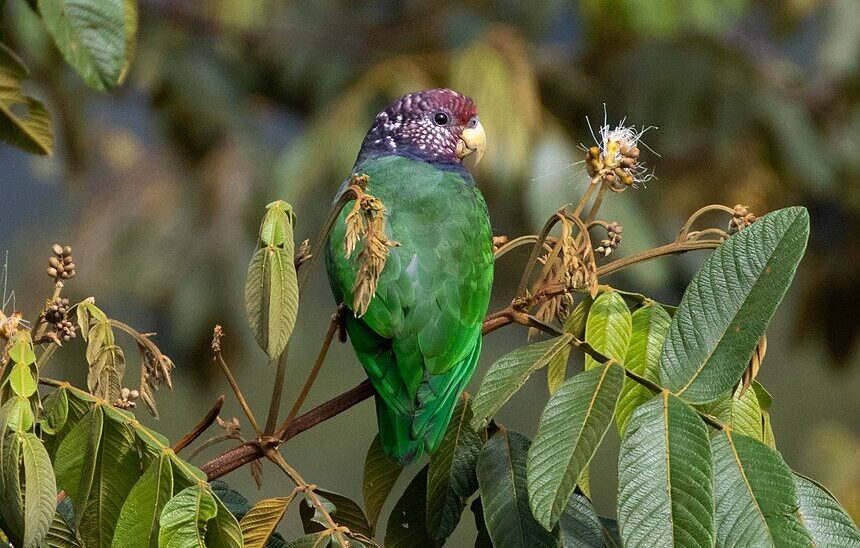
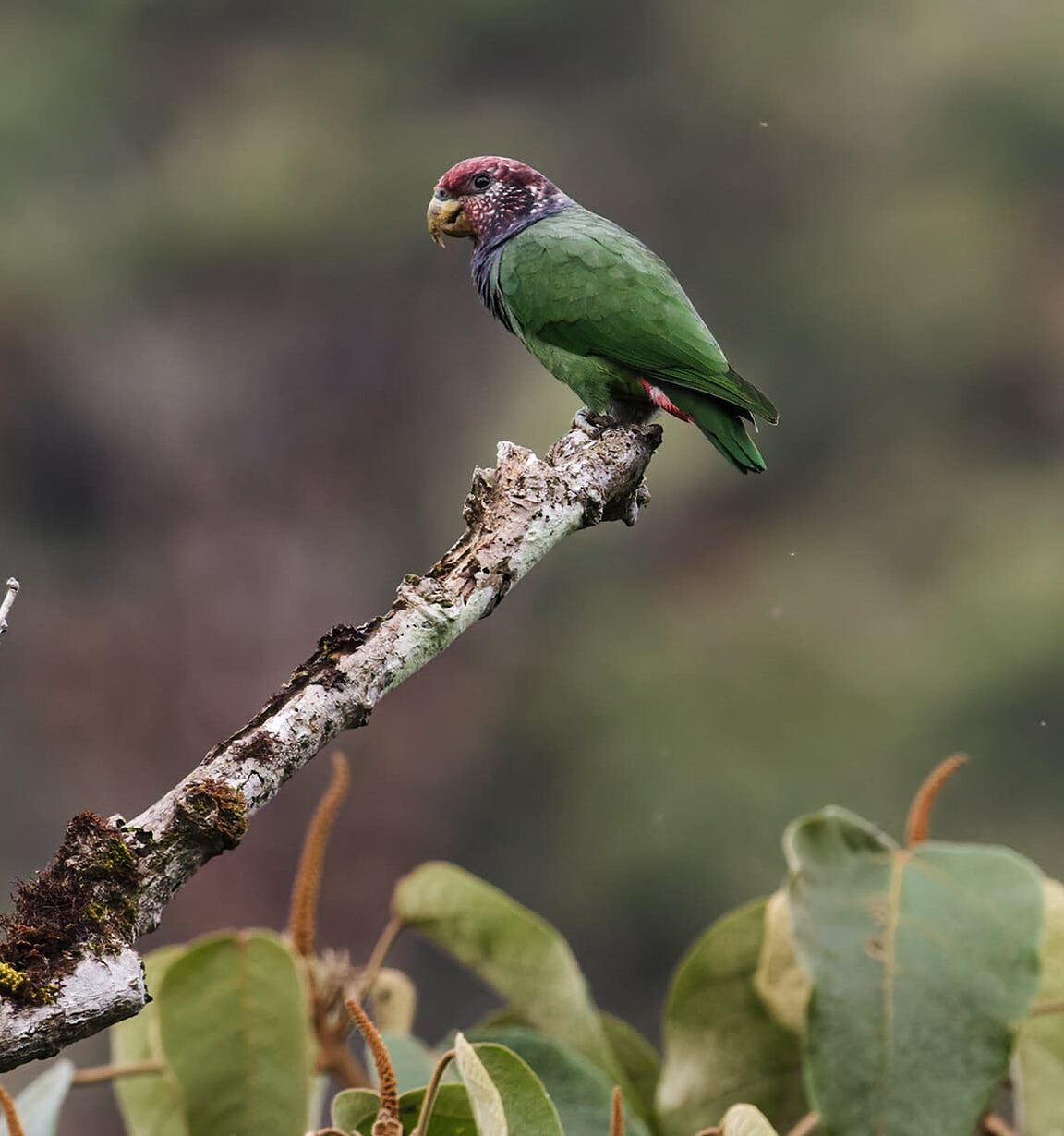
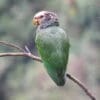
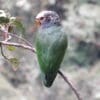
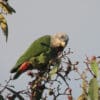
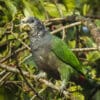
![© Nick Athanas [CC BY-NC 2.0] via Flickr A wild Plum-crowned Parrot perches on the end of a branch](https://foowd.com/wp-content/uploads/2023/01/wpt_White-capped-Parrot_1406-6-e1732914433110-100x100.jpg)
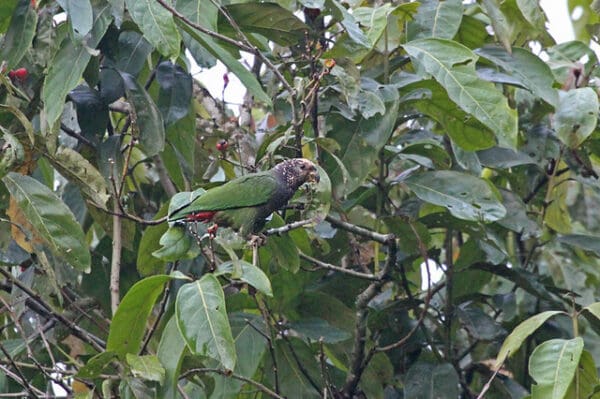
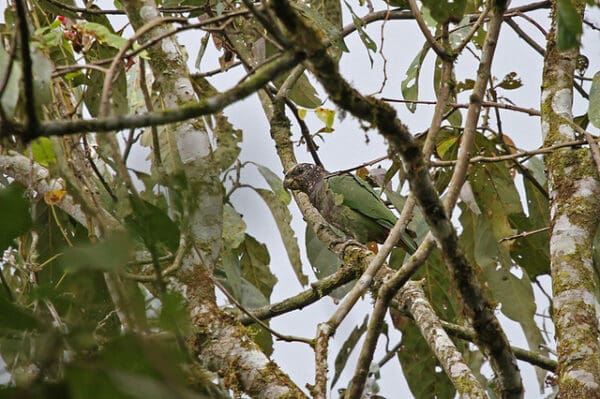
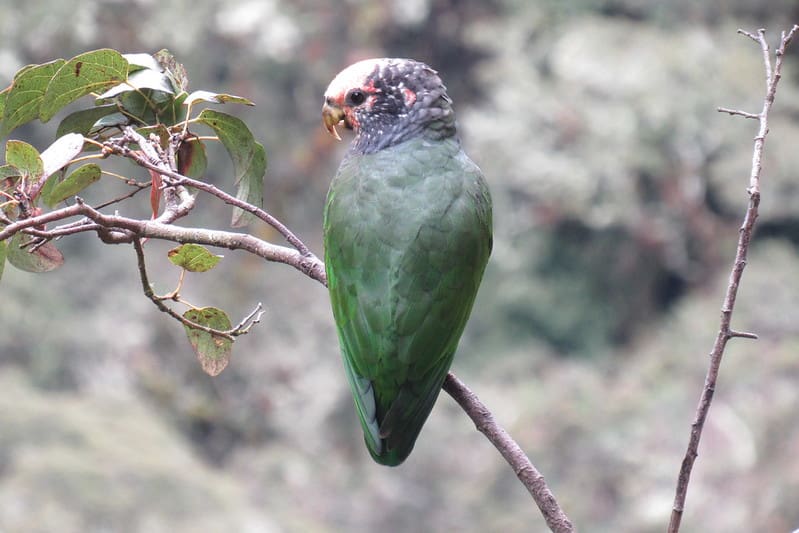
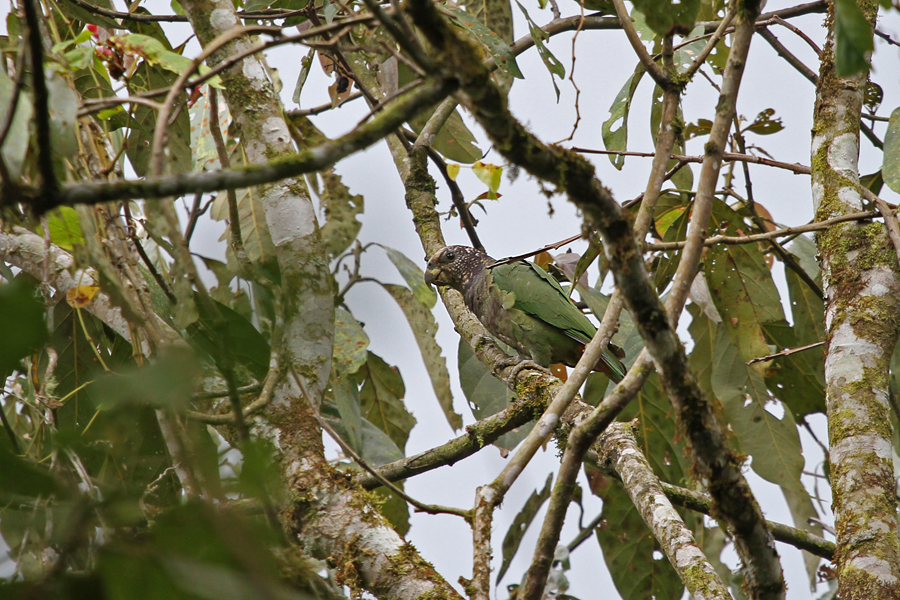
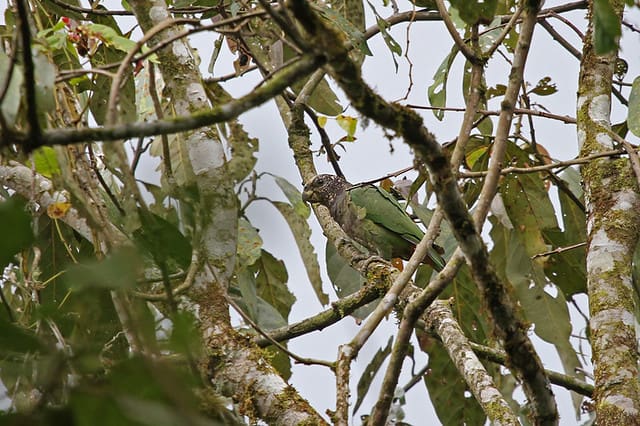
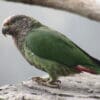
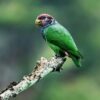
![© Brendan Ryan [CC BY-NC-SA 2.0] via Flickr A wild White-capped Parrot perches in a leafy tree](https://foowd.com/wp-content/uploads/2023/01/wpt_White-capped-Parrot_1406-5-100x100.jpg)
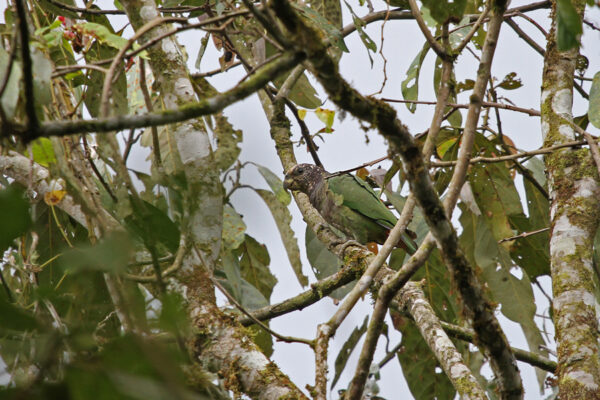
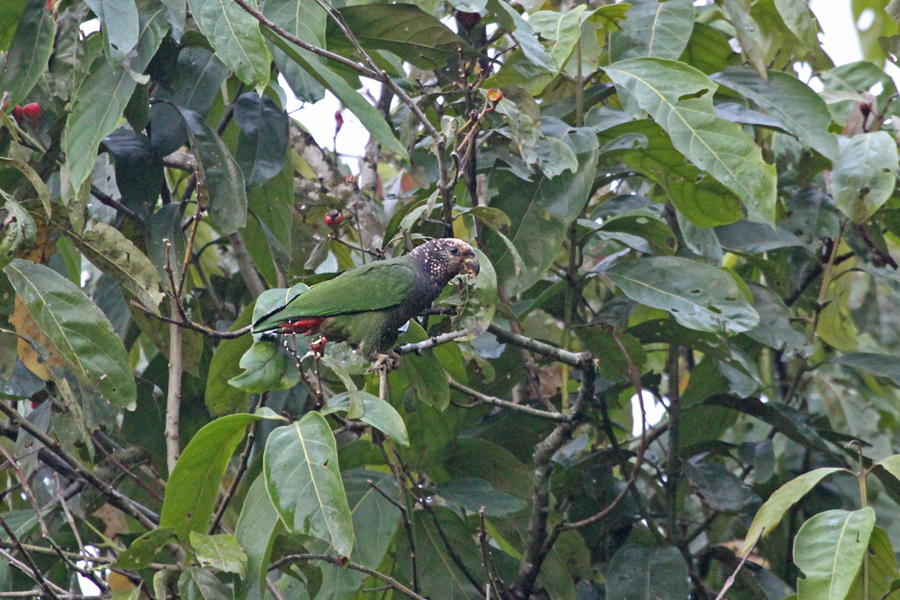
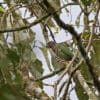
![© Brendan Ryan [CC BY-NC-SA 2.0] via Flickr A wild White-capped Parrot perches in a tree](https://foowd.com/wp-content/uploads/2023/01/wpt_White-capped-Parrot_1406-4-100x100.jpg)
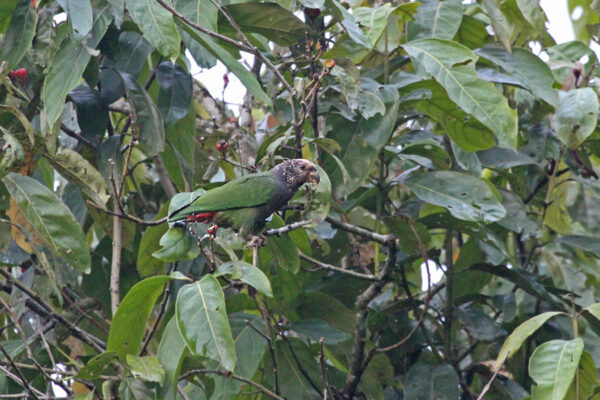
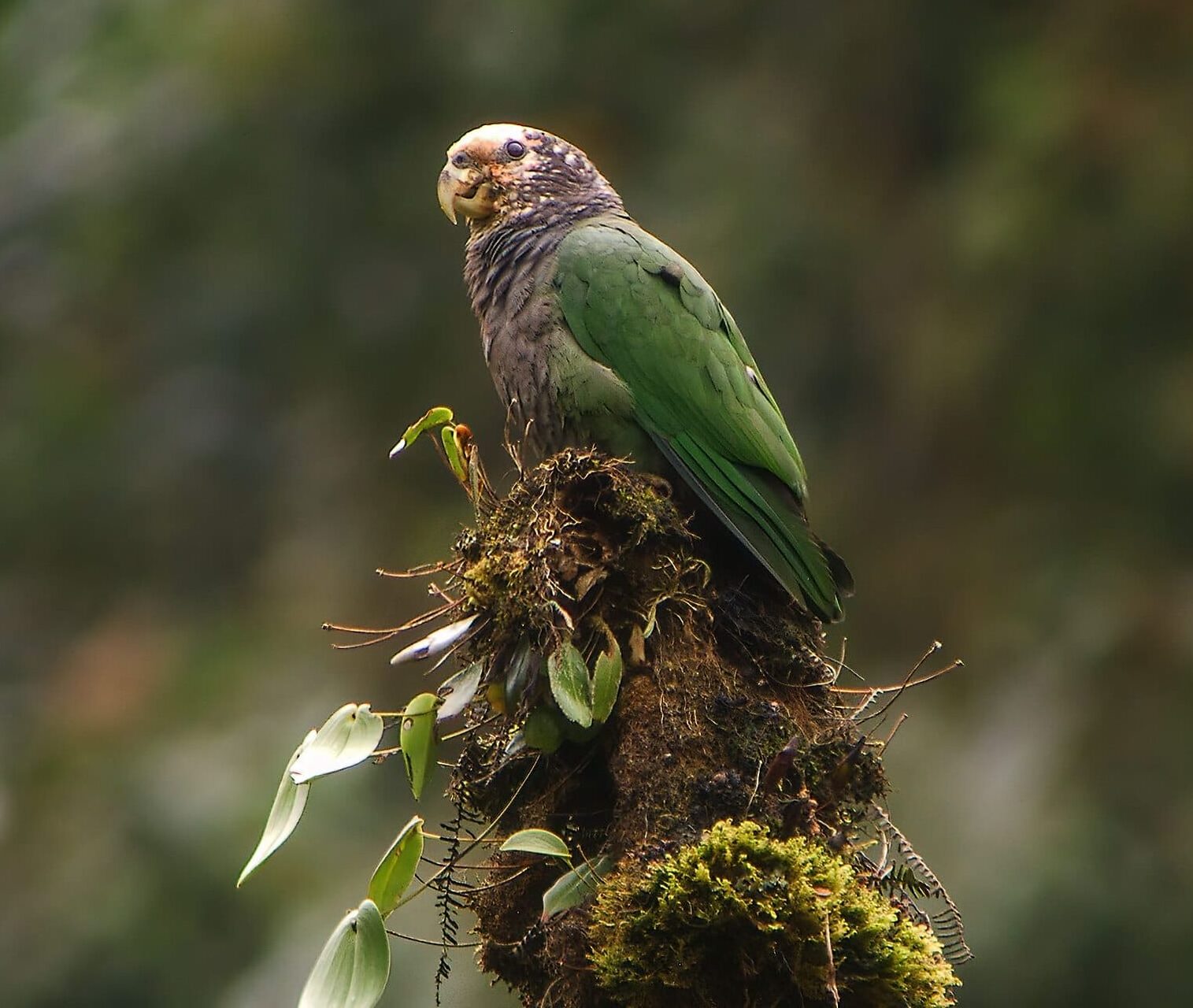
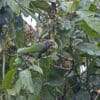
![© Francesco Veronesi [CC BY-NC-SA 2.0] via Flickr A wild White-capped Parrot perches in a leafy tree](https://foowd.com/wp-content/uploads/2023/01/wpt_White-capped-Parrot_1406-3-100x100.jpg)


The Plum-crowned Parrot is also called the Restless Parrot, due to its flighty, nervous behaviour.

Pionus

tumultuosus
Size:
29 cm (11.3 in)
Weight:
250 g (8.75 oz)
Subspecies including nominate:
two: P.t. tumultuosus, P.t. seniloides
Colour Adult:
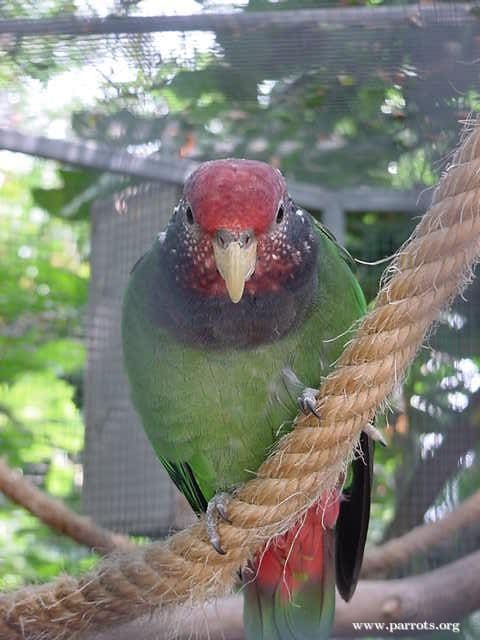
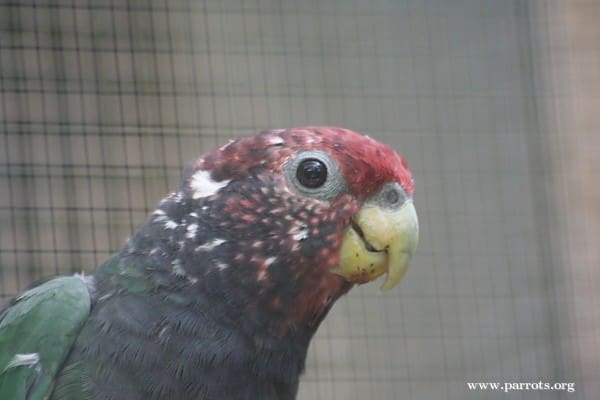
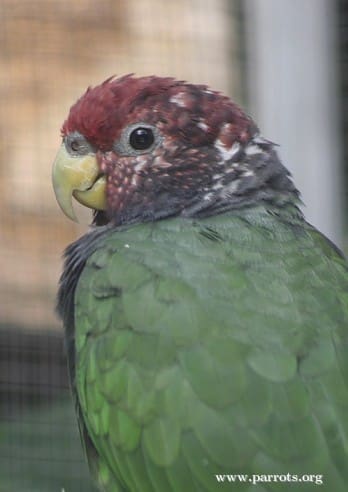
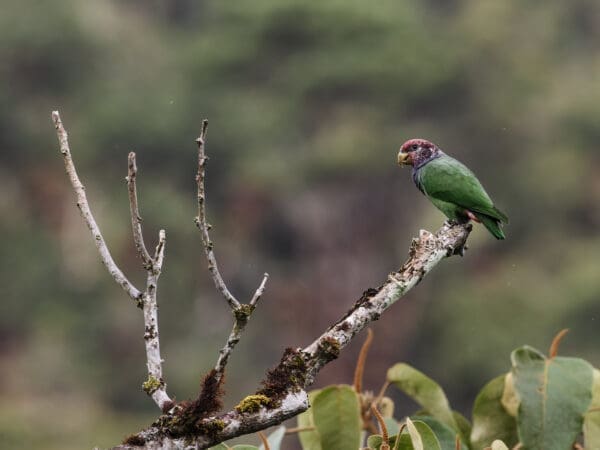
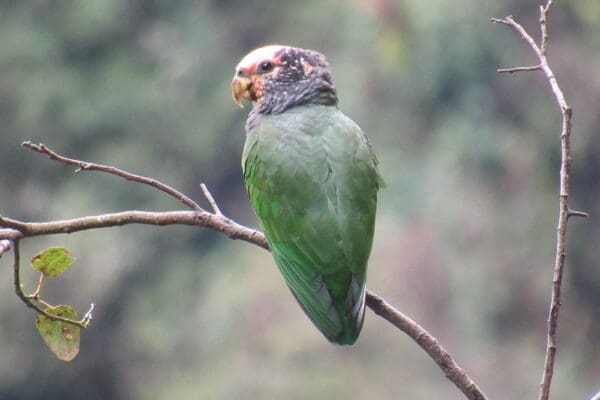
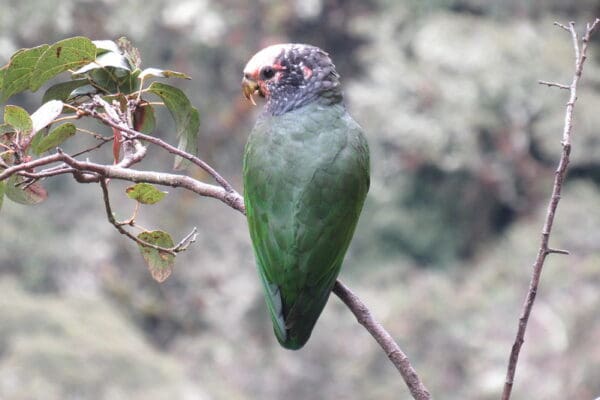
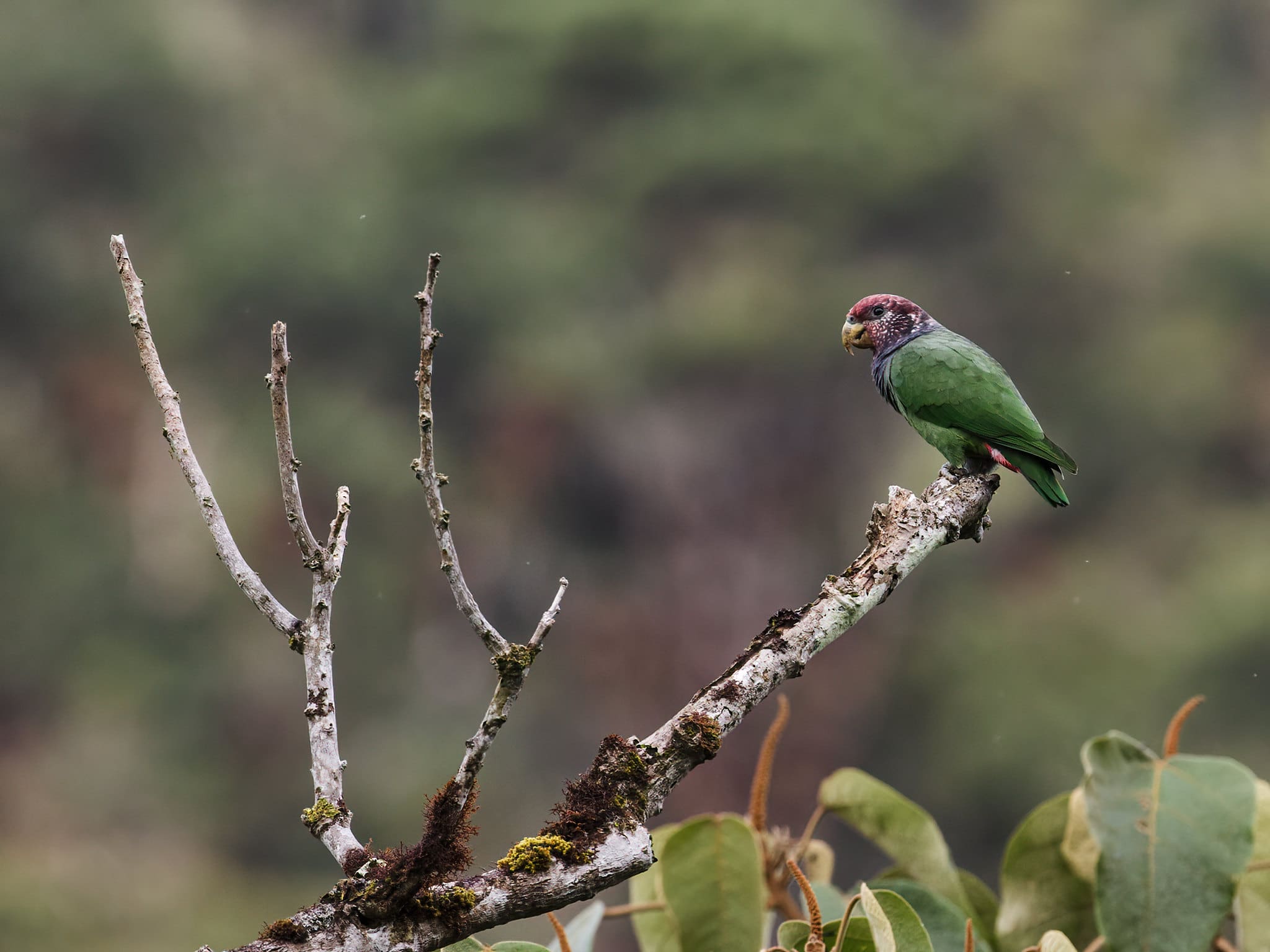
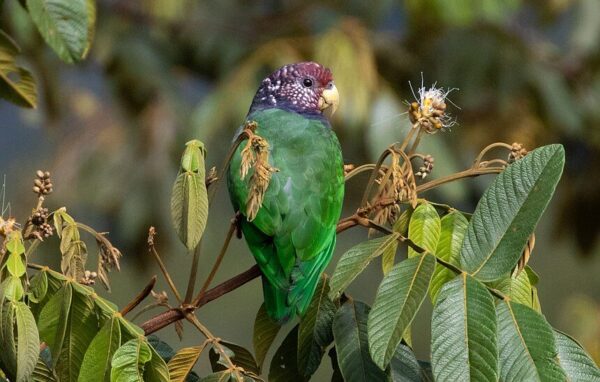
P.t. tumultuosus: Both adults generally green, paler on underparts; dark red crown and nape; red feathers on sides of head tipped with purple, with visible white bases; wine/purple hindneck and sides of neck to breast; red undertail coverts tinted with purple; green tail with red at base. Beak olive/yellow. Eye ring bare and pale grey. Eye brown.
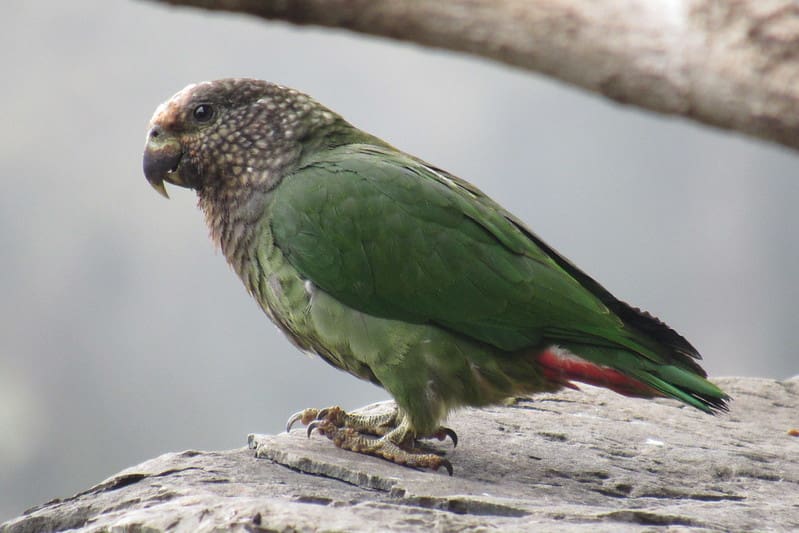
P.t. seniloides: Both adults in general green, lower underparts being paler; white forehead and forecrown, the feathers grey just before the tips and orange/red tipped on forehead; dark grey ear coverts marked with pink; white cheeks and lores, dark grey edging on the feathers; feathers on forecheeks sometimes edged with orange/red; throat has pink band, turning to red/purple on chest and further blending with brown on abdomen; red undertail coverts; green tail with red at base. Beak pale olive/yellow. Eye ring bare and pale grey. Eye brown.
Colour Juvenile:
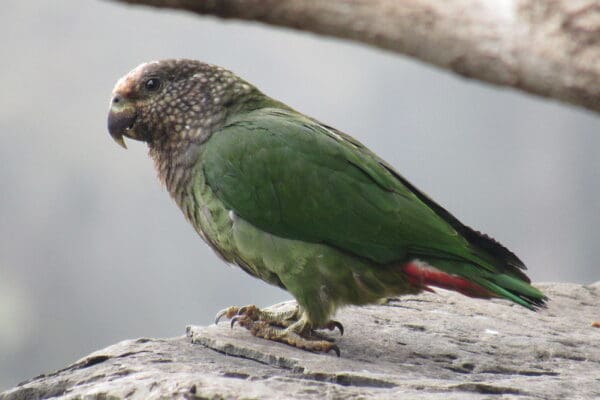
P.t. tumultuosus: Dark green nape and hindcrown; rose/red throat; green cheeks and breast; yellow/green undertail coverts, marked with pink.
P.t. seniloides: Feathers on head green with white bases showing; feathers on crown edged with dull red; white sides of head, with margined green feathers; green throat and breast, the feathers with dull red/mauve in centre.
Call:
Calls described as distinctive; those made in flight are smooth notes with a laughing quality, or harsher sounds. While perched gives nasal tones.
Content Sources:
CITES
AviList
BirdLife International
Cornell Lab of Ornithology/Birds of the World
Parrots: A Guide to Parrots of the World, Juniper and Parr, 1998
Parrots of the World, Forshaw, 2006. 2010 edition
Parrots in Aviculture, Low, 1992.
Psittacine Aviculture, Schubot, Clubb and Clubb, 1992.
Captive Status:
Rare
Longevity:
35-45 yrs
Housing:
Aviary or suspended enclosure, minimum length 2-3 m (6.5-9.8 ft).
Diet:
Fruits such as: apple, pear, orange, banana, pomegranate, cactus fruits, forming about 30 percent of the diet; vegetables such as: carrot, celery, green beans, peas in the pod; fresh corn; green leaves such as: Swiss chard, lettuce, sowthistle, dandelion, chickweed; spray millet; small seed mix such as: canary, millet, and smaller amounts of oats, buckwheat, safflower and a little hemp; soaked or sprouted sunflower seed; cooked beans and pulses, boiled maize and complete kibble.
Enrichment:
Vigorous chewers so provide bird-safe, unsprayed flowering, fir, pine or willow branches; wooden block toys, vegetable tanned leather toys, heat sterilized pine cones, swings, ladders and ropes. Like to bathe so provide overhead misters or shallow bowls of water.
Nest Box Size:
Vertical box 12″ x 12″ x 18-24″ (30.5 cm x 30.5 cm x 46-61 cm).
Clutch Size:
4
Fledging Age:
9-10 weeks
Hatch Weight:
—
Peak Weight:
—
Weaning Weight:
—
World Population:
Unknown, decreasing.
IUCN Red List Status:
Not Evaluated
CITES Listing:
Appendix II
Threat Summary:
Not globally threatened. Described as fairly common but patchily distributed. Overall status difficult to judge owing to frequent movements, but at present the species is considered to be more numerous than formerly conspecific P. seniloides. This species is considered to have a medium dependency on forest habitat, and tree cover is estimated to have declined by 2.3 % within its range over the past three generations. As a precautionary measure, it is tentatively suspected that this may have led to a decline of between 1-19 % in the species’ population over the same period.
Range:
P.t. tumultuosus: Mountains of C and S Peru, south from Carpish region, Huanuco, to N Bolivia, in La Paz, Cochabamba, and Santa Cruz.
P.t. seniloides: Mountains of W Venezuela, from Tachira and Merida to Trujillo-Lara border, through W Colombia; in Cordilla Occidental reported only locally on eastern slope of Rio Cauca valley, SW Antioquia and south on both slopes of Andes in Ecuador to NW Peru, in Cajamarca and La Libertad.
Habitat:
Found from 1400 to 3300 m (4592-10,824 ft) in humid forest in the subtropical zone and tall cloud forest with bamboo thickets; in temperate zone in elfin woodland, wooded ravines and open areas with trees.
Wild Diet:
Feeds on fruits and seeds, types unknown.
Ecology and Behaviour:
Gregarious and noisy. Seen in singles, pairs or small flocks. Are sometimes approachable in the wild.
Clutch and Egg Size:
4 eggs
Breeding Season:
Possibly begins in November.
Related Links:
—