Southern Mealy Amazon
Also known as:
Mealy Parrot, Plain-colored Amazon (A.f. inornata)
Also known as:
Mealy Parrot, Plain-colored Amazon (A.f. inornata)

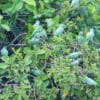
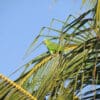
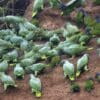
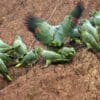

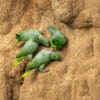
DID YOU KNOW?
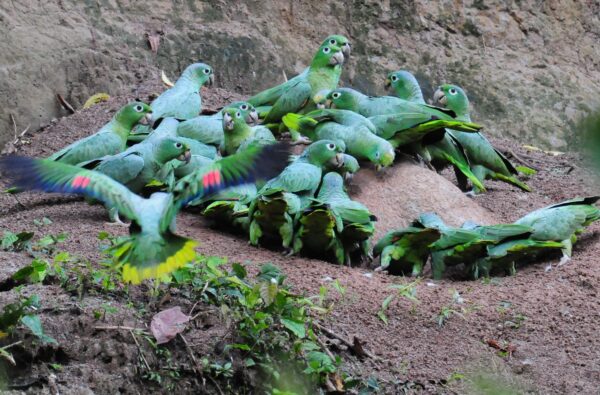
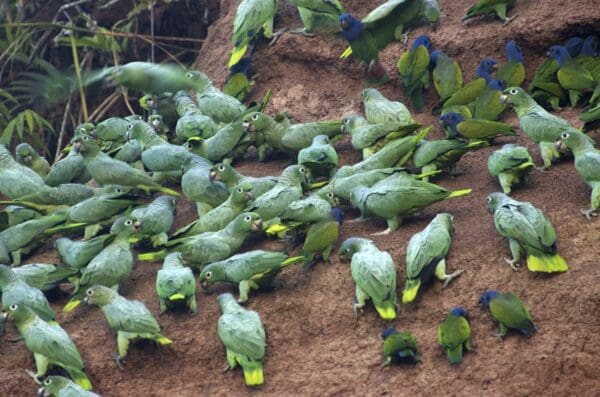
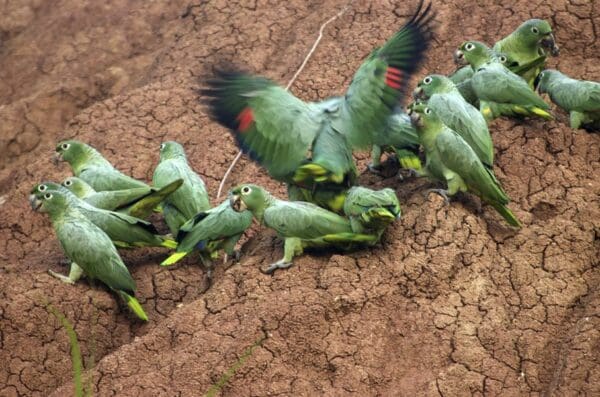
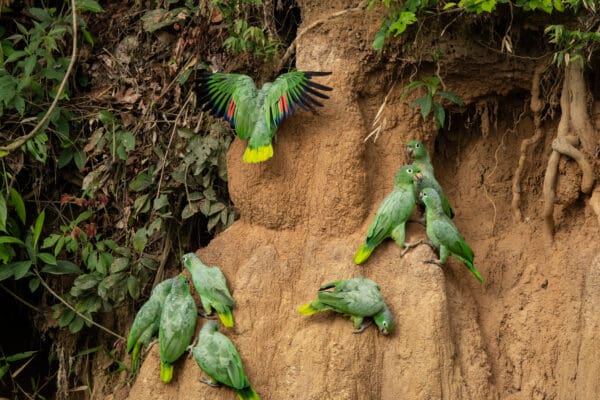
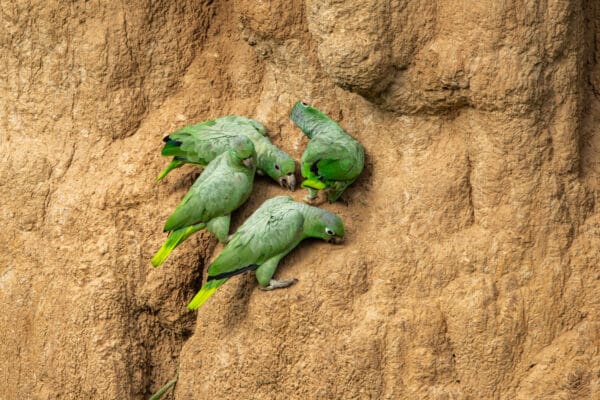
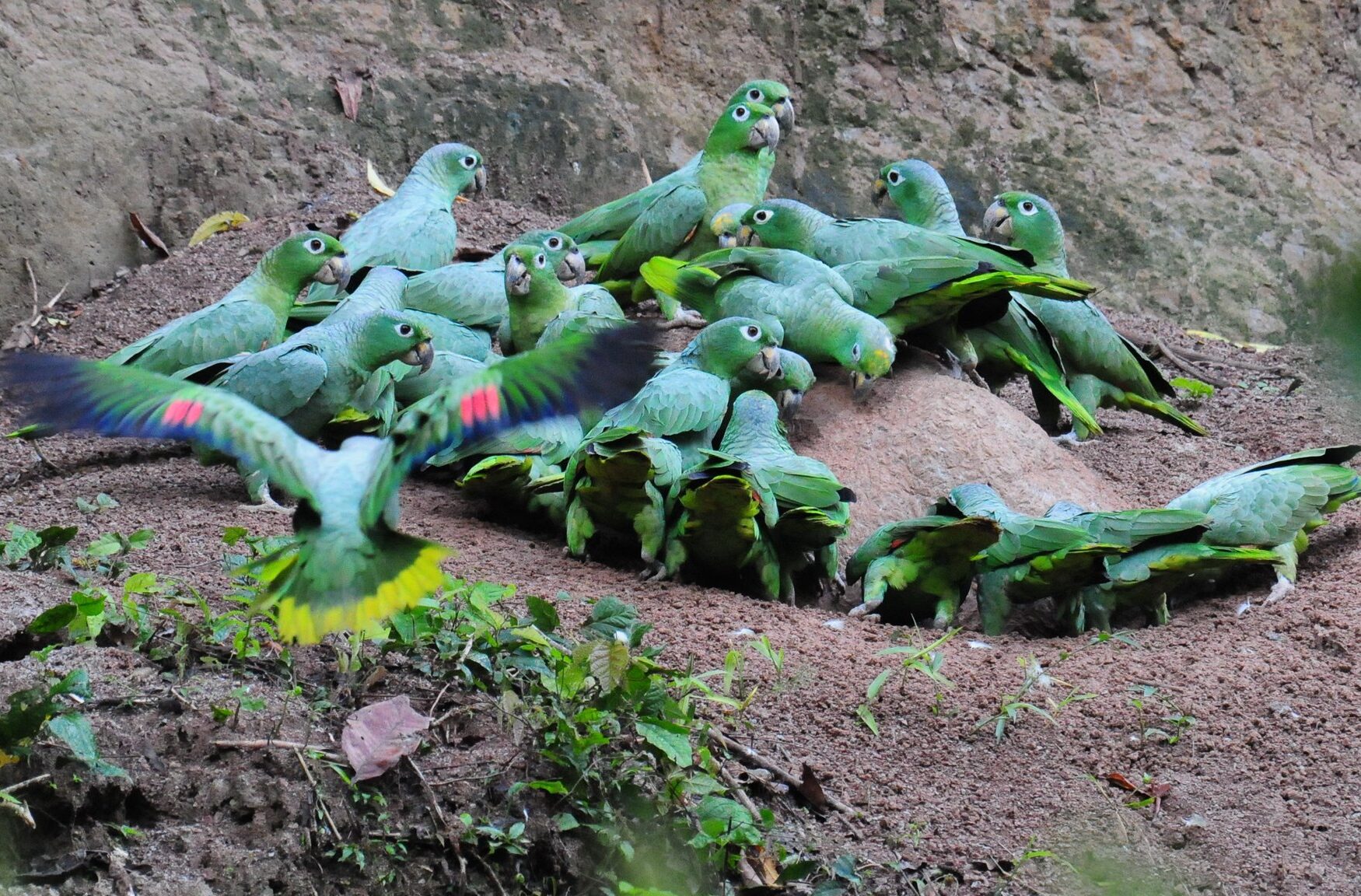
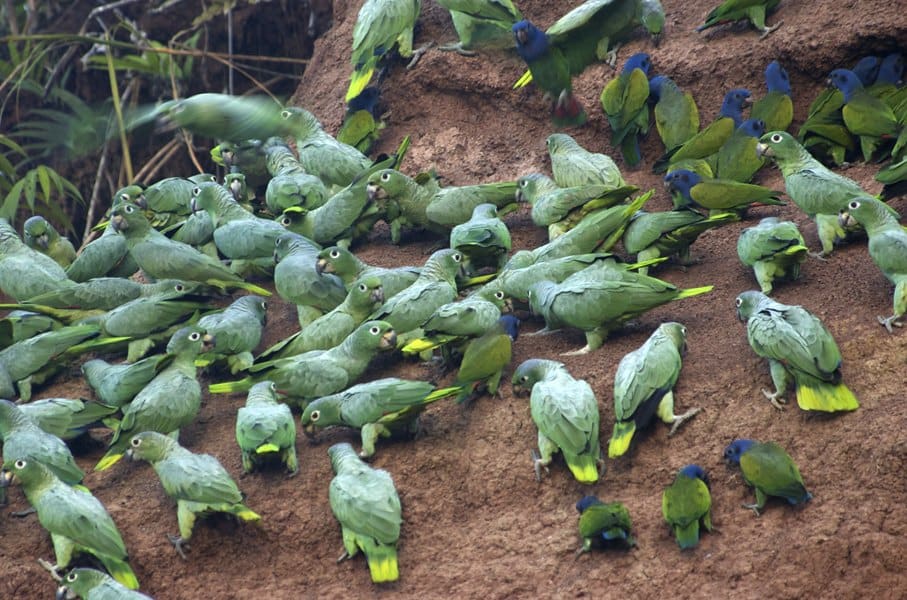
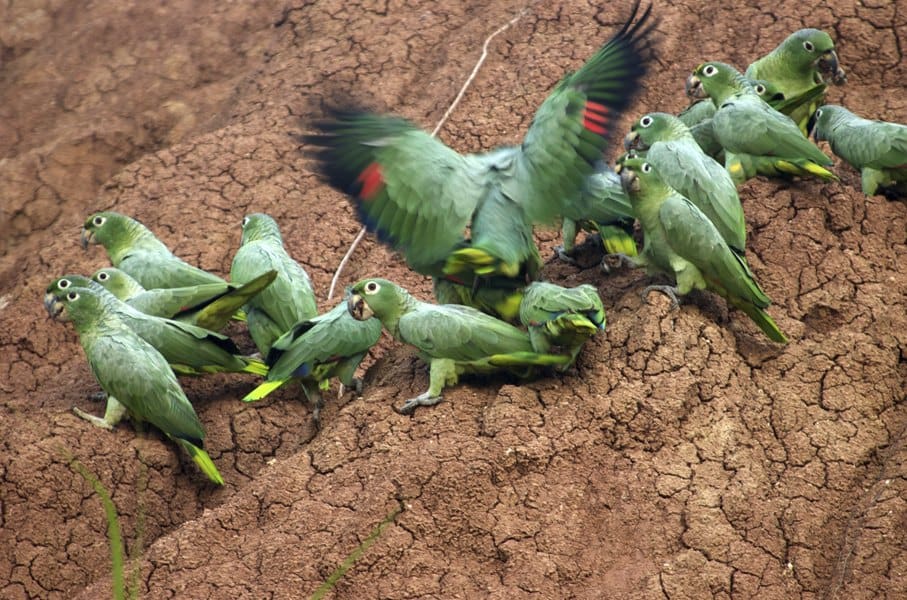
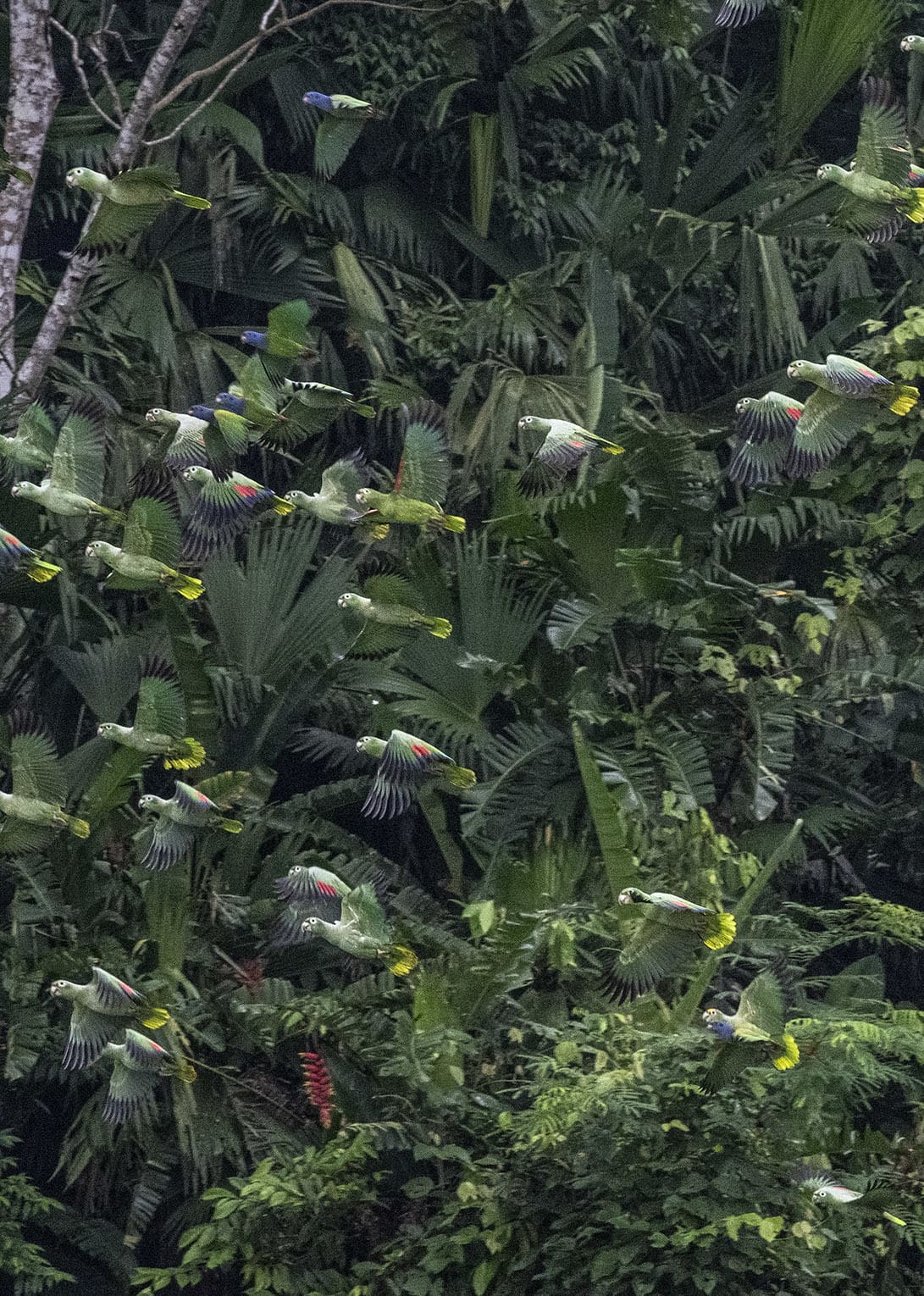
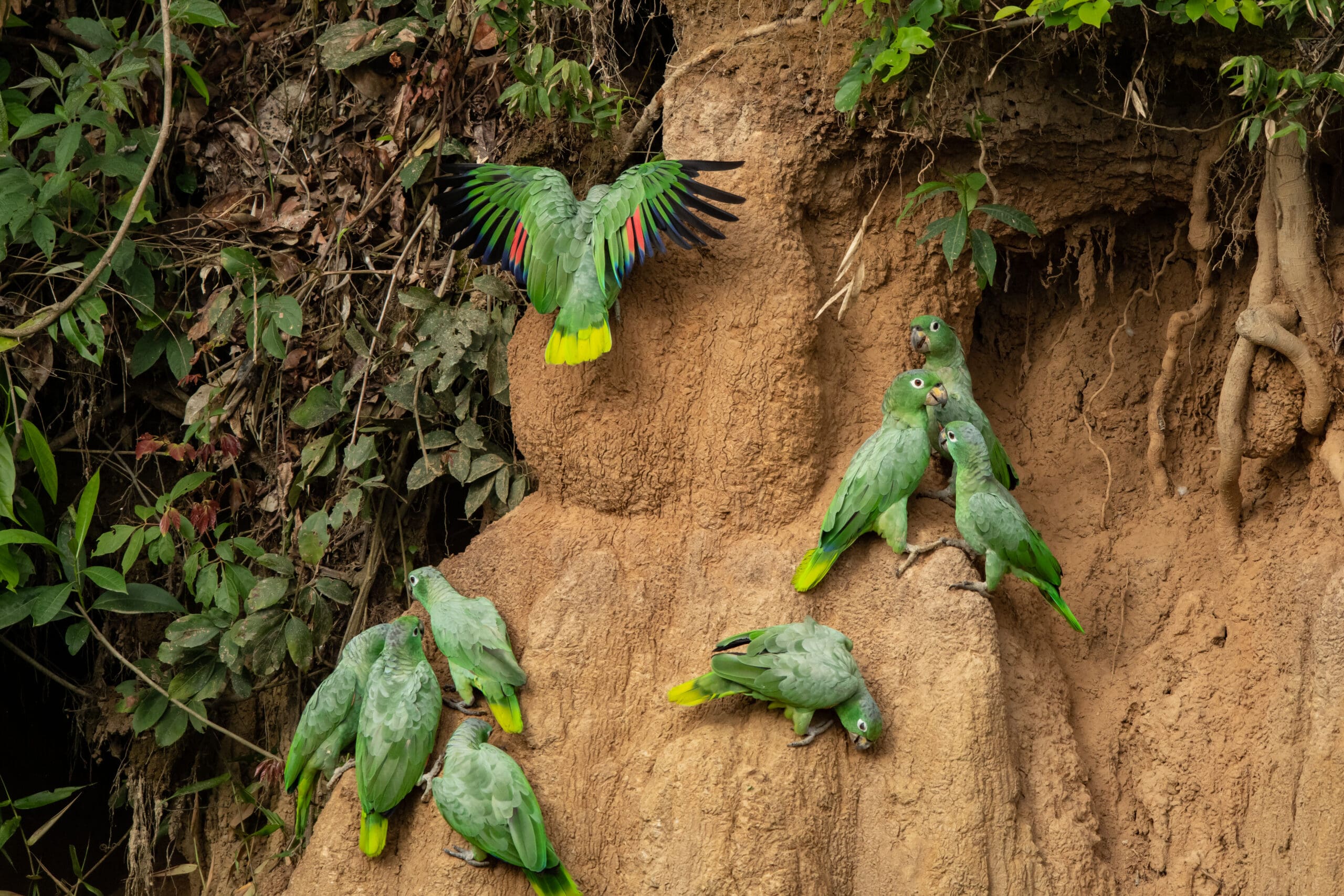
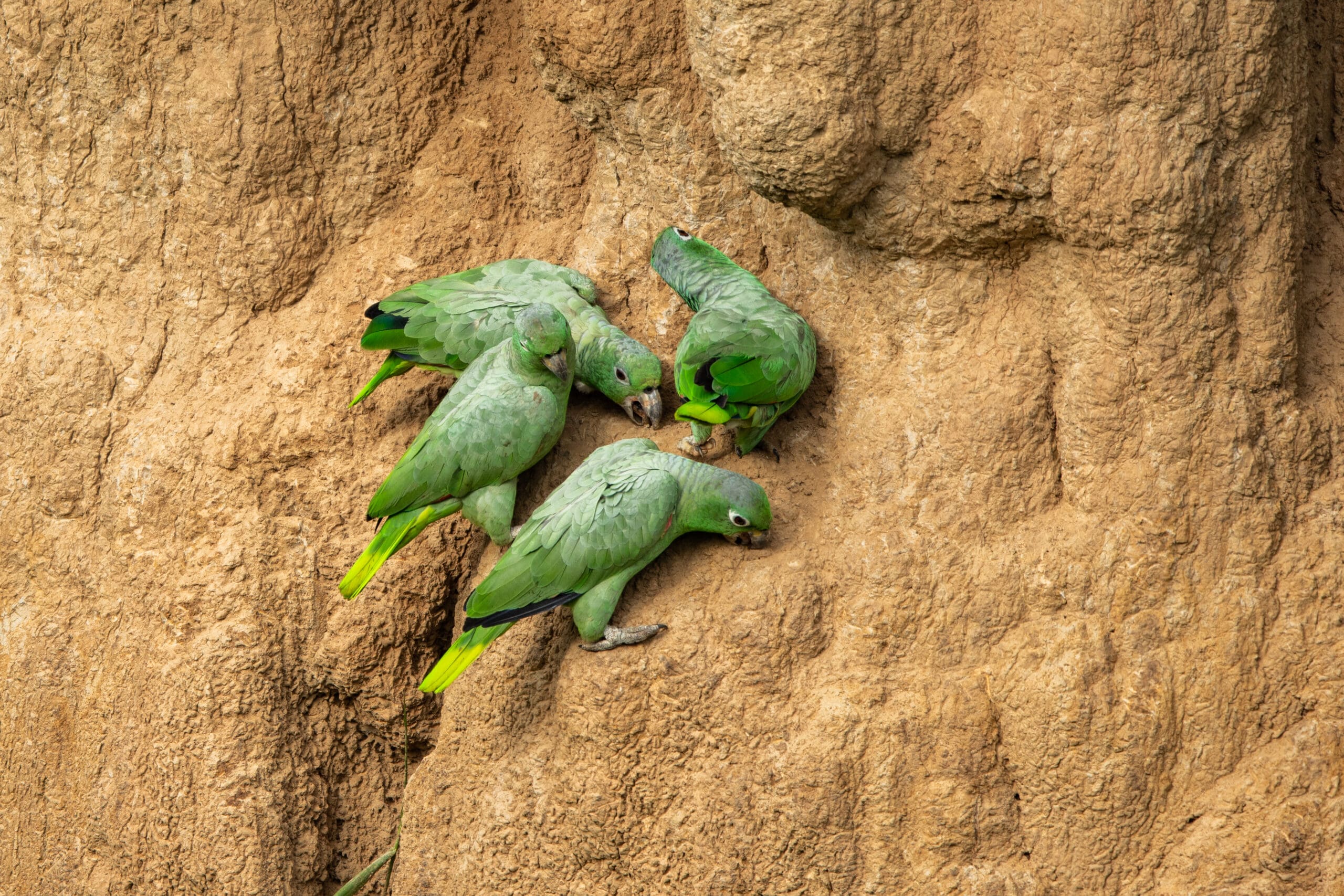
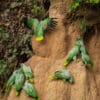
Southern Mealy Amazons gather in large flocks to consume clay at licks.

Amazona
farinosa
Size:
38 cm (14.8 in)
Weight:
705-766 g (24.7-26.8 oz)
Subspecies including nominate:
three: A.f. farinosa, A.f. chapmani, A.f. inornata
Colour Adult:
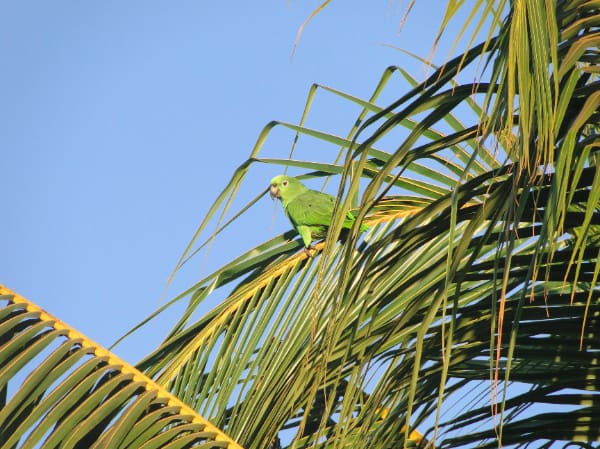
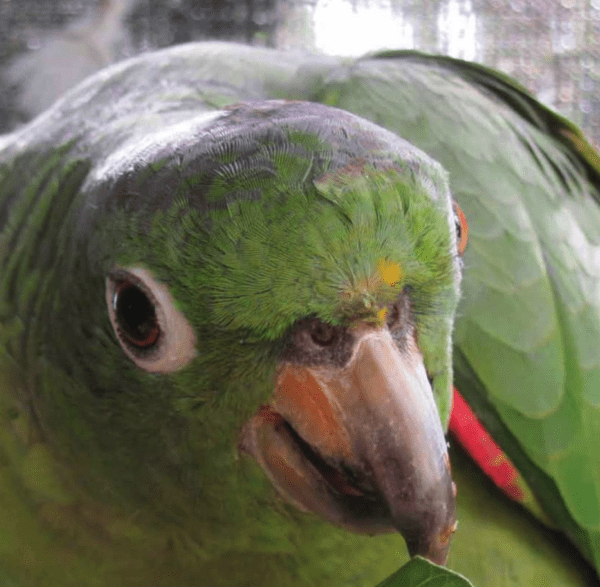
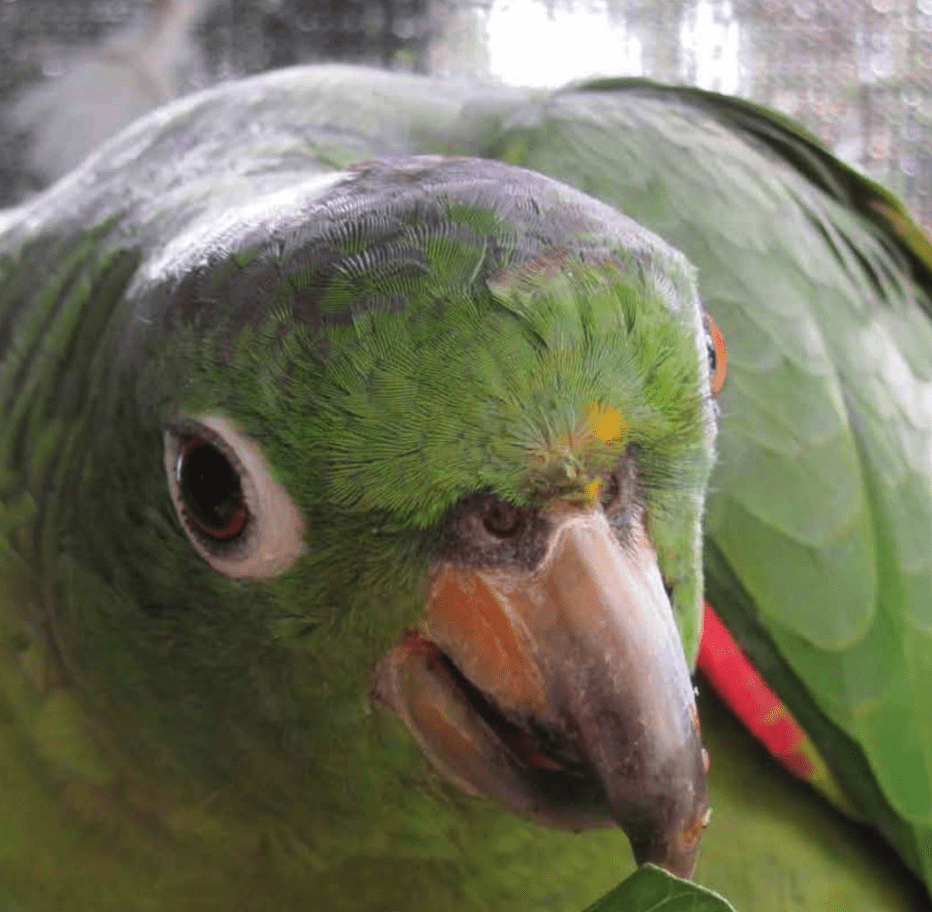
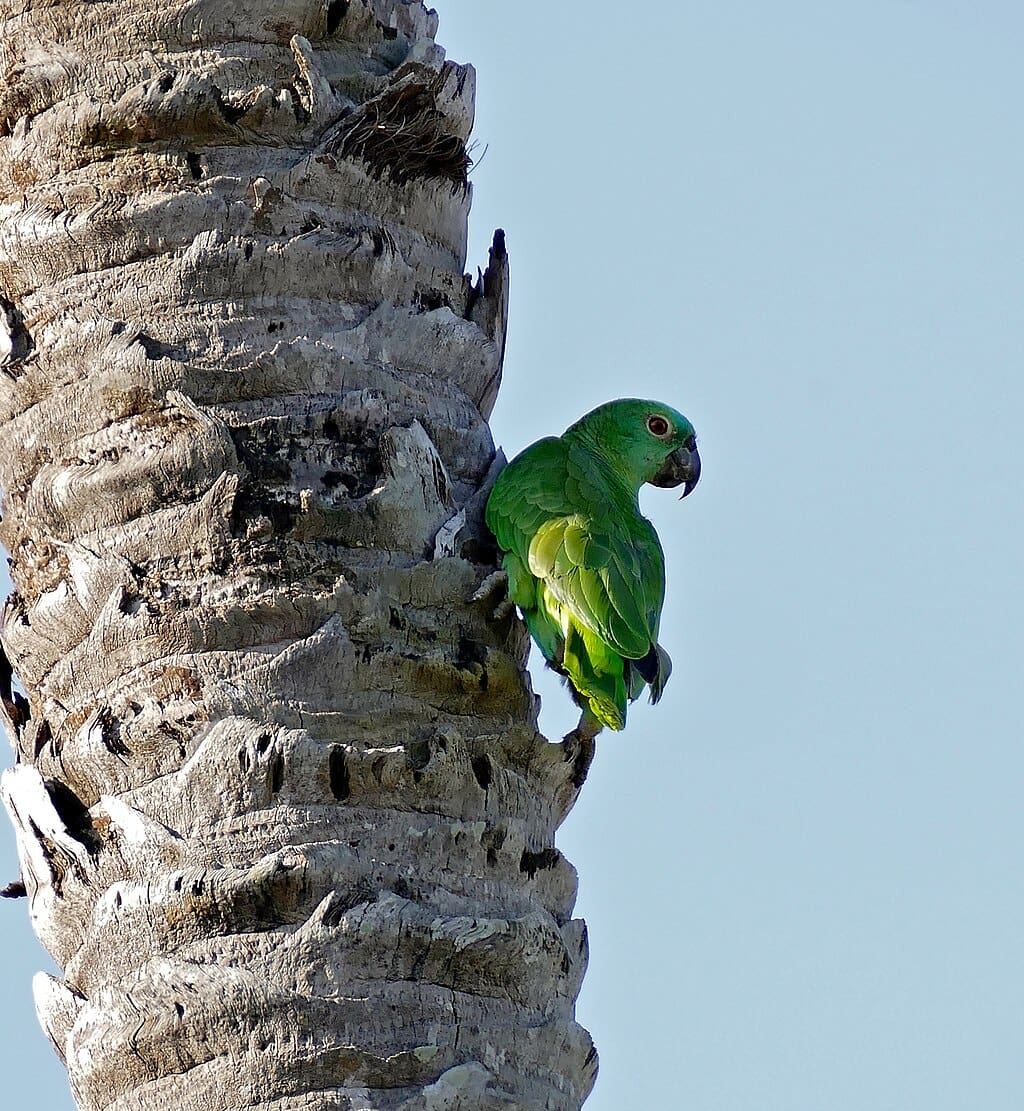
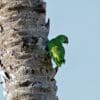
A.f. farinosa: Both adults-body green with blue/black wash on back of neck to back; varying yellow patch on crown; feathers of back of head, nape and back of neck dull green, tipped black; red on middles of secondary feathers 1 to 4, the remainder green; red carpal edge, often mixed with yellow/green; tail green striped with yellow/green at end. Beak yellow/horn colour. Eye ring white, eye red.
A.f. chapmani: Both adults as in farinosa but larger in size.
A.f. inornata: Both adults as in farinosa but upperparts with less blue/black wash; green crown, with scattered yellow feathers.
Colour Juvenile:
Are similar to adults but with brown eye.
Call:
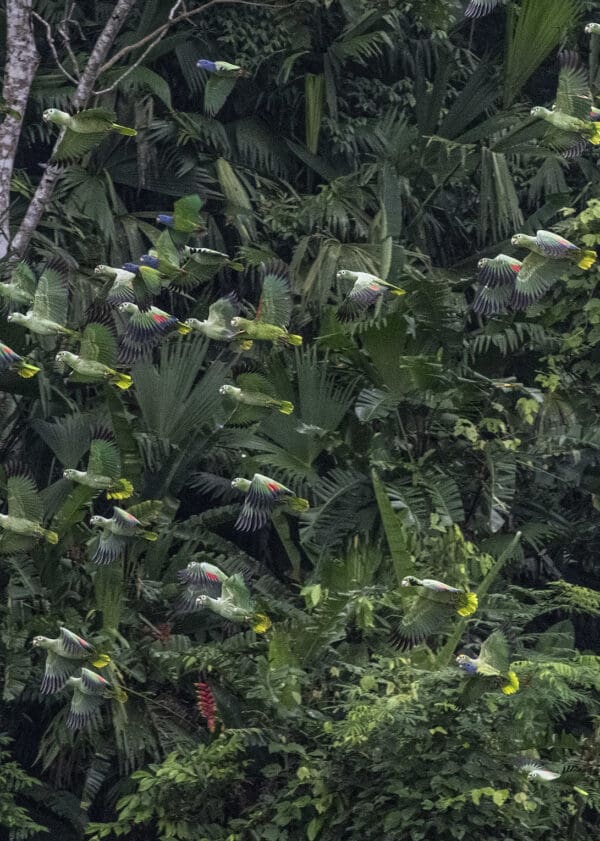
Varied calls including screams, whistles, babbles, squawks and chattering. Some mimicry. Noisy while in flight.
More Information:
WPT-supported project – Northern and Southern Mealy Amazon Conservation
Content Sources:
CITES
Avibase
BirdLife International
Cornell Lab of Ornithology/Birds of the World
Parrots: A Guide to Parrots of the World, Juniper and Parr, 1998
Parrots of the World, Forshaw and Cooper, 1989. 2010 edition
Parrots of the World, Forshaw, 2006.
Parrots in Aviculture, Low, 1992.
Psittacine Aviculture, Schubot, Clubb and Clubb, 1992.
Captive Status:
Somewhat rare in captivity.
Longevity:
Probably can live 50-60 yrs.
Housing:
Walk-in enclosure, minimum length 4.5 m (14.7 ft) or suspended aviary, minimum length 3 m (9.8 ft).
Diet:
Fruit such as: apple, pear, orange, cactus fruits, pomegranate, etc, forming about 30 percent of diet; vegetable such as: carrot, celery, green peas and beans, corn; green leaves such as: Swiss chard, sowthistle, lettuce; spray millet; mix of small seeds, limited sunflower and other fatty seeds; cooked beans and pulses, and complete kibble.
Enrichment:
Loves to play and climb so provide bird-safe chew wood and leather toys, branches, ladders, swings; also socializing, bathing.
Nest Box Size:
Vertical box, 12″ x 12″ x 24″ (30.5 cm x 30.5 cm x 61 cm).
Clutch Size:
3
Fledging Age:
9-10 weeks
Hatch Weight:
—
Peak Weight:
—
Weaning Weight:
—
World Population:
Unknown, decreasing.
IUCN Red List Status:
Least Concern
CITES Listing:
Appendix II
Threat Summary:
The species is locally common. It is undergoing declines due to habitat loss and the impacts of hunting and trapping. Since 2000, tree cover within the range has been lost at a rate equivalent to roughly 13% over three generations. Rates of deforestation vary within its range; forest loss is historically more severe in the Atlantic Forest of Brazil, while forests in parts of the Amazon Basin and Guinanan Shield remain largely intact. The species appears to tolerate some habitat degradation, but it is susceptible to hunting and trapping. Based on data, population declines are suspected to be 10 to 19% over thirty years.
Range:
A.f. farinosa: Amazonia from Guianas, N Brazil and SE Venezuela, in southern Delta Amacuro, Bolívar east of Rio Caura, and Amazonas, to SE Colombia, in Vaupes and Amazonas, and south to Santa Cruz, C Bolivia and N Mato Grosso, Brazil; also an isolated group in coastal Brazil from S Bahia and E Minas Gerais to N São Paulo.
A.f. chapmani: E slopes of Andes from S Colombia in Meta, Caquetá and Putumayo to E Ecuador, E Peru and N Bolivia, in Pando to Cochabamba.
A.f. inornata: Veraguas and Isla Coiba, W Panama, N Colombia, north of Andes, excluding north coast and Sierra Nevada de Santa Marta, south in Río Magdalena valley to Cundinamarca and east to Sierra de Perijá and NW Venezuela, east and west of Andes in E Zulia to Táchira and Pacific lowlands, west of Andes, in W Colombia south to W Ecuador, in SE Guayas and W Azuay.
Habitat:
Resides in dense humid lowland rainforest, near clearings and forest edge; also found in low montane rainforest in Honduras and lower margins of subtropical zone in Panama. Found on plantations with tall trees as well as local gallery forest in savanna and more rarely deciduous forest. Up to 1100 m (3608 ft).
Wild Diet:
Food items include figs: Euterpe, Brosimum, Inga, Dussia, Eschweilera ovata, Pithecellobium, Tetragastris, Dialium guianensis, Peritassa compta, Prionostemma aspera, Cochlospermum orinocense, Sloanea grandiflora, Corima macrocarpa, Abuta grandifolia, Piptadenia psilostachya, Cecropia miparia, C. hololeuca, Helicostylis tomentosa, Diospyros kaki, Micropholis, Pouteria, Protium heptaphyllum, Sterculia speciosa; also buds and flowers, arils of Casearia and Virola, and nectar of Tabebuia insignis. Also visits maize fields.
Ecology and Behaviour:
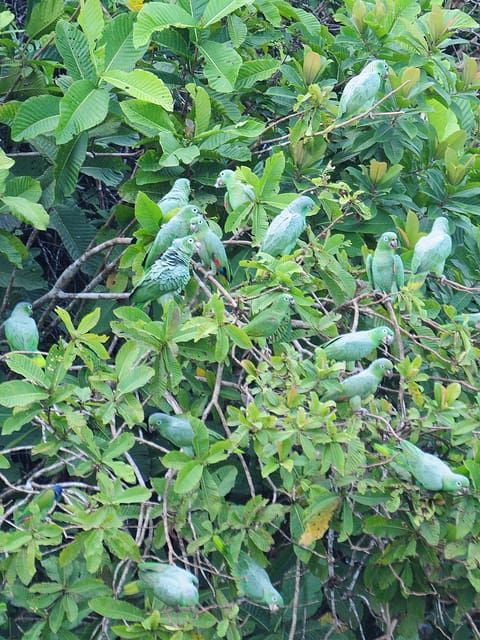
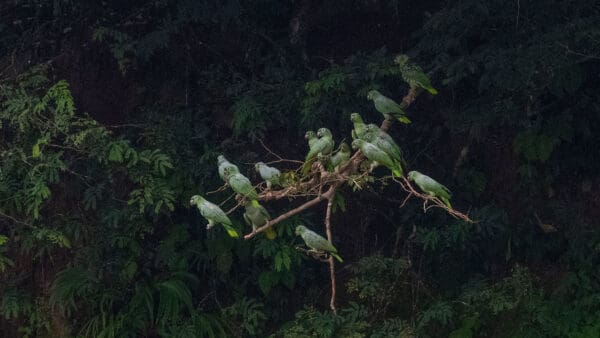
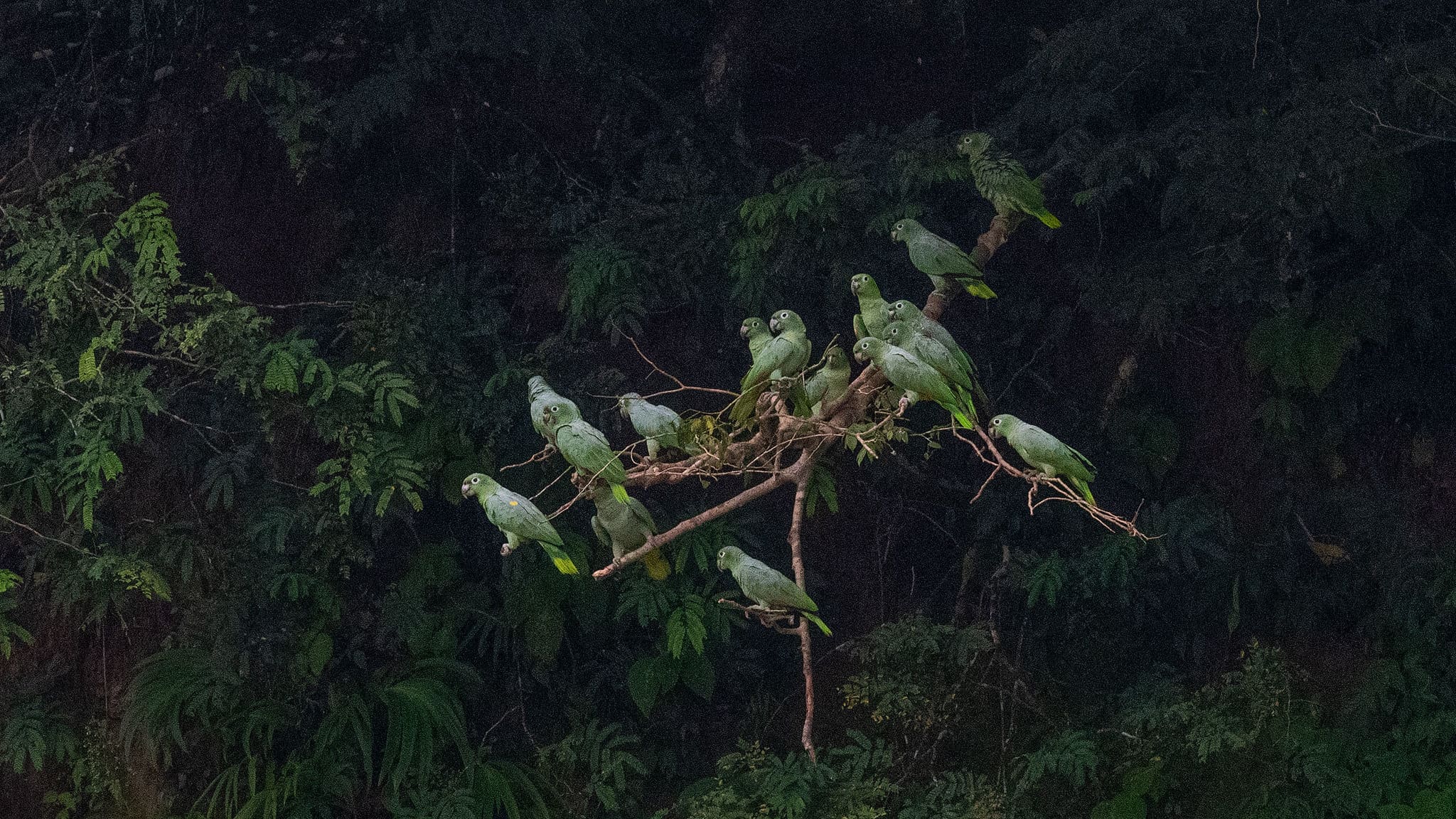
Found in pairs or flocks up to 20 individuals, with larger congregations at food sources. Forms large noisy communal roosts in tall trees outside breeding season sometimes with several hundred birds. Well camouflaged while quietly feeding in upper stages of forest canopy.
Clutch and Egg Size:
3 broadly elliptical eggs, 37.5 x 29.0 mm (1.5 x 1.1 in).
Breeding Season:
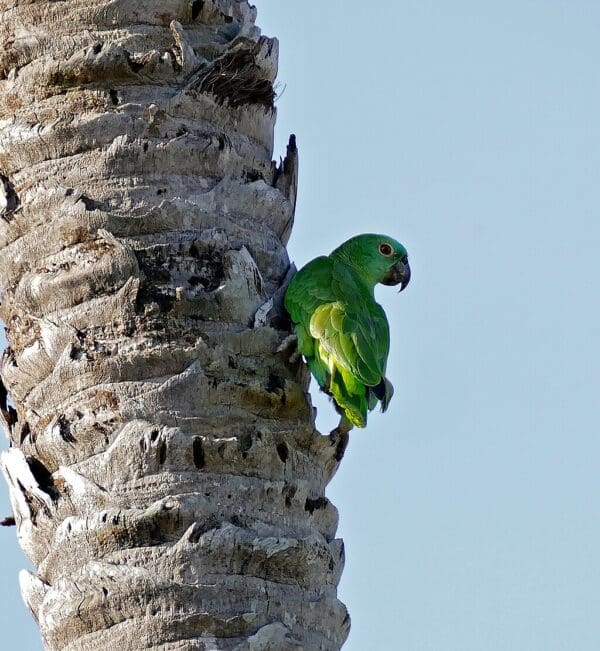
Season November-March, Mato Grosso; May, Guatemala; January breeding condition, Cauca, Colombia. Nest is in cavity in live tree or dead palm.
Related Links:
News: A community-led Mealy Amazon census – December 6, 2024
Research: Cryptic species in a Neotropical parrot: genetic variation within the Amazona farinosa species complex and its conservation implications
Research: Genetic, but Not Behavioral, Evidence Supports the Distinctiveness of the Mealy Amazon Parrot in the Brazilian Atlantic Forest