LEARN

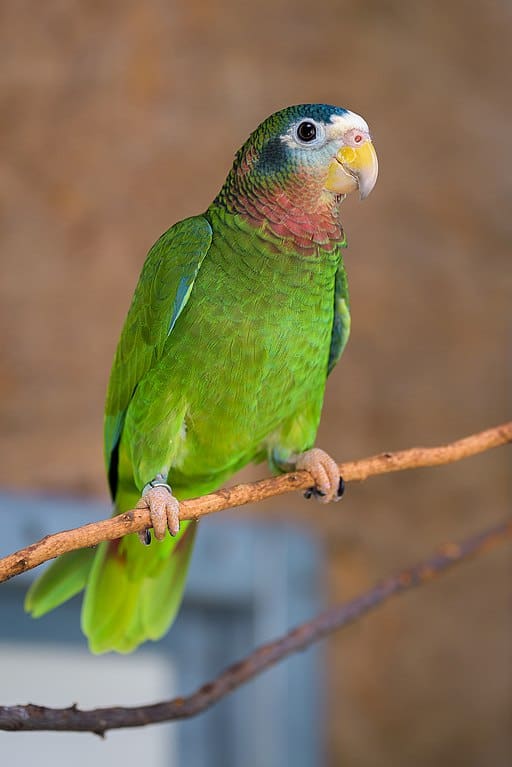
Yellow-billed Amazon

( Amazona collaria )

Also known as:
Yellow-billed Parrot, Red-throated Amazon, Jamaican Amazon

Also known as:
Yellow-billed Parrot, Red-throated Amazon, Jamaican Amazon

Geography:

DID YOU KNOW?

The Yellow-billed Amazon is one of the few Amazon parrots with a yellow bill – most other Amazons have either black or buff-coloured beaks.

<p><em>Amazona</em></p>
Genus:

Amazona

<p><em>collaria</em></p>
Species:

collaria

Size:

28 cm (11 in)

Weight:

260 g (9.1 oz)

Subspecies including nominate:

one

Colour Adult:

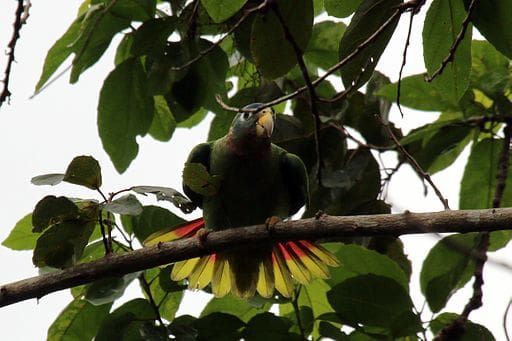
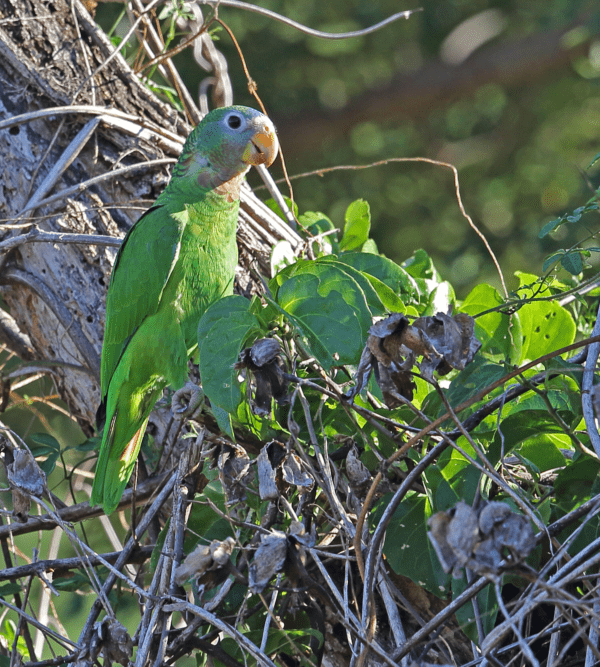
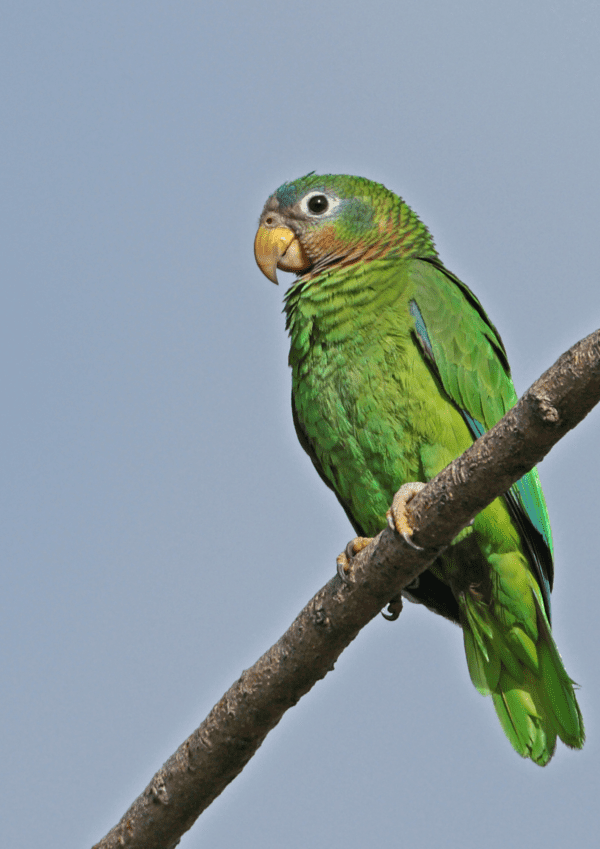
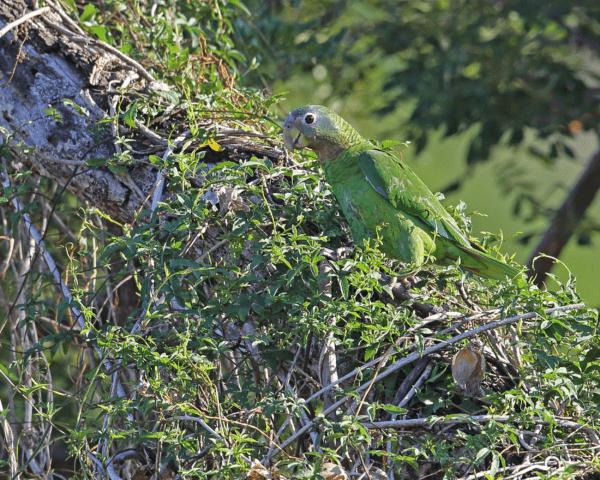
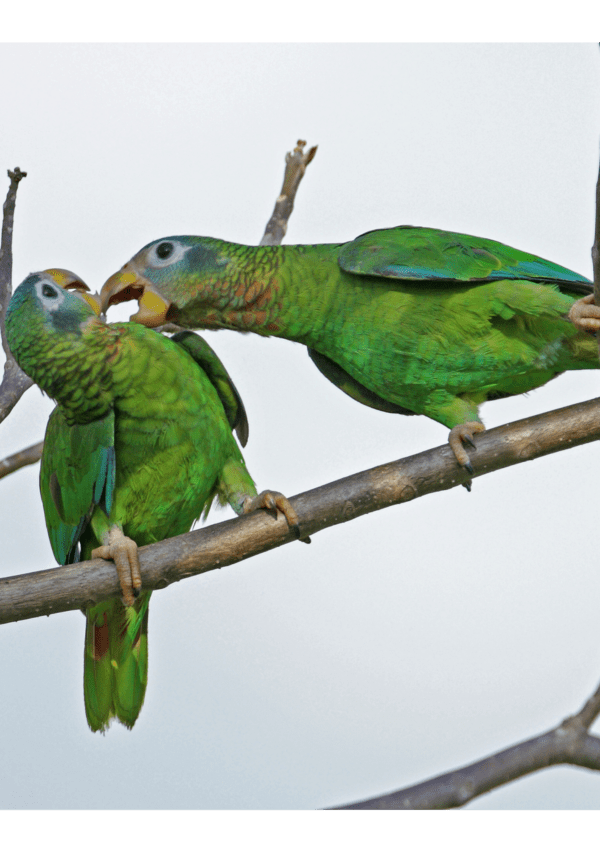
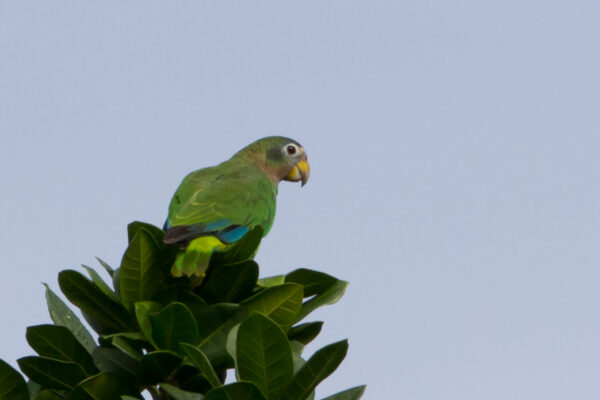
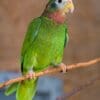
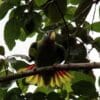
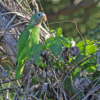
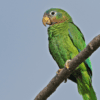
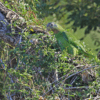
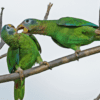
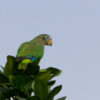
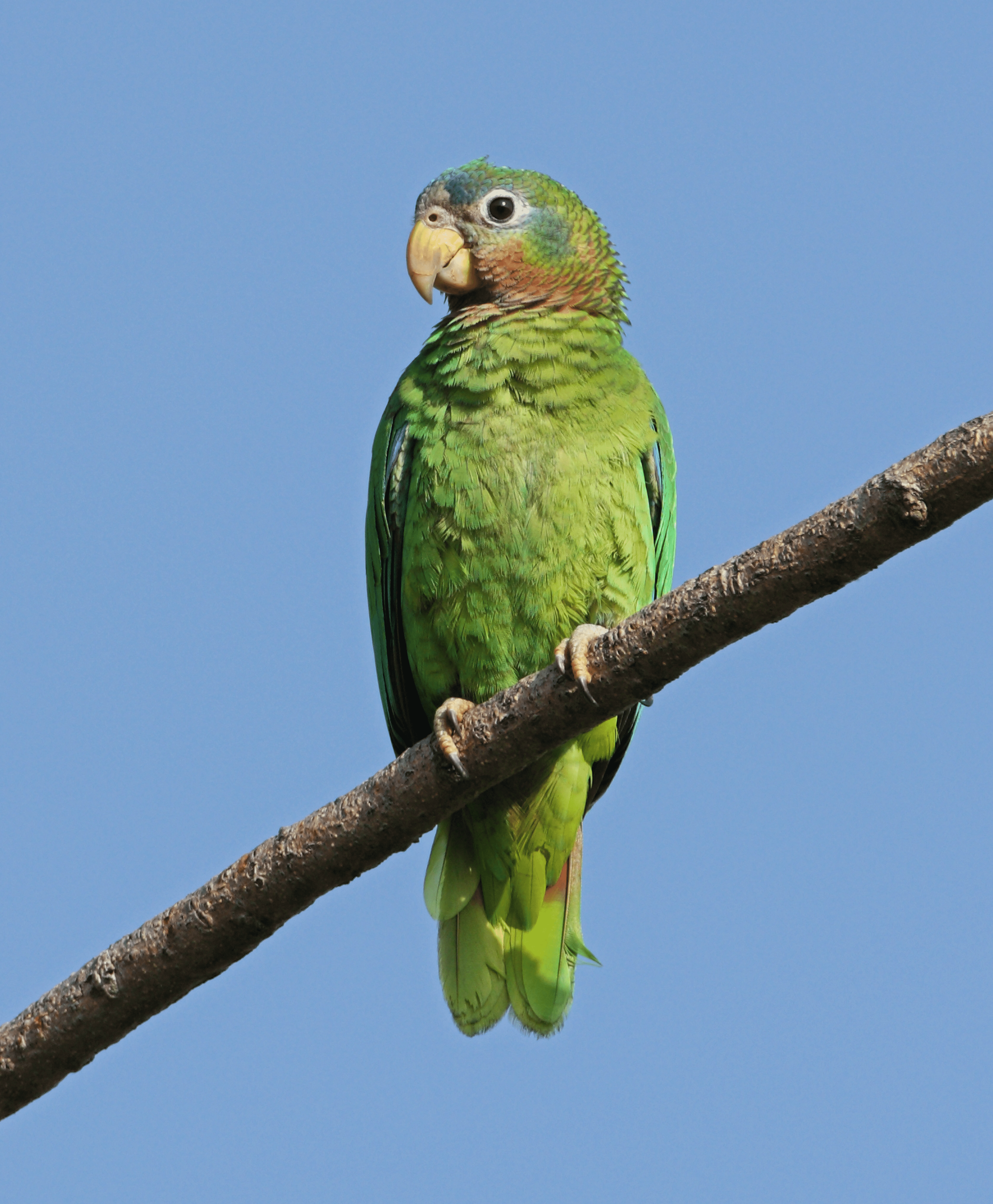
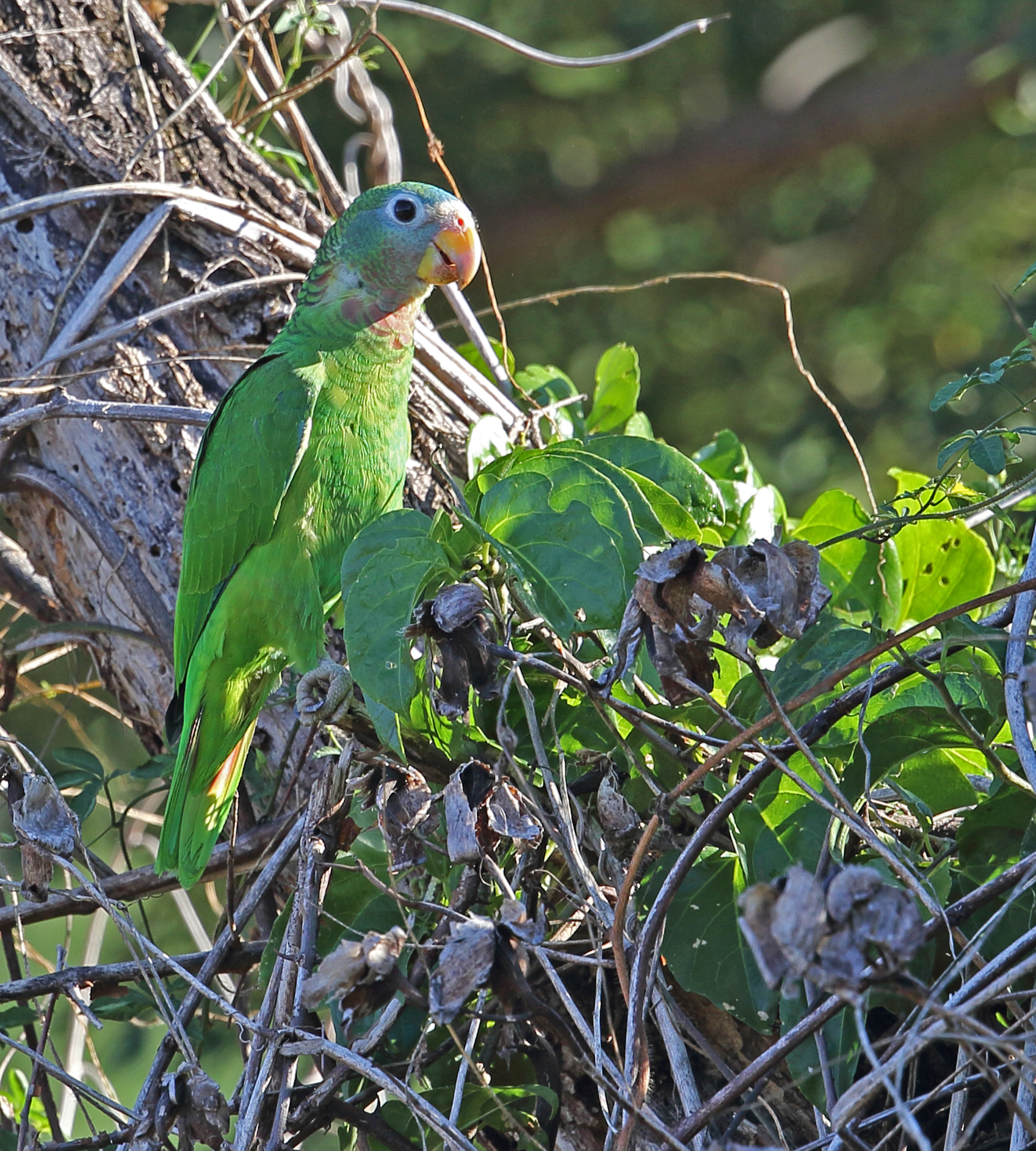
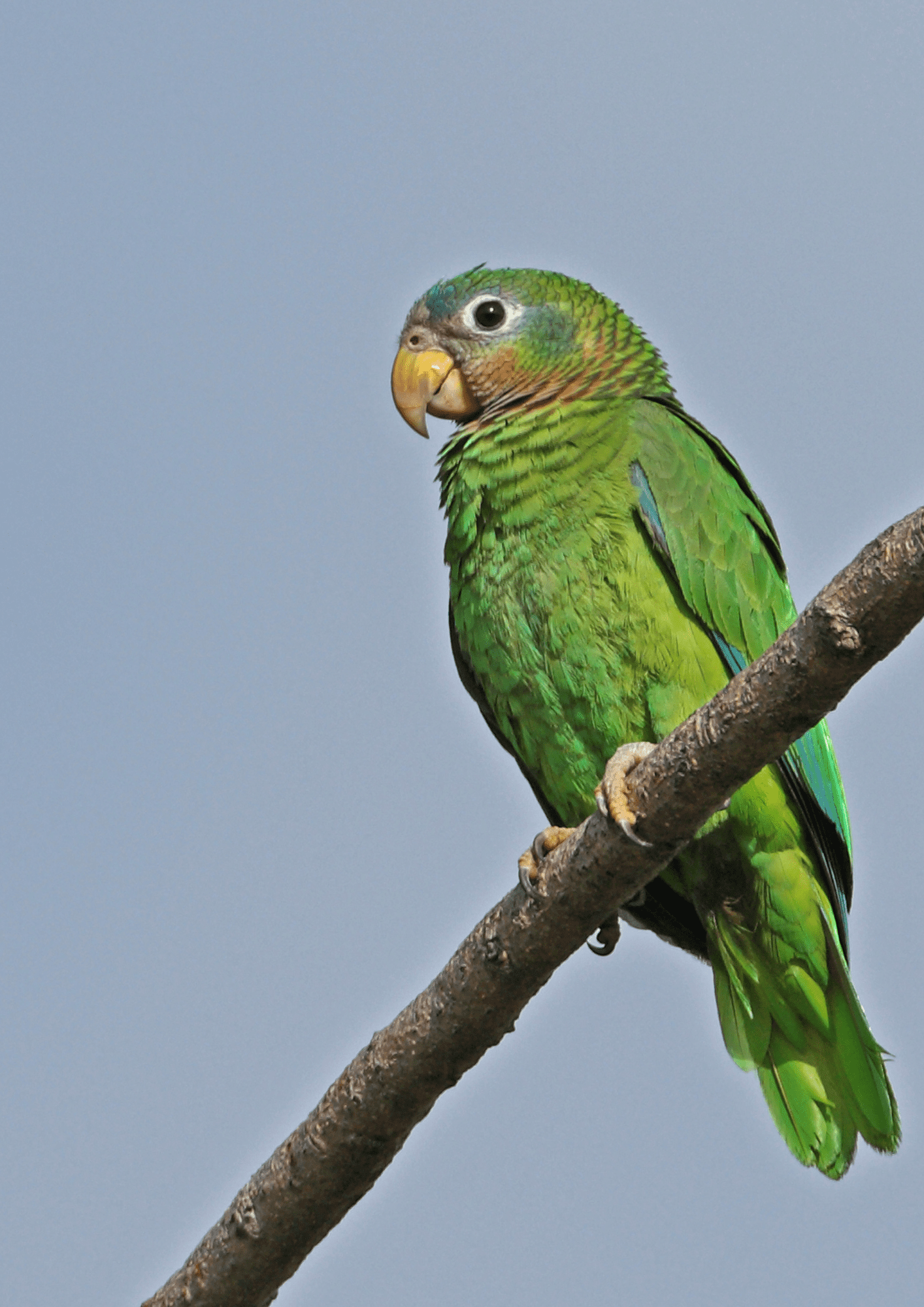
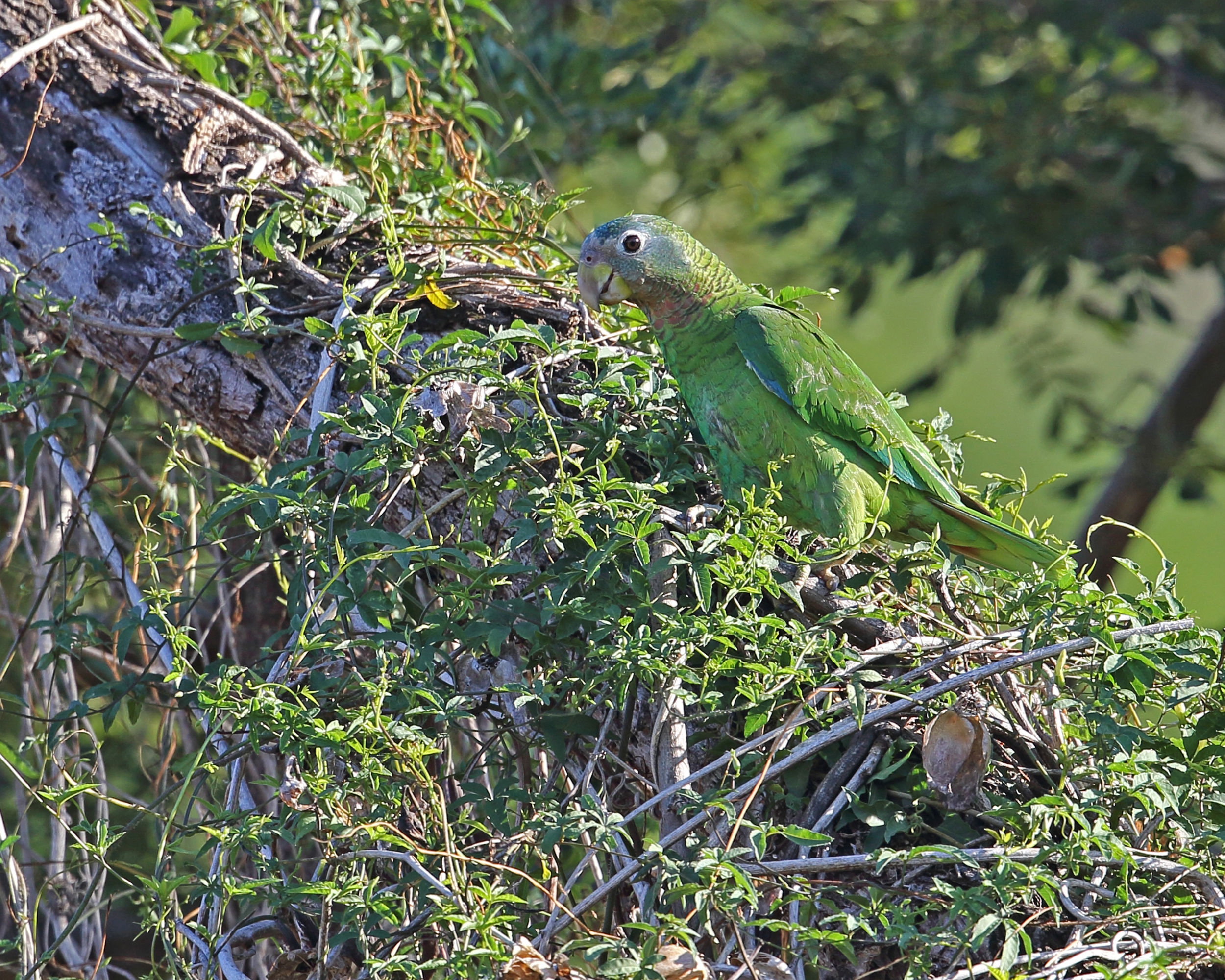
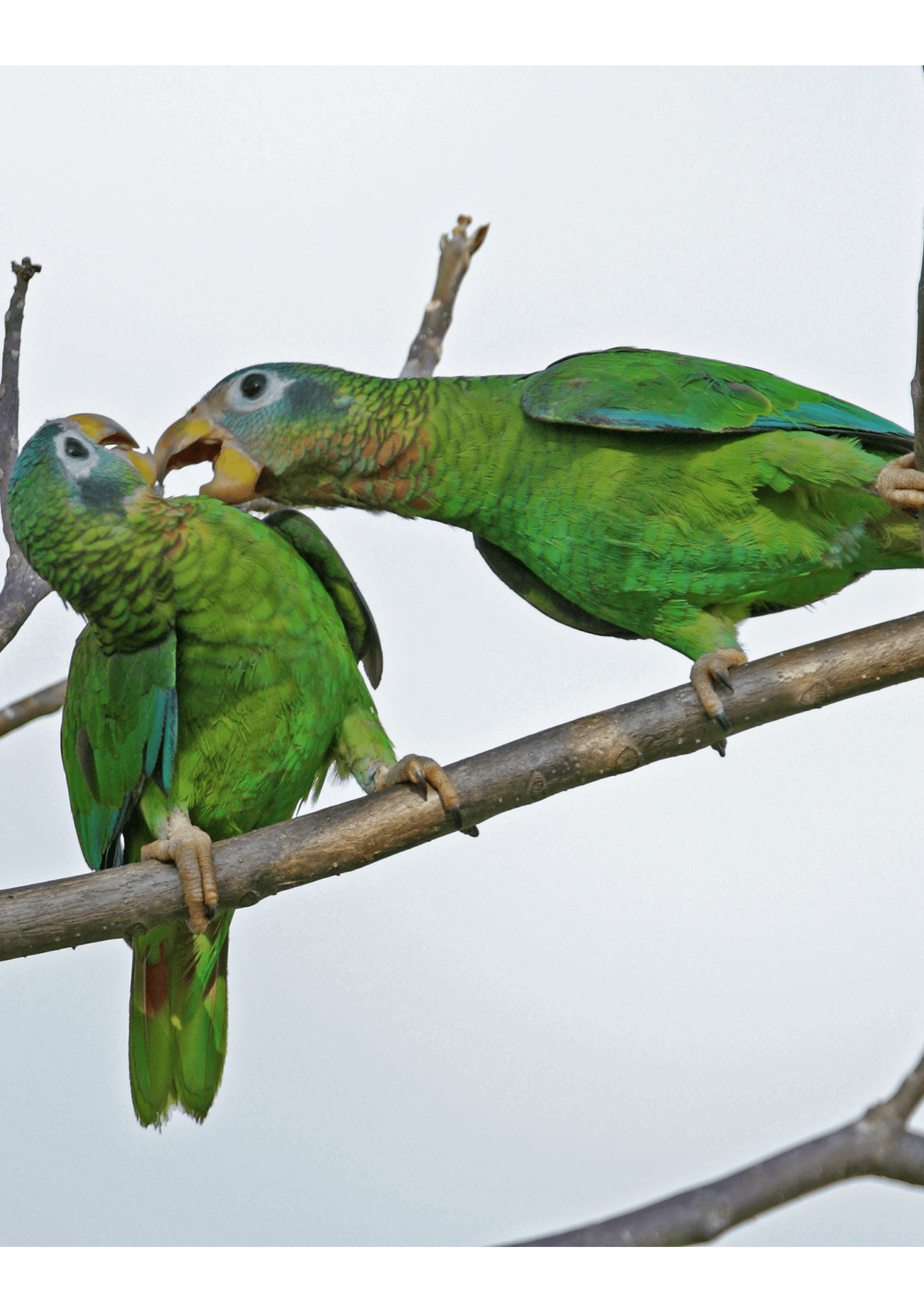
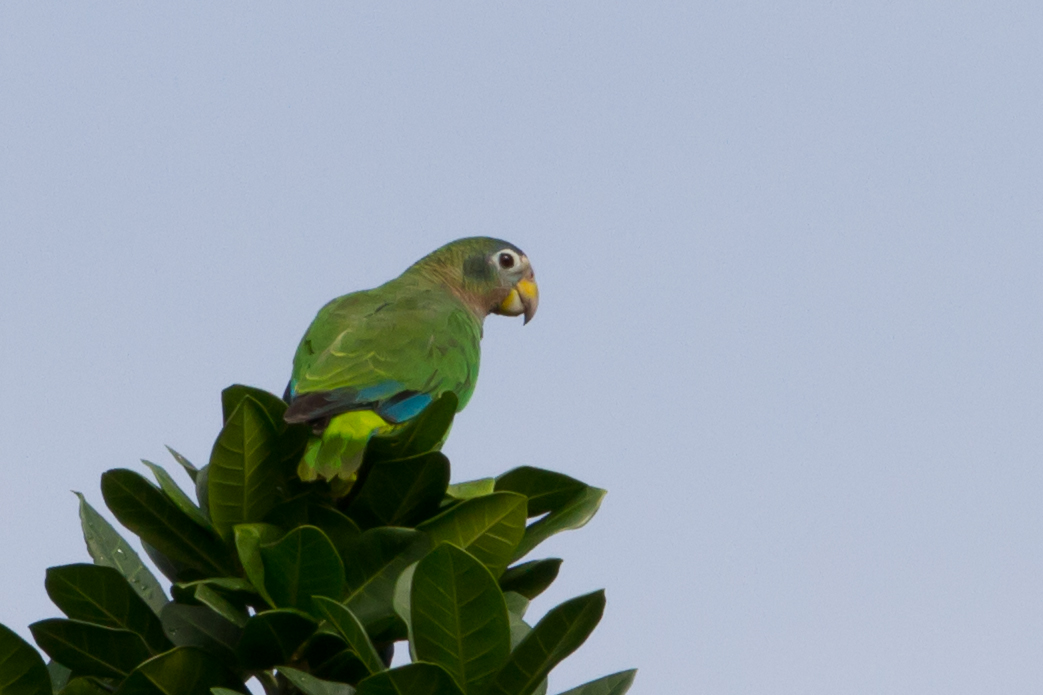
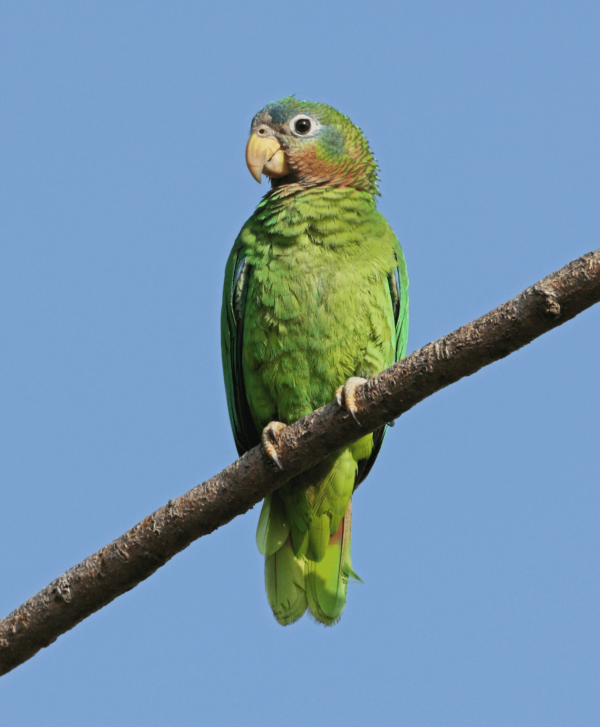
Both adults in general green, with yellowish underparts; black edging on feathers of crown to mantle and sides of head; white forehead and line around eyes; dull blue forecrown; pale blue lores and upper cheeks; blue/grey ear coverts tinted with green; rose/red throat, forecheeks and sides of neck; green tail with red at base. Beak yellow. Eye ring white, eye brown.

Colour Juvenile:

As in adults but with grey markings on upper mandible.

Call:

Calls made in flight bugling notes, lower in pitch than those of Black-billed Amazon and last syllable prolonged. Also high-pitched notes while perched.

Xeno-canto Wildlife Sounds-Yellow-billed Amazon

Content Sources:

CITES
Avibase
BirdLife International
Cornell Lab of Ornithology/Birds of the World
A Guide to Parrots of the World, Juniper and Parr, 1998
Parrots: Status Survey and Conservation Plan 2000-2004, Snyder, McGowan, Gilardi and Grajal, 2000.
Parrots of the World, Forshaw and Cooper, 1977. 2010 edition
Parrots of the World, Forshaw, 2006.
Lexicon of Parrots, Thomas Arndt.
Parrots in Aviculture, Low, 1992.

Captive Status:

Rare

Longevity:

Probably 50+ yrs.

Housing:

Aviary or suspended enclosure, minimum length 3 m (9.8 ft).

Diet:

Fruits such as: apple, pear, orange, banana, pomegranate, cactus fruits, kiwi, papaya, forming about 30 percent of the diet; vegetables such as: carrot, celery, green beans and peas in the pod; green leaves such as: Swiss chard, kale, lettuce, sowthistle, dandelion, chickweed; spray millet; small seed mix such as: canary, millet and smaller amounts of buckwheat, oats, safflower and a little hemp; limited soaked or sprouted sunflower seed; cooked beans and pulses and boiled maize, and complete kibble.
Enrichment:

Provide bird-safe, unsprayed flowering, fir, pine, willow or elder branches, different sized perches, wooden or vegetable tanned leather toys, ladders, swings, ropes and puzzle/foraging toys.

Nest Box Size:

Vertical box 10″ x 10″ x 24″ (24.5 cm x 24.5 cm x 61 cm).

Clutch Size:

3

Fledging Age:

8 weeks

Hatch Weight:

Peak Weight:

Weaning Weight:

World Population:

6000-15,000 mature individuals, decreasing.

IUCN Red List Status:
Vulnerable

CITES Listing:
Appendix II

Threat Summary:

A BirdLife ‘restricted-range’ species. Declines have been caused mainly by ongoing habitat loss and degradation, as well as trapping. Further declines are being caused by drought, which is increasing in severity due to climate change. Over the past 20 years, tree cover within the range has been lost at a rate of 6%. Based on rates of tree cover loss between 2016 and 2020, this may increase to 7%. As the species is dependent on wet limestone forest, population declines may be exacerbated by the additional impact of habitat degradation. The impact of feral predators on nests has not been quantified, but is described as a major driver of population declines, such that it may account for an additional 10% decline over three generations. Accounting for further threats, including trapping for trade and the impact of droughts, the rate of overall population decline is tentatively 20-29% over three generations.

Range:

Jamaica, W Indies.

Habitat:

Found up to 1200 m (3936 ft) in wet limestone forest with Terminalia and Cedrela sp. foliage, more arid upland forest and cultivated areas with trees at forest edge.

Wild Diet:

Forages for fruits, seeds, blossoms and leaf buds, species including Cecropia, Ficus, Annona, Citrus and Rubus. Also takes cultivated crops.

Ecology and Behaviour:

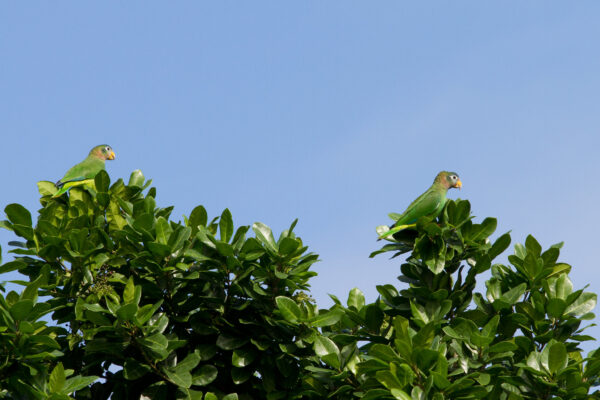
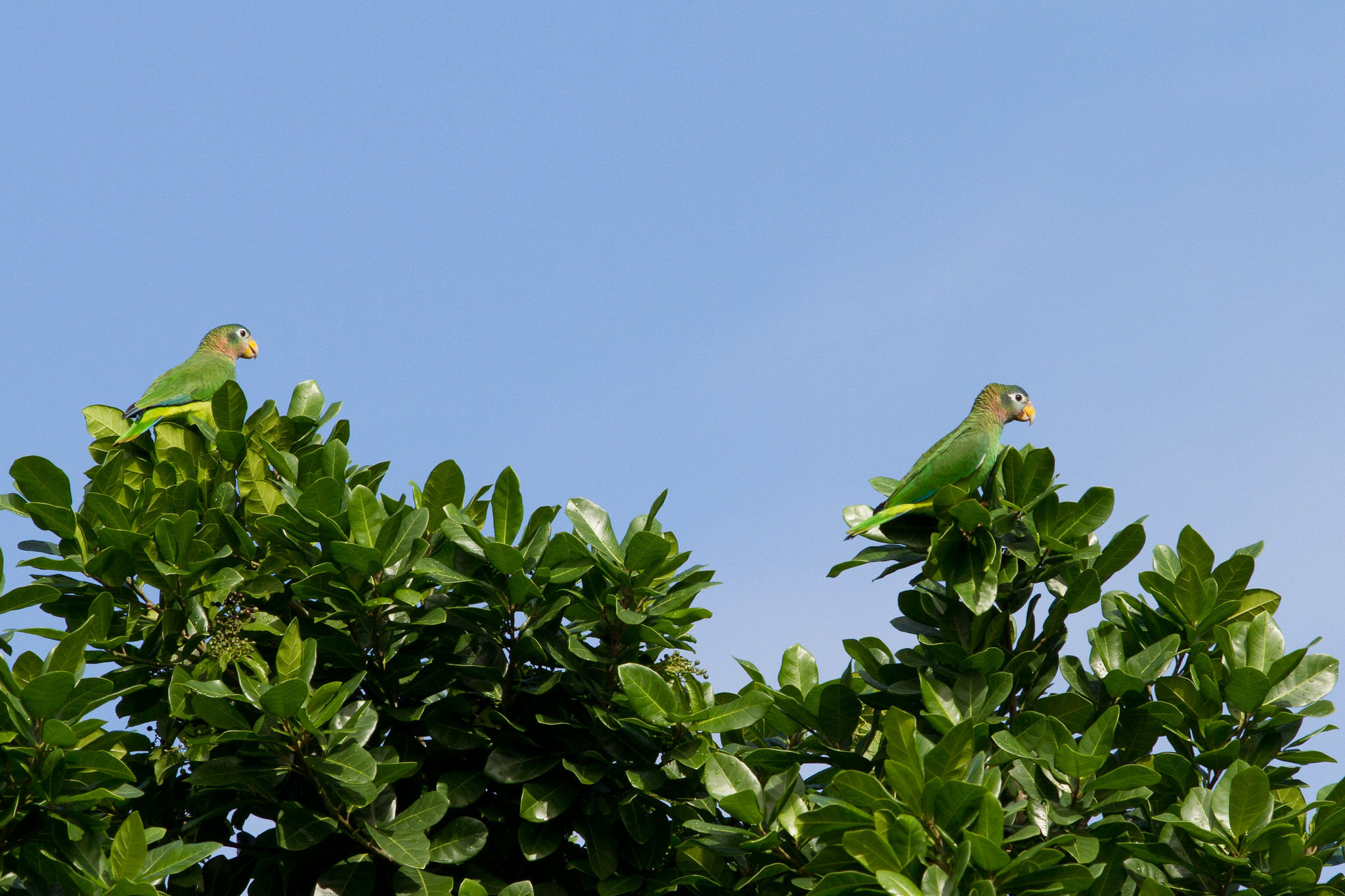
Seen in large communal roosts outside breeding season. Birds range widely during the day, returning to roost late in day. May associate with the Black-billed Amazon (Amazona agilis) and Olive-throated Conure (Eupsittula nana). Groups employ sentinels on high, exposed perches to warn flock of danger.

Clutch and Egg Size:

3 rounded eggs, 36.0 x 29.0 mm (1.4 x 1.1 in).

Breeding Season:

March-May; nest is in tree cavity usually excavated by woodpeckers.