Status:
Collaborators/Funders:
Isdell Foundation, The Percy FitzPatrick Institute for African Ornithology (University of Cape Town), Birdlife South Africa, Cape Parrot Working Group (CPWG), Kurisa Moya Nature Lodge, University of Witswatersrand

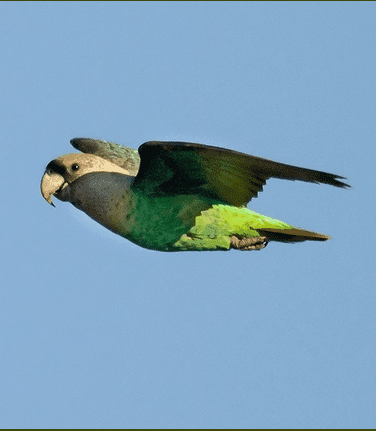
The Cape Parrot is found in the Republic of South Africa in high-altitude Afromontane mist belt-mixed Podocarpus forest patches and lowland/coastal forest. Because of the loss of large nesting trees, trapping for trade and disease, particularly psittacine beak and feather virus, its population has undergone a collapse over the last 50–100 years. Rising threats include climate change, which may cause habitat alteration, and the newly discovered polyphagous shot hole borer beetle, which fatally damages mature trees.
Since the mid-1990s the World Parrot Trust has funded work to restore habitat for the parrots, monitor wild populations, locate and monitor nest sites, increase breeding success and study disease risk, involve local communities in conserving Afromontane forests and aid outreach programs that reach school-aged children.
In 2020, the ‘Cape Parrot and Mistbelt Forest Conservation Action Plan,‘ a collaborative effort between eleven organisations along with the WPT, was published and outlines in detail the ecology, threats and steps needed to protect these birds and their wild spaces. In 2023, WPT and Natural Encounters Conservation Fund joined forces to fund the Wild Bird Trust in their effort to develop and implement a long-term program monitoring Cape Parrot forest habitats and taking necessary conservation actions. The WPT-Natural Encounters grant supports the purchase of much of the equipment required to conduct forest habitat and biodiversity monitoring, and provide the funds needed to conduct reconnaissance surveys of specially selected forests and employ community-based field assistants during these surveys.
Status: IUCN Vulnerable / CITES Appendix II
Population: In 2024, 1314 were counted at multiple sites, down from 2023.
Range: Cape Parrots are endemic to the Republic of South Africa, from the Amathole and Transkei regions to southern KwaZulu-Natal, with an isolated population in the Limpopo Province.
Natural history: These parrots live in high-altitude Afromontane mistbelt mixed Podocarpus forest patches above 1400 m (4200 ft) and lowland/coastal forest. They are shy and easily disturbed. Their diet includes Podocarpus fruits and seeds; they have been recorded feeding on introduced foods such as apples, plums, cherries, acorns, pine seeds and Eucalyptus flowers. Birds roost communally in flocks in large trees.