Mitchell’s Lorikeet: Breeding-for-Release
Status:
Collaborators/Funders:
Paradise Park UK, Taman Safari Bali, Bali Bird Park, West Bali National Park
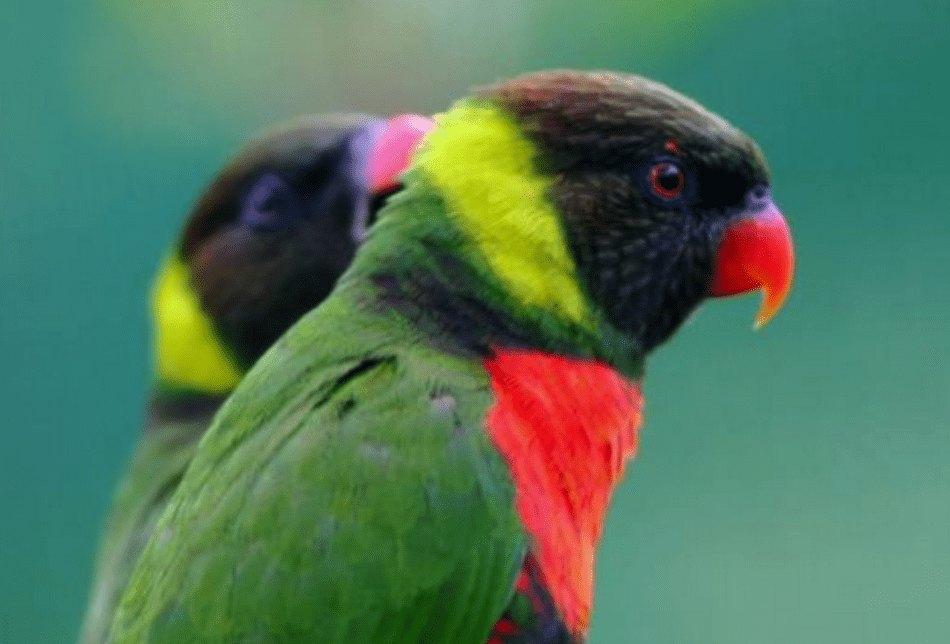
Breeding-for-release can benefit species recovery. The World Parrot Trust and Paradise Park UK, with Taman Safari Bali and Bali Bird Park, have partnered to carry out a breeding-for-release program on the island to produce offspring for the reintroduction of the endangered Mitchell’s Lorikeet (Trichoglossus forsteni mitchellii).
In 2025, 40 birds were sent from Paradise Park in the UK in coordination with the World Parrot Trust. Paradise Park holds the world’s largest and most successful captive population of T. f. mitchellii, and over the years has accumulated experience managing the species, maintaining a healthy genetic pool, facilitating strong pair bonds, and producing multiple successful clutches annually. As of late 2025, the translocated birds had begun breeding in their new home.
In Bali, the birds are provided spacious enclosures to encourage natural behaviours such as foraging, nesting and social interaction. Regular wellness checks, disease prevention and quick access to veterinary care will ensure the birds’ health, and balanced foods will be provided to boost reproductive and general health. Breeding will be carefully monitored. Captive-bred individuals will be trained to develop survival skills foraging, avoiding predators, and socially interacting. Once offspring are old enough and a location in a protected area has been identified, they will be acclimated to the weather and foods native to the area before release.
Once safely established in the wild, the birds will be encouraged to breed through the team providing predator-proof and camera-monitored nest boxes in the release area. Artificial nest installations are necessary to replace mature nesting trees, which have been lost to deforestation. The team will install different-sized boxes in different sizes to provide more breeding opportunities and reduce competition for valuable nest sites.
IUCN/CITES Status: Endangered / Appendix II (As with Trichoglossus forsteni.)
Population: Fewer than 50 individuals.
Range: This lorikeet occurs in Indonesia on Bali, Nusa Penida, and Lombok islands.
Natural history: Mitchell’s Lorikeet is found in lowland and lower montane forests including secondary growth and plantations around forest edges. It feeds mainly on nectar but will consume figs, and insects and can be found around man-made feeding stations. It is found in mixed flocks with other parrots in small noisy groups. Nomadic, as they are dependent on flowering trees. Roosts communally.