ABOUT

Santa Marta Conure Conservation and Research

Status:
2022 – current
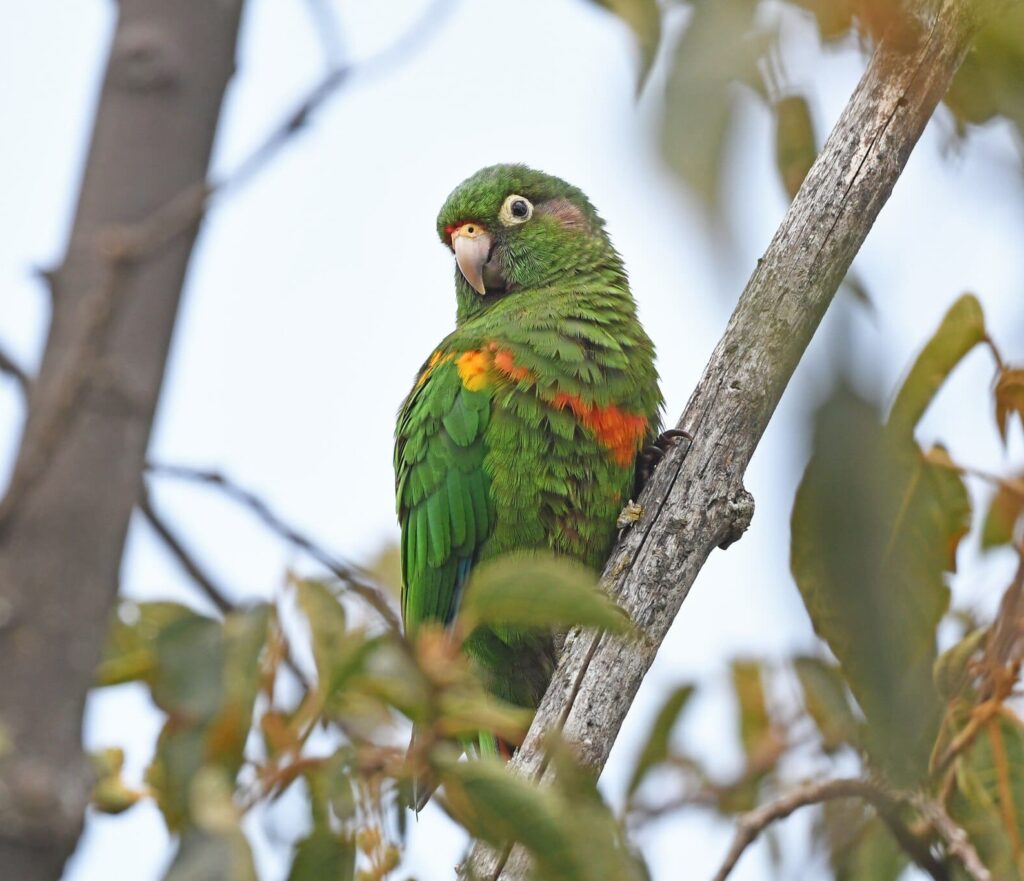
A wild Santa Marta Conure perches on a branch
© Christoph Moning, CC BY 4.0 via Wikimedia Commons
Collaborators/Funders:

ProCAT Colombia (Proyecto de Conservación de Aguas y Tierras Fundación), SELVA – Research for Conservation in the Neotropics, Ciencia Serrana

View Species Profile

The Santa Marta Conure (Pyrrhura viridicata) is IUCN-Endangered in the wild due to habitat loss of up to 80%. The main threats to their forests are food agriculture, livestock farming, and logging, the impacts of which are ongoing. The species is not affected by illegal trapping, however there are records of hunting. Some birds are occasionally shot as crop pests.

The World Parrot Trust’s partner Ciencia Serrana, in collaboration with Proyecto de Conservación de Aguas y Tierras (ProCAT Colombia) and SELVA Investigación para la Conservación en el Neotrópico, is making positive inroads in the conservation of Santa Marta Parakeets in the Sierra Nevada de Santa Marta. Initial efforts have focused on understanding the parakeet’s habitat, observing behaviour and distribution, and engaging local communities through workshops where over 200 adults and children have been reached. The Ciencia Serrana team has installed 80 nest boxes in the birds’ habitat, and early results are showing that the normally-wary birds are beginning to approach the boxes. Local community members, trained by WPT’s field technicians, are integral to monitoring these nests.

In the long term, reforestation will begin to restore habitat with palm and other trees vital to the birds’ survival.

Status: IUCN Endangered / CITES Appendix II

Population: 1800-3200 mature individuals, decreasing.

Threats: The species greatly depends on intact forest; estimates of habitat loss range from 30% to 80% from food agriculture, livestock farming, logging and brush fires. Also reports of subsistence hunting and persecution as crop pests.

Range: Sierra Nevada de Santa Marta, NE Colombia.

Natural history: These parrots are found from 1800-2800 m (5904-9184 ft) in cooler humid mountain forest and forest edge, mainly in subtropical zone; may also occur in grass and bracken-covered slopes with mountain shrubs. Their diet includes fruits, flowers, leaves, lichens and seeds. Are usually seen in flocks of up to 20 individuals in flight across open country and roosts communally in a tree hollow or hidden in foliage at night. Two peak periods for breeding: December-May and May-October. Nests exclusively in dead Wax Palms.

Join Our Flock

FlockTalk our monthly newsletter for parrot people everywhere:

+ News from the world of parrots

+ Updates on wild parrot projects

+ Inspiring updates from partners

+ Real stories from the parrot flock

+ Plus, expert tips for caring for your feathered friends at home.


Stay In The Loop, Sign Up Now.

FlockTalk: our monthly newsletter for parrot people everywhere:

Parrot news. Conservation wins. Pet care tips. All in one monthly email.

We do not sell or share your information with anyone.