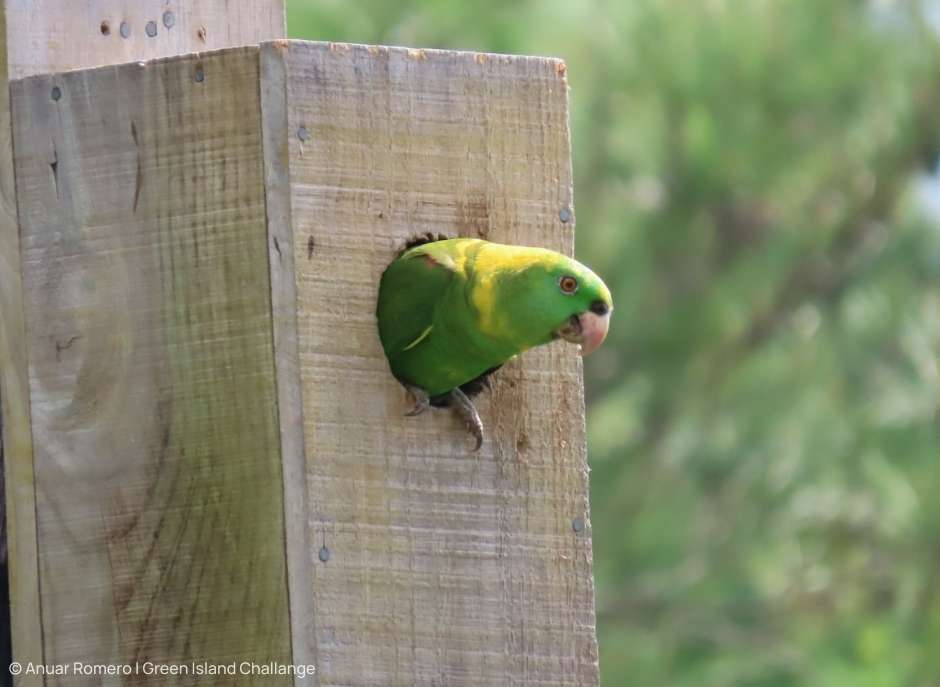
The critically endangered Yellow-naped Amazon is deeply affected by trapping and habitat loss. In the mid-2020s, WPT funded a Costa Rican field researcher and his team conducting outreach with landowners interested in protecting the birds, as well as awareness in local communities. Actions have included active protection against predators, installing 40 nest boxes, and carrying out continuing nest surveys and roost counts.
WPT partner Green Island Challenge (GIC) in the Bay Islands, Honduras, is expanding its education program with island-specific lessons focused on the environment, parrots, and fostering a deeper connection to the land. In addition to their educational efforts, Green Island Challenge conducts anti-poaching patrols, nest box installations and parrot counts. On Roatán, a backyard nest program led by WPT’s Dr Noelia Volpe has been initiated to provide a safe space for Yellow-naped Amazons to breed. To date, 76 nest boxes have been installed for these endangered parrots, and over 80 residents have shown interest in the program. In 2025, on the island of Guanaja, 70 chicks fledged from 30 nests. Ongoing efforts include testing five or six different treatments to find the most effective method of repelling honey bees and preventing them from taking over nests, a significant problem for the birds.