LEARN

Blue-crowned Conure

( Thectocercus acuticaudatus )

Also known as:
Blue-crowned Parakeet, Sharp-tailed Conure

Also known as:
Blue-crowned Parakeet, Sharp-tailed Conure

Type :
Geography:

DID YOU KNOW?

This species is the only conure in its genus, Thectocercus.

<p><em>Thectocercus</em></p>
Genus:

Thectocercus

<p><em>acuticaudatus</em></p>
Species:

acuticaudatus

Size:

37 cm (14.4 in)

Weight:

165 g (5.8 oz)

Subspecies including nominate:

five: T.a. acuticaudatus, T.a. neumanni, T.a. haemorrhous, T.a. koenigi, T.a. neoxena

Colour Adult:

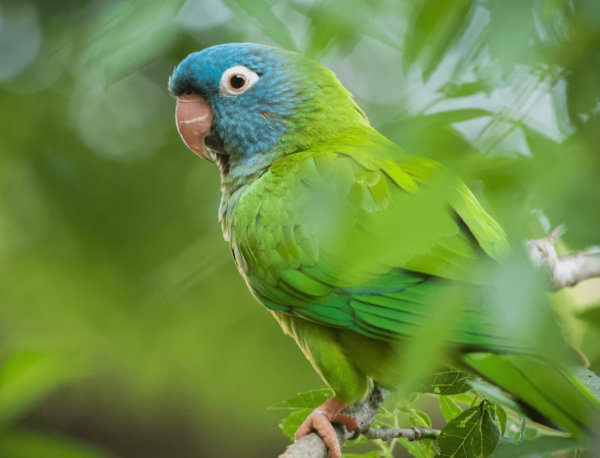
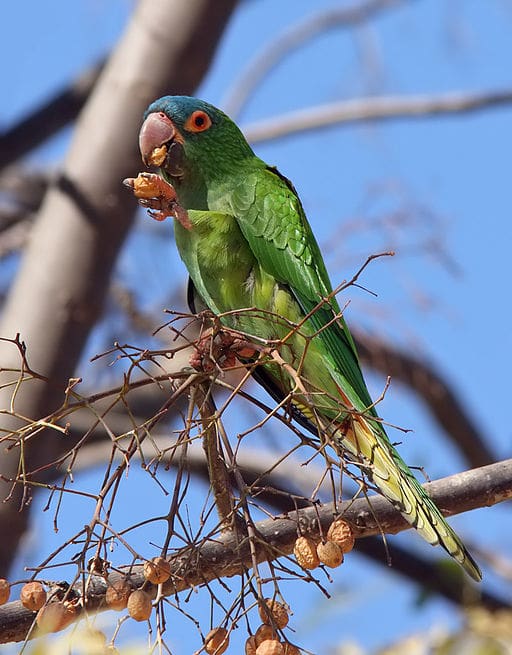
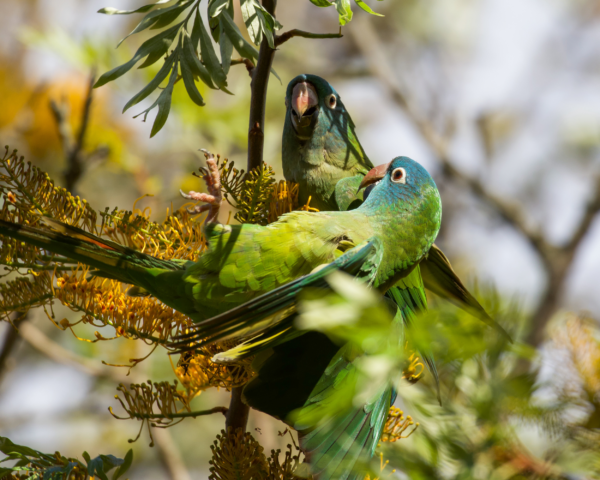
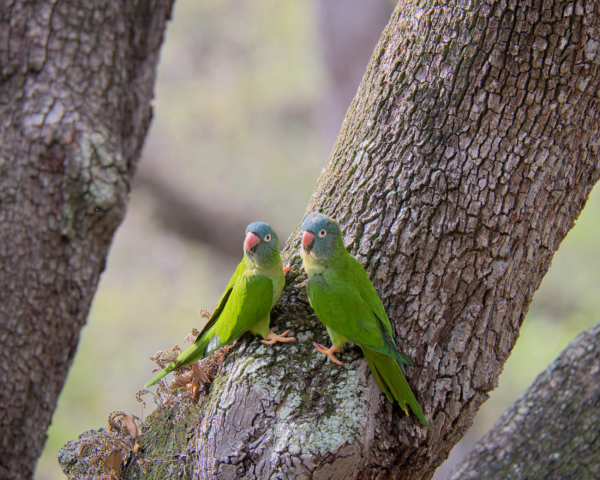
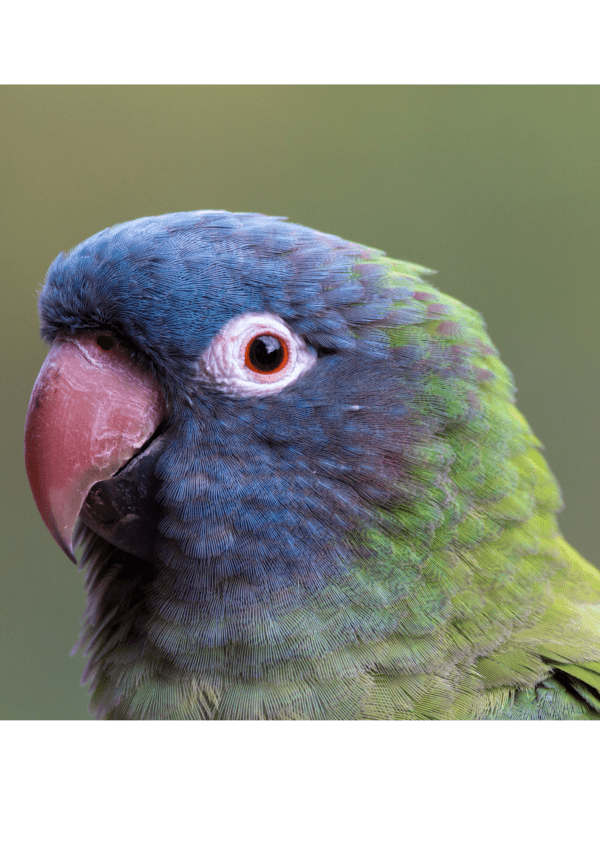
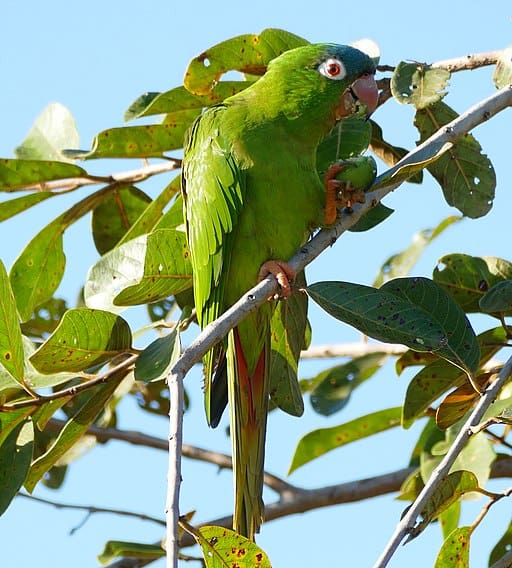
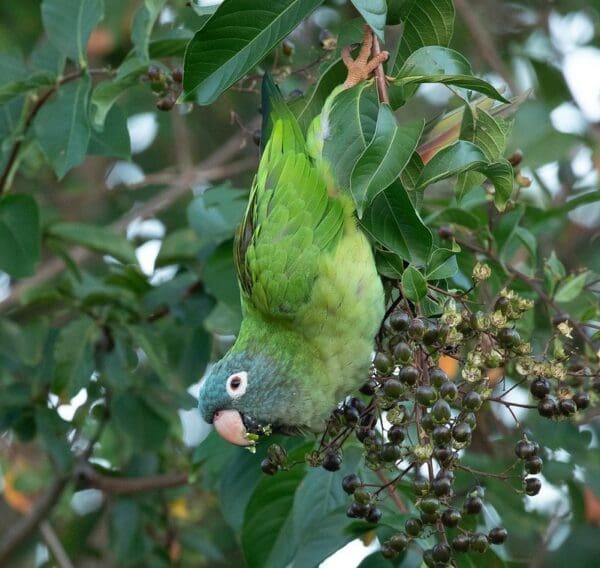
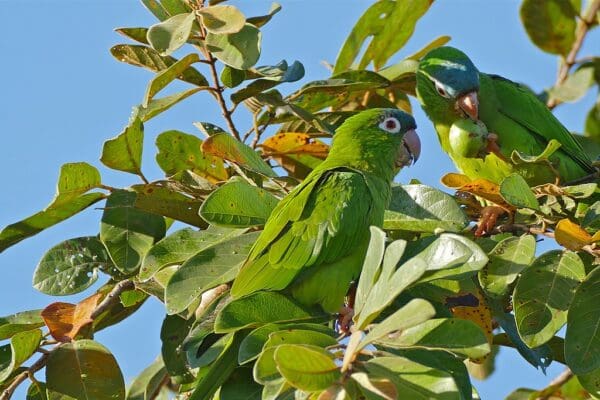
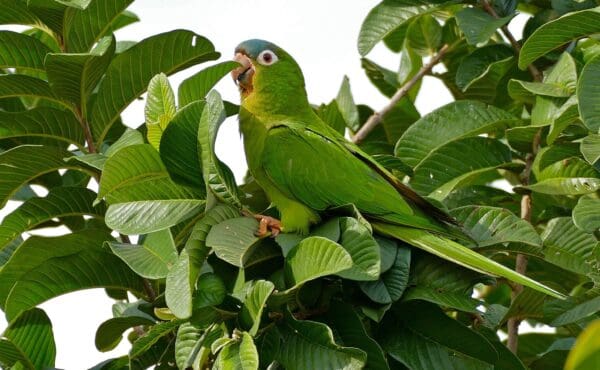
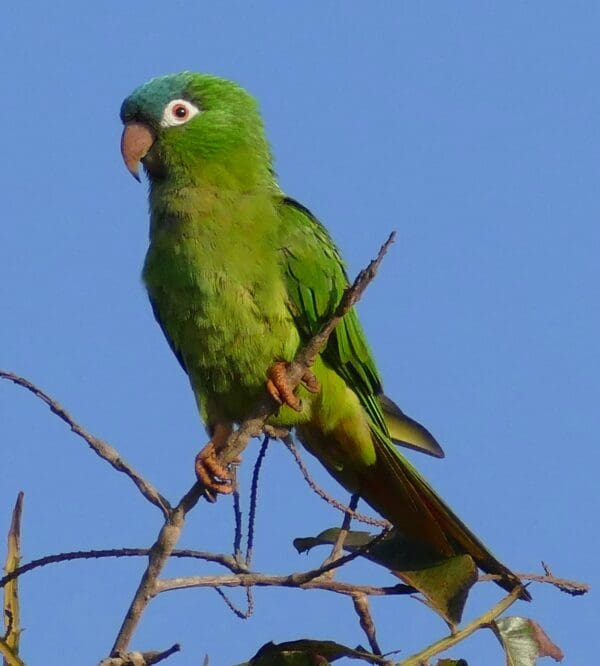
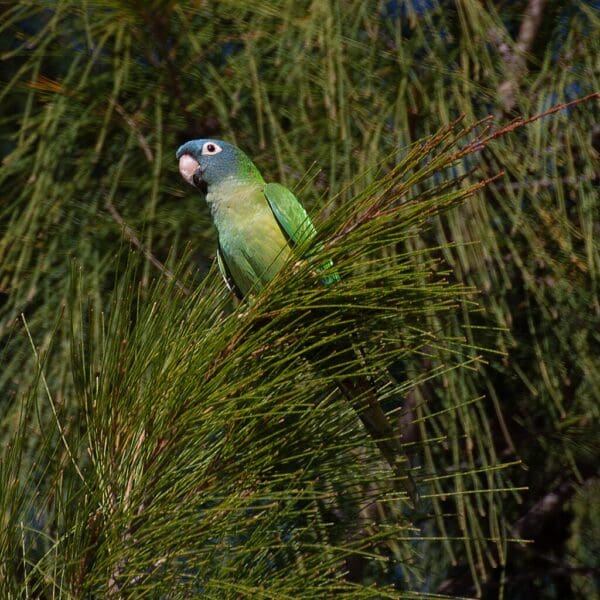
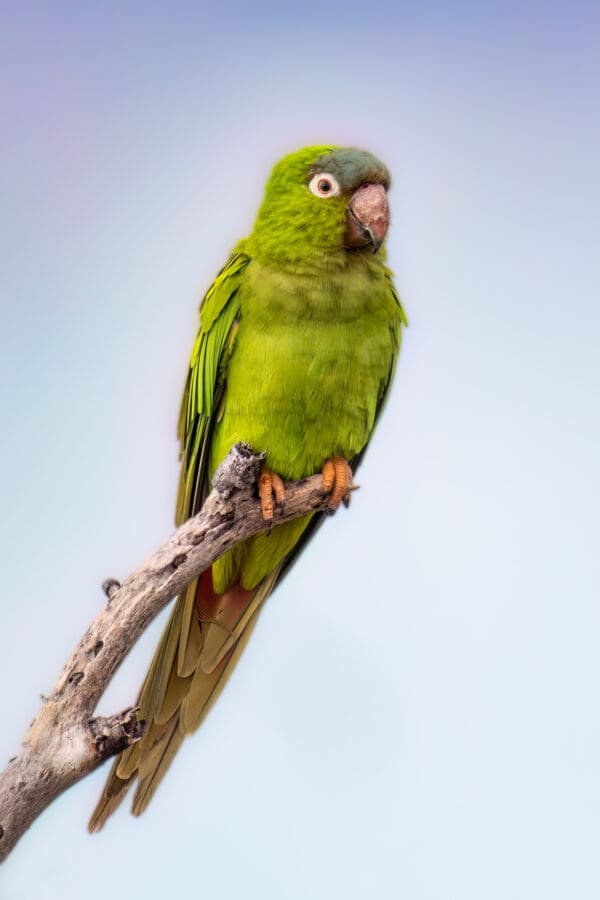
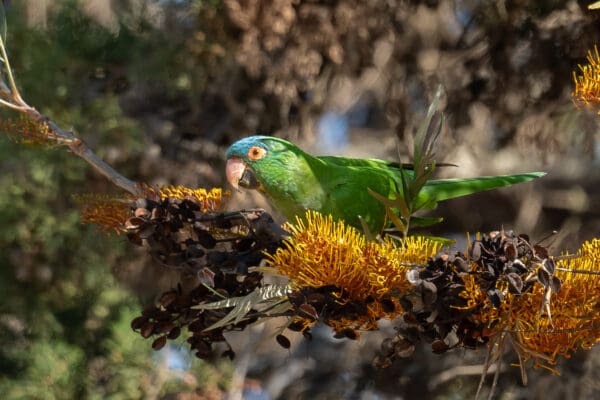
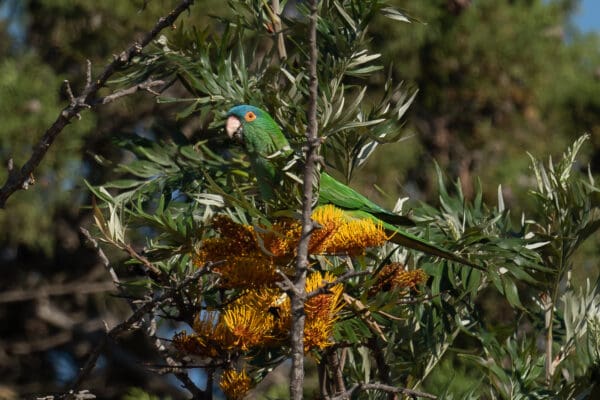
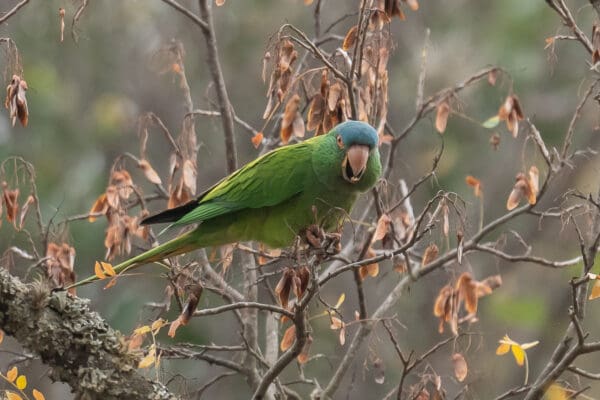
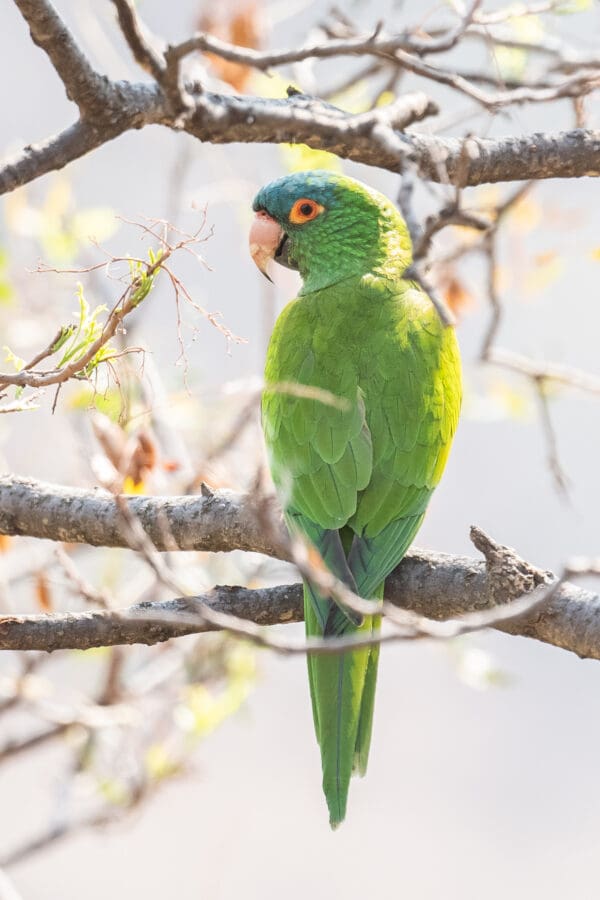
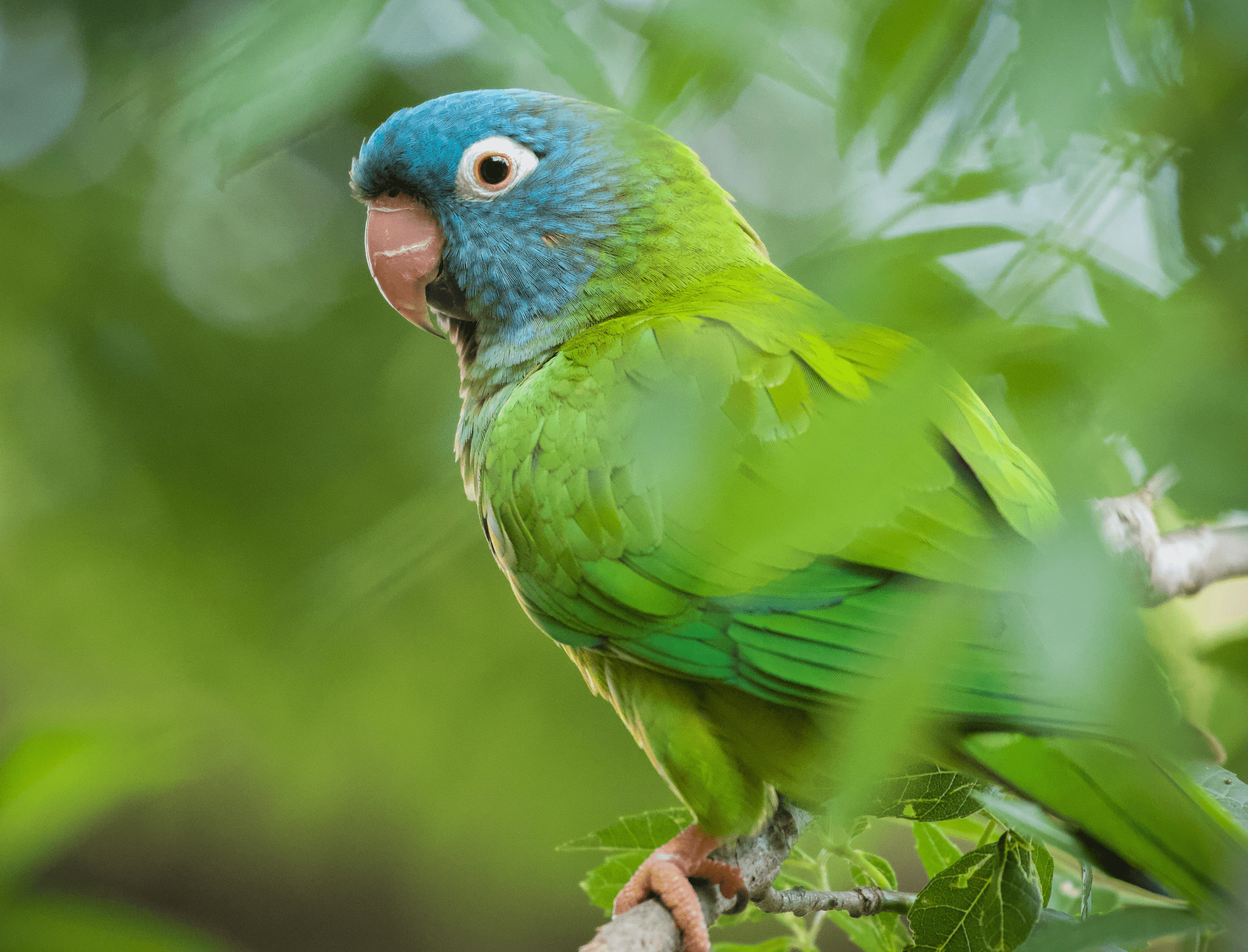
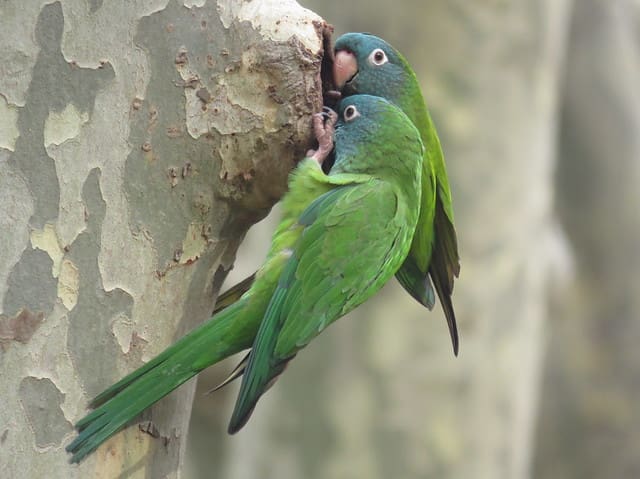
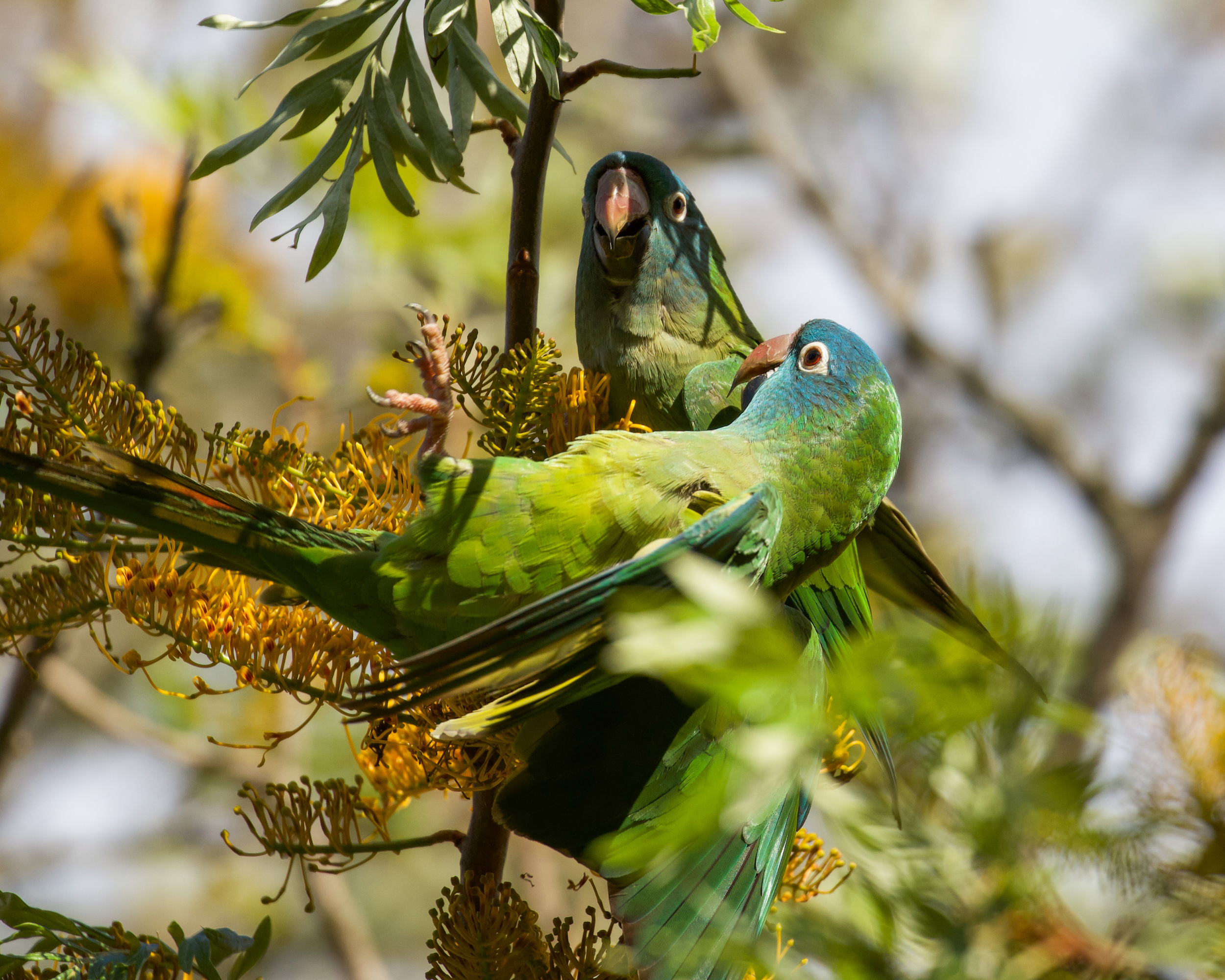
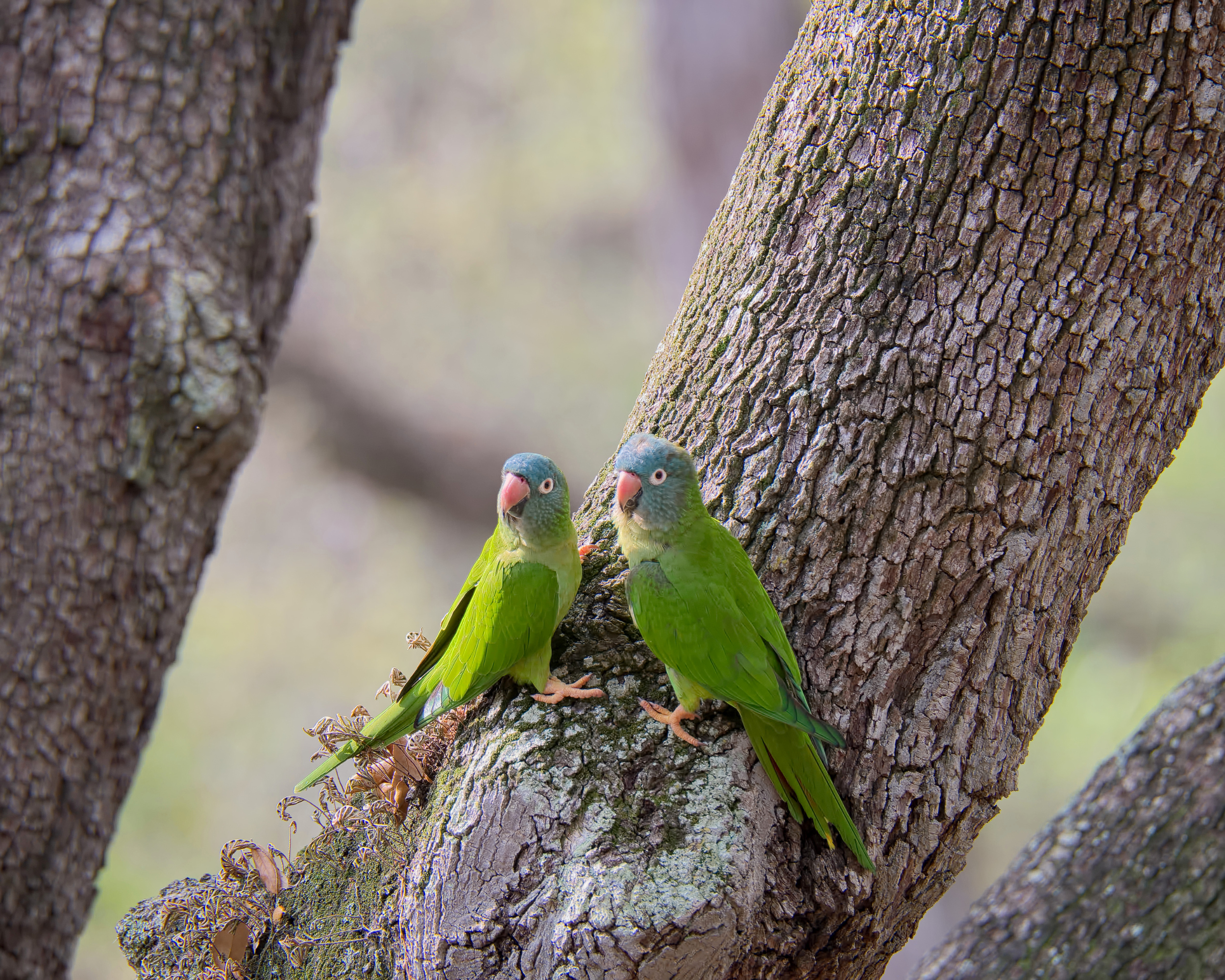
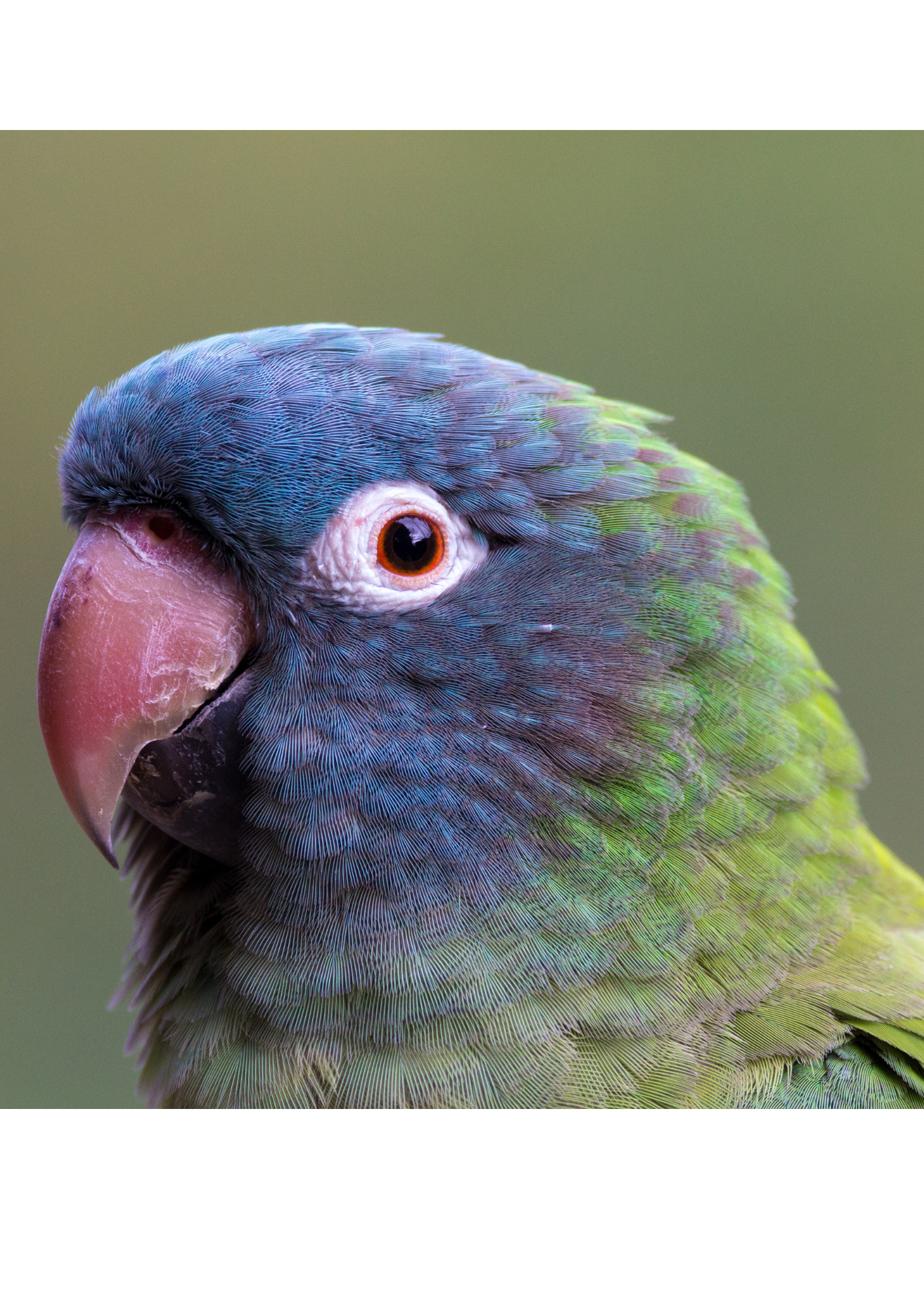
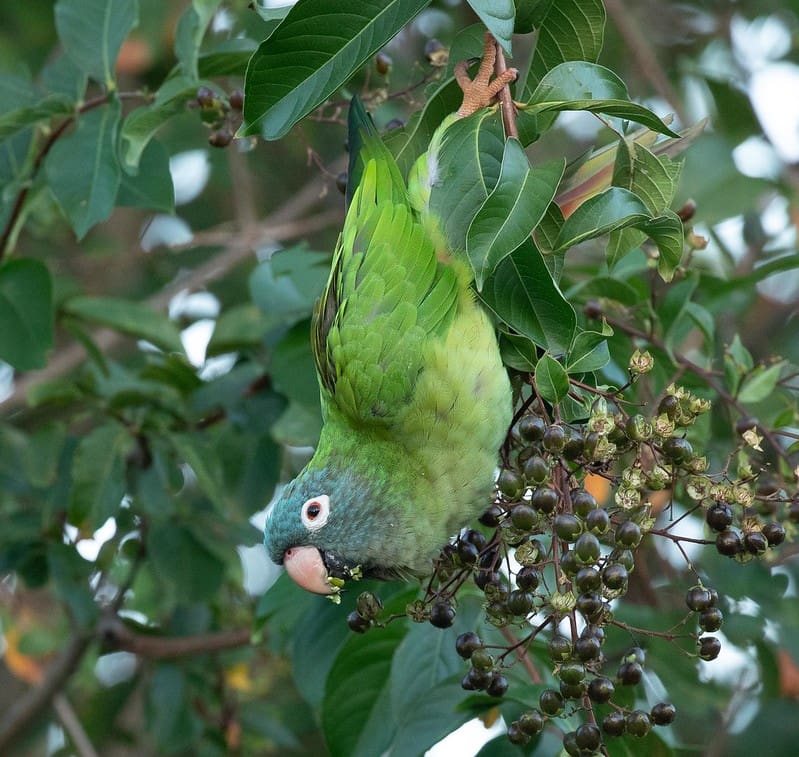
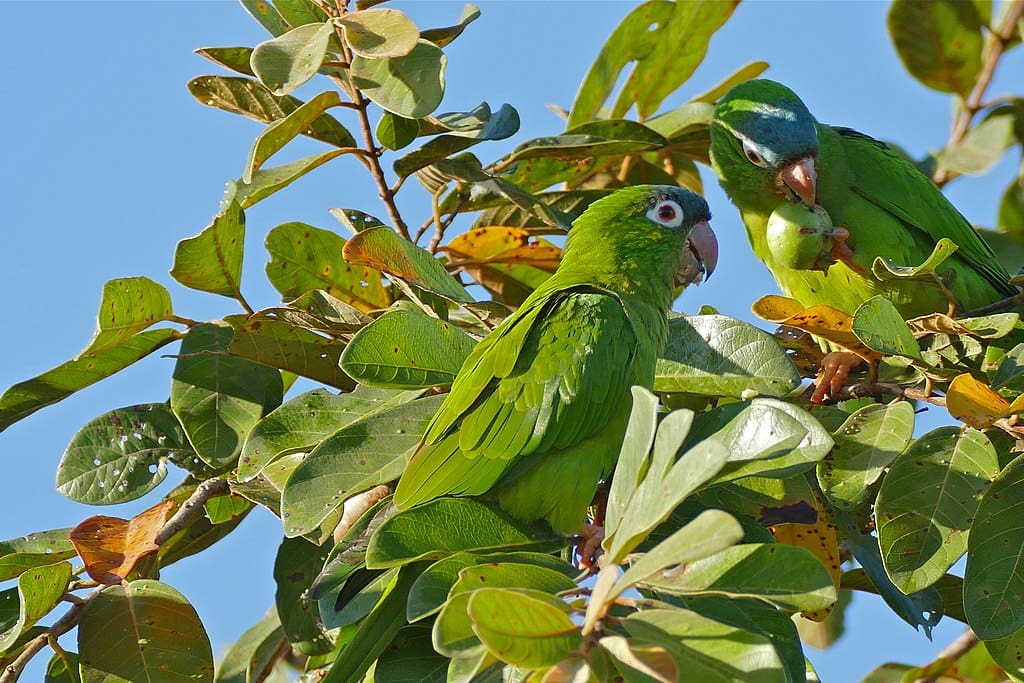
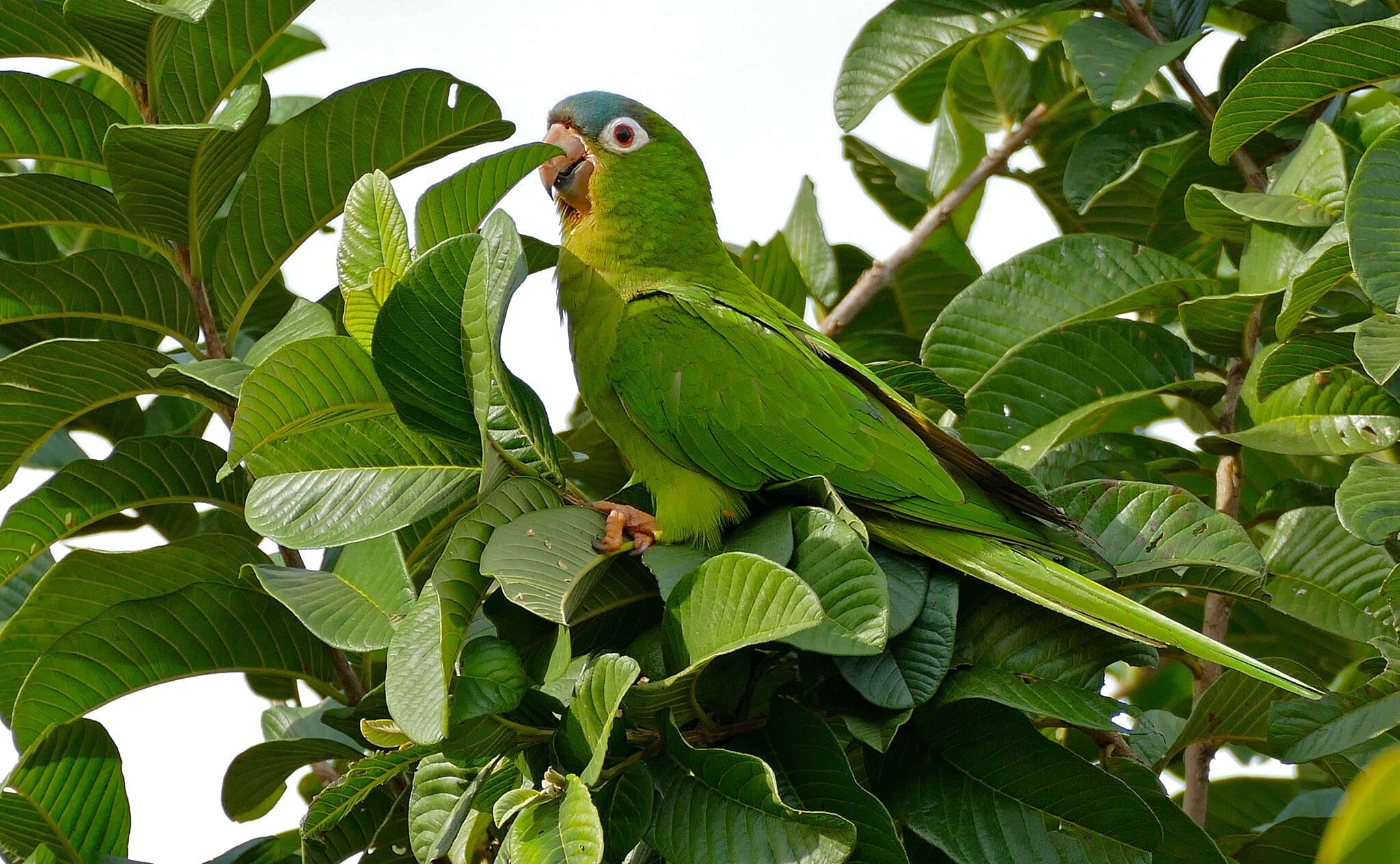
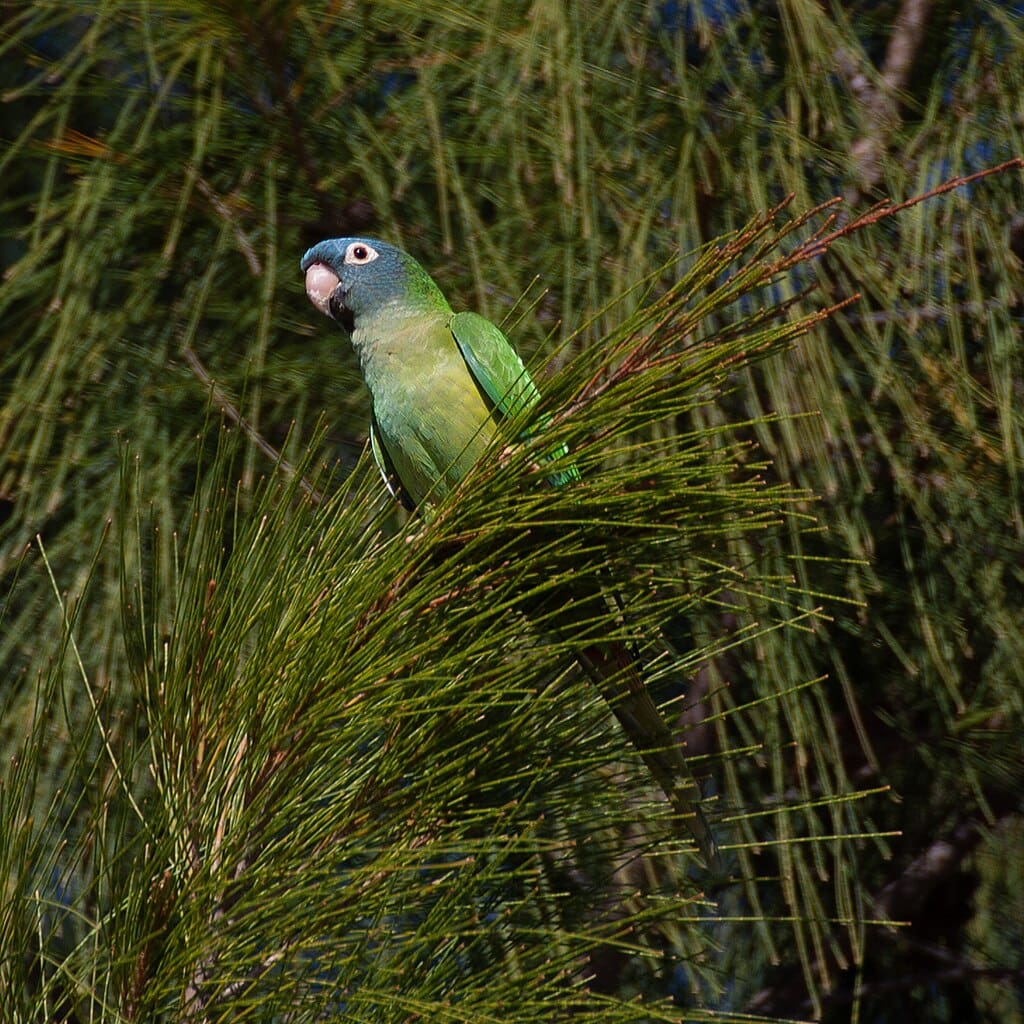
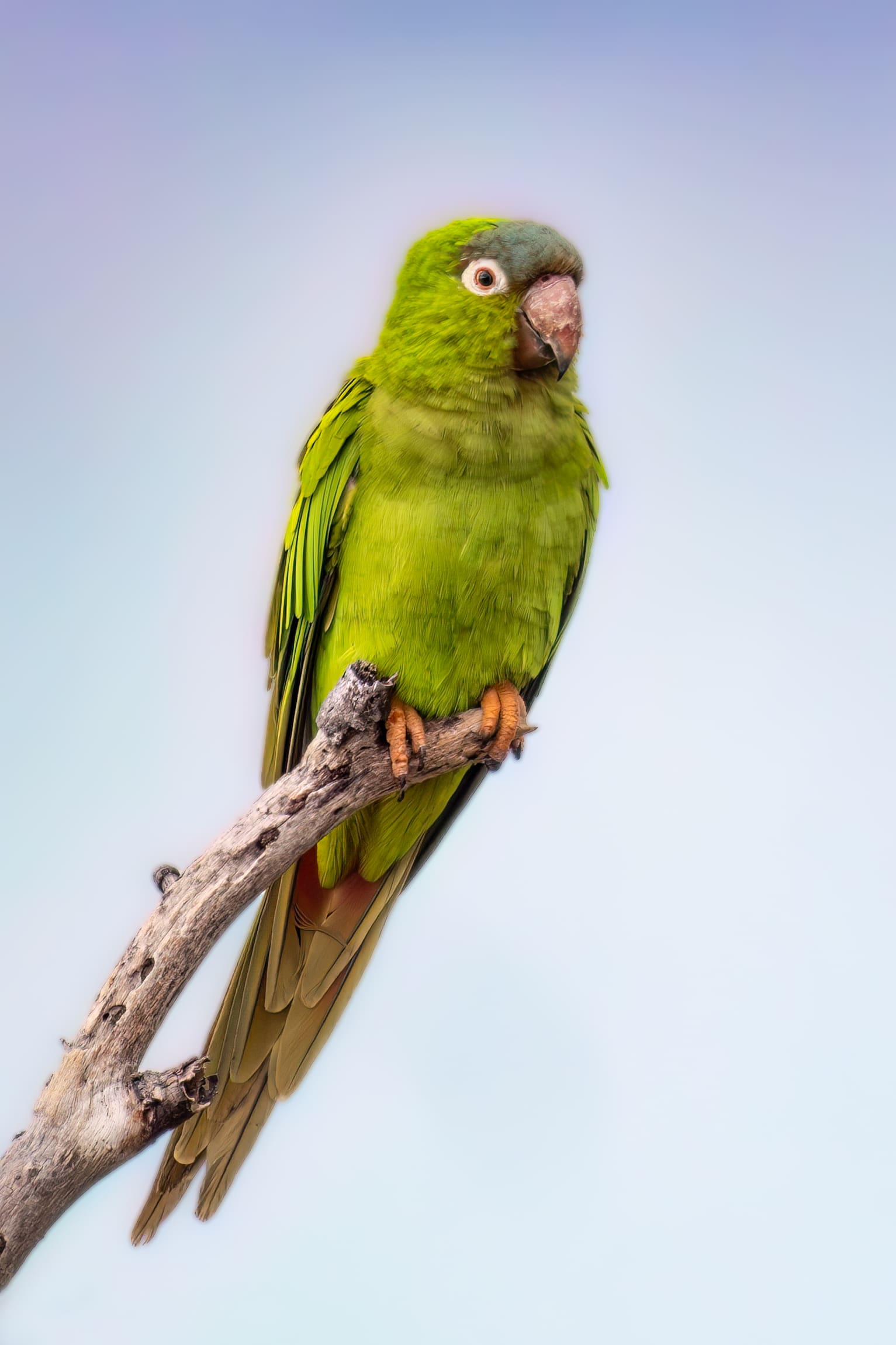
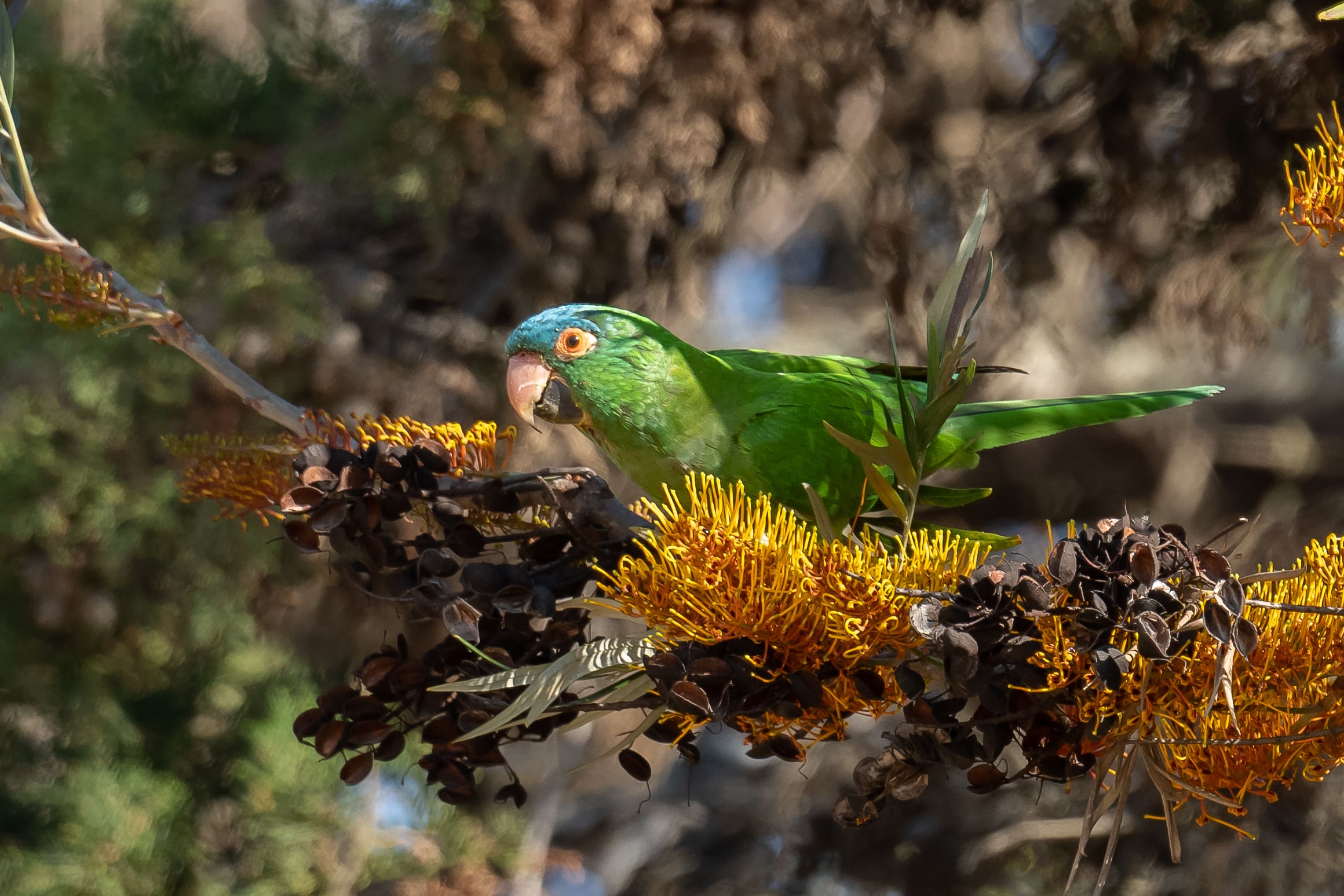
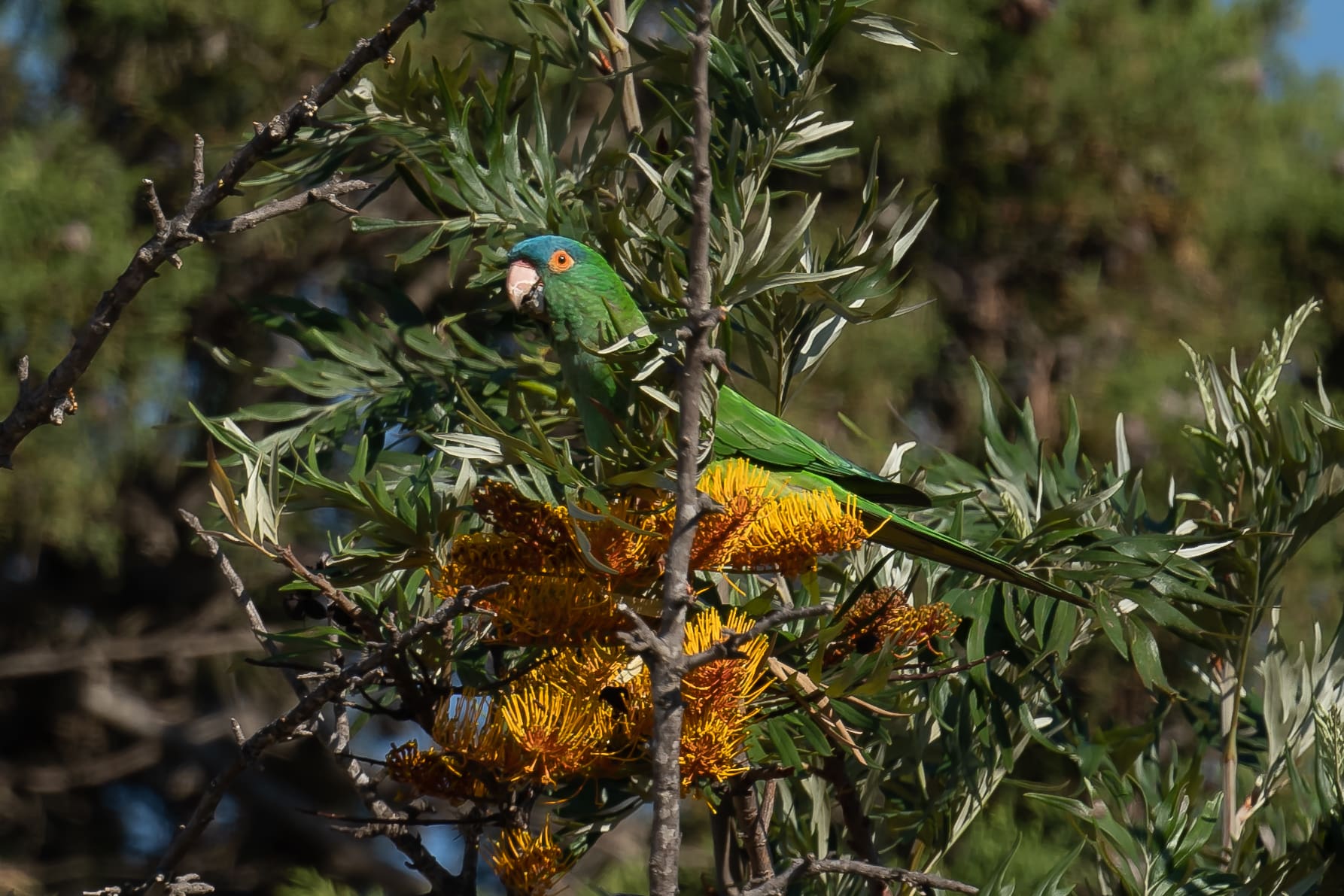
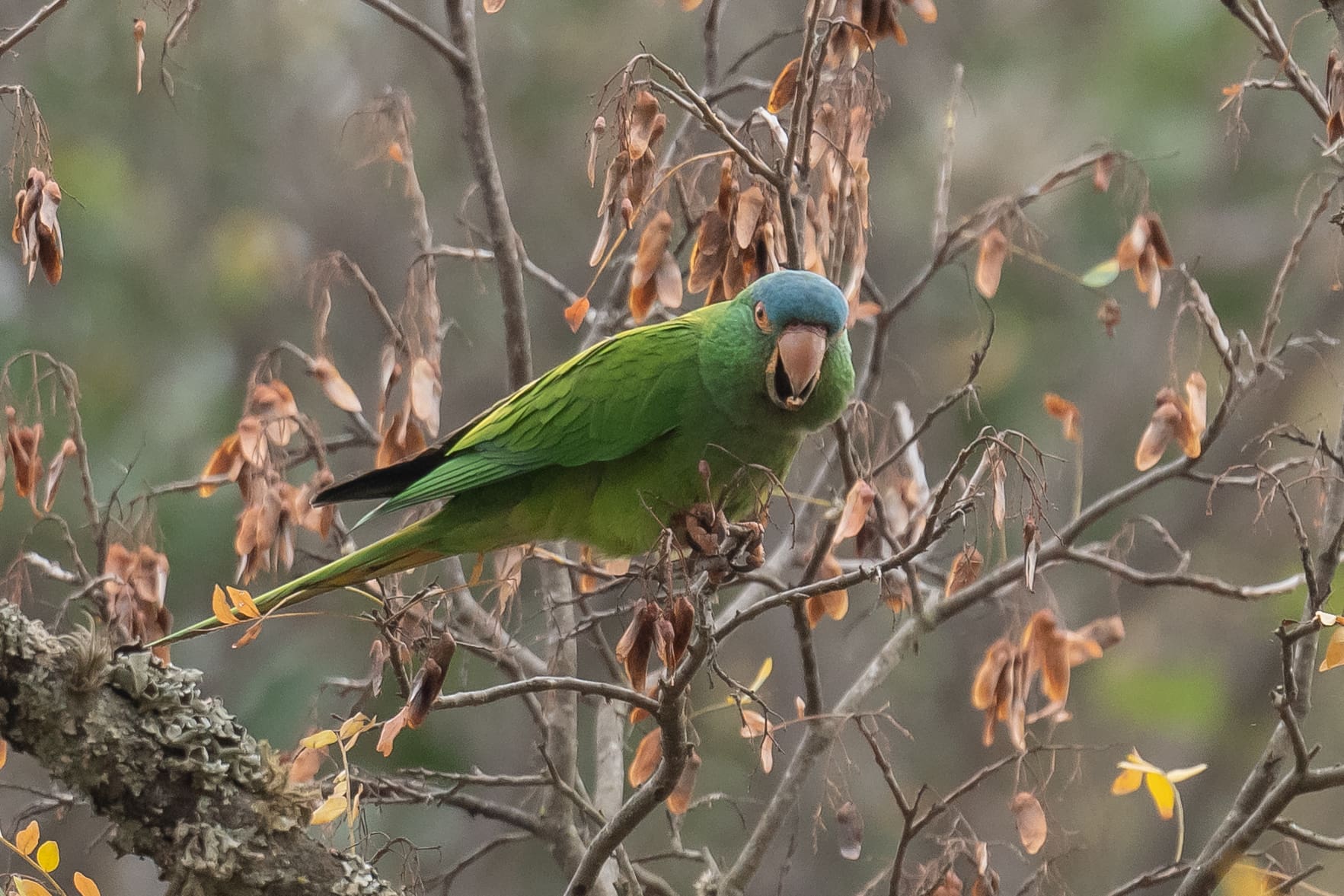
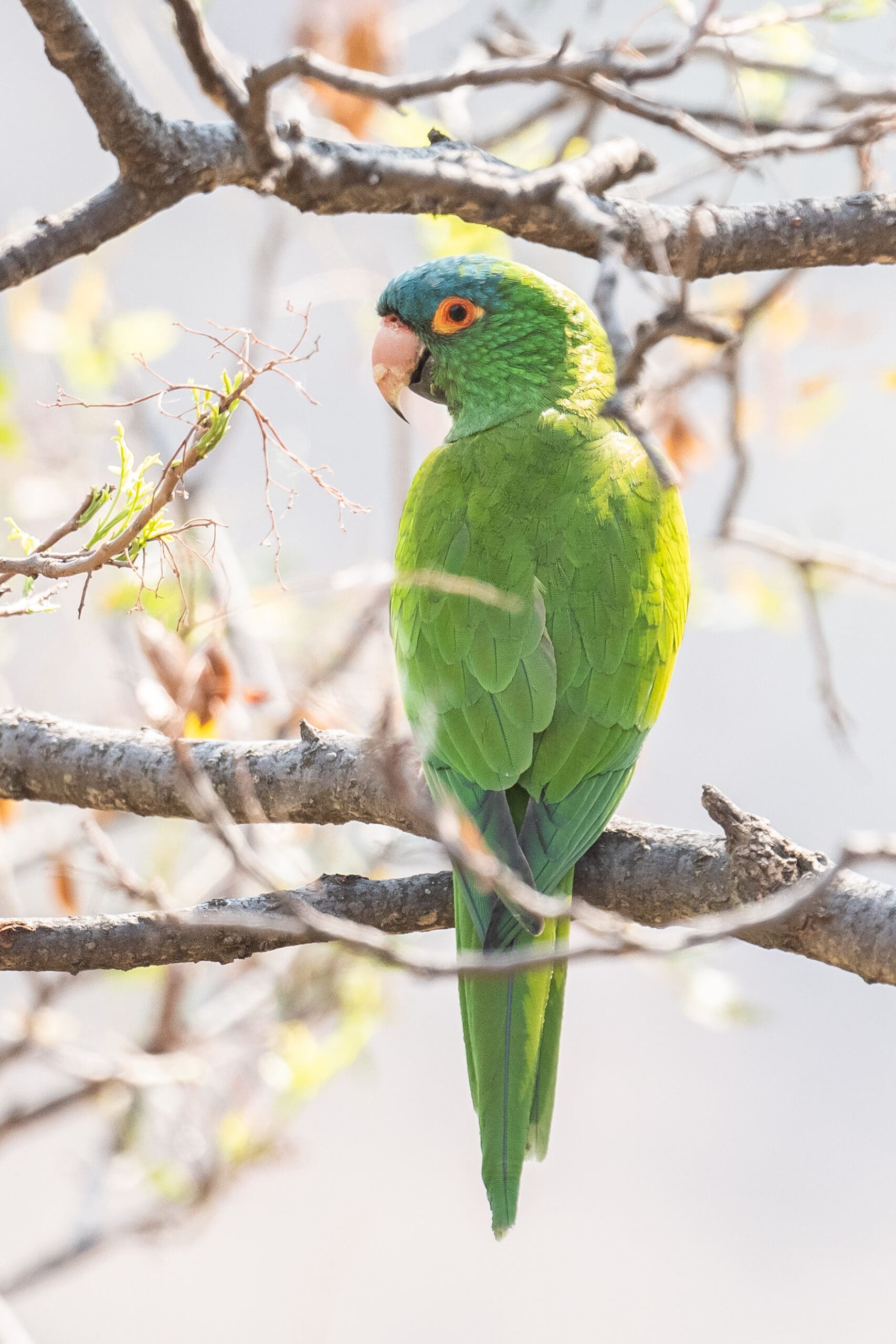
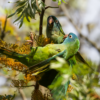
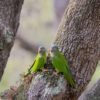
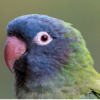
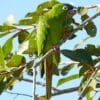
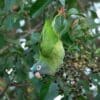
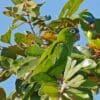
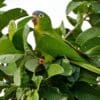
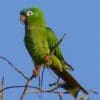
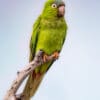
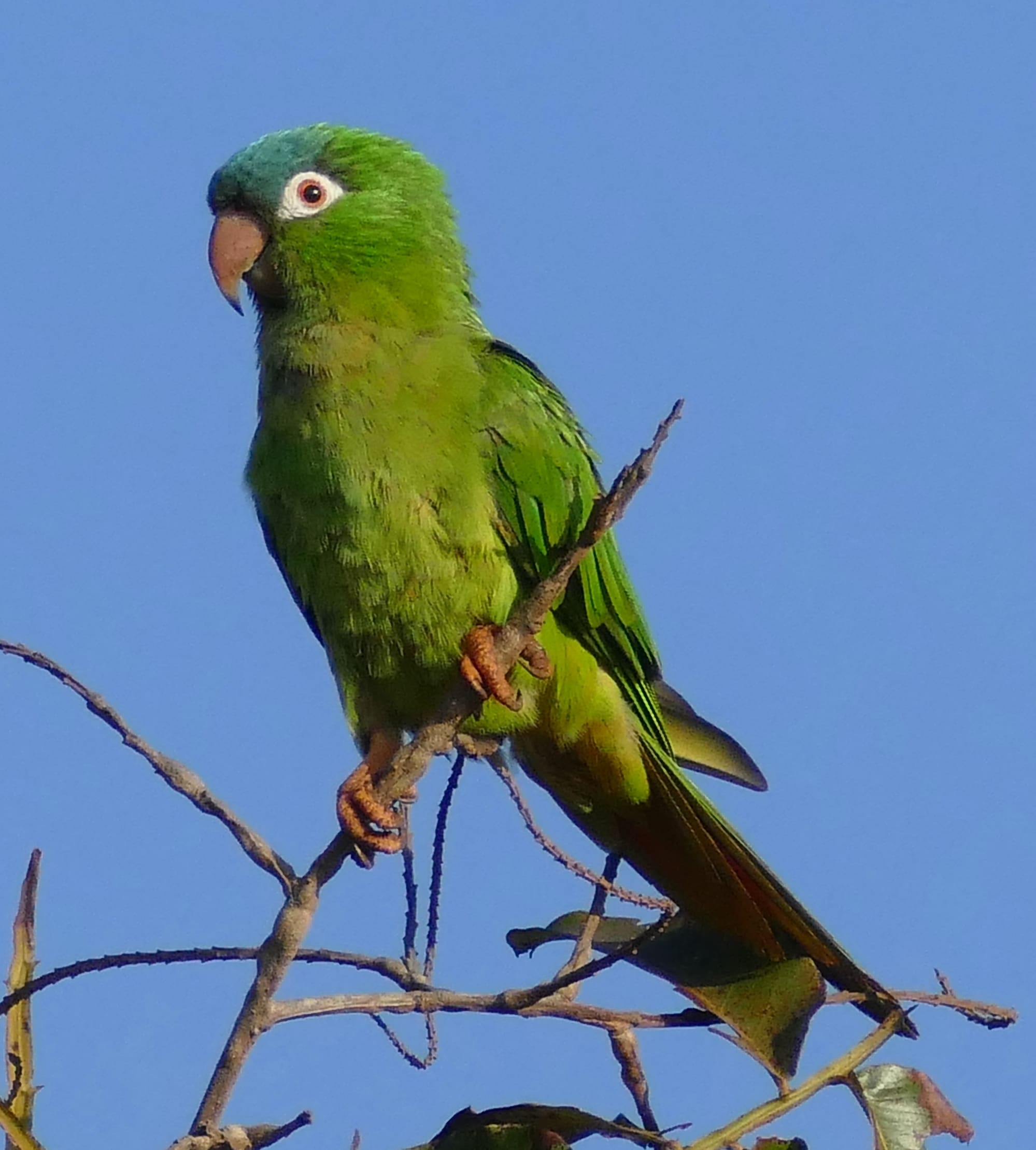
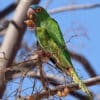
T.a. acuticaudatus: Both adults forecrown to lores, cheeks, and ear coverts dull blue; breast on some birds washed blue; tail green on upperside and brown/red on underside tipped with yellow/olive; upper mandible horn in colour tipped with grey, lower mandible grey/brown. Eye ring bare and creamy white. Eye orange.
T.a. neumanni: Both adults forehead to nape blue; underparts suffused dull blue.
T.a. haemorrhous: Both adults as in neumanni, but paler blue confined to forehead and forecrown; blue suffusion absent on underparts; both mandibles horn in colour.
T.a. koenigi: As in neumanni but undertail less brown/red; smaller in size.
T.a. neoxena: As in haemorrhous, but underparts washed with blue; smaller in size.

Colour Juvenile:

T.a. acuticaudatus: As in adults but blue confined to forecrown; no blue wash on breast and tail shorter. Eye brown.
T.a. neumanni: As in adults but tail shorter and eye brown.
T.a. haemorrhous: Blue found on forehead only, or instead a red/brown tinge; tail shorter. Eye brown.

Call:

Calls made in flight loud and repetitious. Also babbling and musical notes.

More Information:

Avibase

Content Sources:

CITES
AviList
BirdLife International
Cornell Lab of Ornithology/Birds of the World
Parrots: A Guide to Parrots of the World, Juniper and Parr, 1998
Parrots of the World, Forshaw and Cooper, 1977. 2010 edition
Parrots of the World, Forshaw, 2006.
Parrots in Aviculture, Low, 1992.
Lexicon of Parrots, Thomas Arndt.
Psittacine Aviculture, Schubot, Clubb and Clubb, 1992
UNEP-WCMC CITES Trade Database, January 2005.

Captive Status:

Common in US, less so elsewhere.

Longevity:

30-40 yrs

Housing:

Aviary or suspended enclosure, minimum length 3 m (9.8 ft).

Diet:

Cooked beans and pulses, boiled maize or corn; sunflower seed, dry, soaked or sprouted; fruit such as: apple, orange, bananas, cactus fruits; rearing food made with hard-boiled egg, wholegrain bread and carrot, all ground to crumbly consistency; vegetables such as: carrot, celery, green beans and peas in the pod; spray millet; complete pellet.

Enrichment:

Socialisation, bathing, toys like ladders, swings, puzzle toys, foraging toys, bird-safe chew toys.

Nest Box Size:

12″ x 12″ x 18″ (30.5 cm x 30.5 cm x 46 cm) vertical box or 10″ x 16″ x 12″ (25.4 cm x 40.6 cm x 30.5 cm) diagonal box.

Clutch Size:

3

Fledging Age:

7-8 weeks

Hatch Weight:

Peak Weight:

Weaning Weight:

World Population:

Unknown but described as common, decreasing.

IUCN Red List Status:
Least Concern

CITES Listing:
Appendix II

Threat Summary:

Not globally threatened. Trade has been heavy: 193,299 wild-caught birds were traded internationally from 1981. Race neoxena at high risk from trade and predation by rats with only 100-200 individuals remaining.

Range:

T.a. acuticaudatus: Lowlands E Bolivia and SW Mato Grosso, Brazil, to Paraguay, W Uruguay (where may be extinct) and N Argentina, south to La Pampa and SW Buenos Aires. Introduced to Florida and southern California, US.
T.a. neumanni: Highlands on the east slopes of Andes in Cochabamba, Santa Cruz, Chuquisaca, and possibly Tarija, S Bolivia.
T.a. haemorrhous: Interior of NE Brazil in Piaui, N Bahia Pernambuco, Alagoas and N Minas Gerais.
T.a. koenigi: NE Colombia, from Guajira Peninsula and Santa Marta Mountains south to W Meta, and N Venezuela, from NW Zulia to Falcon and N Lara, and Aragua east to N Monagas and south to N Bolivar and southern Apure.
T.a. neoxena: Isla Margarita, N Venezuela.
Habitat:

Found in dry deciduous forest and other open habitats, including semi-desert. Seen in caatinga and cerrado with stands of Mauritia and Buriti palms in NE Brazil, from gallery forest in Venezuela and Colombia, almost desert in Bolivia and pampas in Argentina. Is seen up to 2600 m (8528 ft). Subspecies neumanni occurs at 1500–2650 m (4921 to 8694 ft) in thorny leguminaceous wood with columnar cacti.
Wild Diet:

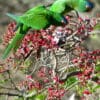
Food items include Sorghum and Bambusa seeds, berries of Condalia lineata and fruits of cacti and crops such as mango and sorghum. Also takes insects and weed seeds.

Ecology and Behaviour:

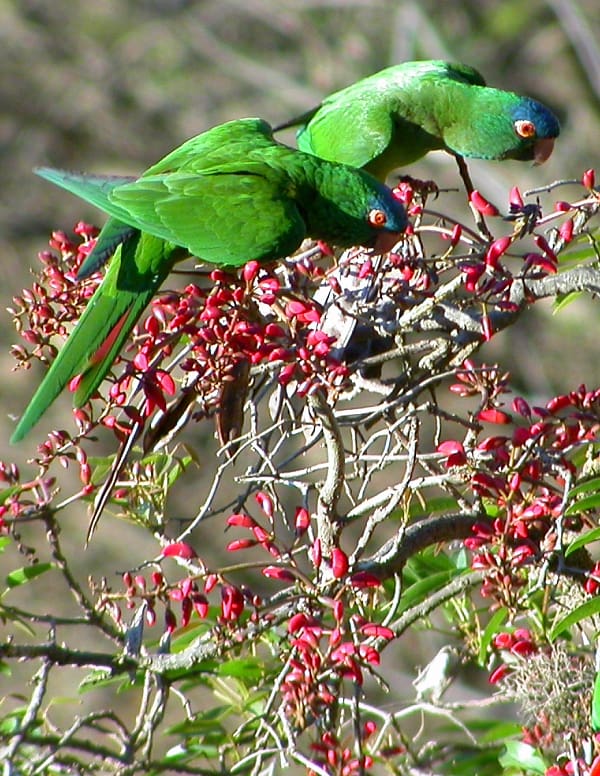
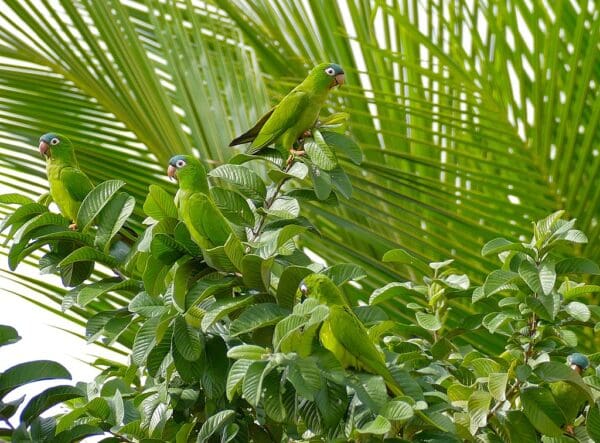
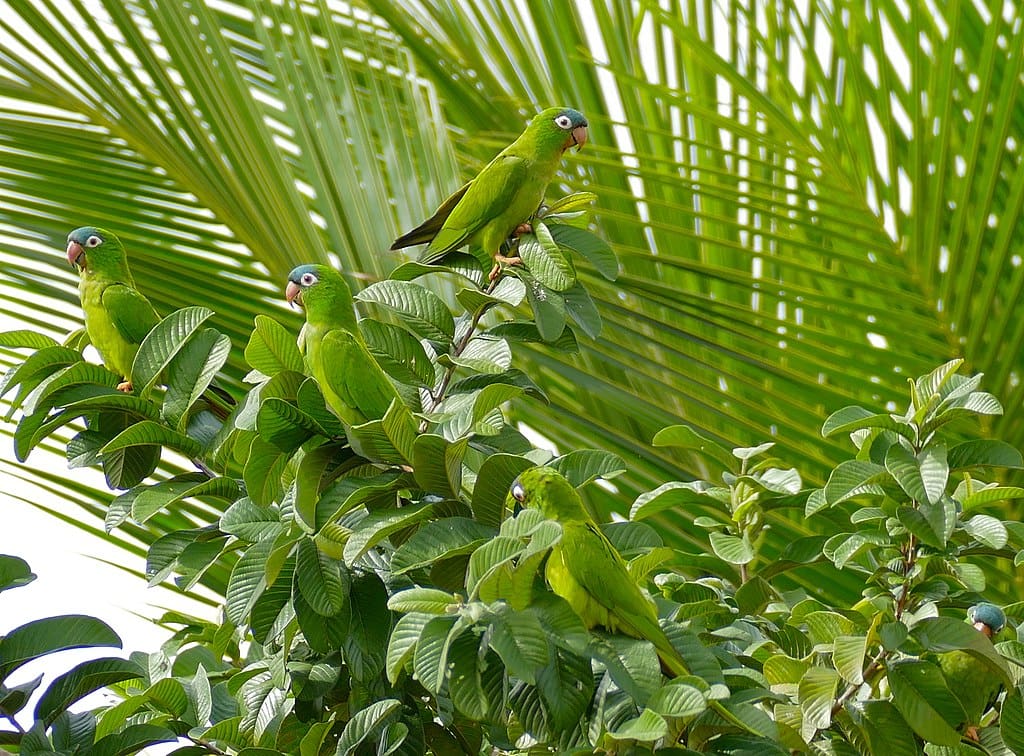
Feeds in trees and on the ground, in pairs, or small flocks; congregations are larger when food is abundant. In some areas, birds roost in crevices on cliffs. May be seen with Mitred Conures (Psittacara mitrata) and White-eyed Conures (Psittacara leucophthalma).

Clutch and Egg Size:

3 rounded eggs, 33.0 x 24.0 mm (1.3 x 0.9 in)

Breeding Season:

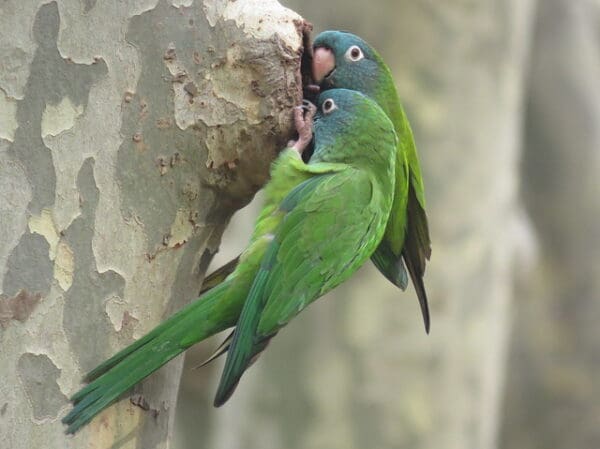
December, Paraguay and Argentina; March-July Venezuela; May-August, Margarita Island. Nest is in tree hollow.

Related Links:

Join Our Flock

FlockTalk our monthly newsletter for parrot people everywhere:

+ News from the world of parrots

+ Updates on wild parrot projects

+ Inspiring updates from partners

+ Real stories from the parrot flock

+ Plus, expert tips for caring for your feathered friends at home.


Stay In The Loop, Sign Up Now.

FlockTalk: our monthly newsletter for parrot people everywhere:

Parrot news. Conservation wins. Pet care tips. All in one monthly email.

We do not sell or share your information with anyone.