Psittacara

frontatus
Size:
38 cm (15 in.)
Weight:
200-240 g (7-8.4 oz.)
Subspecies including nominate:
two: P.f. frontatus, P.f. minor
Colour Adult:
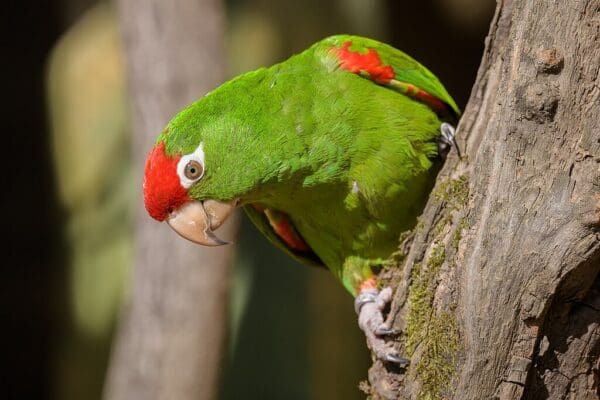
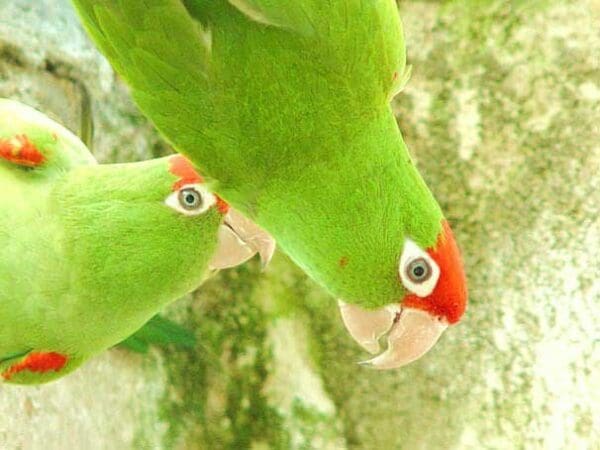
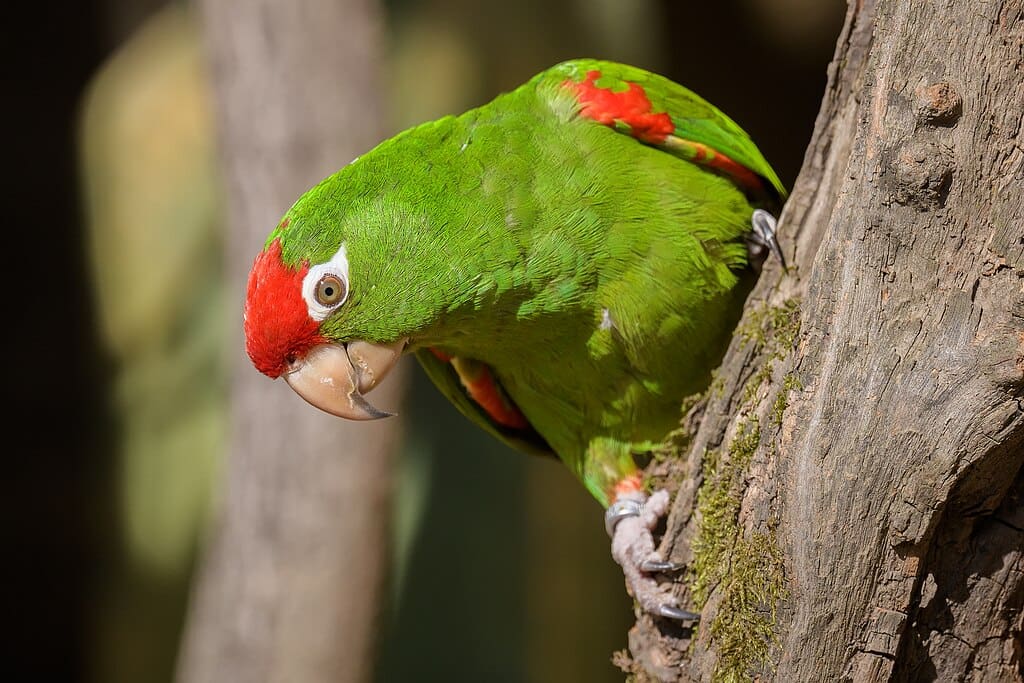
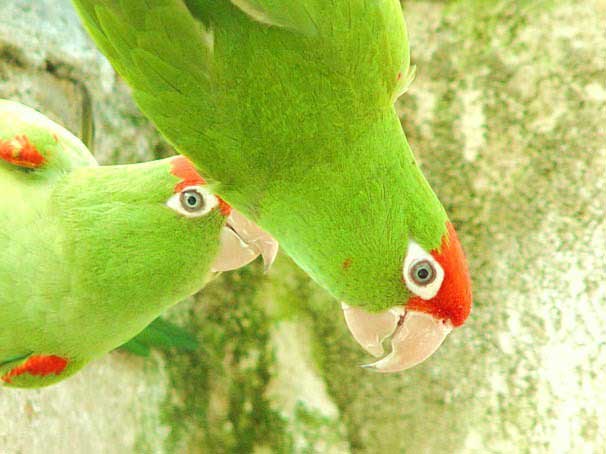
P.f. frontatus: Both adults red forecrown; red around lores and eyes, eye rings bare and white; red thighs and bend of wing to carpal edge. Beak buff/light pink. Large.
P.f. minor: Both adults as in frontatus but smaller; overall colour darker without bronze/yellow tinge of frontatus; red on thighs paler and more extensive; upper mandible notch rounded.
Colour Juvenile:
Not recorded.
Call:
Calls made in flight are repetitious and high-pitched, discordant notes; higher in pitch than that of Mitred Conure Psittacara mitrata.
More Information:
Content Sources:
BirdLife International
Cornell Lab of Ornithology/Birds of the World
Captive Status:
—
Longevity:
—
Housing:
—
Diet:
—
Enrichment:
—
Nest Box Size:
—
Clutch Size:
Likely 3-4 eggs, as in P. wagleri.
Fledging Age:
—
Hatch Weight:
—
Peak Weight:
—
Weaning Weight:
—
World Population:
Unknown, moderately decreasing.
IUCN Red List Status:
Near Threatened
CITES Listing:
Appendix II
As conspecific with P. wagleri.
Threat Summary:
Not globally threatened. The species has been heavily trafficked; wild-caught individuals were recorded in international trade before it was listed on CITES Appendix II. International trade declined rapidly after the 1980s in Peru, but rose again in the early 1990s. Habitat loss is presumed to have some effect, as well as persecution as a crop pest. Is very rare in Ecuador.
Range:
P.f. frontatus: Pacific slope of Andes in S Ecuador and W Peru, south to Tacna.
P.f. minor: C Andes of Peru from Rio Maranon valley, Amazonas and possibly Zumba district in nearby S Ecuador, south to Ayacucho and Apurimac.
Habitat:
Inhabits light montane evergreen (cloud) forest edge (Acacia, Prosopis, and Ochroma), tropical deciduous forest, secondary growth, and gallery woodland. Is also seen in fields and orchards, town parks and cactus formations. Needs cliff faces on which to nest and roost.
Wild Diet:
Largely unknown, but takes a variety of fruits, nuts and seeds.
Ecology and Behaviour:
Seen in social groups of up to 20; occasionally 300 or more. Feeds in the canopy and roosts at dusk in communal roosting areas in cliffs, which are also required for nesting.
Clutch and Egg Size:
Likely 3-4 eggs, as in P. wagleri.
Breeding Season:
Timing unknown, but apparently nests colonially in cliff faces.
Related Links:
—