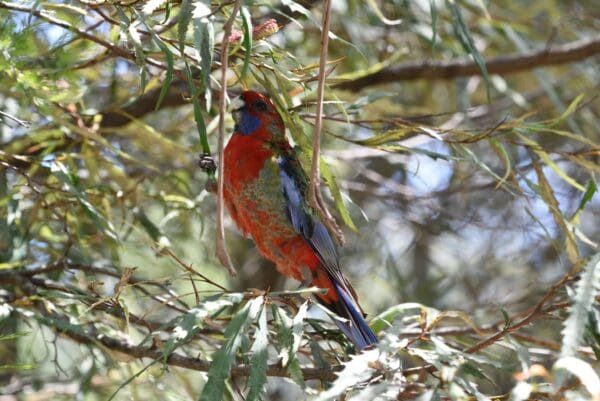
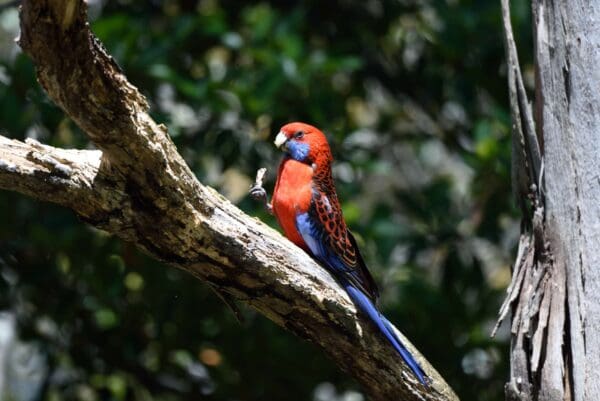
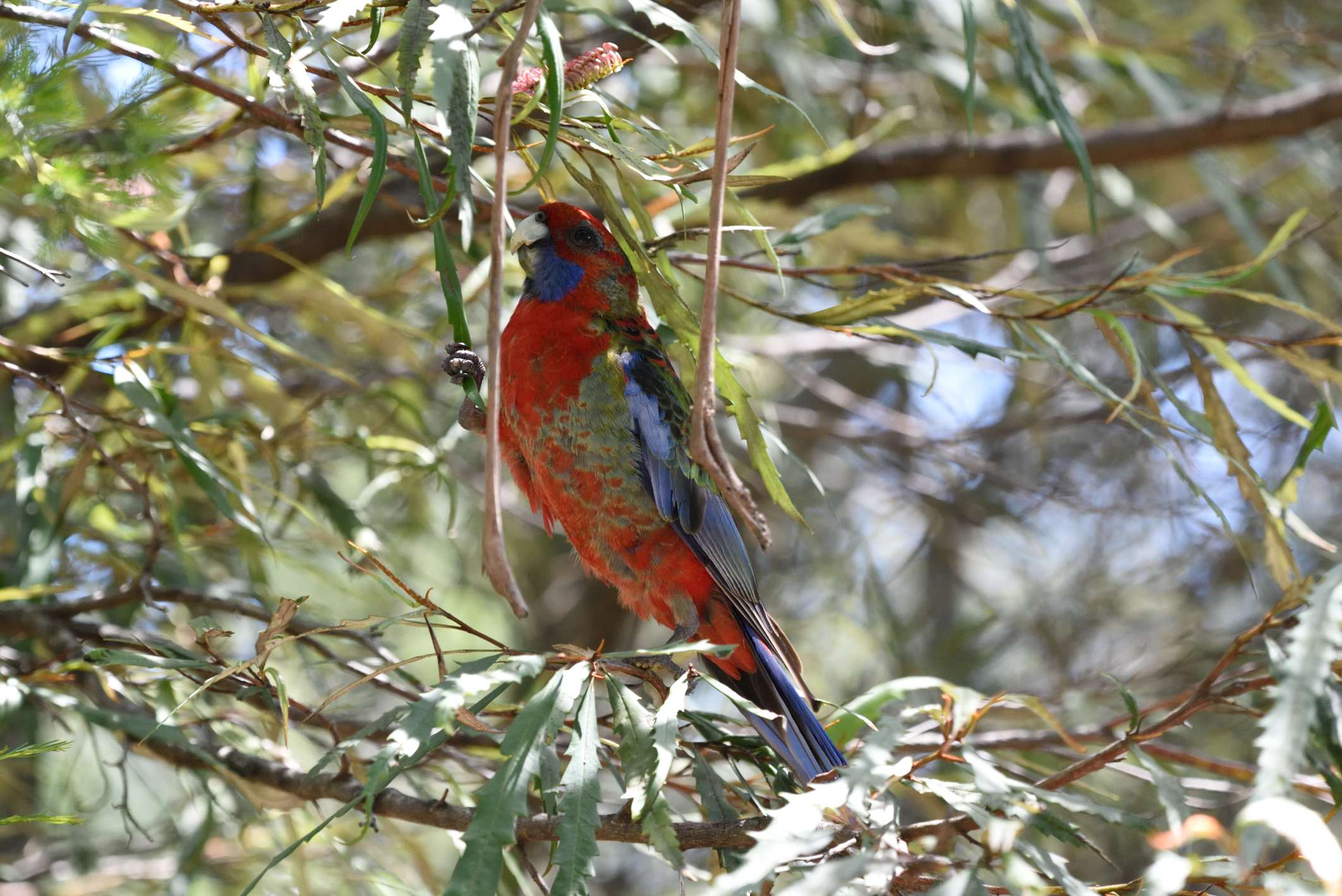
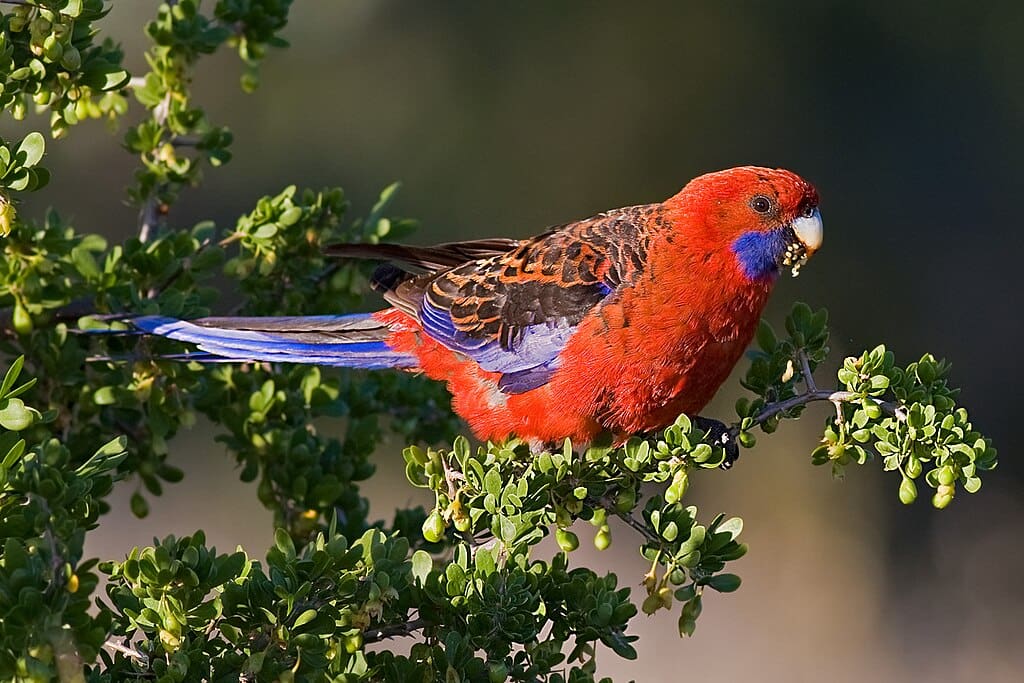
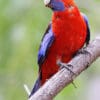
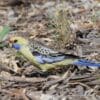
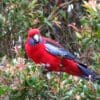
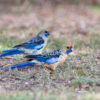
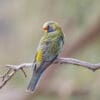
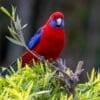
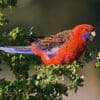
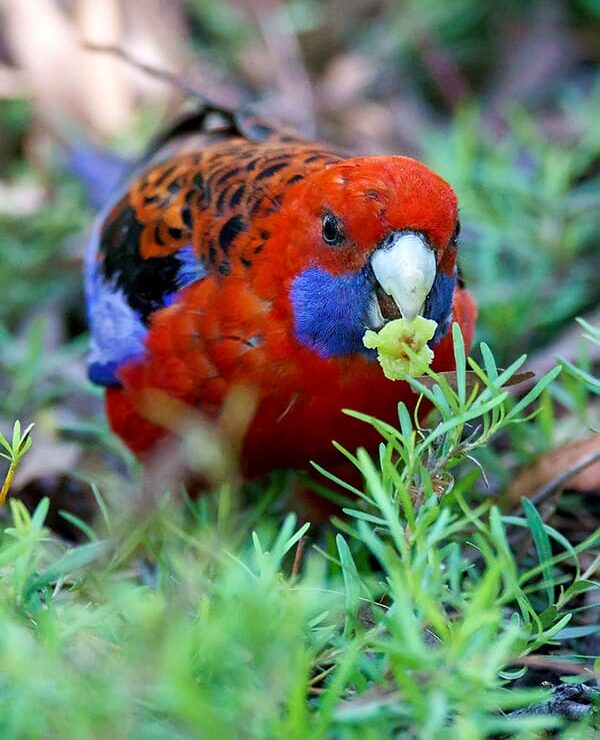
![© David Cook [CC BY-NC 2.0] via Flickr A wild Crimson Rosella forages in vegetation](https://foowd.com/wp-content/uploads/2023/01/wpt_Crimson-Rosella_1187-24-e1731611372757-100x100.jpg)
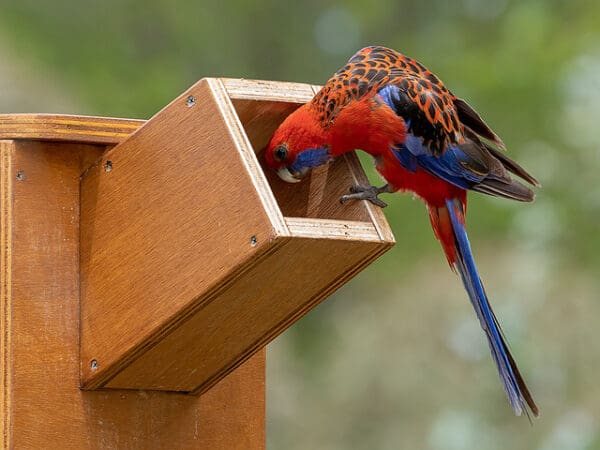
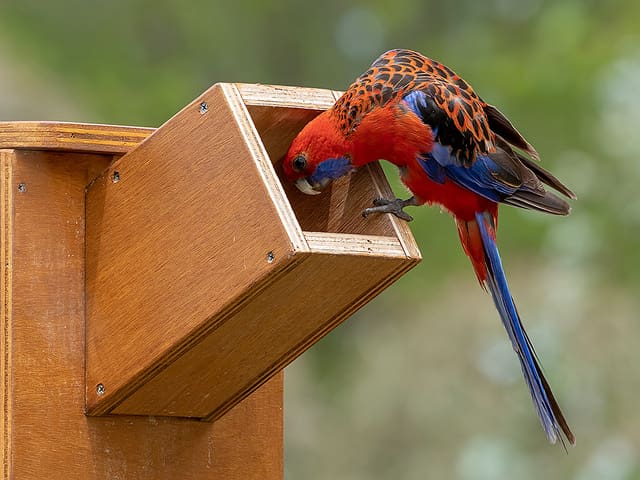
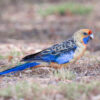
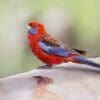
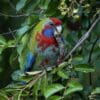
![© David Cook [CC BY-NC 2.0] via Flickr A wild Crimson Rosella peers into a nest box](https://foowd.com/wp-content/uploads/2023/01/wpt_Crimson-Rosella_1187-23-100x100.jpg)


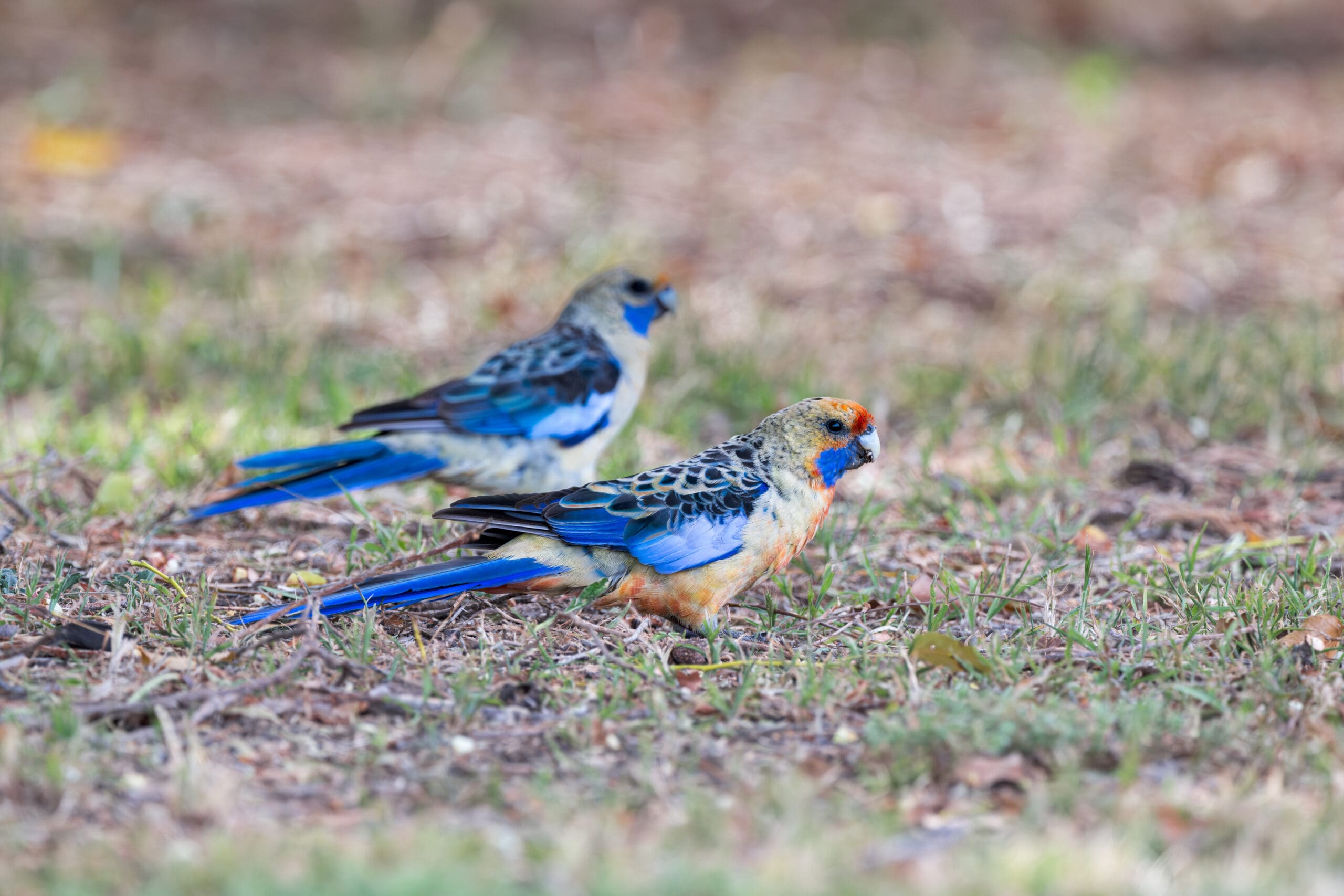
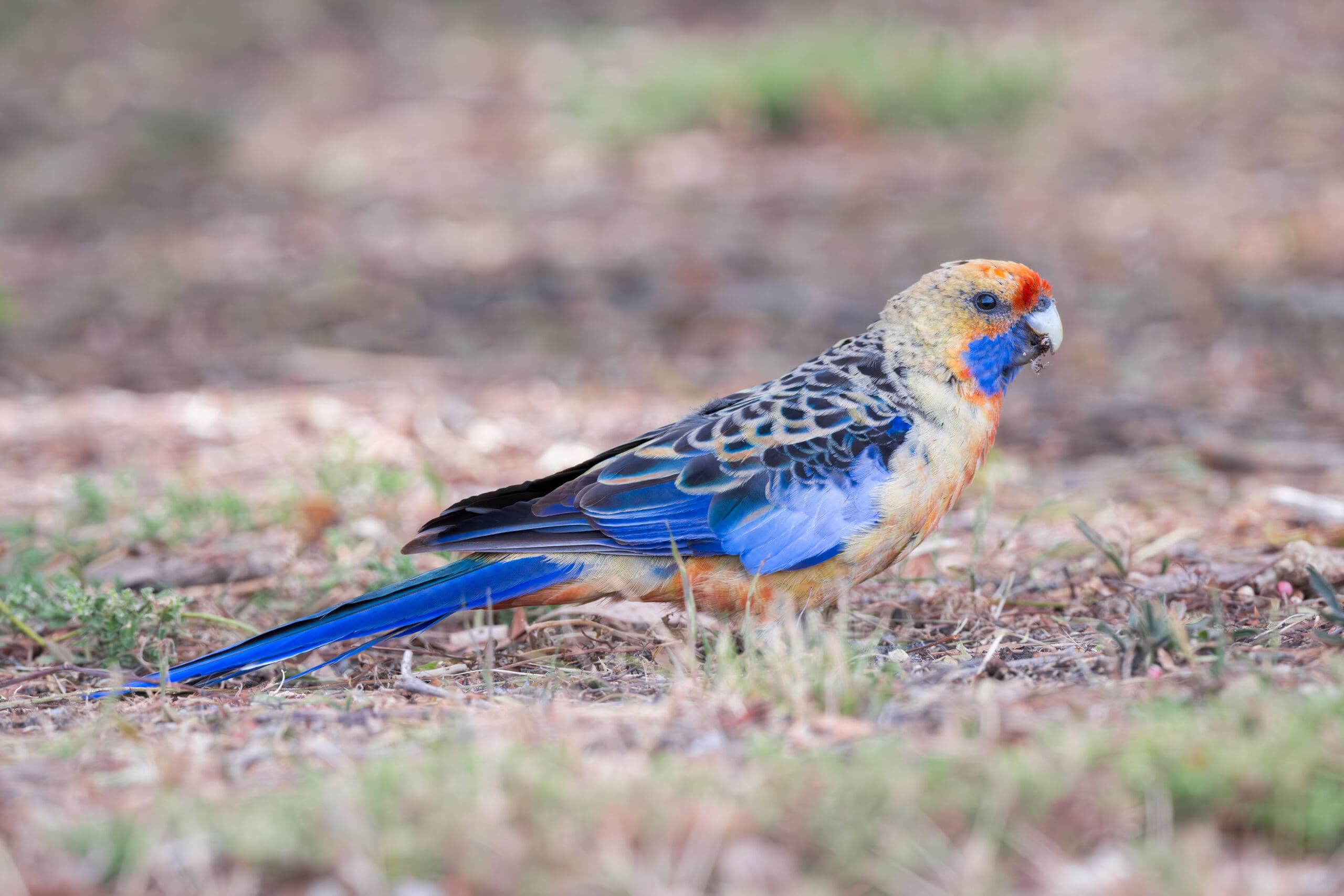
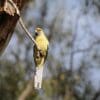
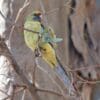
In the wild Crimson and Yellow Rosellas have hybridised (mixed species breeding), producing the Adelaide Rosella (P.e. fleurieuensis X e. subadelaidae X e. flaveolus).

Platycercus

elegans
Size:
36 cm (14 in)
Weight:
115-170 g (4-6 oz)
Subspecies including nominate:
seven: P.e. elegans, P.e. nigrescens, P.e. filewoodi, P.e. melanopterus, P.e. adelaidae, P.e. subadelaidae, P.e. flaveolusÂ
Colour Adult:
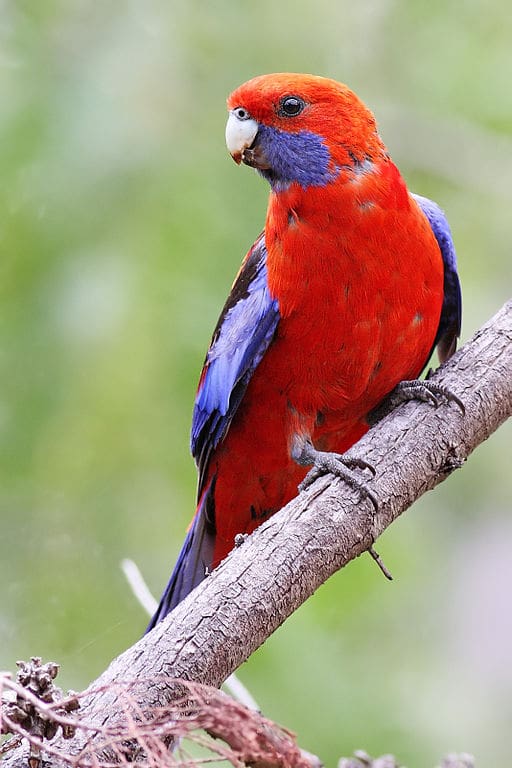
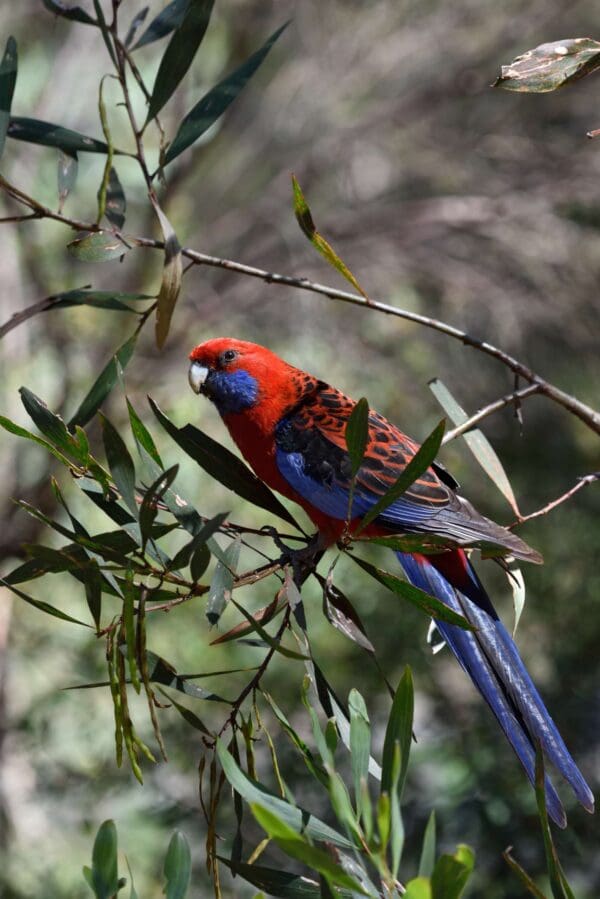
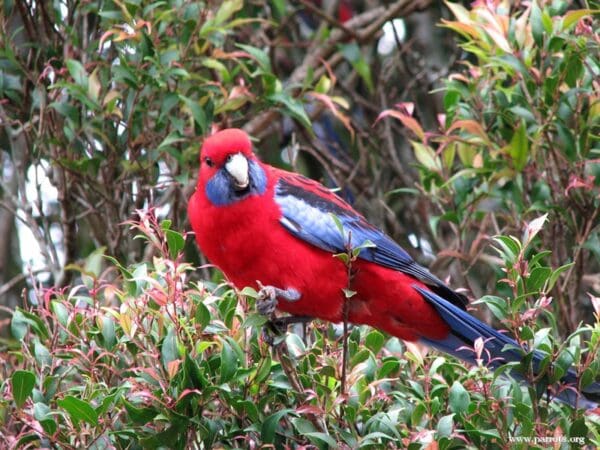
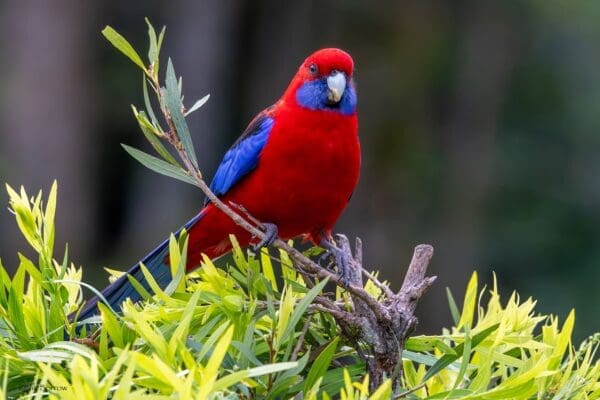
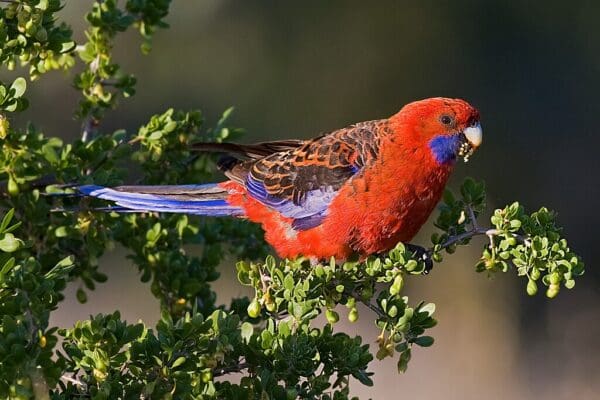
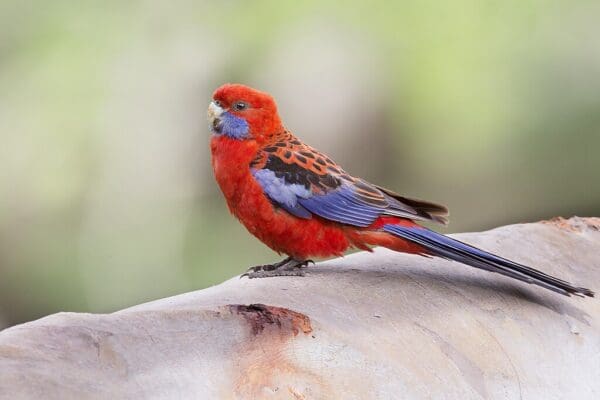
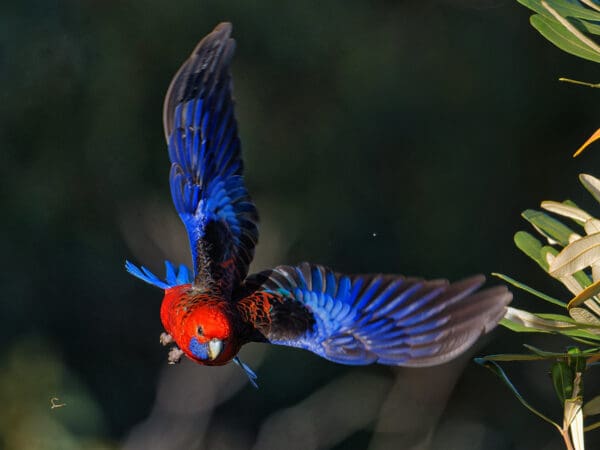
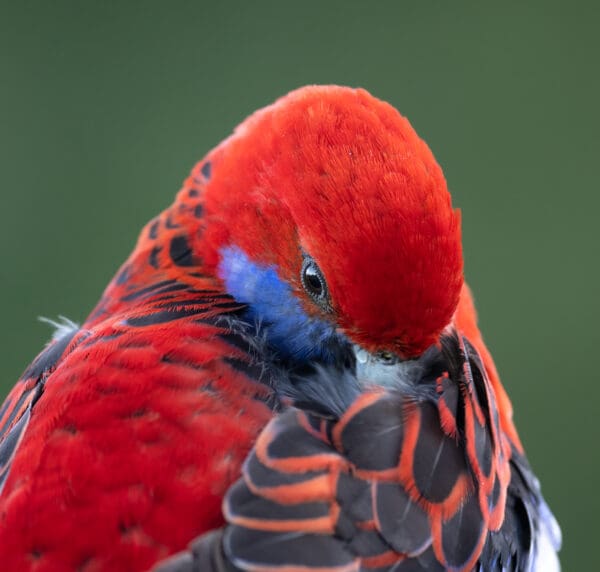
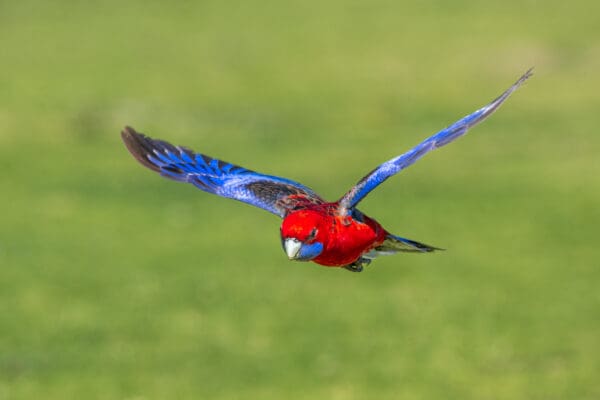
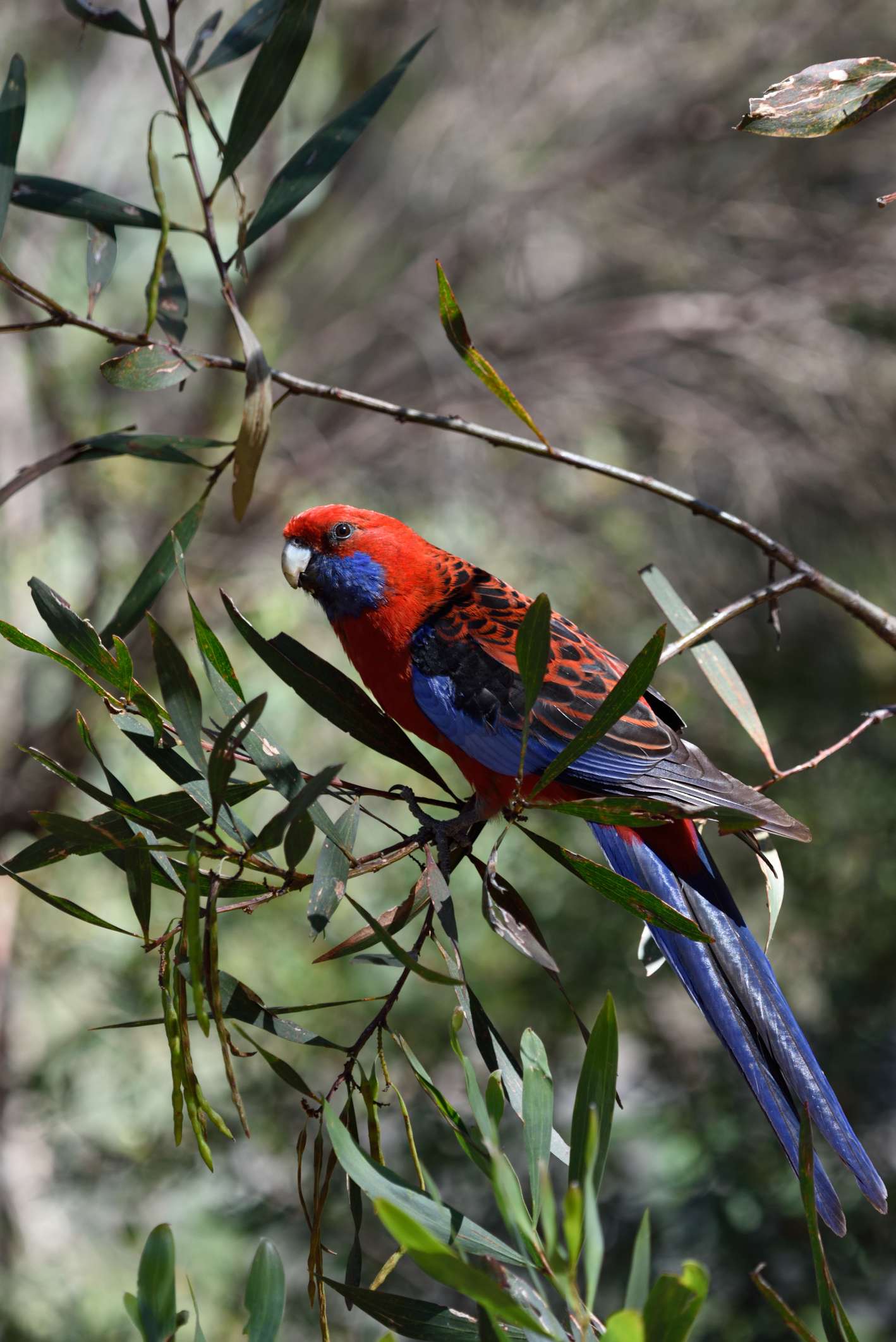
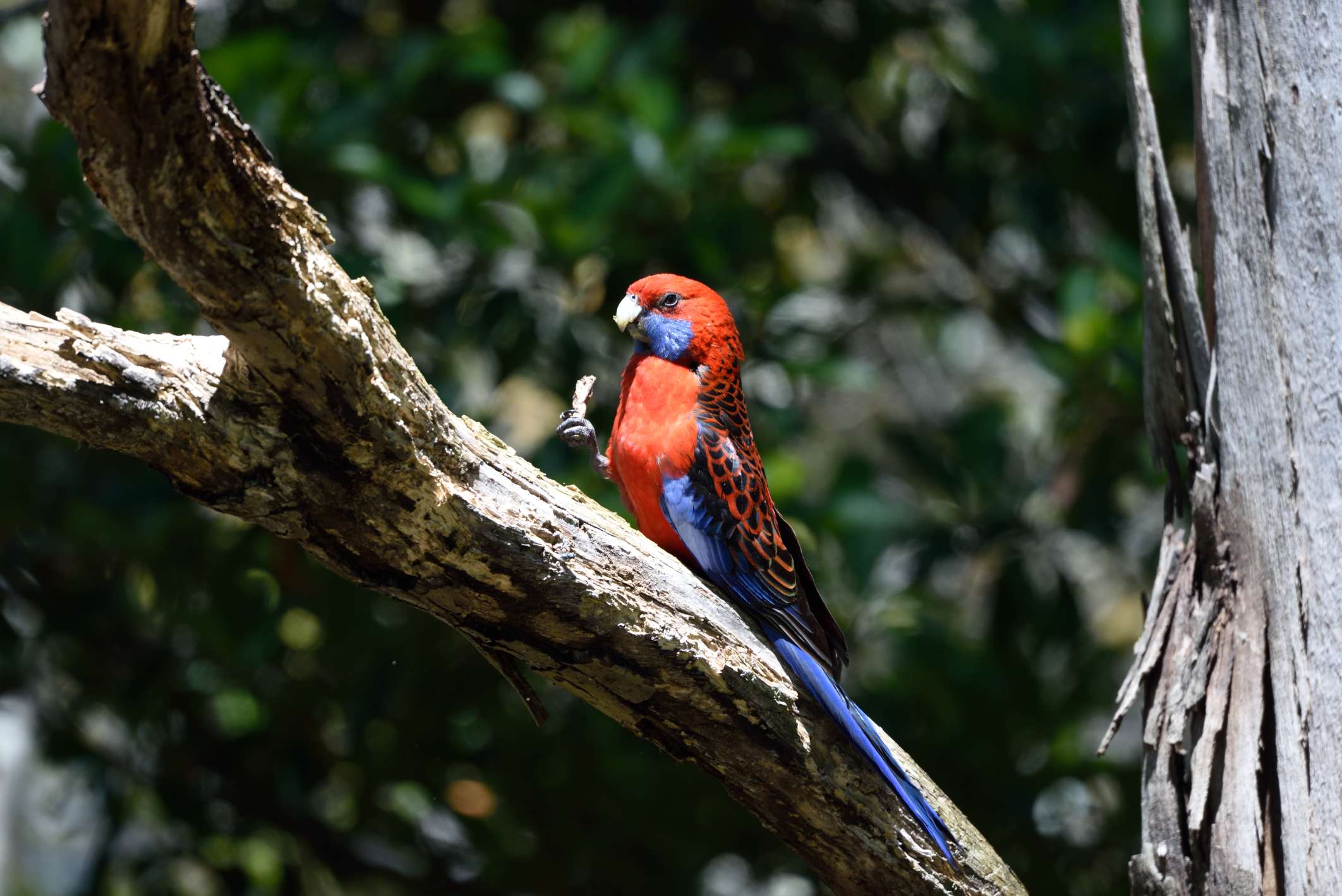
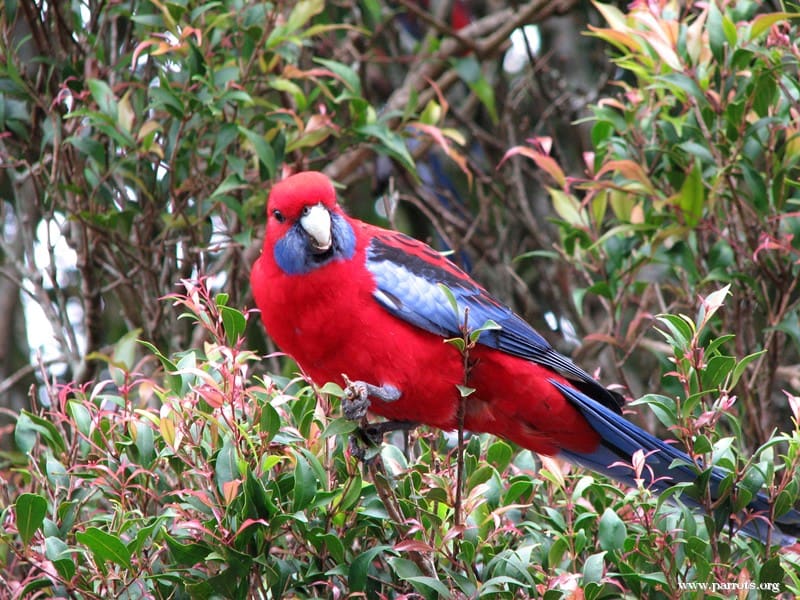
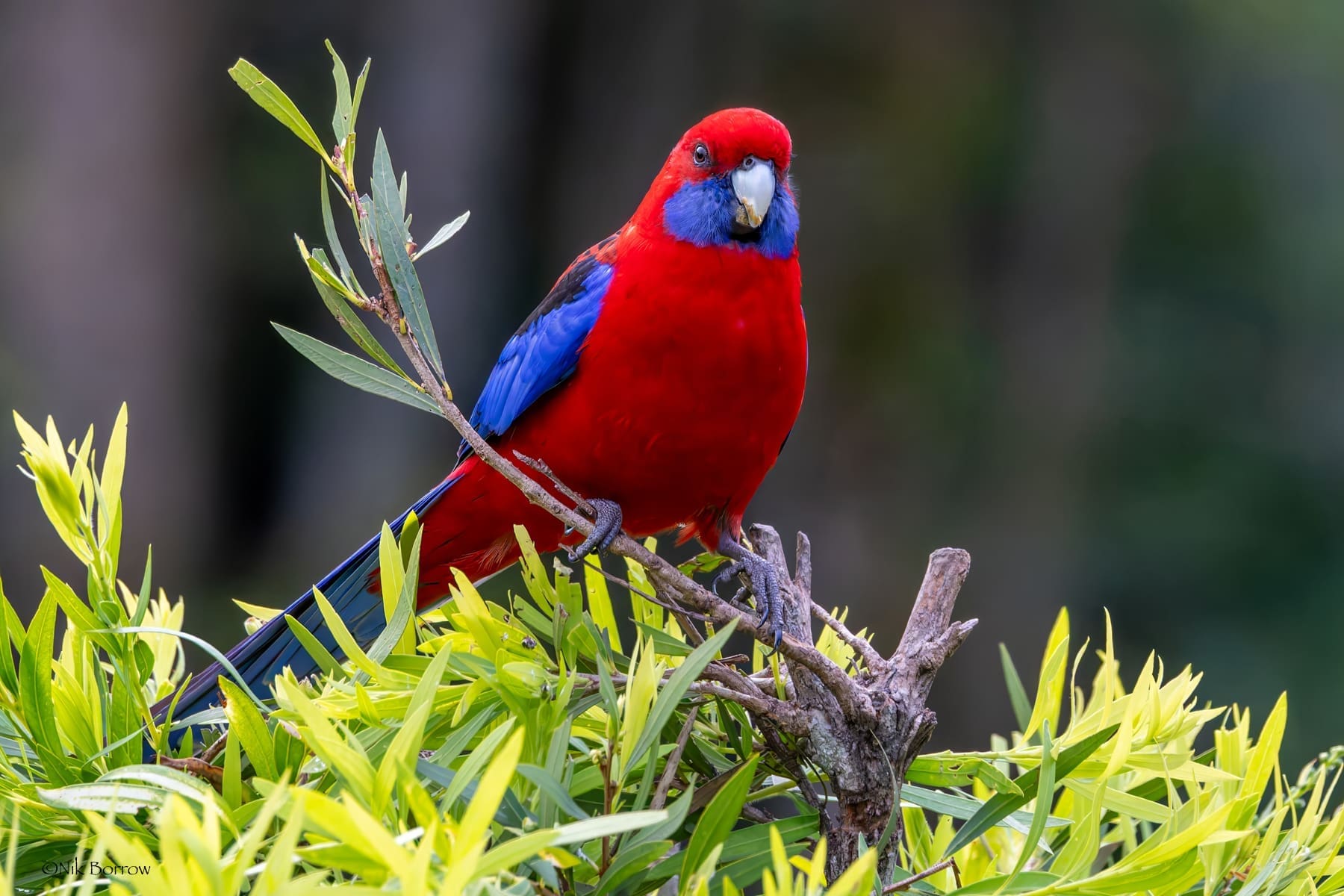
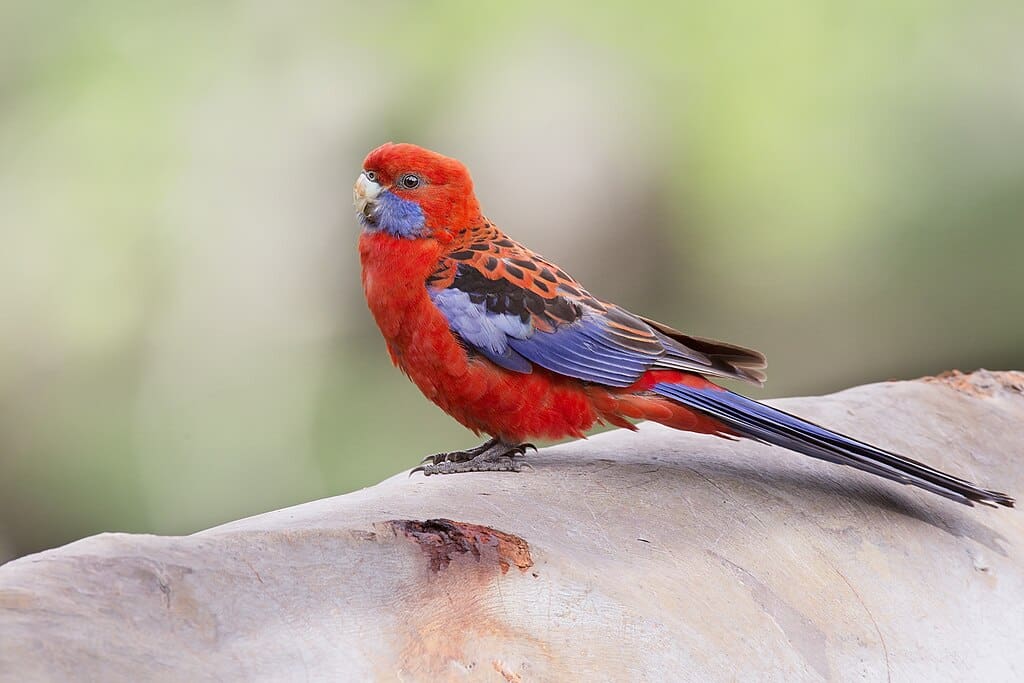
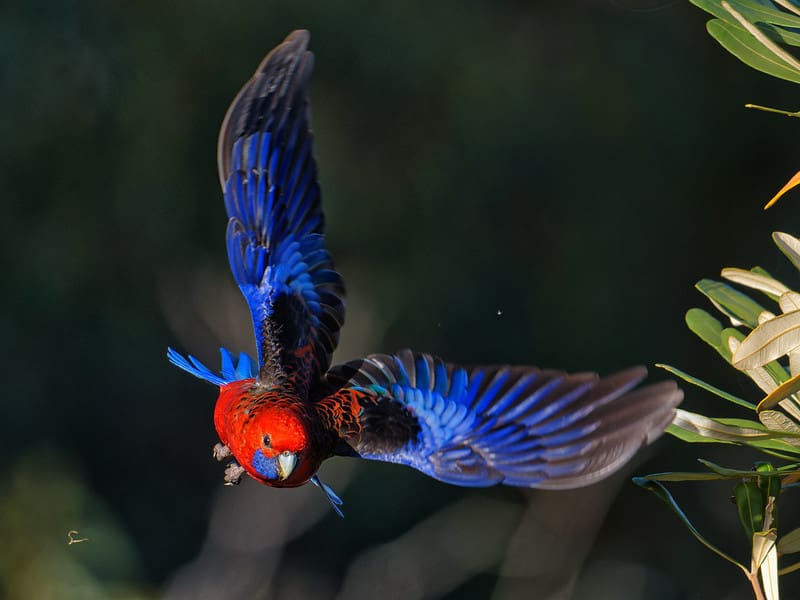
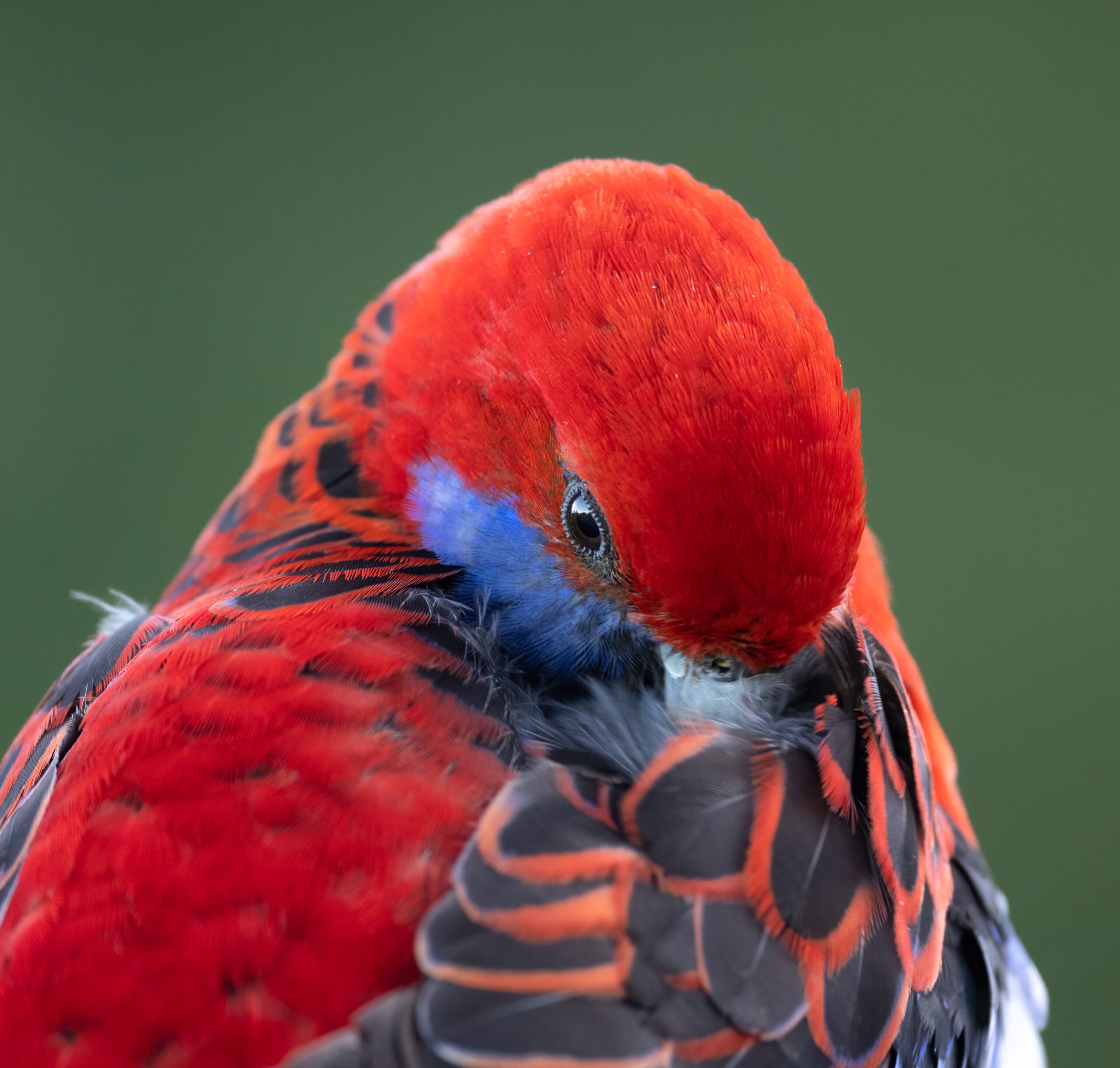
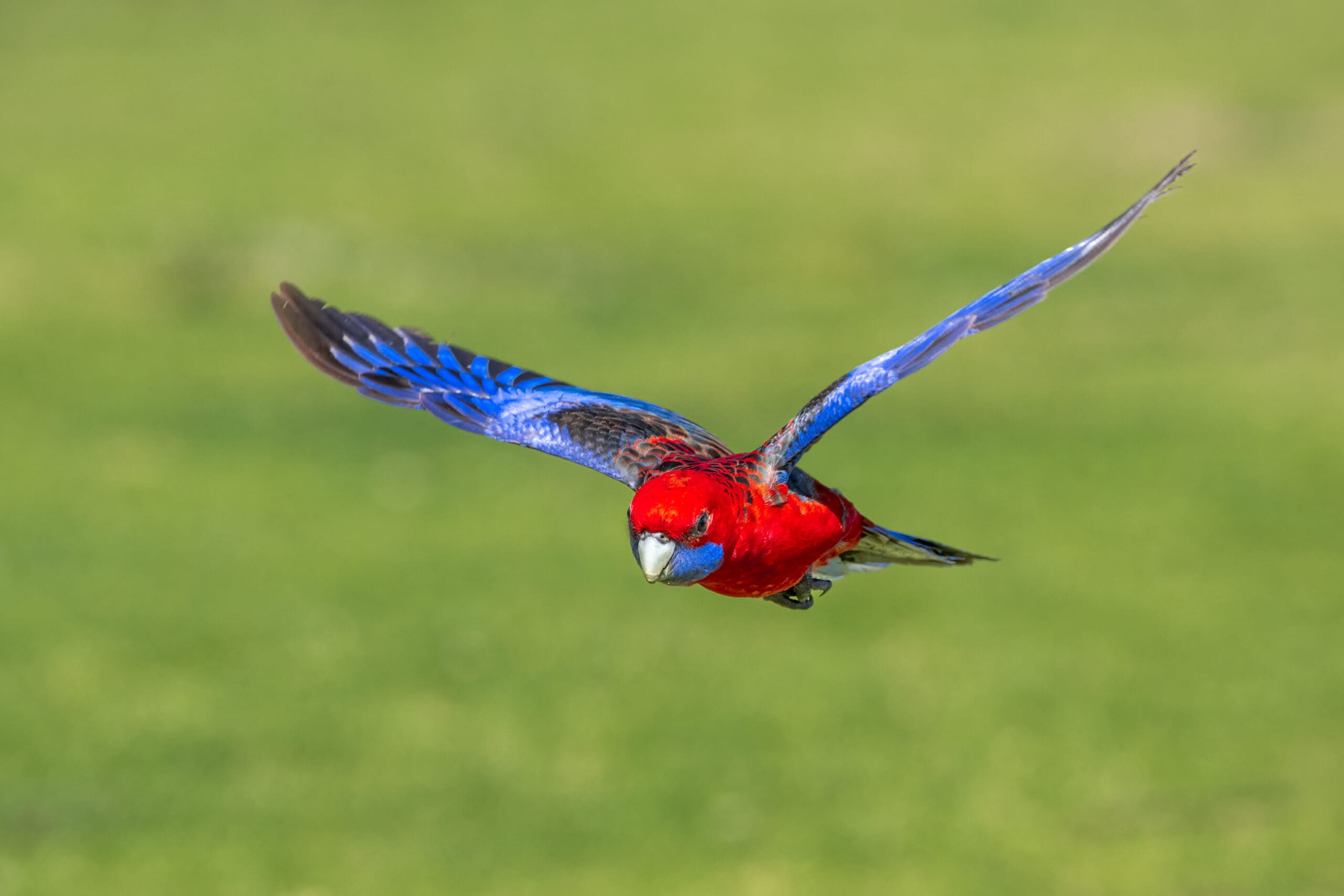
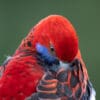
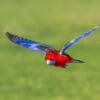
P.e. elegans: Male-dark red in colour; cheek patches purple/blue; black mantle and back, spotted with dark red; purple/blue bend of wing, outer median and outer secondary feathers on wing coverts; dark blue tail with wide blue/white tip. Beak grey/white. Eye dark brown. Female-as in male, but tail washed with dull green. Beak smaller with narrower upper mandible.
P.e. nigrescens: Both adults as in elegans but in general darker red; more spotting on mantle and back; smaller in size.
P.e. filewoodi:Â As in nigrescens – darker and smaller.
P.e. melanopterus: Both adults as in elegans, but with narrower red margins to black feathers of mantle and back.
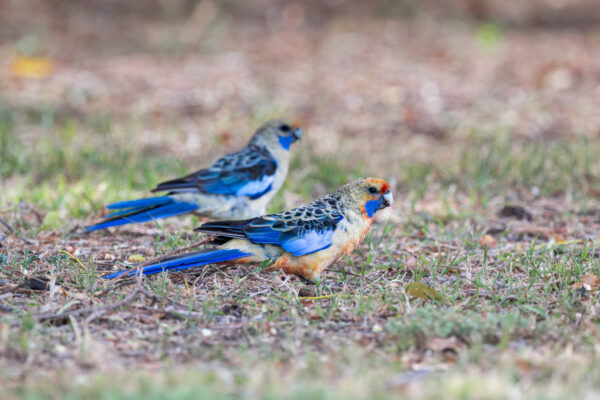
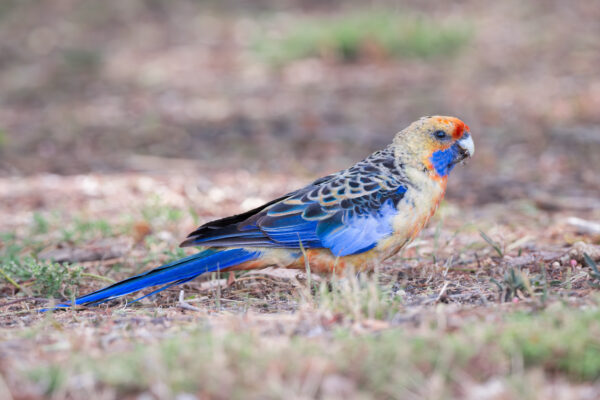
P.e. adelaidae: Both adults different from elegans by having deep orange/red plumage; grey/black mantle and back, spotted with dull orange/red; outer median and outer secondary wing coverts pale blue.
P.e. subadelaidae: Both adults orange/red forehead, crown and face, turning to brighter red on frontal band; dull yellow underparts, often washed dull orange/red; grey/black mantle and back spotted dull yellow; olive/yellow lower back to upper tail coverts.
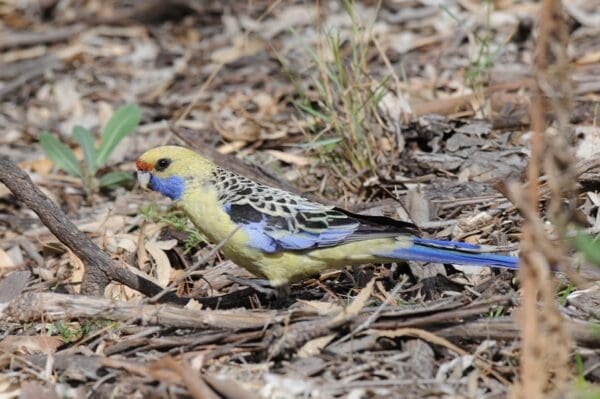
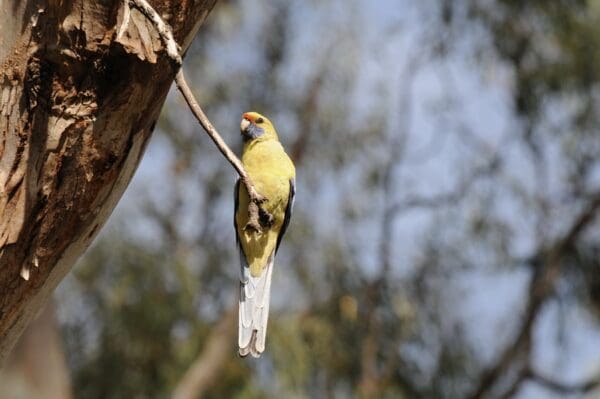
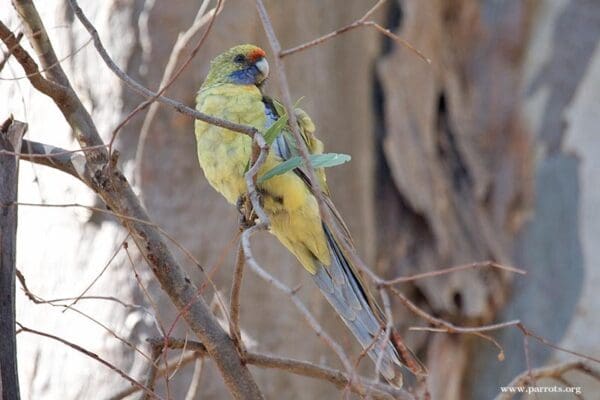
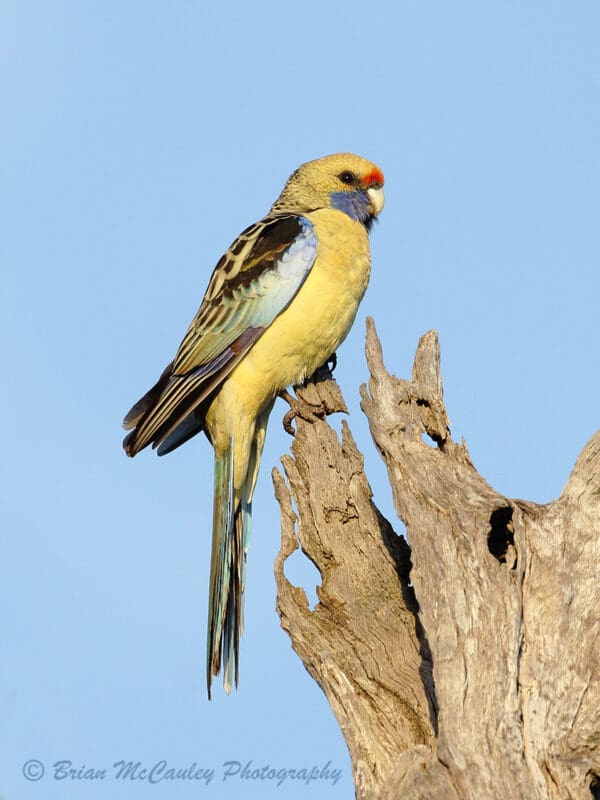
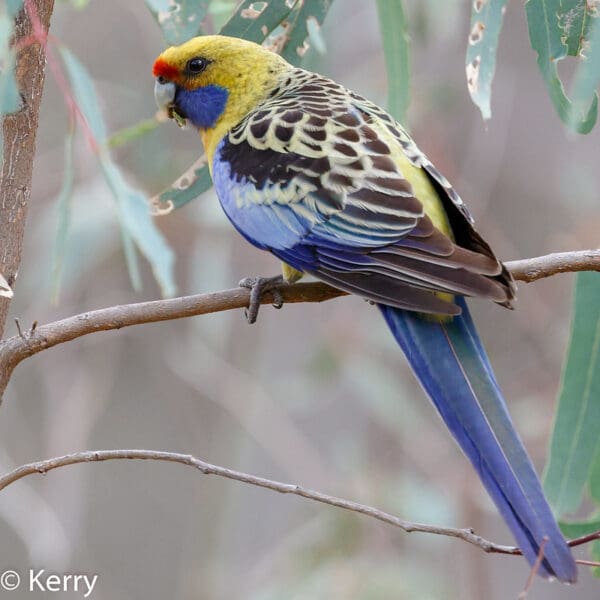
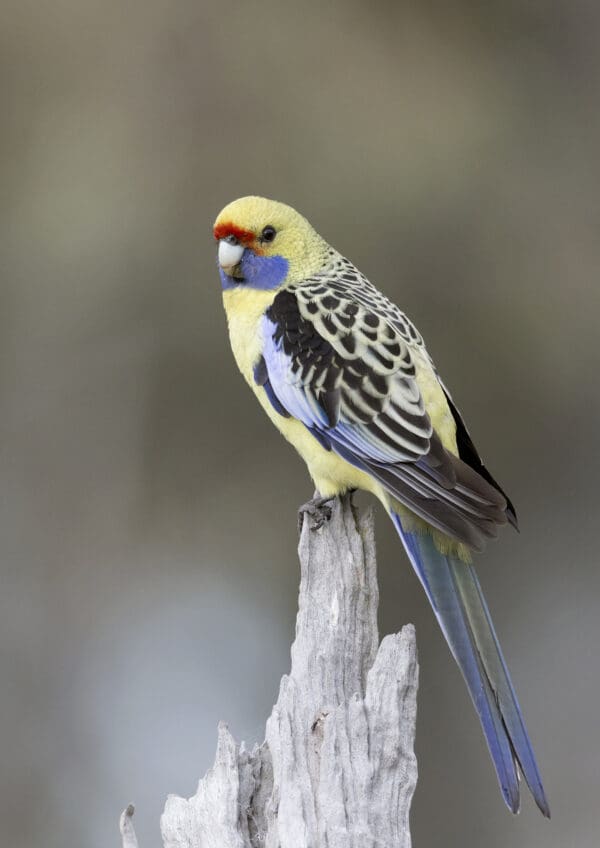
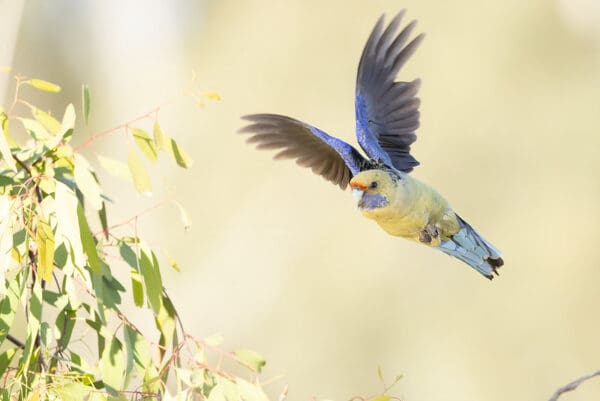
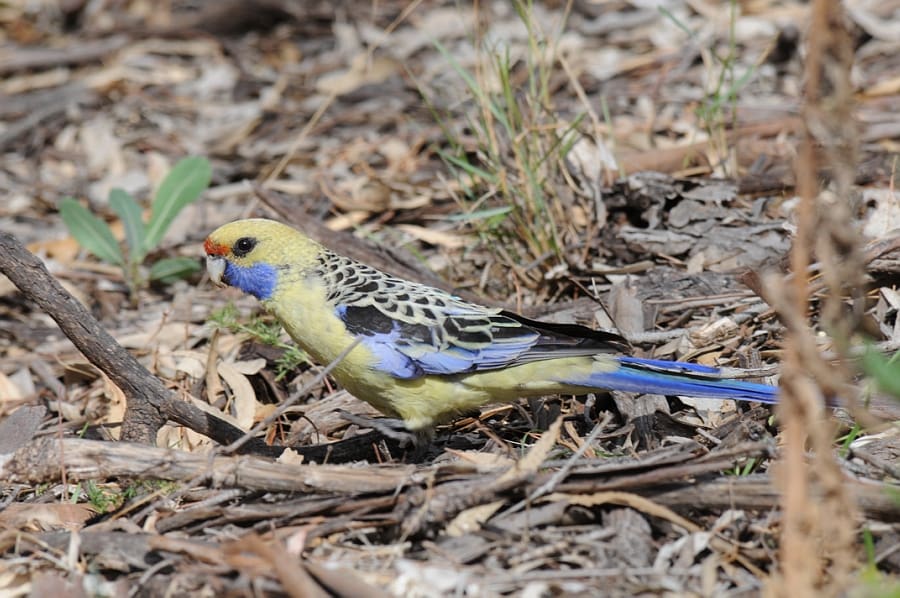
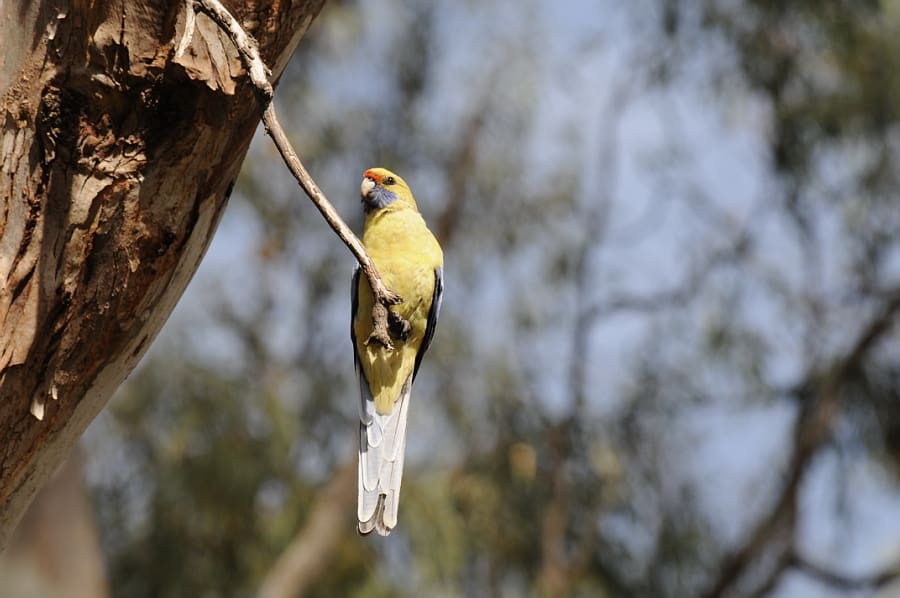
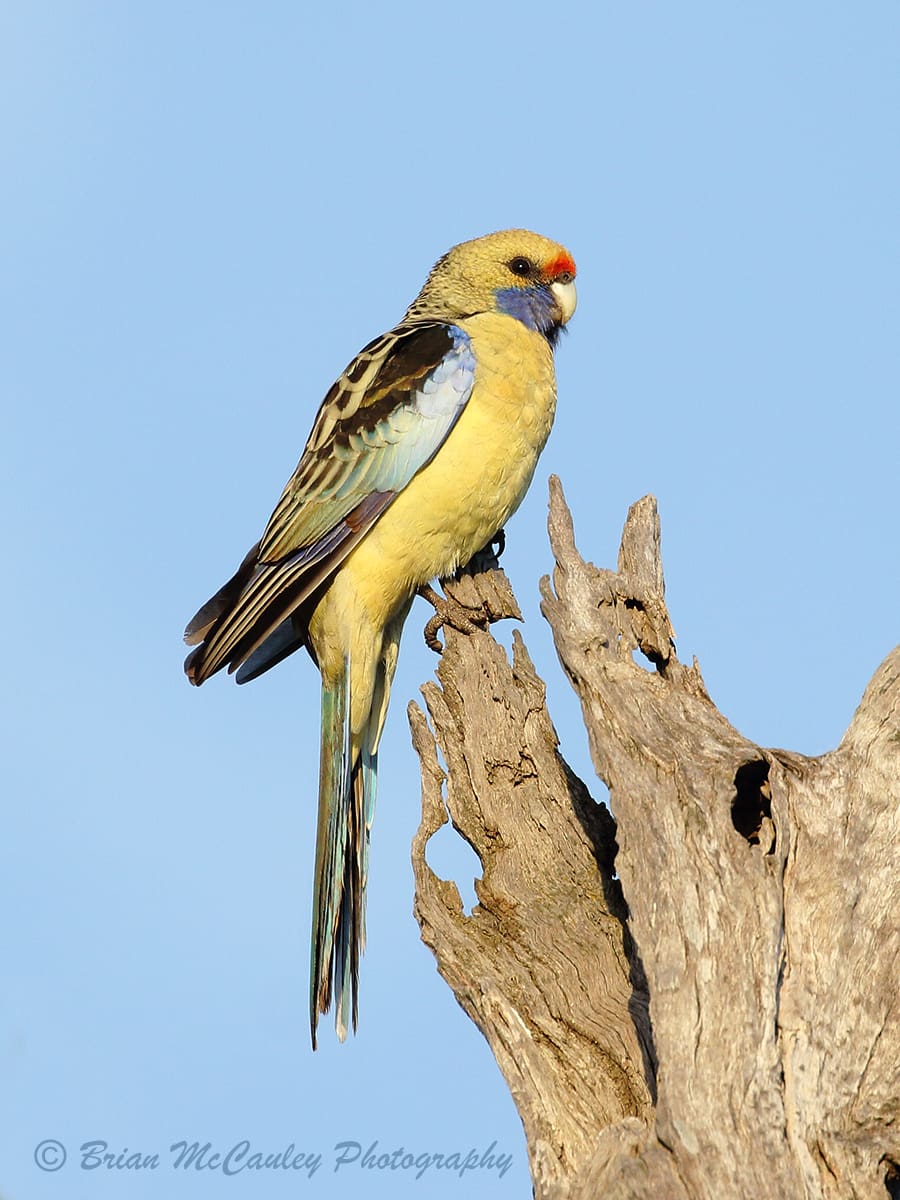
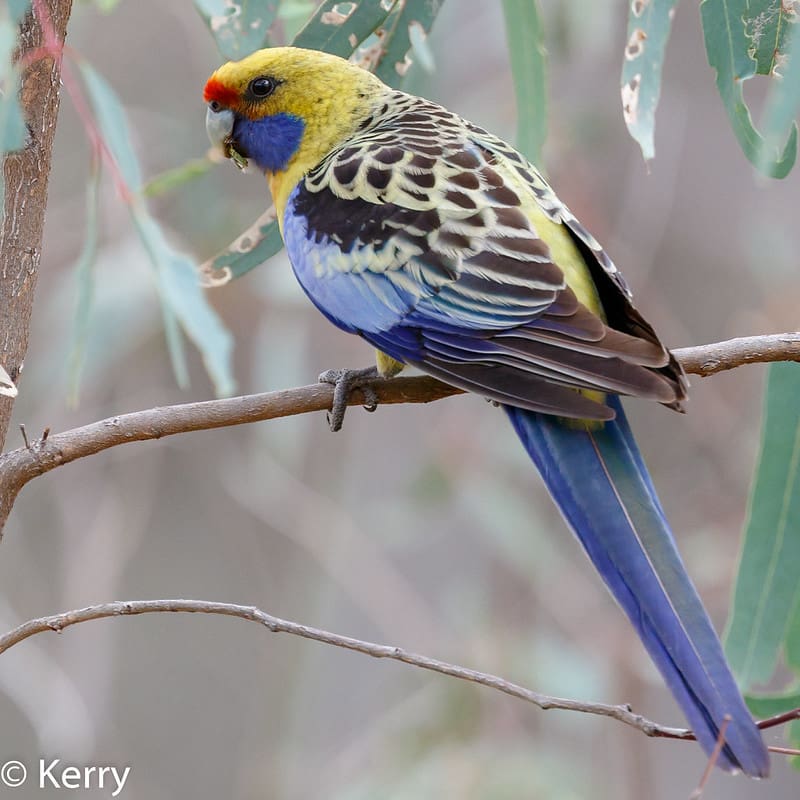
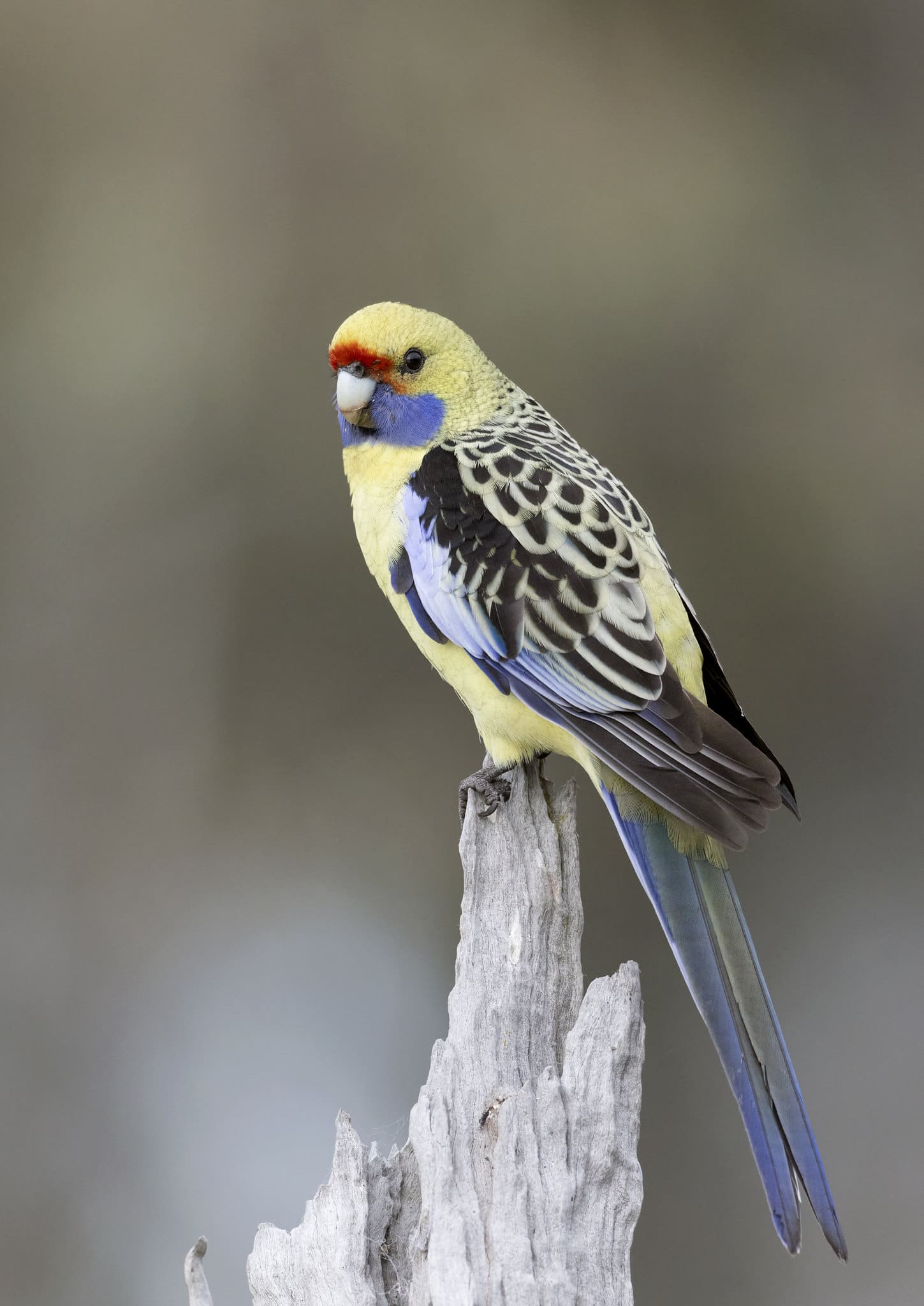
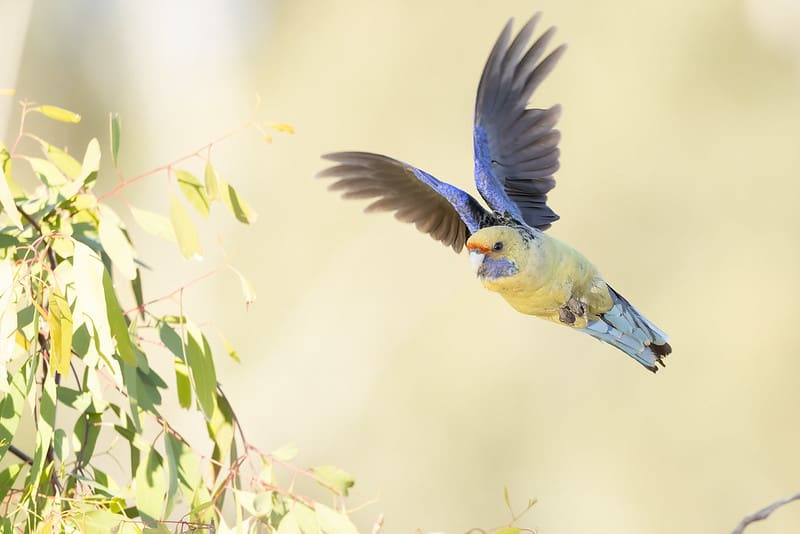
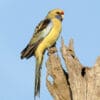
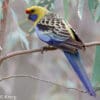
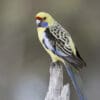
P.e. flaveolus: Both adults bright pale yellow, orange/red lores and frontal band; black mantle and back spotted yellow; olive/yellow rump and upper tail coverts.
Colour Juvenile:
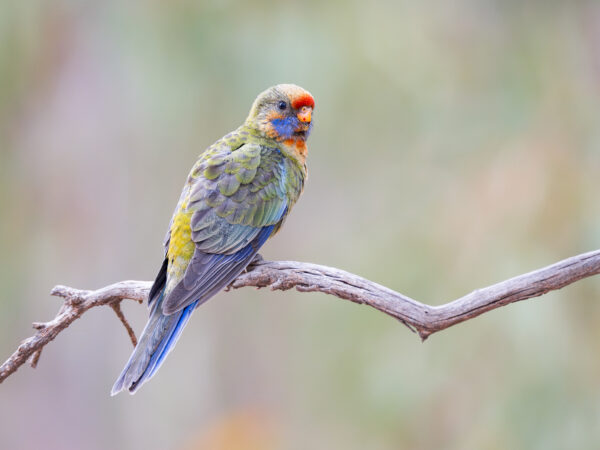
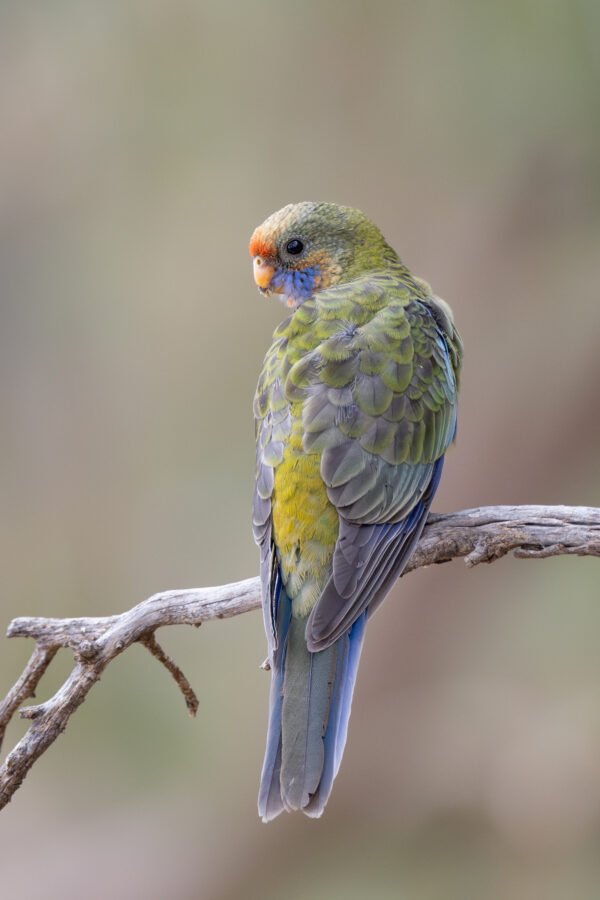
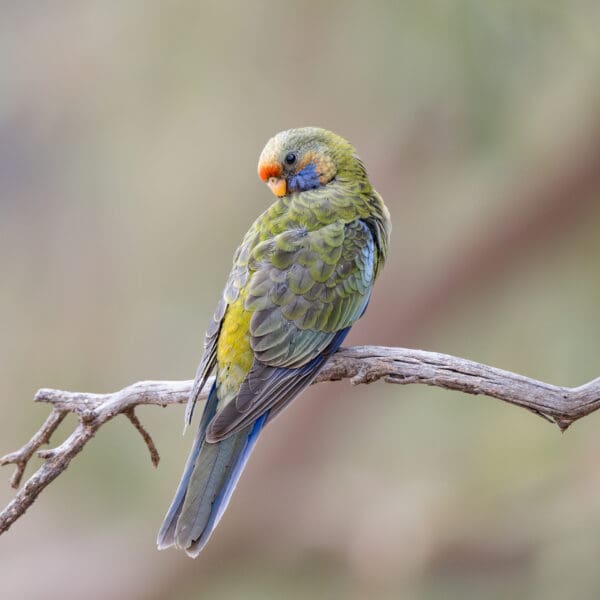
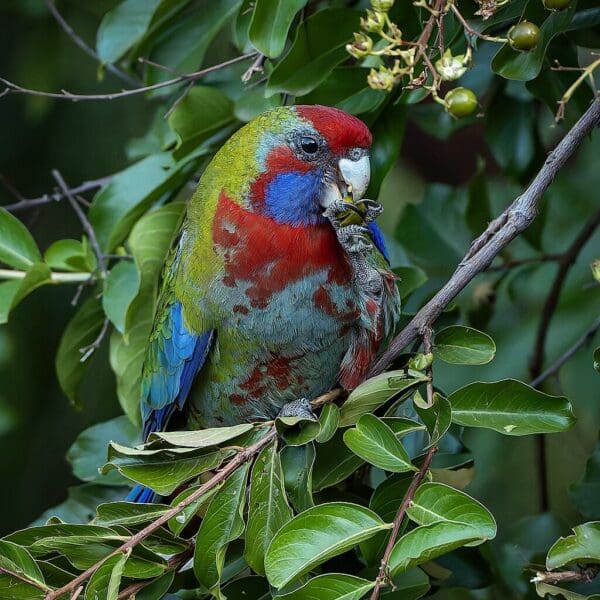
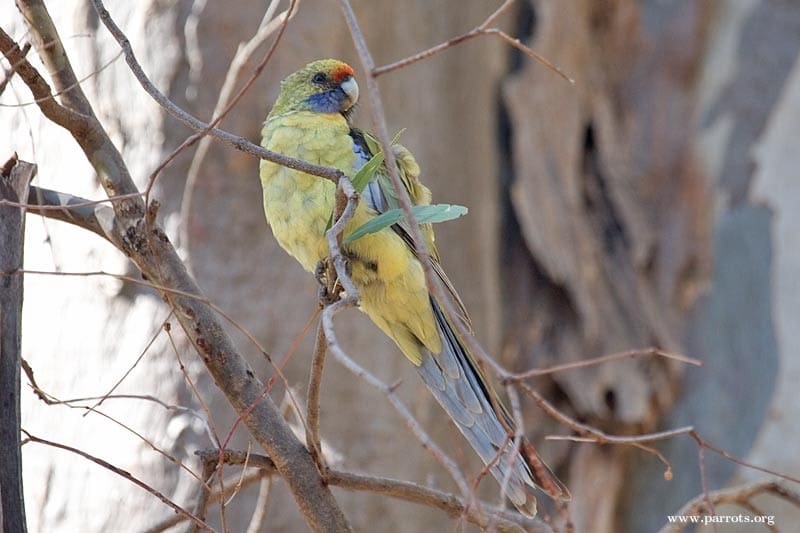
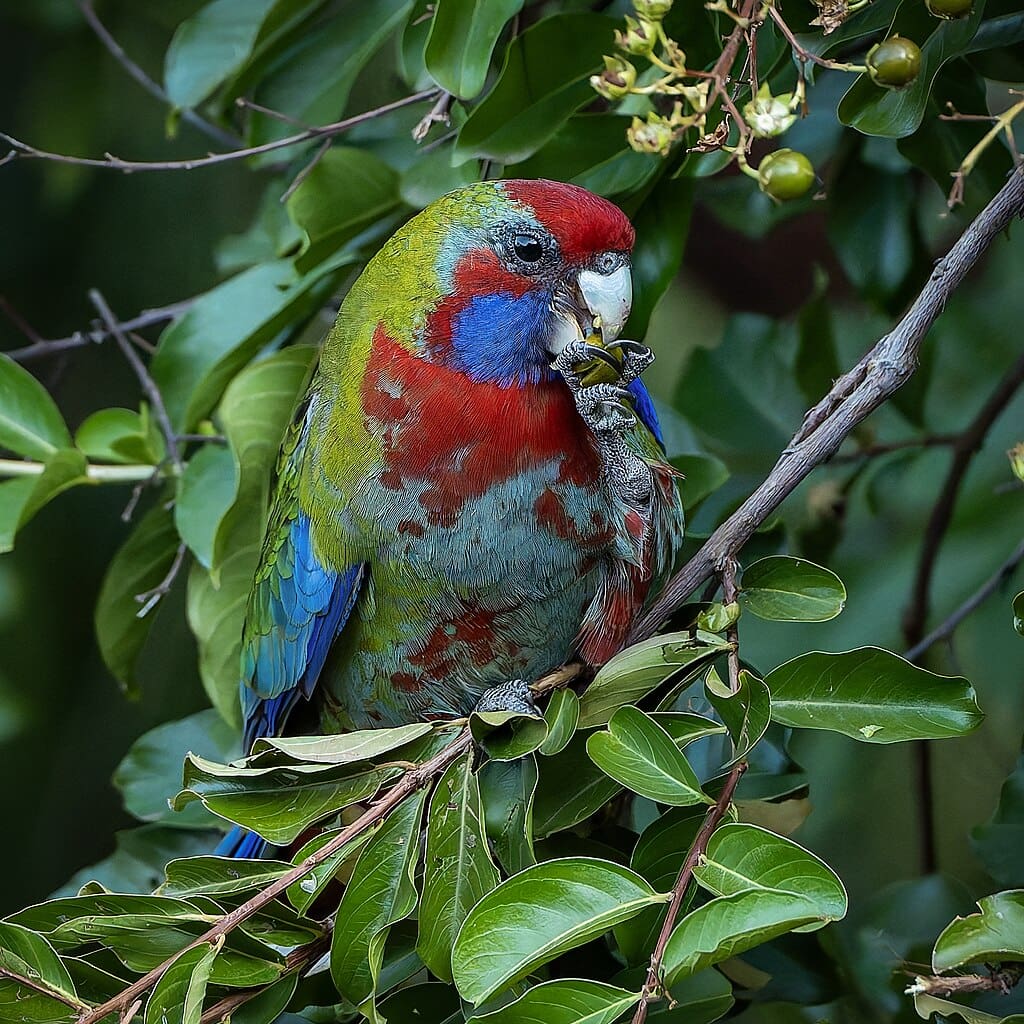
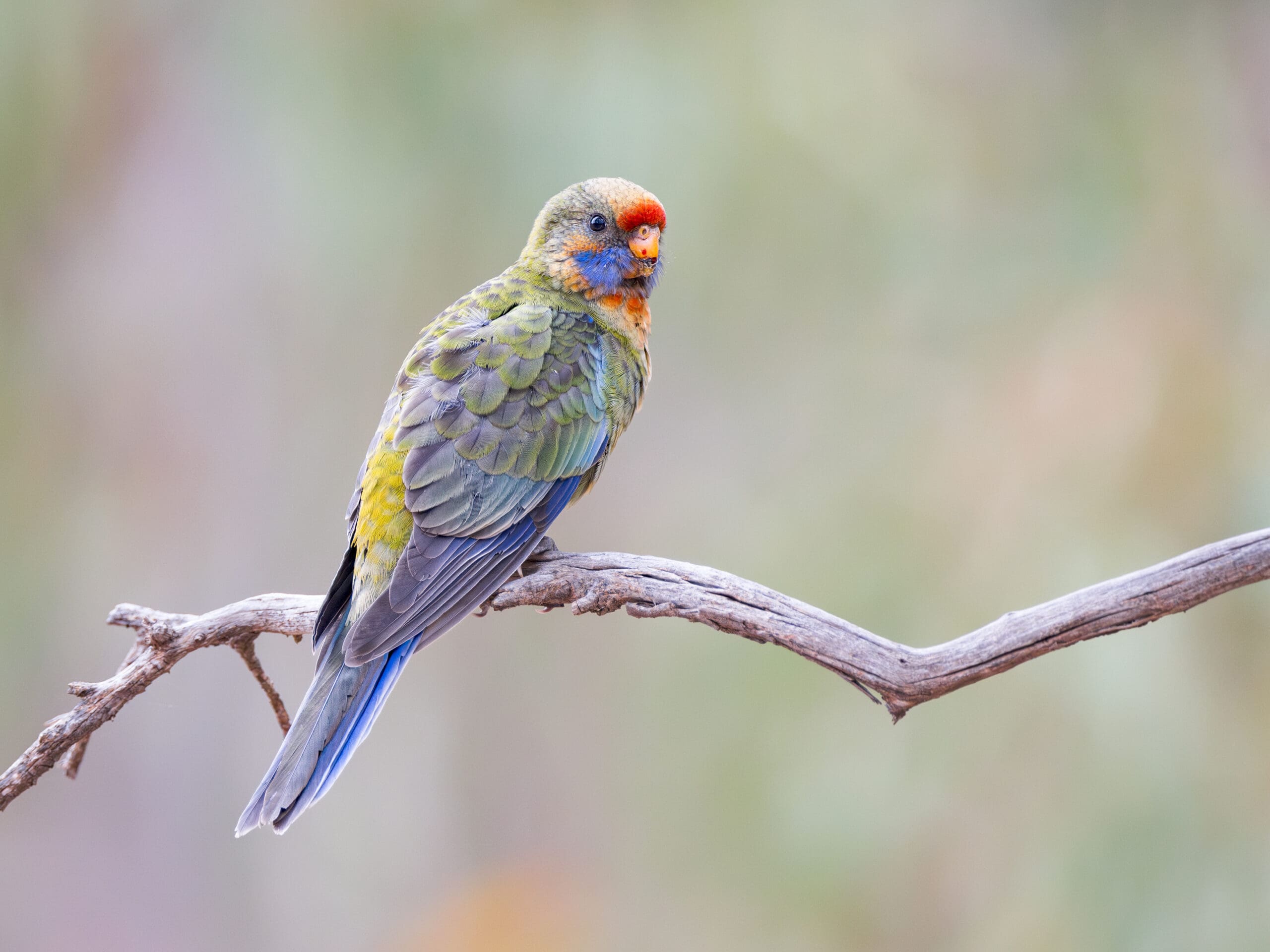
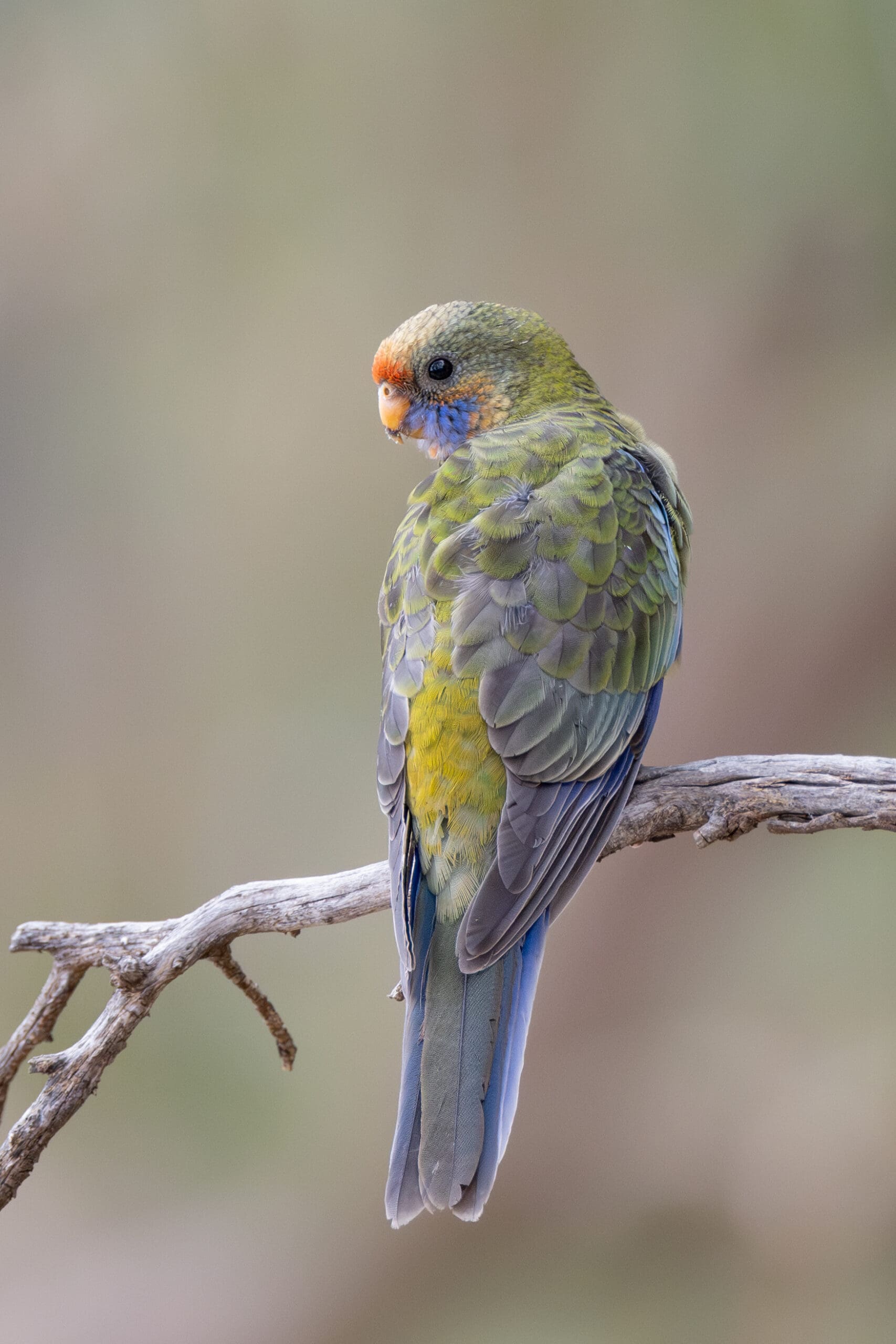
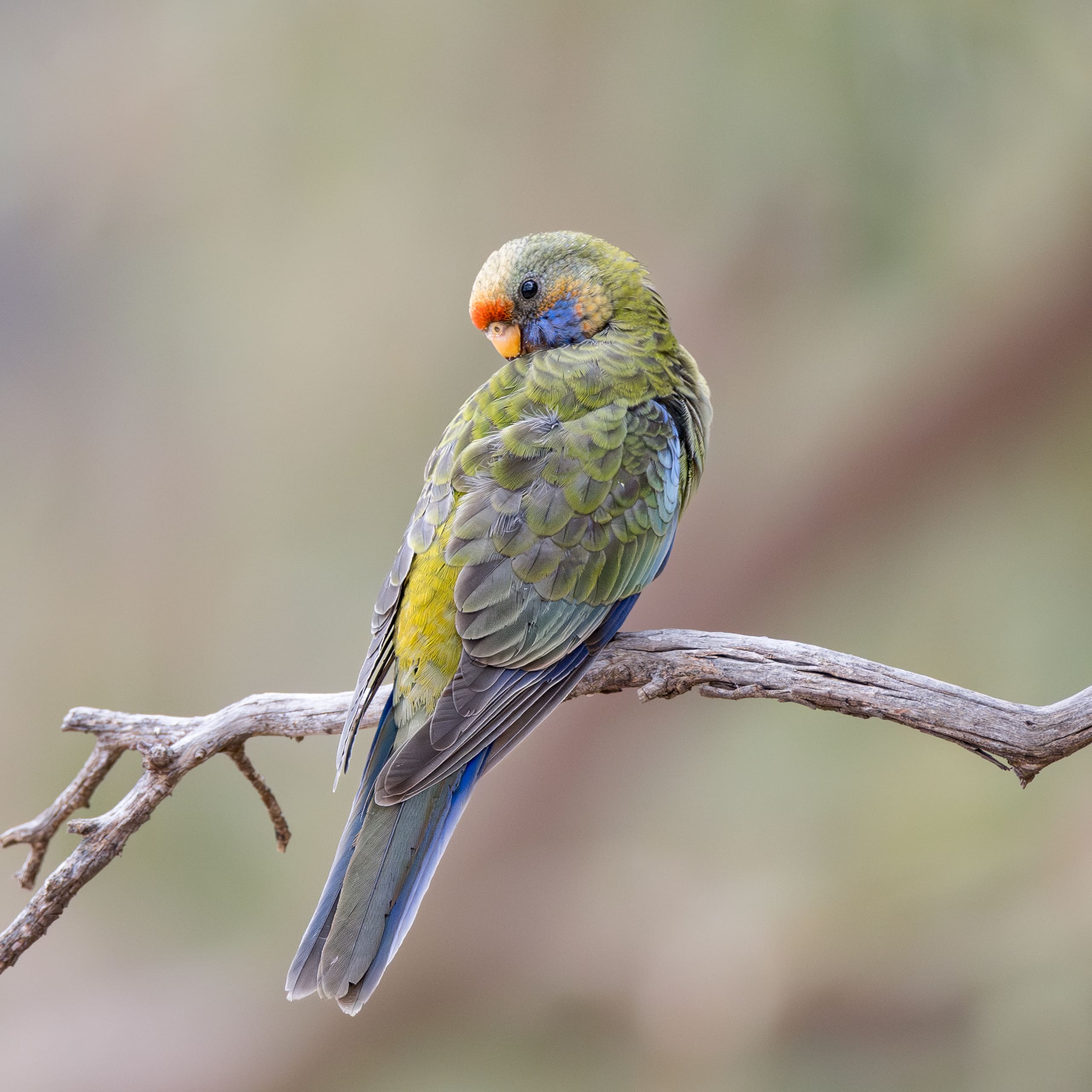
P.e. elegans: Bright olive/green in colour; red forehead, crown and borders to cheek patches, throat, upper breast, thighs and undertail coverts; dark olive/green tail; white underwing stripe.
P.e. nigrescens: As in adults but duller, darker red on head, rump and underparts; faint scalloping with black on feathers of breast; black mantle and back with red spotting and suffused with dull olive/green.
P.e. filewoodi: As in nigrescens.
P.e. melanopterus: As in elegans.
P.e. adelaidae: As in elegans, with some red and blue on the crown and face.
P.e. subadelaidae: As in fleurieuensis but paler green with more yellow in plumage; frontal band bright orange/red; purple/blue cheek patches bordered with dull orange/red; orange/red crown; dull orange/yellow throat, upper breast, thighs and undertail coverts washed with dull orange/red.
P.e. flaveolus: Frontal band narrow and pale orange/red; olive/green upperparts with minimal spotting on back and mantle, becoming dull yellow/olive on rump and upper tail coverts; dull olive/yellow underparts; white underwing stripe.
Call:
Calls in flight two syllable notes and mellow, piping sounds with upward inflection on second note. While perched emits soft twitters and clucks. When threatened notes become metallic and shrieks given when frightened.
More Information:
Content Sources:
CITES
AviList
BirdLife International
Cornell Lab of Ornithology/Birds of the World
Australian National Botanic Gardens
Parrots: A Guide to Parrots of the World, Juniper and Parr, 1998
Parrots of the World, Forshaw and Cooper, 1977. 2010 edition
Parrots of the World, Forshaw, 2006.
Lexicon of Parrots, Thomas Arndt.
Parrots in Aviculture, Low, 1992.
Captive Status:
Crimson Rosellas common; Yellow Rosellas not common.
Longevity:
10-15 yrs
Housing:
Walk-in enclosure, minimum length 3 m (9.8 ft).
Diet:
Small seed mix such as: canary, oats, safflower and small amount of hemp; millet spray; limited sunflower seed, dry, soaked or sprouted; sprouted mung or other beans, cooked beans and lentils; boiled maize; green leaves such as: Swiss chard, dandelion, chickweed, lettuce, sowthistle; vegetables such as: carrot, celery, green beans, peas in the pod, zucchini or squash; fruit such as: apple, pear, banana, cactus fruits, pomegranate; nuts such as: walnuts, lightly cracked hazelnuts, pecans and roasted peanuts; complete pellet; also seeding grasses for Crimson Rosellas and green food daily for Yellow Rosellas.
Enrichment:
Provide with plenty of willow, elder, pine and other bird-safe branches to chew; provide bathing areas. Also likes to scratch around in dirt, so provide clean sand for this purpose.
Nest Box Size:
Vertical box 9″ x 9″ x 24″ (22.9 cm x 22.9 cm x 61 cm).
Clutch Size:
Crimson rosella: 5-8; Yellow rosella: 4-5
Fledging Age:
5 weeks
Hatch Weight:
—
Peak Weight:
—
Weaning Weight:
—
World Population:
Unknown, decreasing.
IUCN Red List Status:
Least Concern
CITES Listing:
Appendix II
Threat Summary:
Not globally threatened. Generally common to abundant. Despite this, it has lost ground to land clearance, but slight range expansion is seen in some areas. Large numbers shot as crop pests during the 1930s in Comooyne, New South Wales. Chicks are taken for aviculture. Is widespread on Norfolk Island, where introduced in the 1830s. Was also introduced into the city of Wellington NZ where the species has flourished.
Range:
P.e. elegans: East and southeast Australia, in eastern Queensland, where populations are isolated, and from southeastern Queensland south to south Victoria and southeastern South Australia; also occurs in coastal populations north of the Hastings River valley, northeastern New South Wales.
P.e. nigrescens: Northeastern Queensland, from Windsor and Atherton Tablelands south to the Seaview-Paluma Ranges.
P.e. filewoodi: East-central Queensland.
P.e. melanopterus: Kangaroo Island, South Australia.
P.e. fleurieuensis: Restricted to Fleurieu Peninsula, southeastern South Australia, north to Bungala and Inman Rivers and east through the lower Murray River region.
P.e. adelaidae:Â Southern South Australia (Mt. Lofty Range to Fleurieu Peninsula).
P.e. subadelaidae: Isolated to southern Flinders Ranges, eastern South Australia, north to lat. 32S; in the south throughout Mount Lofty Ranges, Adelaide Plains and lower Murray River region.
P.e. flaveolus: In Murray-Murrumbidgee-Lachlan Rivers system, from lower Murray River, SE South Australia, east to Riverina region, S New South Wales and north on Darling River to Kinchega National Park, W New South Wales.Â
Habitat:
In the north, is found in upland forests up to 1900 m (6233 ft), preferring rainforests, tall secondary growth and closed Eucalypt forest; south of the Hunter River valley is found in varied habitats at all altitudes. Crimson Rosellas may also be seen in open woodlands and cultivated areas. Yellow Rosellas are closely linked to riparian woodlands dominated by riverine red gums (Eucalyptus camaldulensis). Nominate elegans uses box- ironbark and peppermint forests. Subspecies adelaidae occurs in all types of wooded country, suburban gardens, and parks. Regularly visits farmyards to pick up spilt grain, while subadelaidae, like flaveolus, is largely confined to riverine red gum.
Wild Diet:
Crimson Rosellas: insect larvae, psyllids, blossoms, nectar and seeds of grasses and trees. Yellow Rosellas: seeds of Eucalypt and Acacia, fruits, blossoms, berries, psyllids and insects. Will take foodstuffs from native and introduced plants.
Ecology and Behaviour:
Young birds gather in flocks, whereas large groups of adults are rare. Both the Crimson and Yellow Rosellas behave similarly however, Yellow Rosellas are more likely to been seen in the trees and they are less vocal, more shy. Crimson Rosellas are not shy and may be approached while feeding. Both species will readily drink at manmade irrigation sites.
Clutch and Egg Size:
Crimson Rosella: 5-8 rounded eggs, 29.5 x 24.0 mm (1.1 x 0.9 in); Yellow Rosella: 4-5 rounded eggs, 27.0 x 23.0 mm (1.0 x 0.9 in)
Breeding Season:
August-February depending on race and location. Nest is in hollow limb or trunk of tree.
Related Links:
—