Military Macaw Conservation
Status:
Collaborators/Funders:
Santuario de las Guacamayas

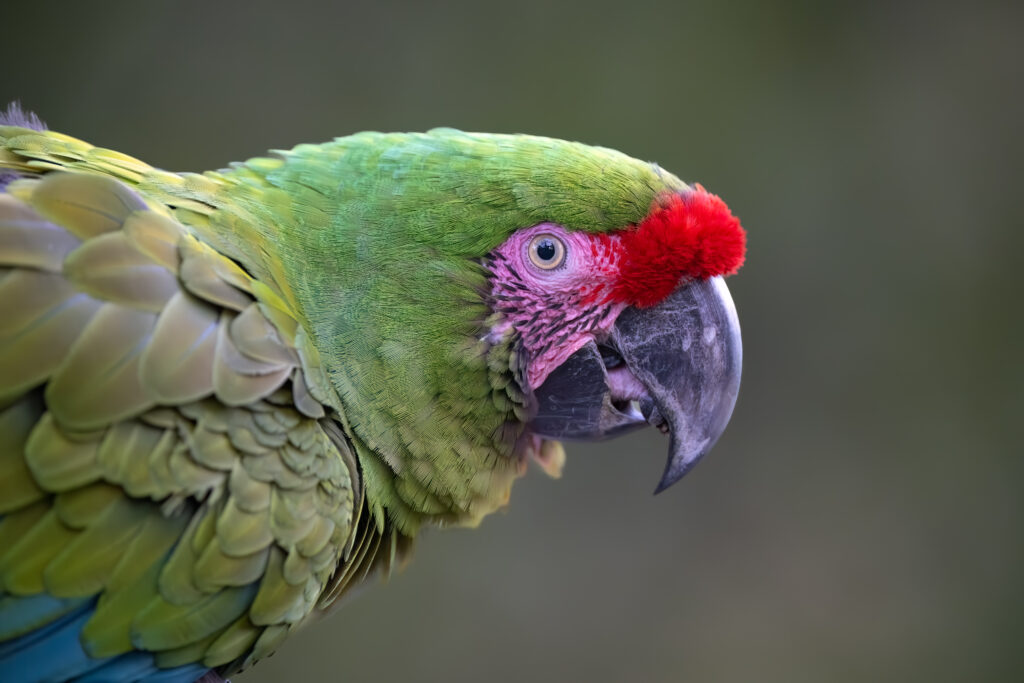
Military Macaws (Ara militaris) have disappeared from many areas, particularly in Mexico where habitat loss is over 30%. In Argentina, the only sightings since 1991 are of approximately 50 individuals and in Bolivia a total of 37 individuals in 8 of 21 known locations. Populations in Mexico, Venezuela and Colombia face continuing threats from domestic trade, destruction of nest cavities by poachers and forest destruction.
The WPT has funded several research and conservation projects throughout the macaws’ range, including population surveys along the Jalisco coast of Mexico, breeding ecology and food use studies, surveys that identified priority breeding areas and availability of nest cavities, and educational programs for landowners in areas where birds are known to nest and roost.
In Cabo Corrientes Mexico, a population of Military Macaws faces multiple threats, mainly trapping. Because of unchecked poaching, the Ibarra family has created a refuge for species on one of their properties. WPT has partnered with the Macaw Sanctuary (Santuario de la Guacamayas), which was born of the discovery of a tree felled to illegally extract a macaw chick for trade. The Ibarra family builds, installs and maintains artificial nests for Military Macaws living in the area. To date, 30 nest boxes have been installed and 70 chicks have hatched and successfully fledged. The team has also provided a lookout tower and blinds for visitors to view the macaws, along with tours and educational talks. Native tree planting across the site is helping to replace trees lost to deforestation. By the end of 2025, the team had planted several thousand pine trees of different species on the property.
IUCN/CITES Status: IUCN Vulnerable / CITES Appendix I
Population: 2000-7000 mature individuals, decreasing.
Threats: This species; range is extensive but highly fragmented. Habitat loss is 32% in Mexico alone and domestic trade is particularly prevalent in Mexico and Bolivia.
Range: A.m. militaris: Tropics of Colombia and NW Venezuela, south to the E Ecuador and Urubamba region, SE Peru; rarely to Pacific slope of Andes in Peru.
A.m. mexicana: Pacific slope in Mexico from Sonora south to Jalisco.
A.m. boliviana: East slope of Andes in Bolivia, south from Beni, also NW Argentina in Jujuy and Salta.
A.m. mexicana: Pacific slope in Mexico from S Sonora south to Jalisco, formerly to W Chiapas and Atlantic slope from E Nuevo Leon to San Luis Potosi.
Natural history: These macaws are found in foothills in wooded country with valleys; also at sea level on the Pacific coast. In Mexico, seen in dry, secluded woodland; also in lowland humid and riparian forests. In the Colombian Andes they are found in humid forest; in Venezuela rainforest. Diet includes fruits and nuts. Are found in pairs or small flocks, with roosts in greater numbers. Breeding is from March to July in Mexico; nest is in a tree cavity.